
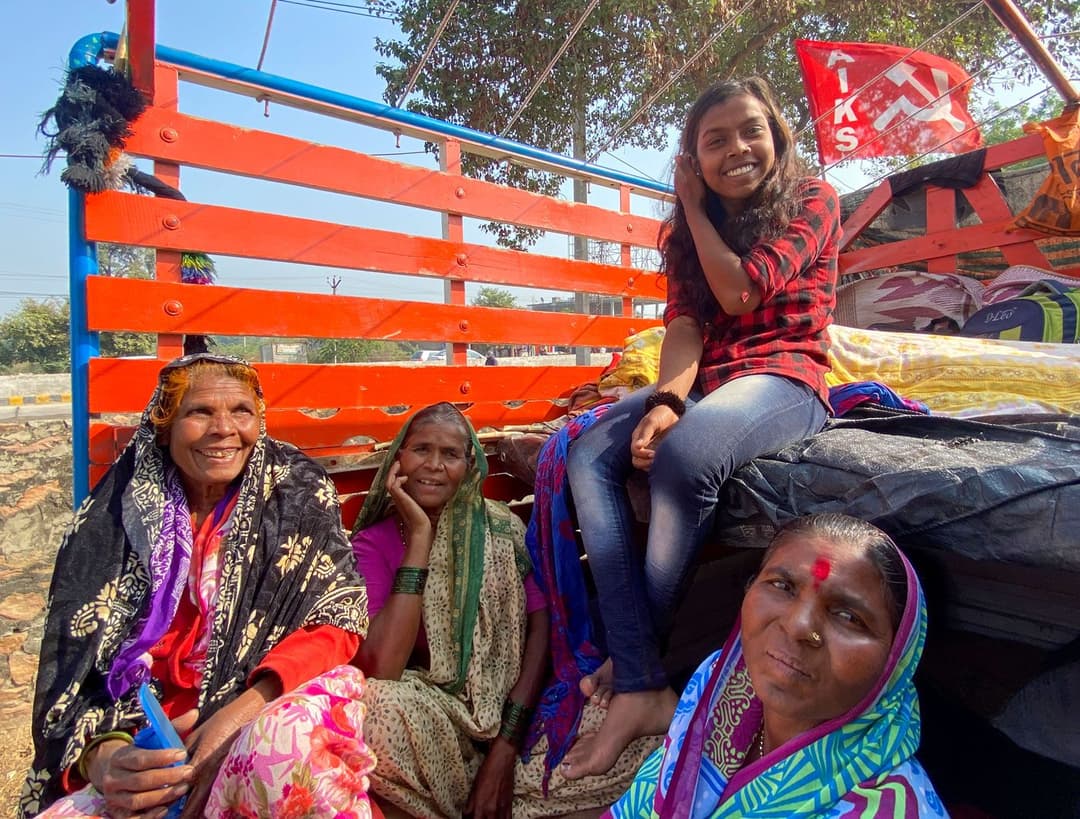
After four days on the road and having covered 750 kilometres, the caravan of tempos and jeeps has stopped for lunch at a gurudwara in Kota, Rajasthan. It is cold in the afternoon, on December 24, and the travellers – farmers and farm workers from Maharashtra– are tired after a nightlong journey. But while they wait for a meal at the gurudwara’s community kitchen, Savita Gunjal’s songs keep their spirits high – Kamgar chya kashtana natavla jagala, jevan naahi potala, kapda naahi nesayla (‘The labour of workers makes the world beautiful, but they have no bread to eat or clothes to wear’).
“I have come here to sing,” says the 16-year-old Bhil Adivasi singer dressed in a dark red shirt and blue jeans. “I want to keep making the farmers aware of their rights. I want to tell the world about our condition,” says Savita, from Chandwad village in Chandvad taluka, Nashik district. She left Nashik on December 21 in the farmers’ vehicle jatha, to join the protests at Delhi’s borders. Lakhs of farmers have been protesting against three farm laws, first passed as ordinances on June 5, 2020, then introduced as farm bills in Parliament on September 14 and rammed through to become Acts by the 20th of that month.
Back in her village, Savita works as a farm labourer on weekends and during holidays, earning Rs. 150-200 a day. “If there is work then I have to go to the fields,” she says. During the Covid-19 lockdown, she spent a lot of her time working on the farms in Chandwad. “There was little work during the lockdown. I would take whatever I could get and earn as much as I could,” she says. She completed high school this year (2020), but could not begin college because of the pandemic.

