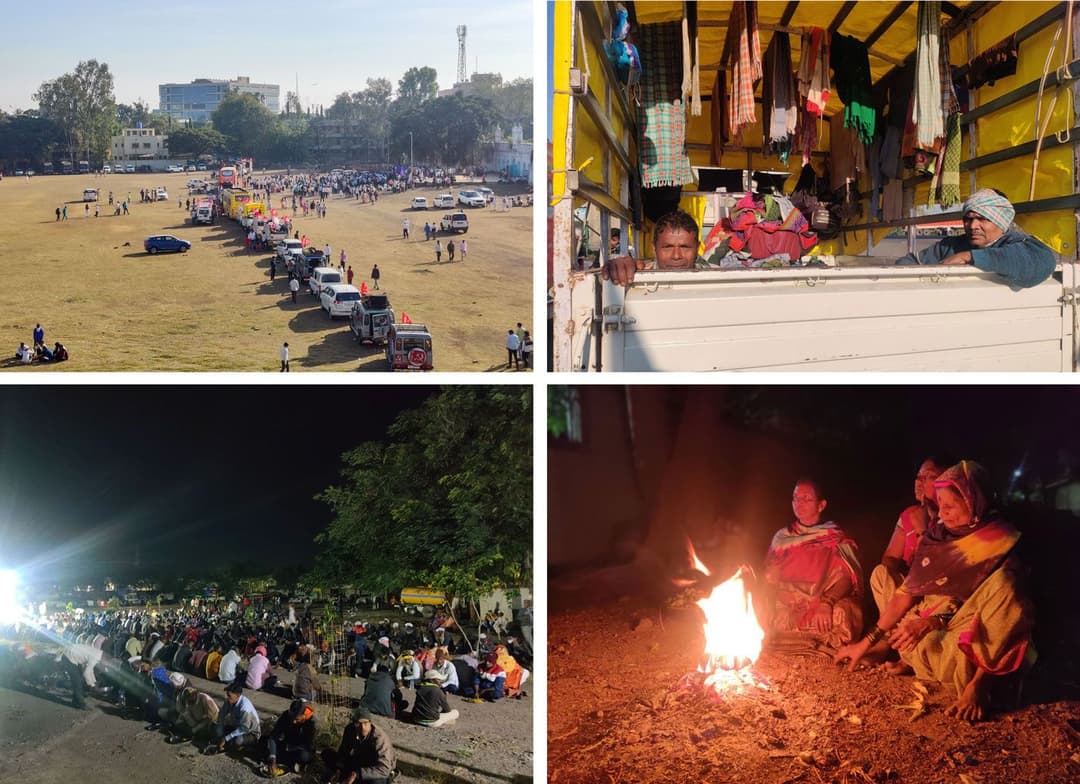

The group of farmers at the roadside dhaba was distracted by the strains of a flute. It was cold that morning of December 22 in Chandvad town – about 65 kilometres from Nashik city – and they were waiting for tea. Some were half-asleep and a few were polishing off misal pav for breakfast. But Narayan Gaikwad, a 73-year-old farmer from Kolhapur district’s Jambhali village, was playing the flute. He was keeping to his morning ritual even 500 kilometres away from home. “People say the agitations in Delhi are limited to farmers from Punjab and Haryana," he said. "We want to point out it is a national issue.”
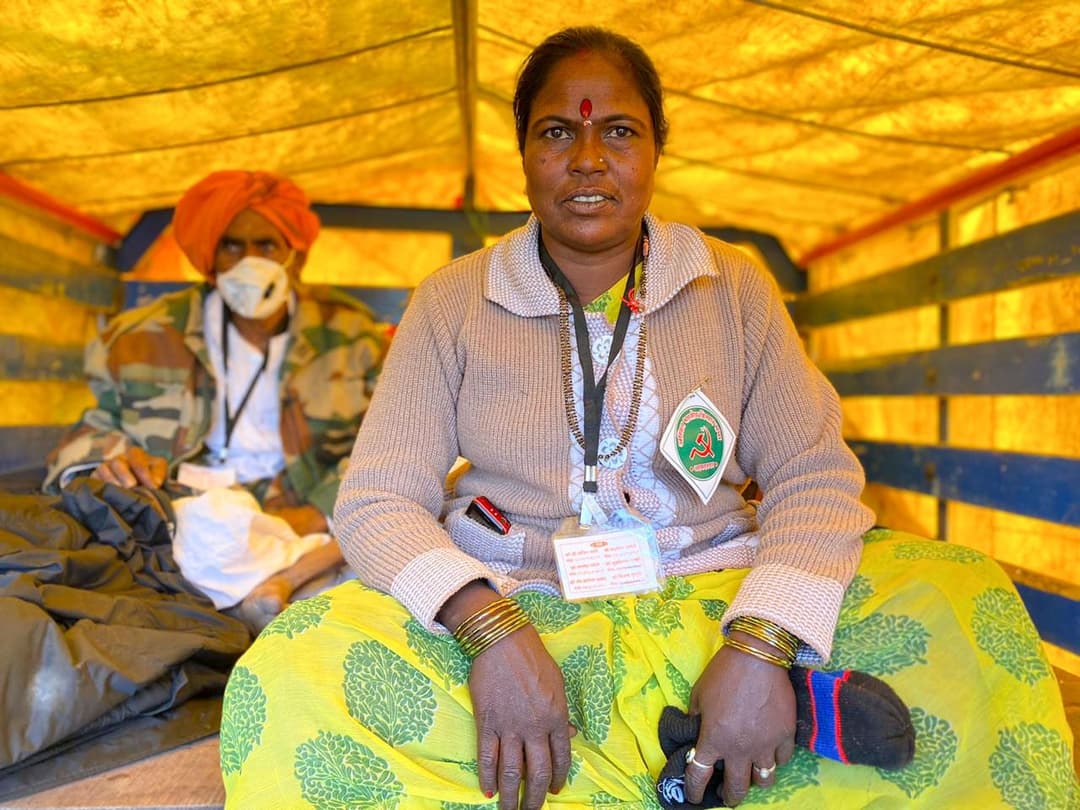
Gaikwad was a part of the group of 2,000 farmers, farm labourers and activists making their way to Delhi in a vehicle jatha (convoy), which had started from Nashik on December 21. But Gaikwad’s journey began a day before that. “Seven of us got into the tempo and arrived in Nashik on the night of the 20th. It took us about 13 hours to get there," he said. "Travel by road gets tougher with age. But I decided to come because I believe in Bhagat Singh’s idea of India. Farmers’ problems won’t end unless there is a revolution.”
Lakhs of farmers, mainly from Punjab and Haryana, have braved police tear gas, lathi charge, biting cold and rain to stage protests along the borders of Delhi. They have been protesting against the three farm laws that the central government first issued as ordinances on June 5, 2020, then introduced as farm bills in Parliament on September 14, and hastened through to become Acts by the 20th of that month.
The laws are: The Farmers’ Produce Trade and Commerce (Promotion and Facilitation) Act, 2020; The Farmers (Empowerment and Protection) Agreement on Price Assurance and Farm Services Act. 2020; and The Essential Commodities (Amendment) Act, 2020. The laws have also been criticised as affecting every Indian as they disable the right to legal recourse of all citizens, undermining Article 32 of the Indian Constitution.