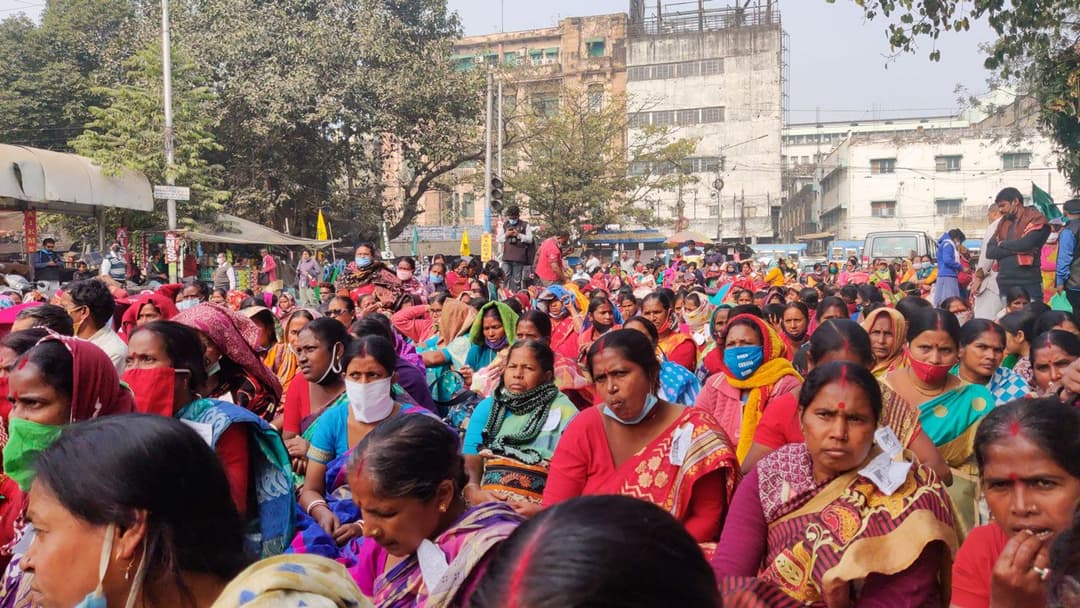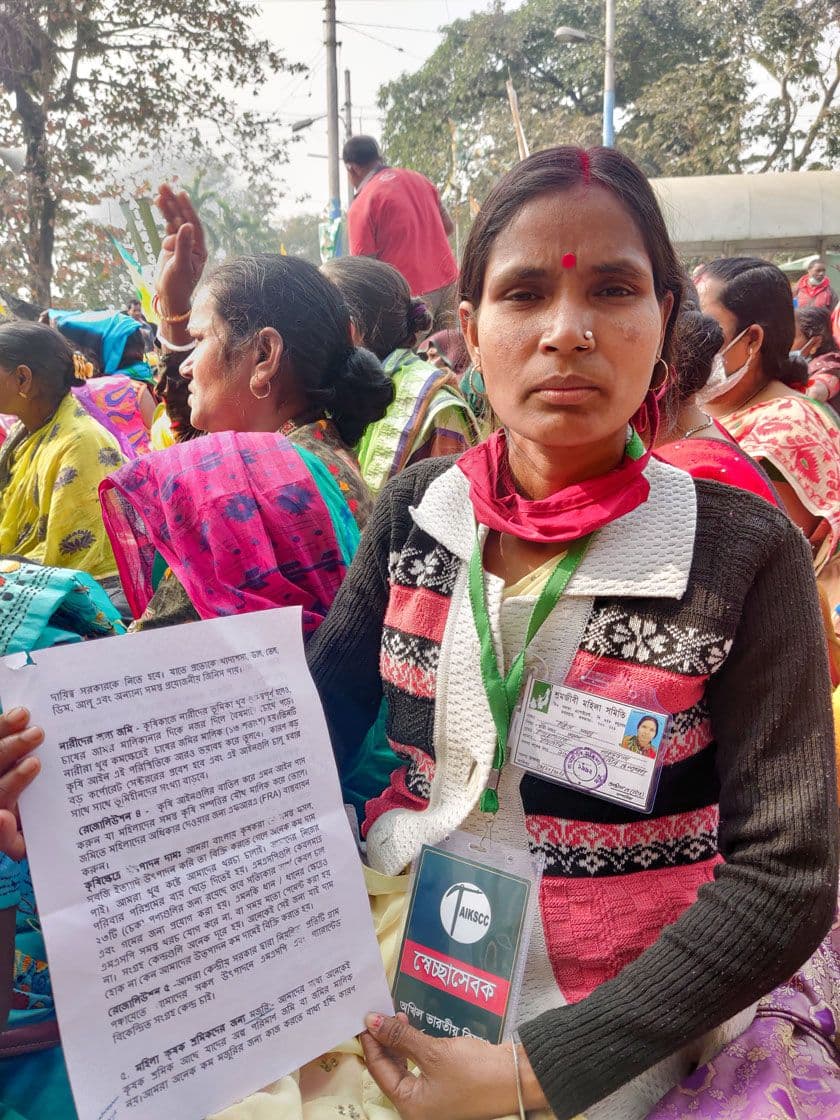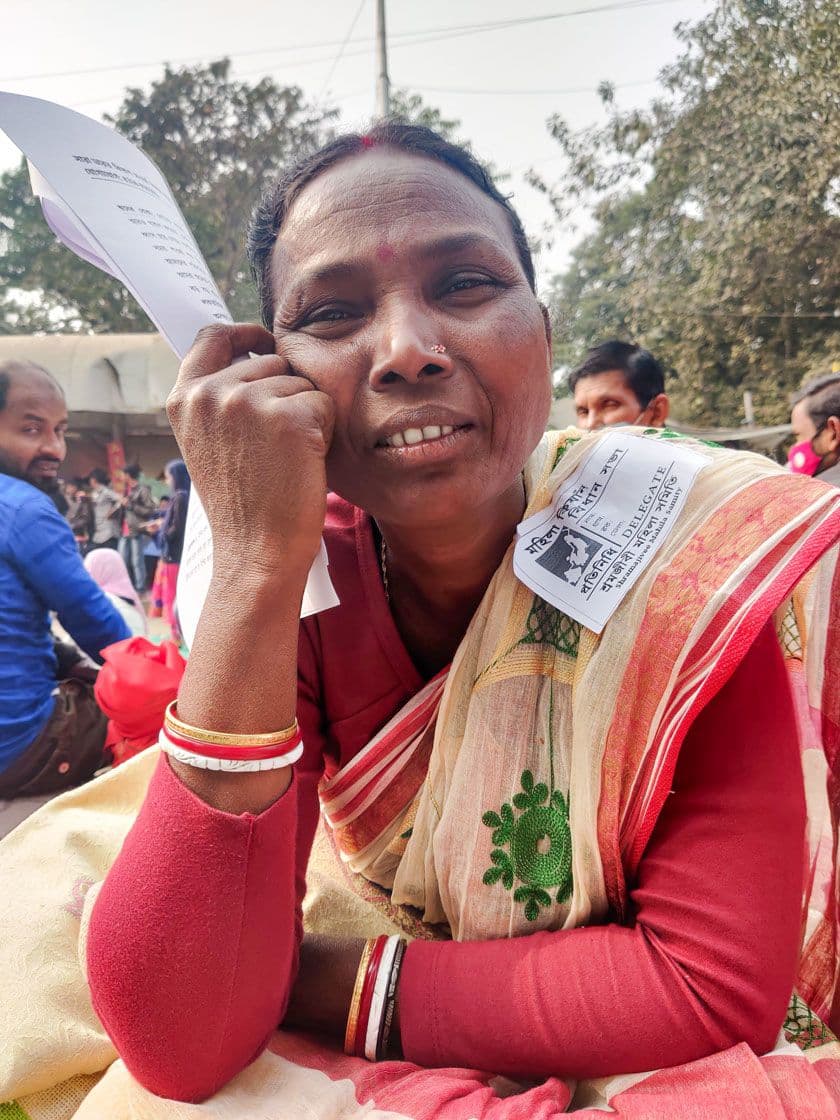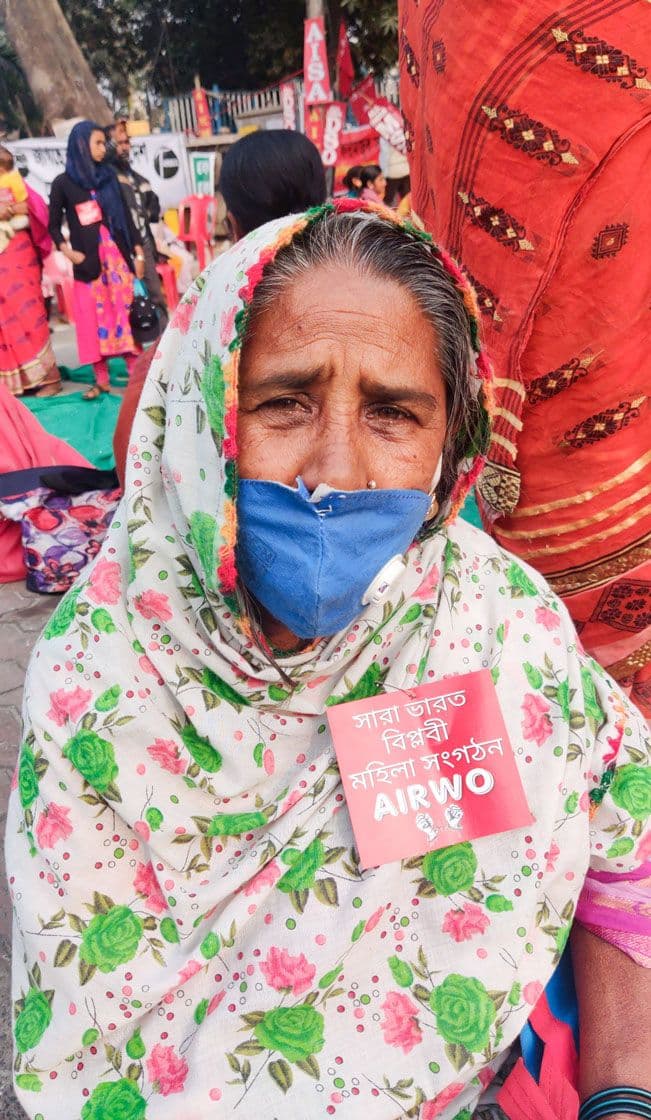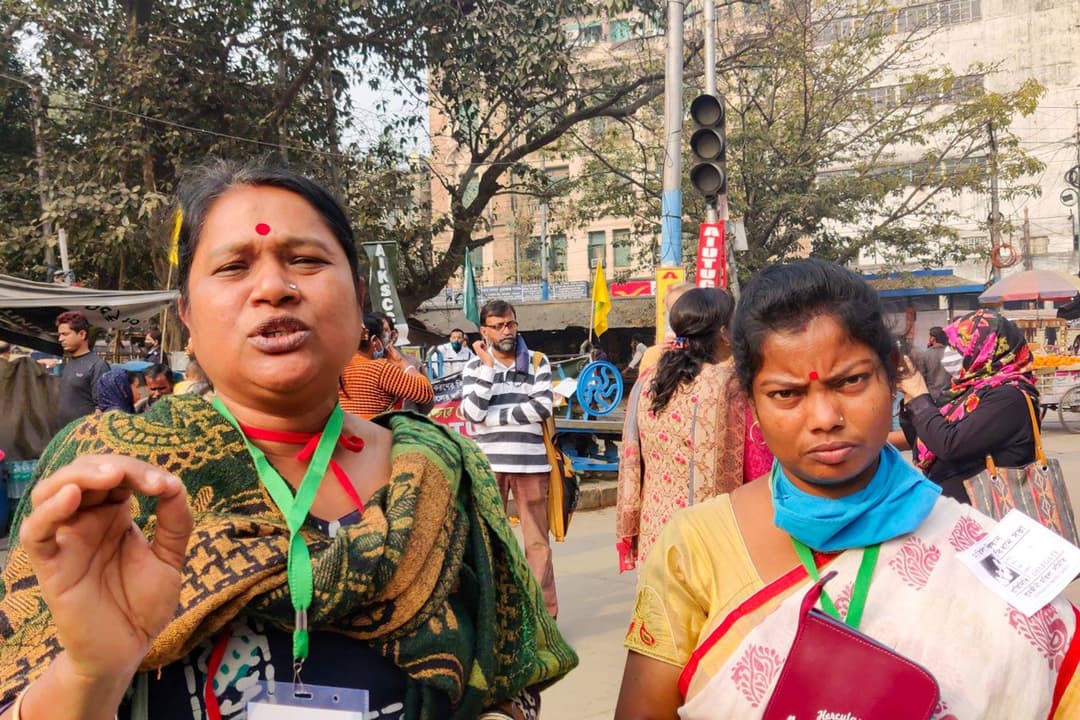

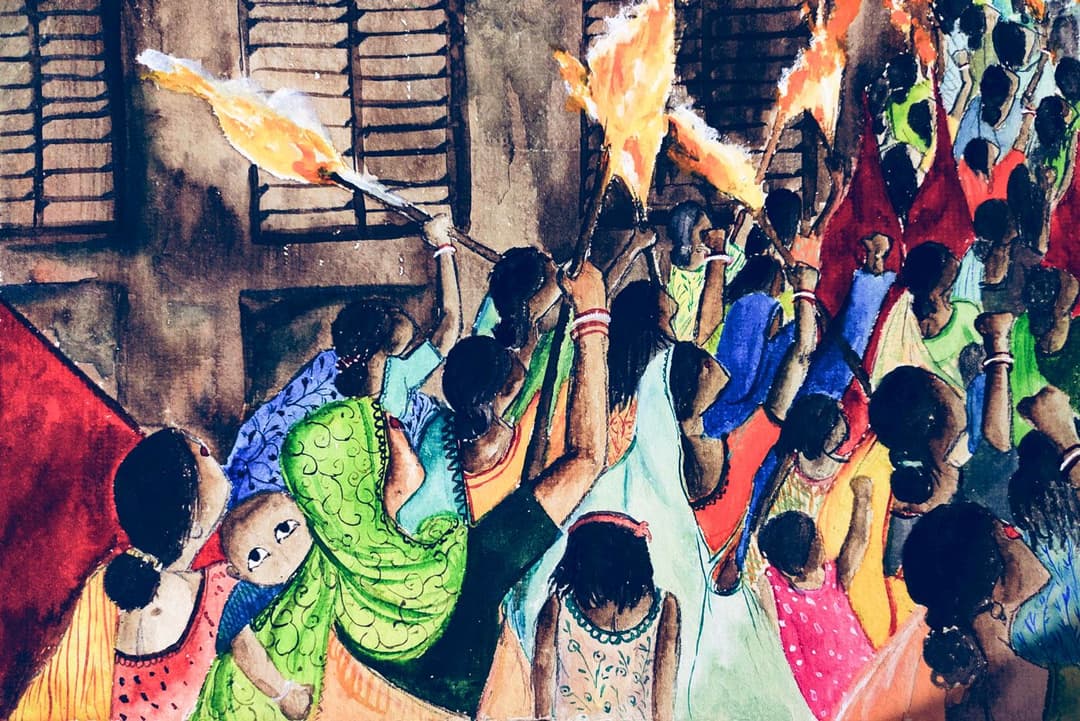
“When women like us leave their homes and farms and come to the city to protest, it means they are losing the maati [ground] beneath their feet,” said Aruna Manna. “In the last few months there were days when we hardly had anything to eat. On other days we survived on barely one meal. Is this the time to pass these laws? As if this mahamari [the Covid-19 pandemic] was not enough to kill us!”
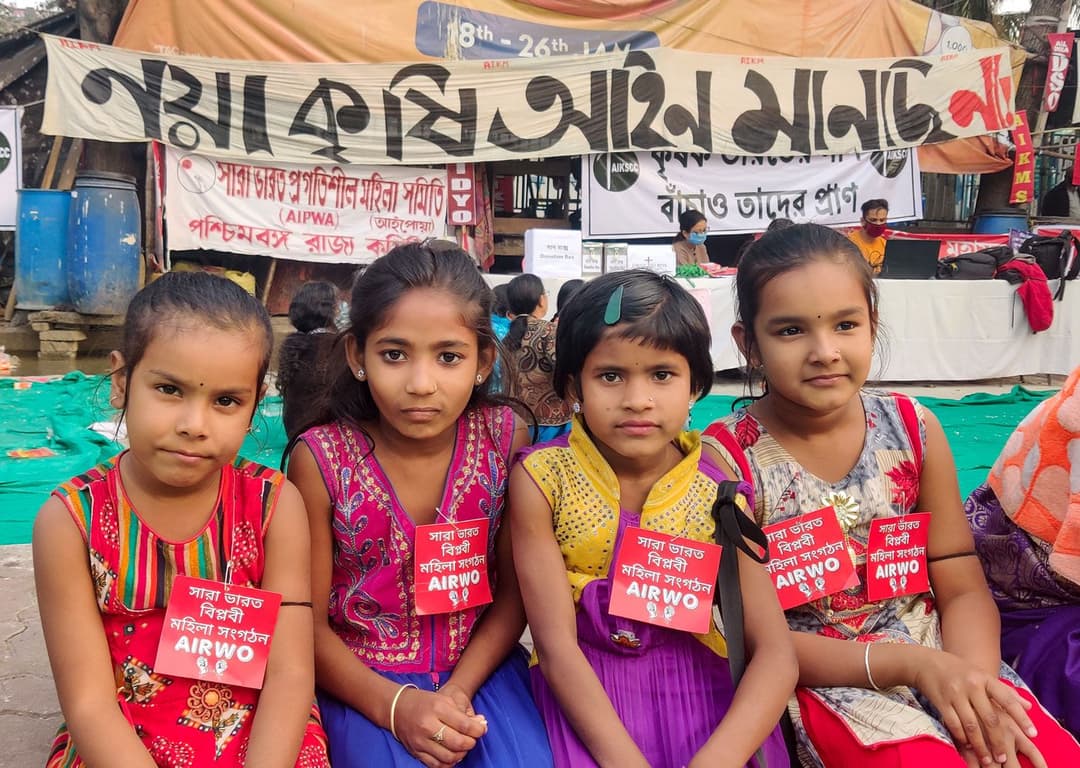
Aruna, 42, was speaking at the Esplanade Y- Channel – a protest site in central Kolkata, where, from January 9 to 22, farmers and farm labourers have come together under the banner of All India Kisan Sangharsh Coordination Committee (AIKSCC). Students, citizens, workers, cultural organisations all gathered here too – all in solidarity with the farmers protesting at the borders of Delhi against the three farm laws passed in Parliament in September 2020.
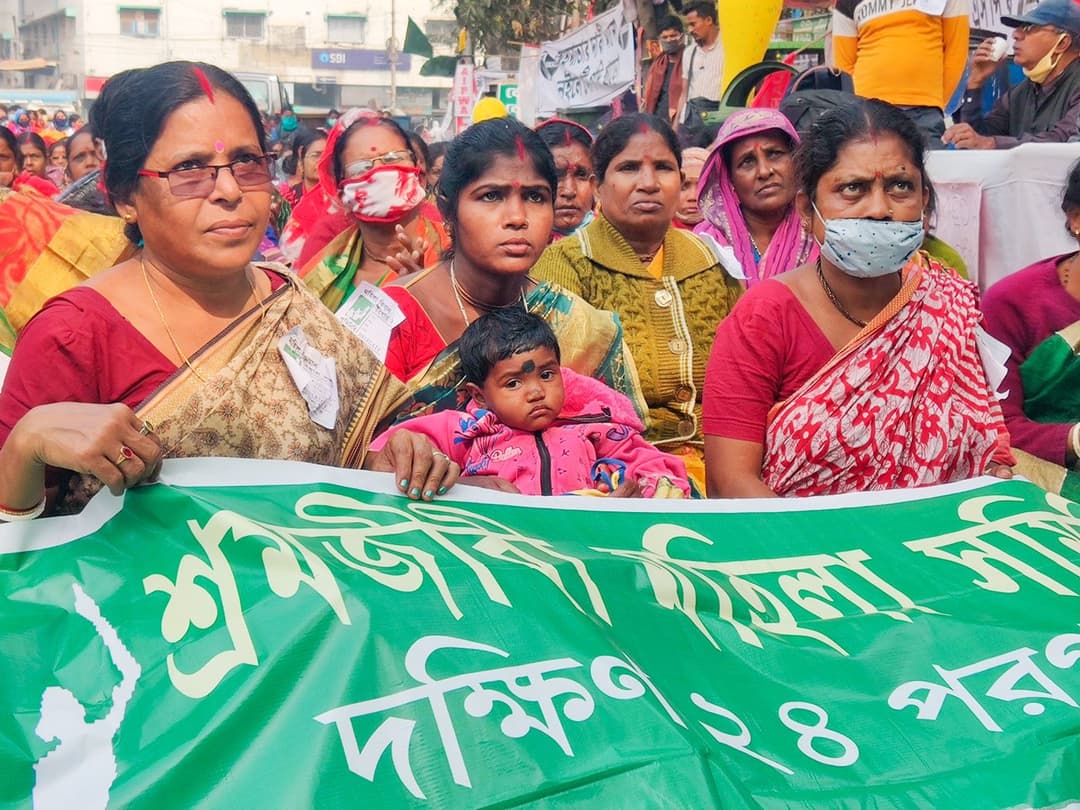
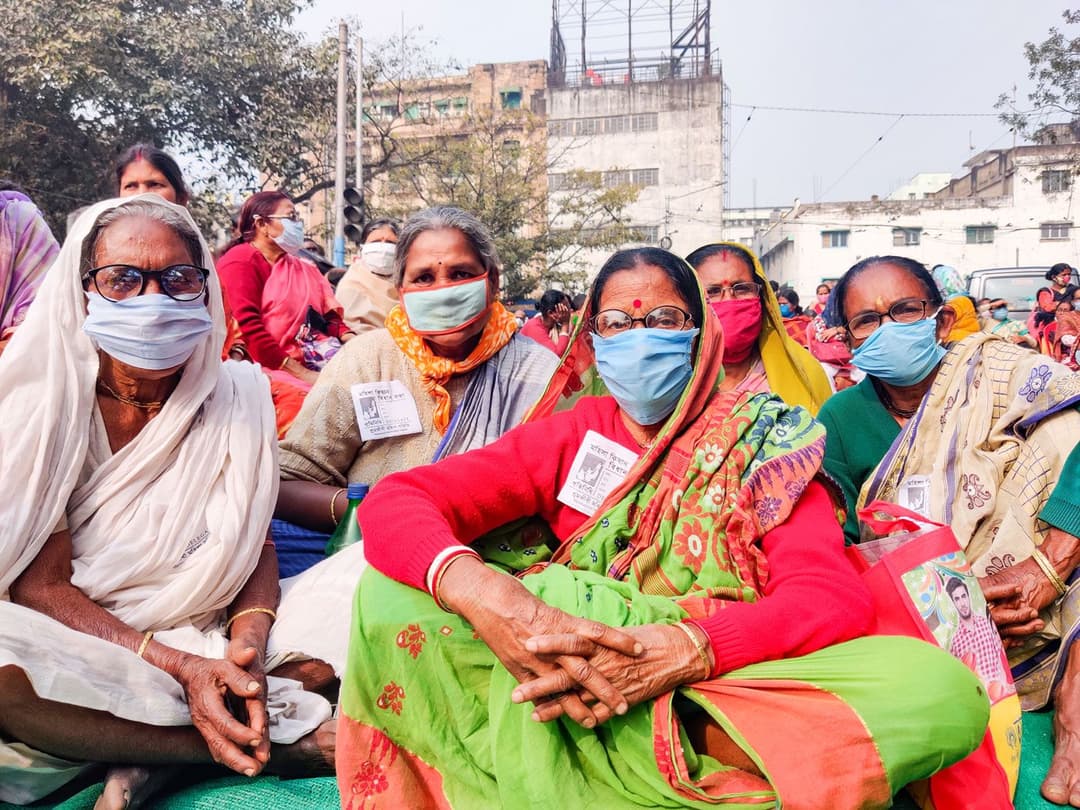
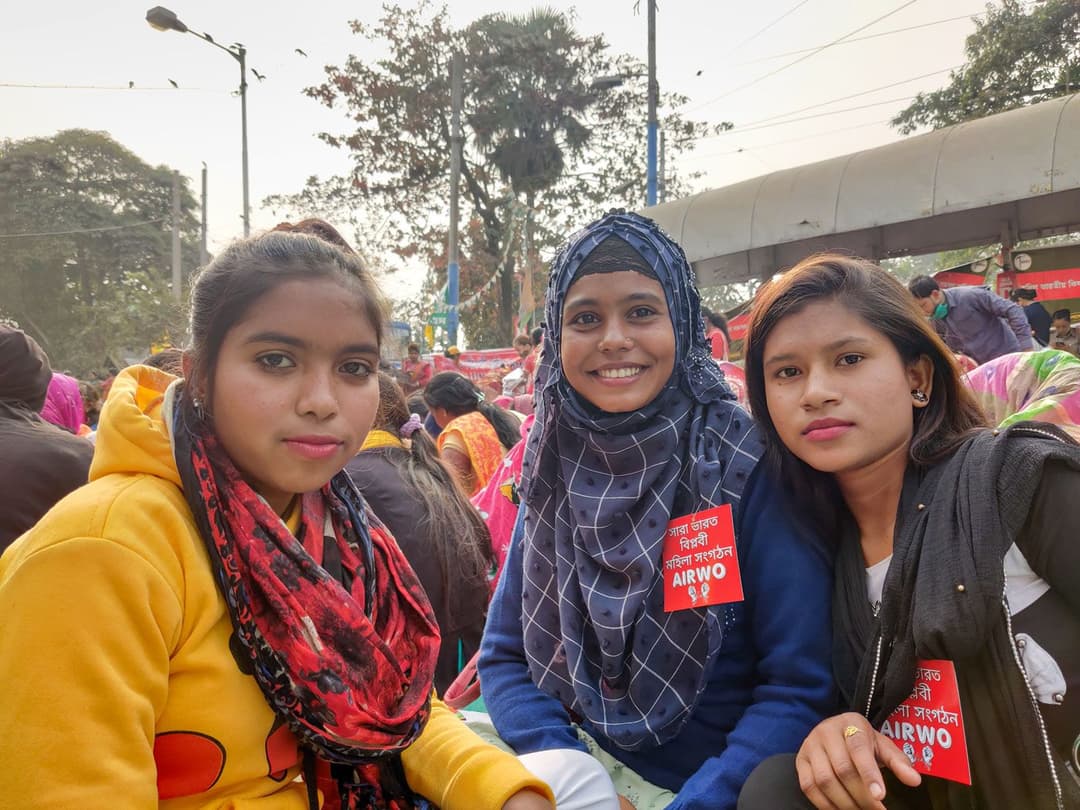
Aruna had come here from Rajuakhaki village, along with roughly 1,500 other women, most of them from various villages of South 24 Parganas district. They arrived in Kolkata on January 18 by trains, buses and tempos to mark the nationwide Mahila Kisan Diwas – a day dedicated to women in farming, and to ensuring their rights. More than 40 unions of women farmers and farm workers, women’s organisations, and the AIKSCC organised the West Bengal edition of the event.
Though tired after the long journey to Kolkata to make their voices heard, the women’s rage was still evident. “So who will protest for us? The courtbabus [judges]? Till we don’t get our dues we will protest!” said Suparna Haldar, 38, a member of the Shramajeevi Mahila Samiti, reacting to the recent comment made by the Chief Justice of India that women and elderly protestors should be ‘persuaded’ to leave the protests against the farm laws.
Suparna was speaking at the Mahila Kisan Majur Vidhan Sabha session, held on January 18 at the Kolkata protest site from around 11:30 a.m. to 4 p.m. as part of Mahila Kisan Diwas The session focussed on the complex concerns of women in farming, their labour, their long struggle for ownership of land and other rights, and the potential impact of the new farm laws on their lives.