

“The train stops only for five minutes, and we board amidst a lot of rush and crowding. Sometimes the train starts moving, and we have to leave behind some bundles on the platform.” Saranga Rajbhoi is a rope maker, and the bundles she is forced to leave behind are leftover fibres from textile factories that women like her make into ropes they sell. The ropes are used to tie cows and buffaloes, cargo on trucks and tractors, and even to hang clothes to dry.
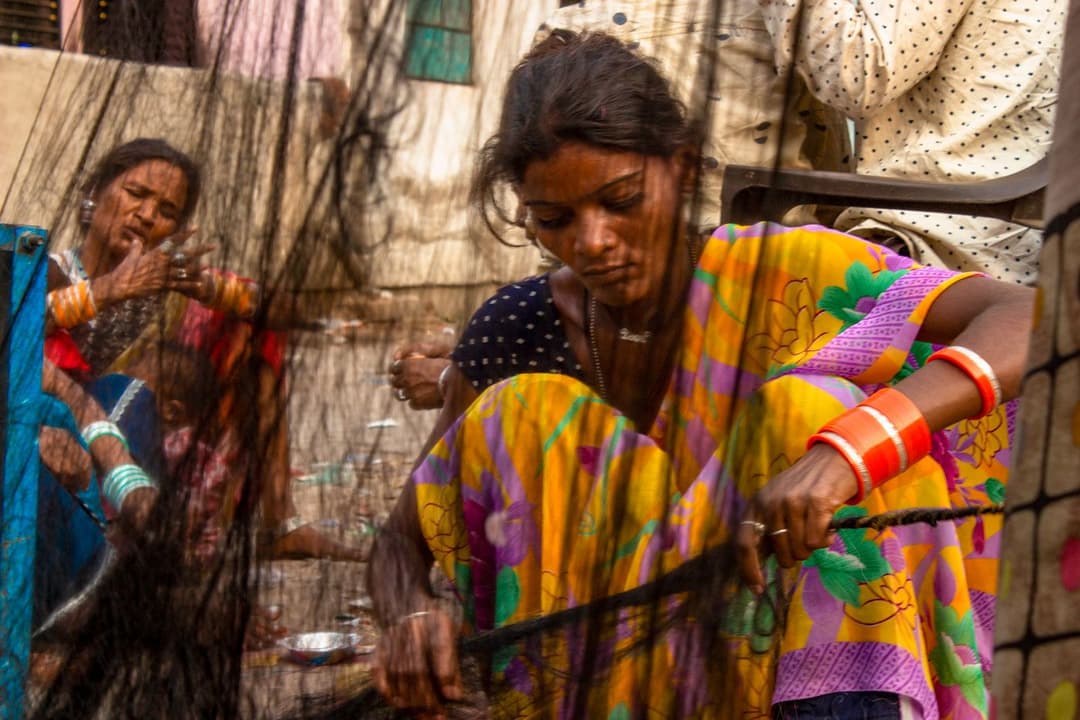
“Hamara khaandani hai [Ours is a family business],” says Santra Rajbhoi. Seated in an open space near her home in a municipal housing block in Vatva, Ahmedabad, she is busy untangling knots from a heap of synthetic fibre.
Saranga and Santra belong to the Rajbhoi nomadic community in Gujarat. They travel from Ahmedabad to Surat buying up waste fibres from textile mills along the way, which they then turn into ropes. It’s a job that makes them leave home around eleven at night and return only at seven in the evening the next day. Their young children are left behind in the care of relatives and neighbours.
The trains they catch often reach their destination at one or two in the morning, so the women rope makers sleep on the railway platforms for which they are often harassed. “We are taken to the police station for two-three hours and questioned about where we come from. The policemen catch hold of poor people,” says Karuna. “If they feel like detaining us, they do.”
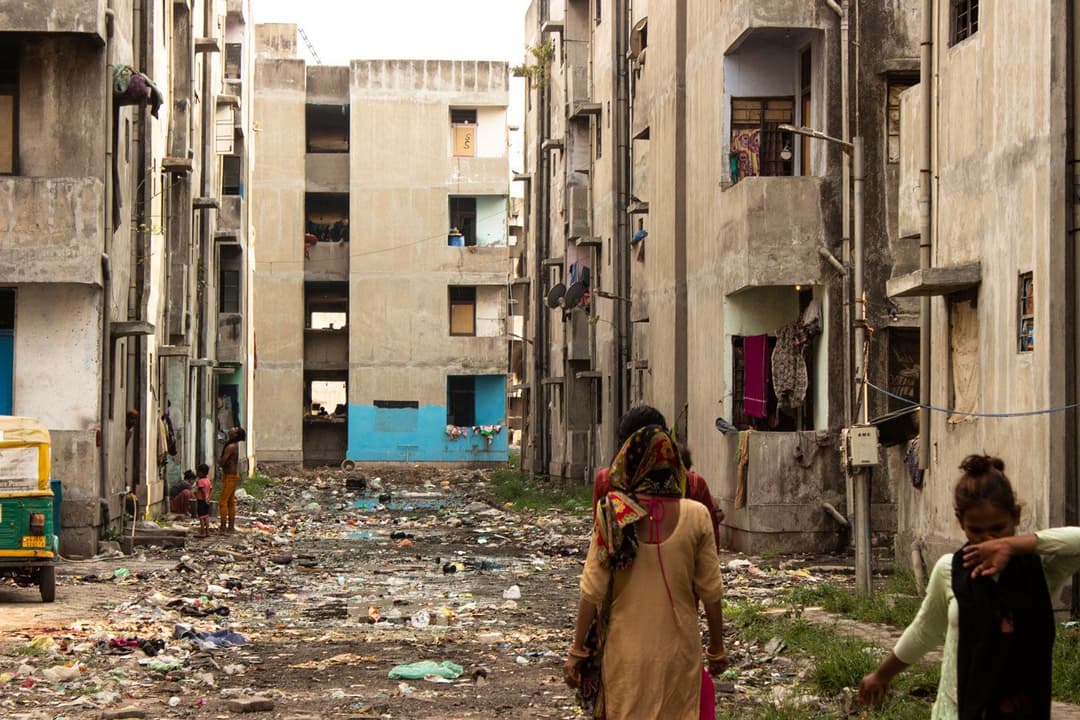
Karuna, Santra and Saranga are all neighbours in the Char Maliya municipal housing located in Vatva. They say their homes lack basic amenities like regular water supply and sewage lines. Electricity connections came only after a long fight.