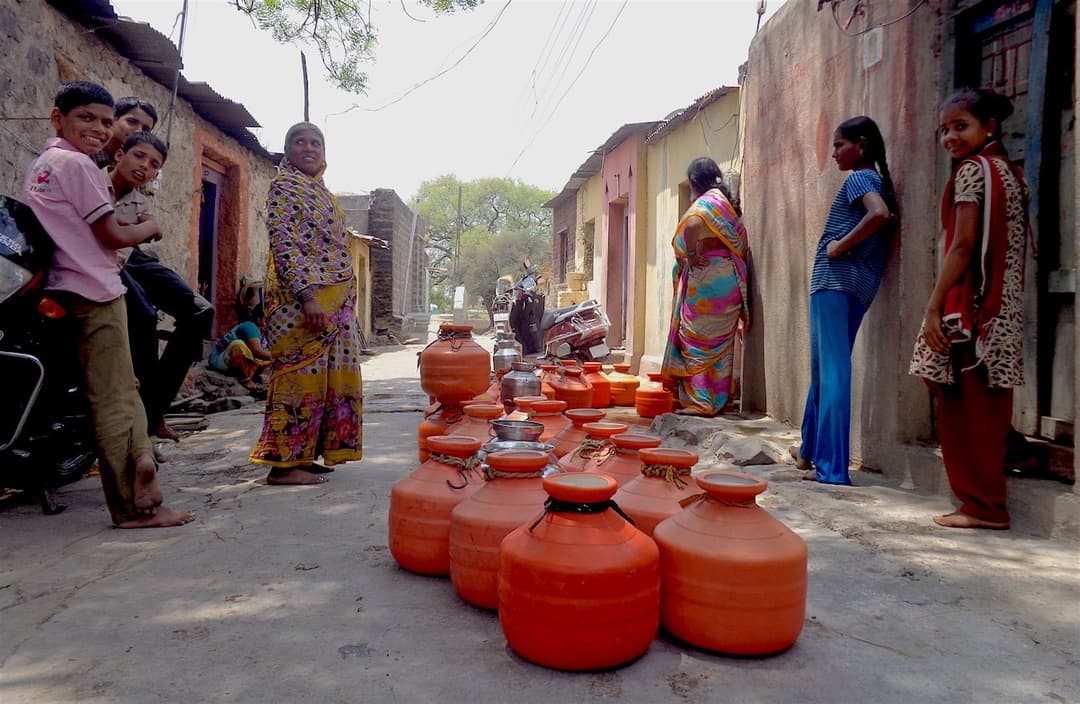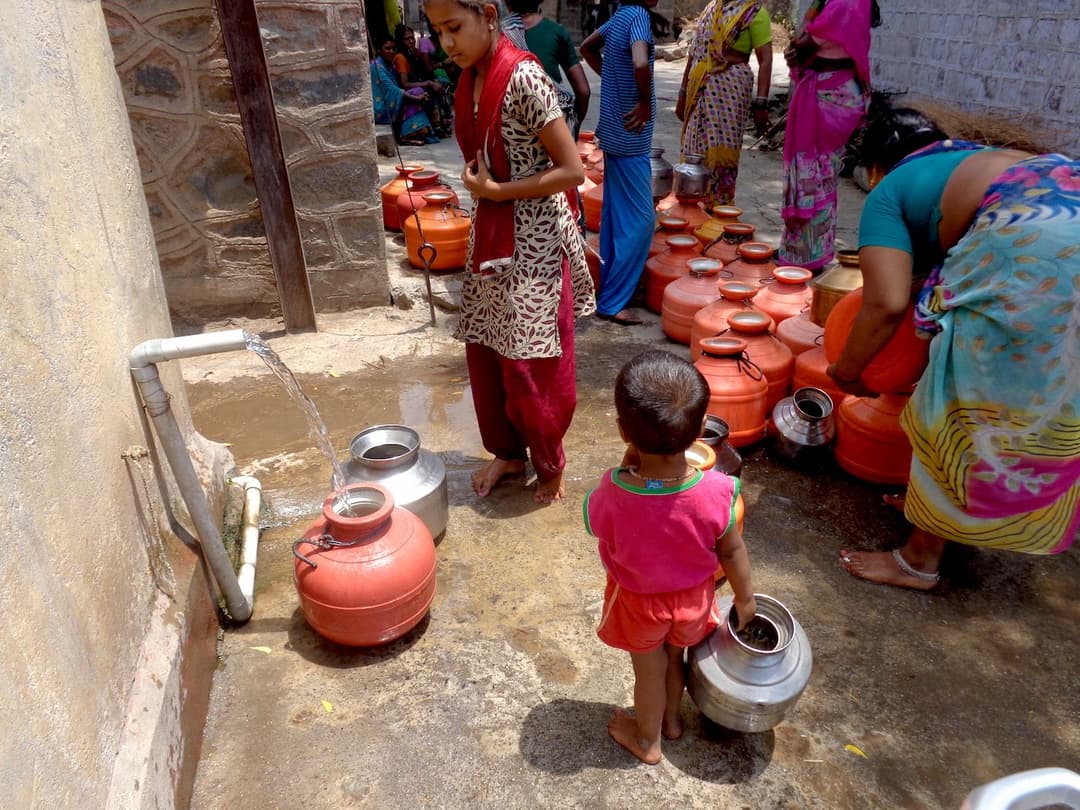

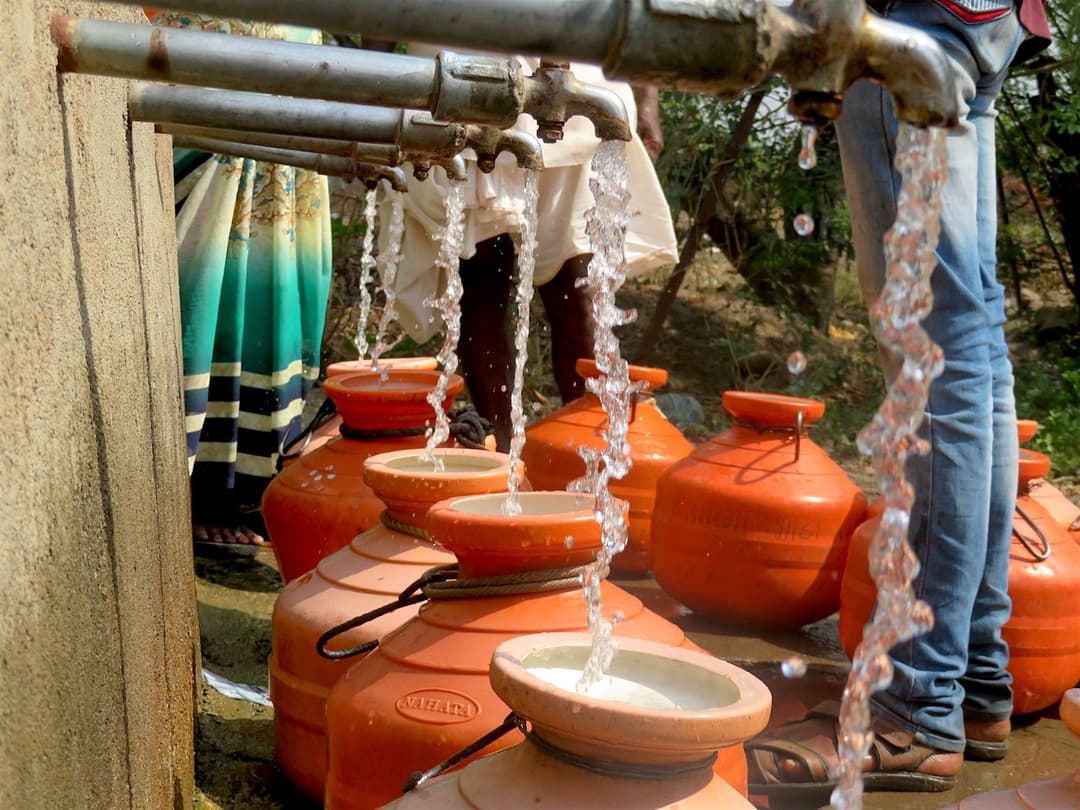
A clanging of pots announces the dawn in Takwiki, as people surge towards the nearest water source in this village in Marathwada's Osmanabad district. Soon, the narrow alleys are lined with water-seekers and their water containers. The oldest is 60-plus, the youngest, five.
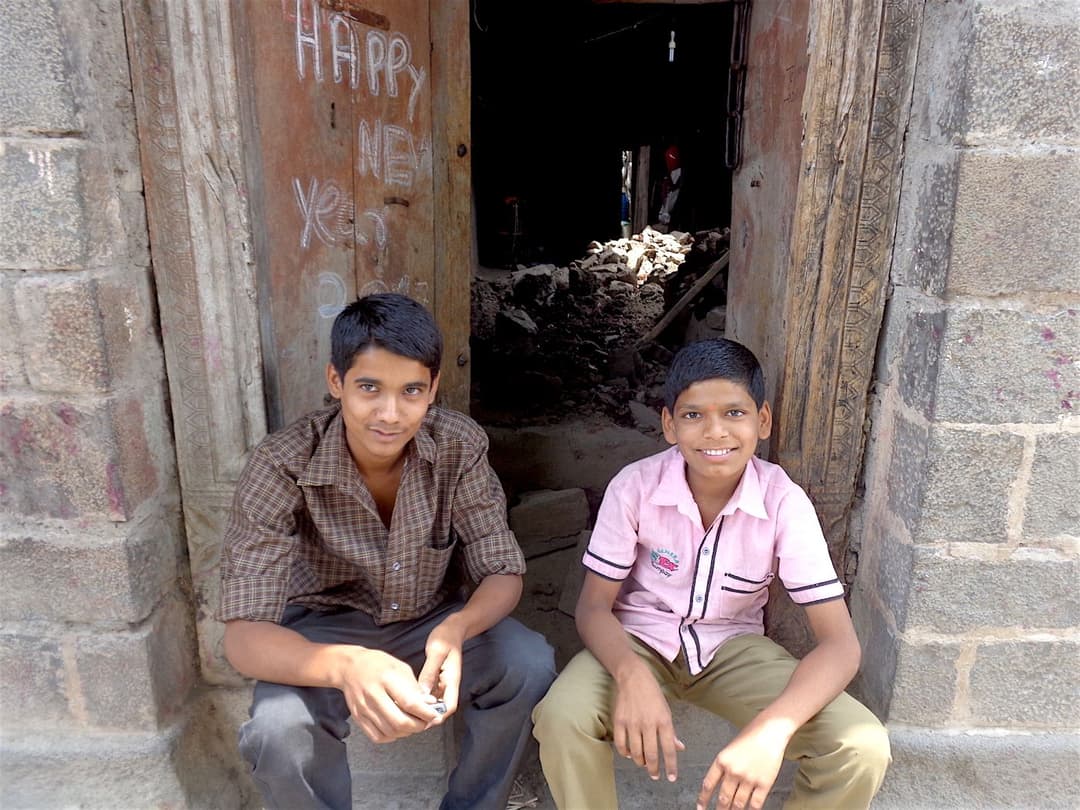
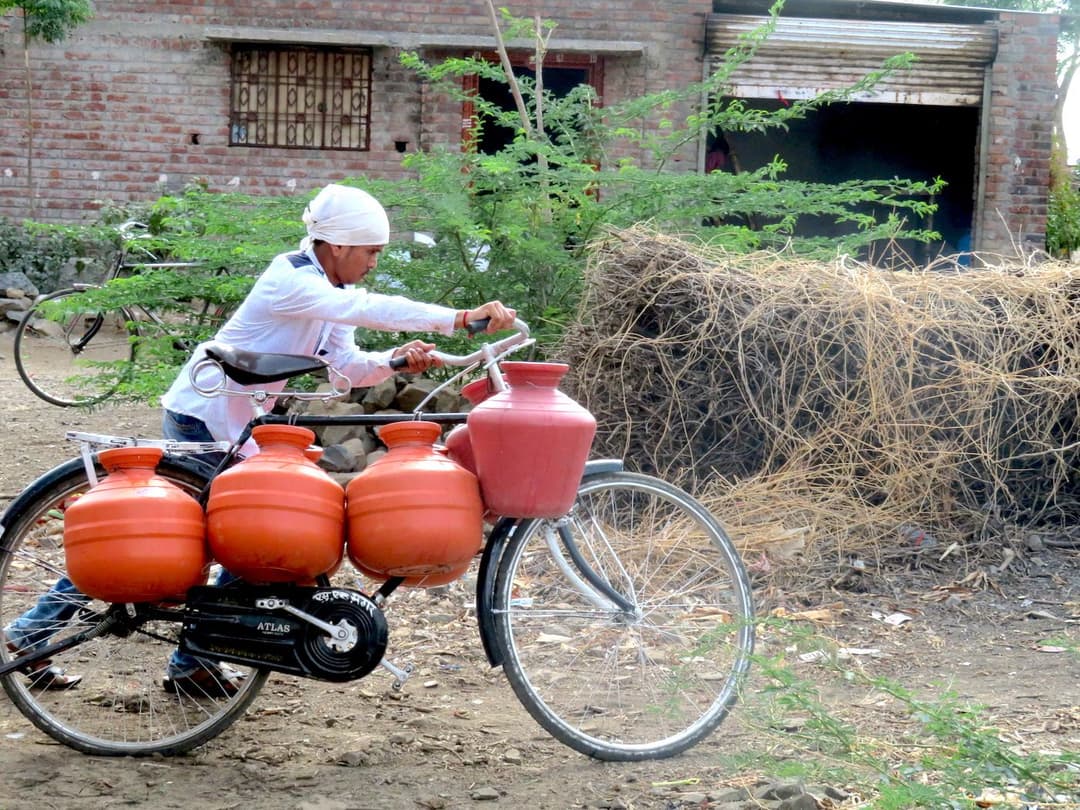
Prithviraj Shirsath, 14, and Aadesh Shirsath, 13, are in the queue. A teacher who lives right across their home opens his borewell to the villagers twice or thrice a week. The summer vacations are on, and the Shirsath cousins don’t have the excuse of school to avoid spending their morning fetching water. “When we do not get water from the teacher’s house nearby, we travel a kilometre,” says Prithviraj, ribbing his cousin about taking two hours to fill 10 pots while he fills 15 pots in an hour-and-a-half. “You never let me take the bicycle,” Aadesh shoots back, smiling.
Some distance away, 40-year-old Chhaya Suryanvanshi is less sanguine about walking through the fields in the blistering heat. Her nearest source of water, another borewell, is around a kilometre from her house. Filling water is her responsibility, while her husband works on their farmland. “I need 15 pots a day for my family of six,” she says, a pot parked on her head, supported with her right hand. Another is resting on her hip, beneath her left arm. “I can carry two pots at a time. It still requires 7-8 eight trips a day. Each trip takes just under 30 minutes. And this year has been better than the previous ones [because of better rainfall in 2016].”