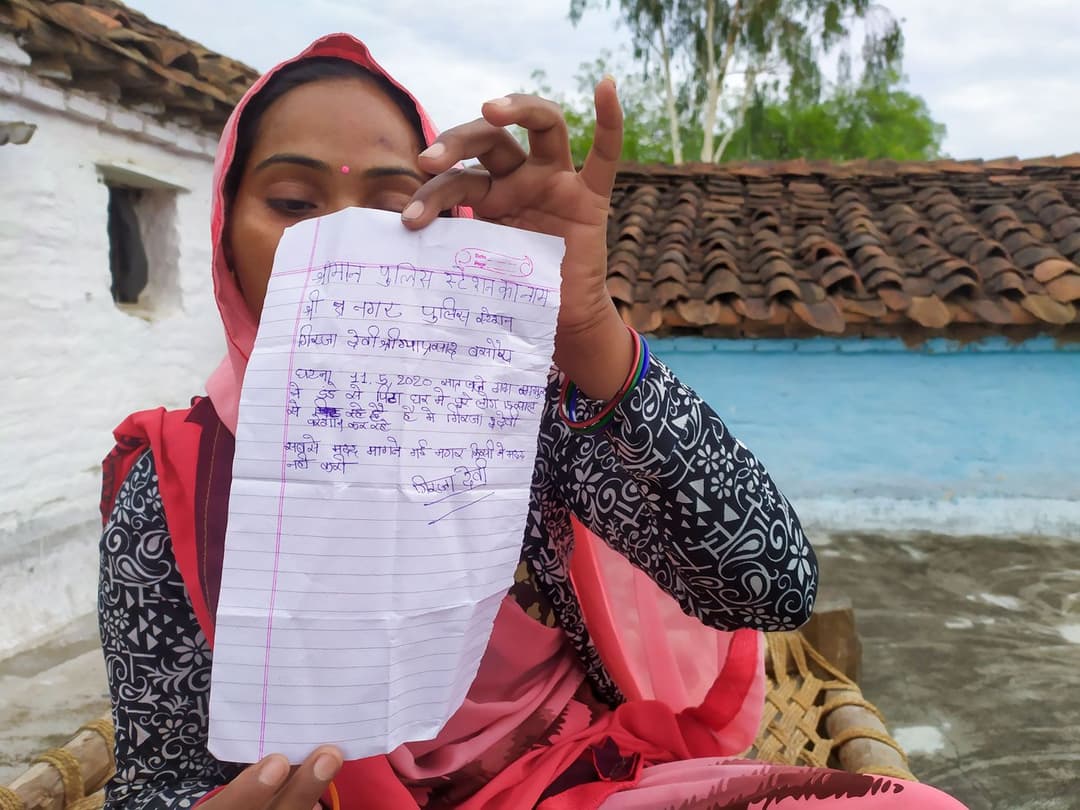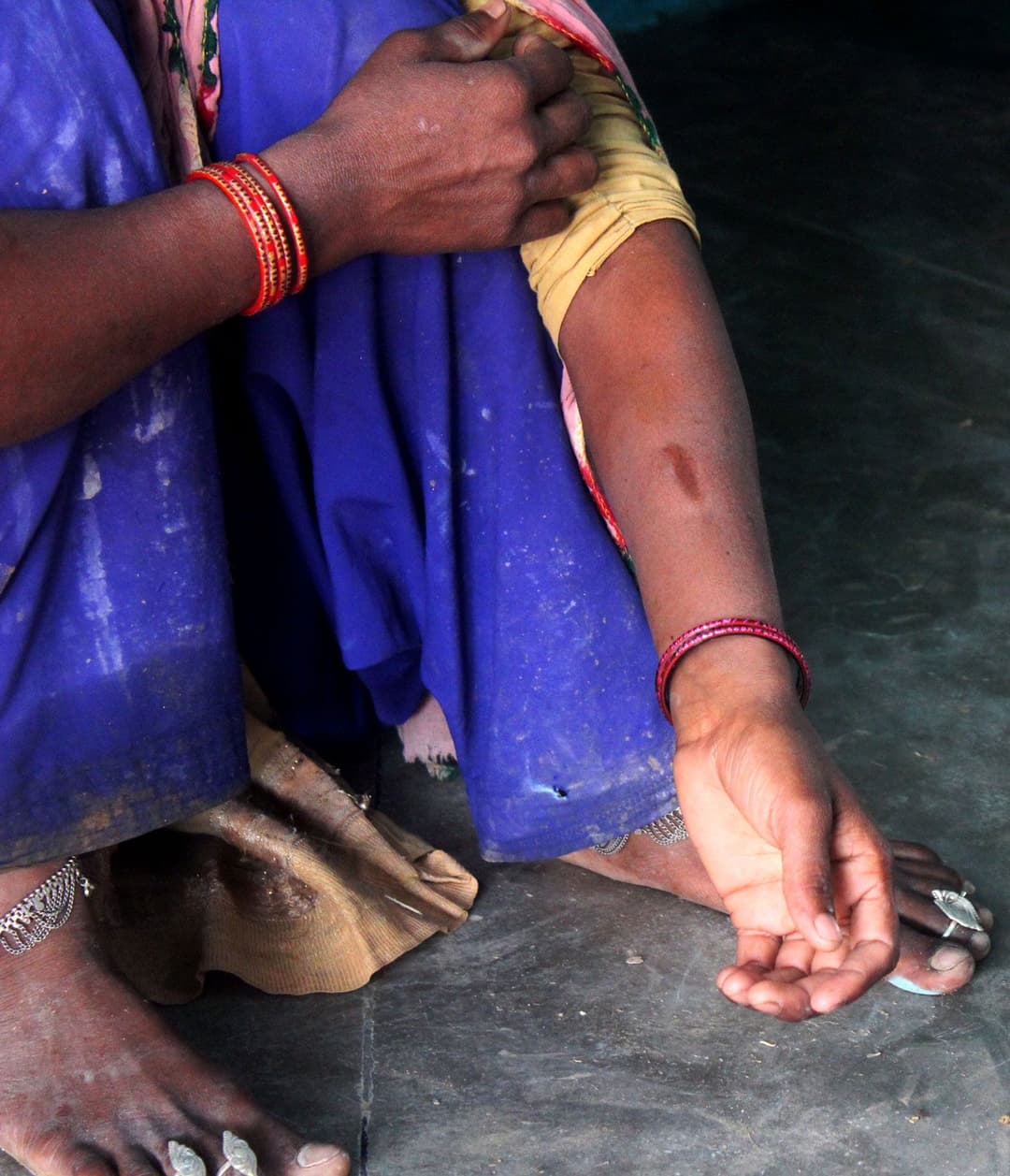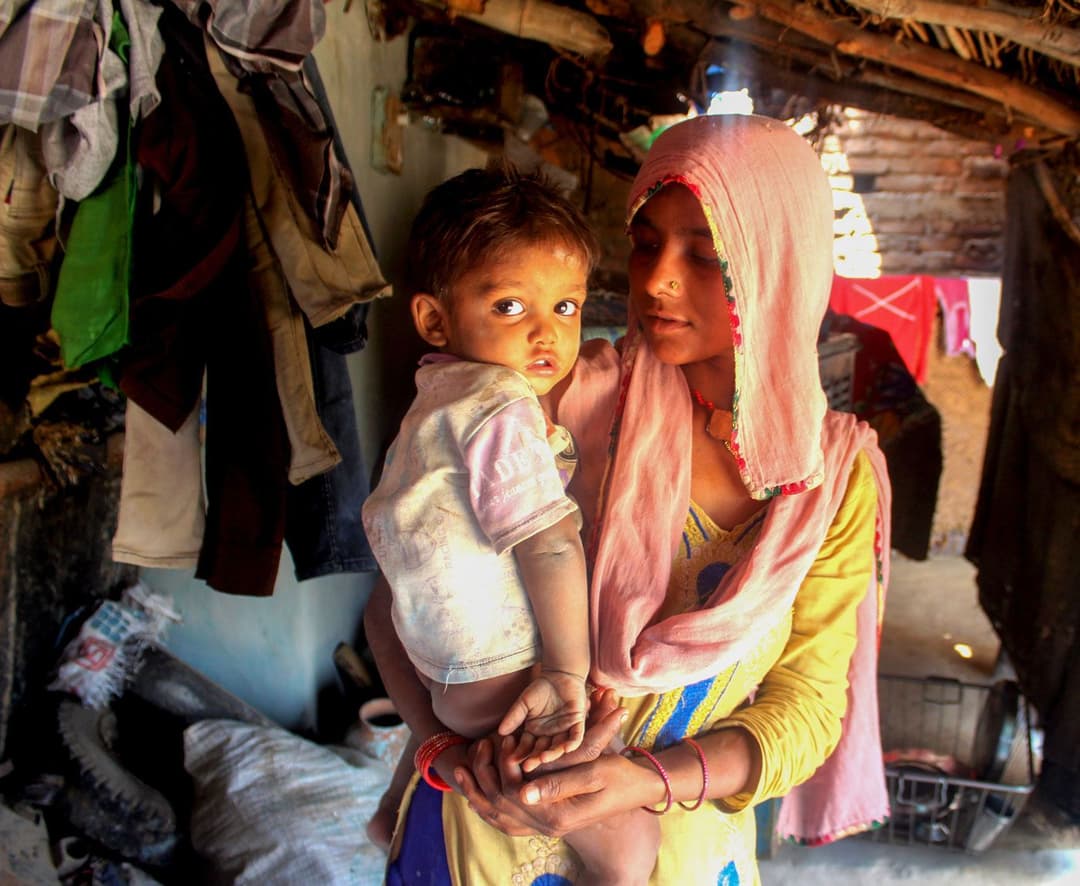

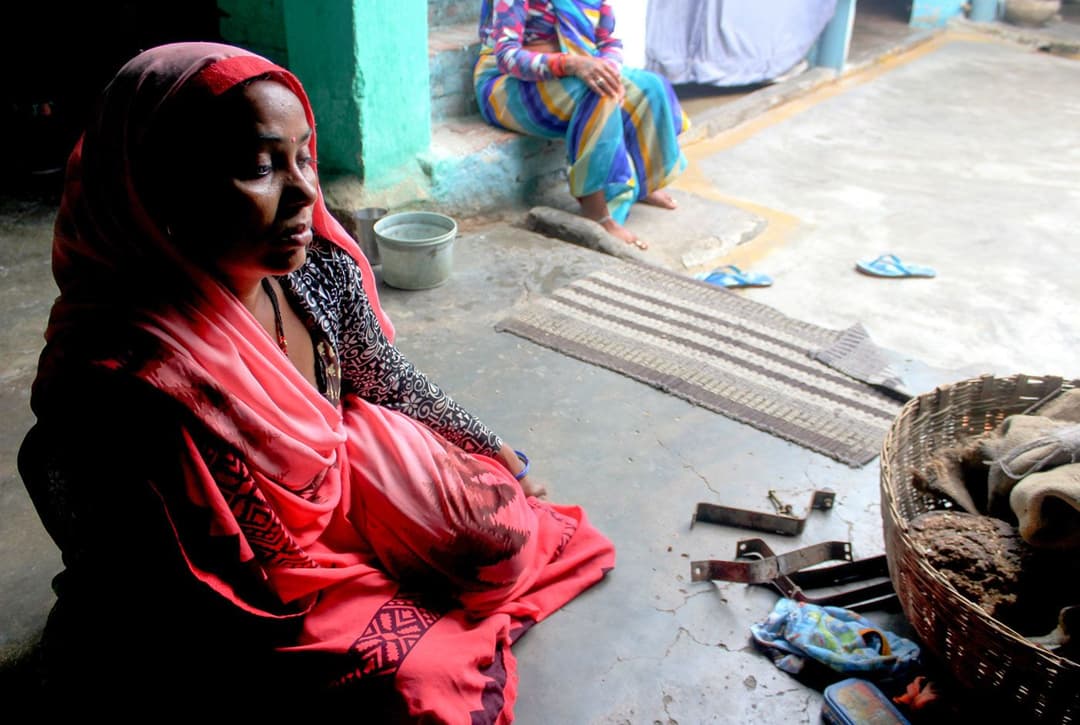
“Didi, please do something or they will kill me anytime soon!” Those were Girija Devi’s first words when I met her. “I have locked myself up in this tiny, dark room since yesterday afternoon so that they don’t hit me,” she sobbed.
Walking through a narrow passage of the house where piled up utensils waited to be washed, I had reached the room where Girija had shut herself away from her in-laws. Outside the room was a kitchen and a small, open area where her husband and children eat their meals.
Girija, 30, married Hemchandra Ahirwar, 34, a mason, 15 years ago. They have three children aged 14, 11 and 6.
The problem began when her in-laws found Girija arguing with them over every unfair demand they would make of her – including that she quit her job. It has grown worse after she took up that job – as an Accredited Social Health Activist (ASHA) in her own village – Basaora in Kabrai block of Uttar Pradesh’s Mahoba district. And now, with her in-laws back in the village during the lockdown, it has become unbearable.
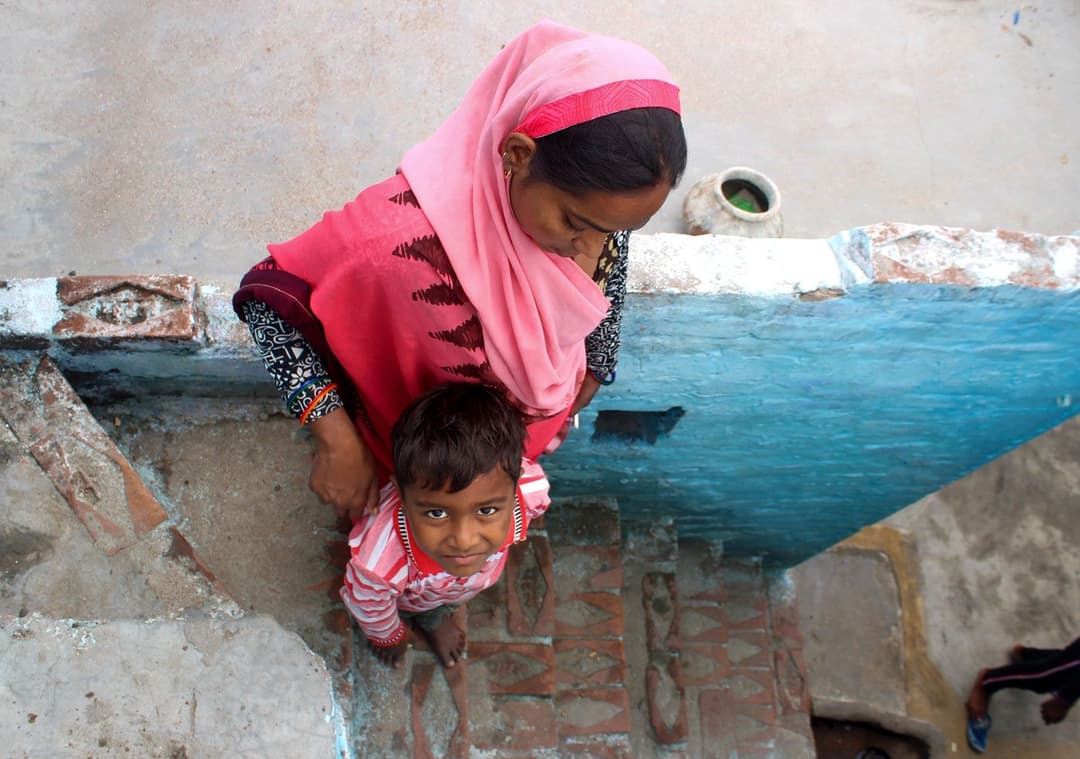
“Things were under control before the lockdown, with both of them [her father-in-law and mother-in-law] in Delhi,” says Girija. They worked there as labourers. “But ever since they’re back, it has become difficult for me to survive. Earlier they would say that I was going to meet with other men whenever I would go to see any pregnant woman in the village or take them to the hospital. Being an ASHA, this is my duty.” Her six-year-old son, Yogesh, followed us as we walked upstairs to the terrace.
Girija has been crying a lot, her eyes and lips appear swollen. She and Hemchandra live in a joint family. Two of his uncles and their families share the same house, though with separate kitchens and portions. However, the entrance and courtyard remain common.