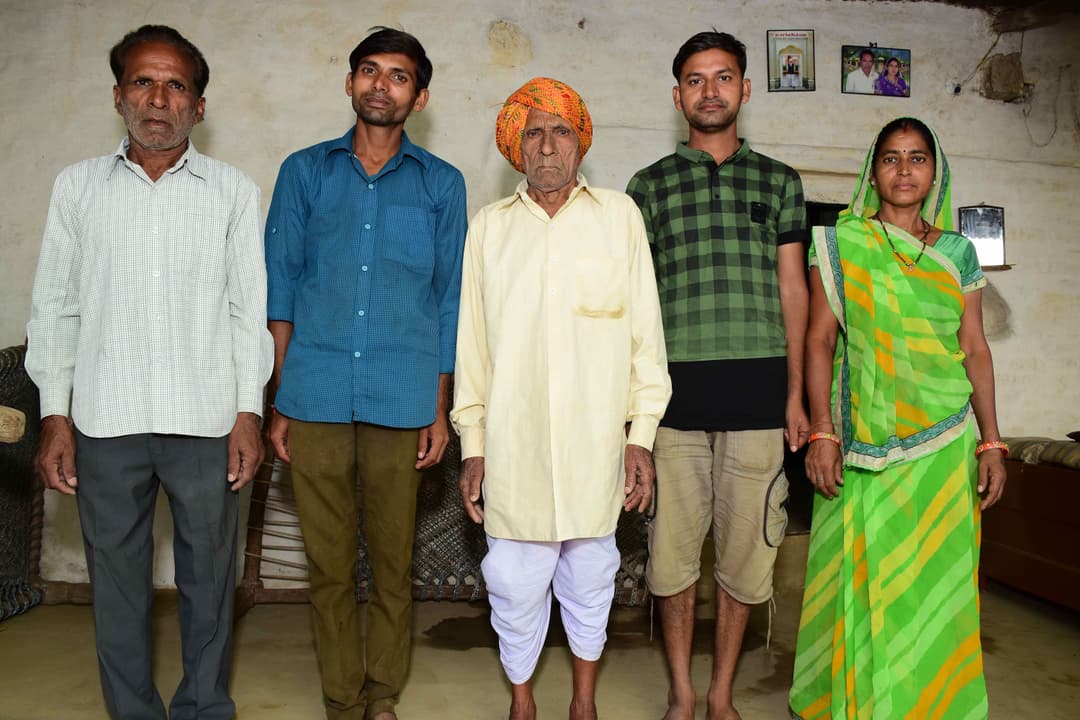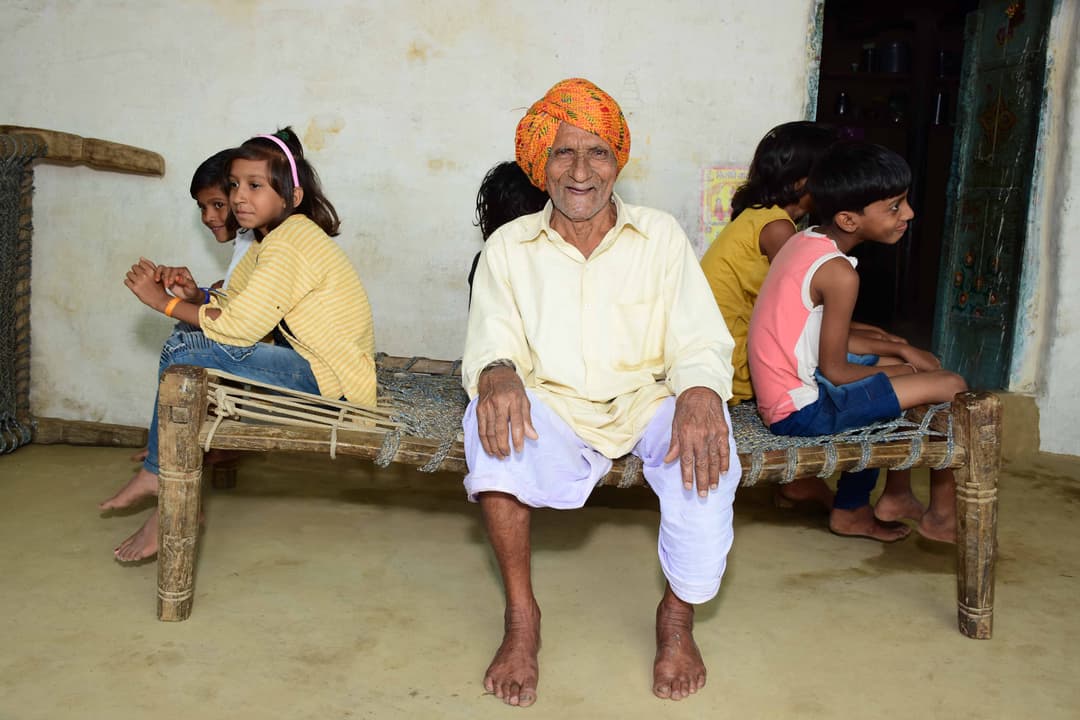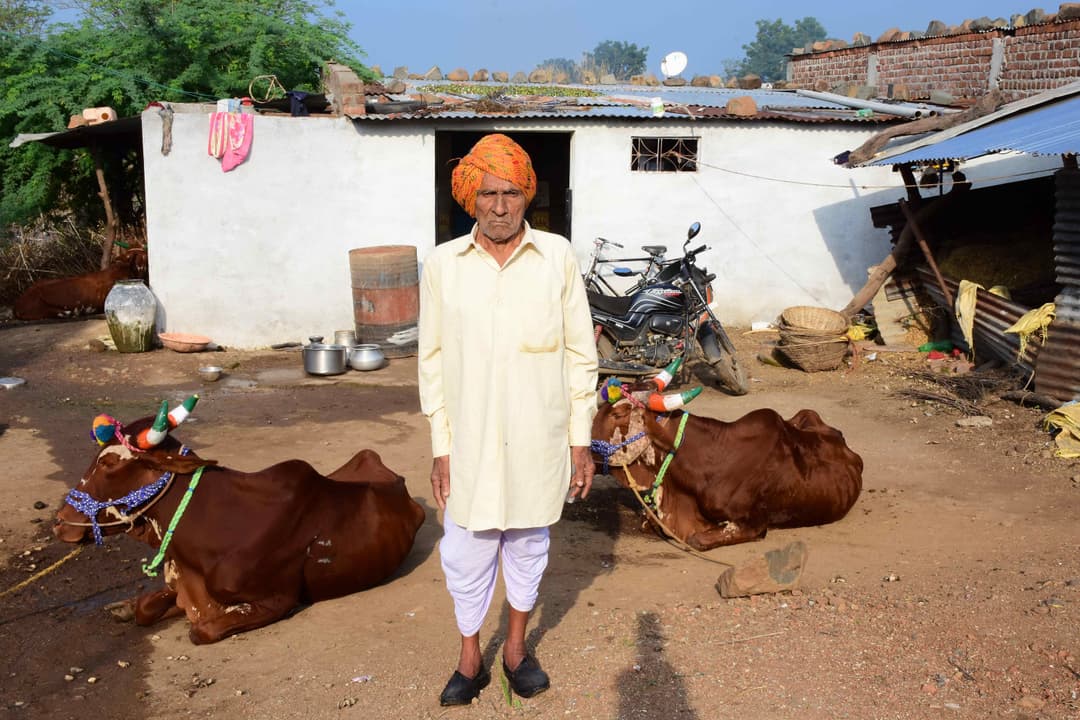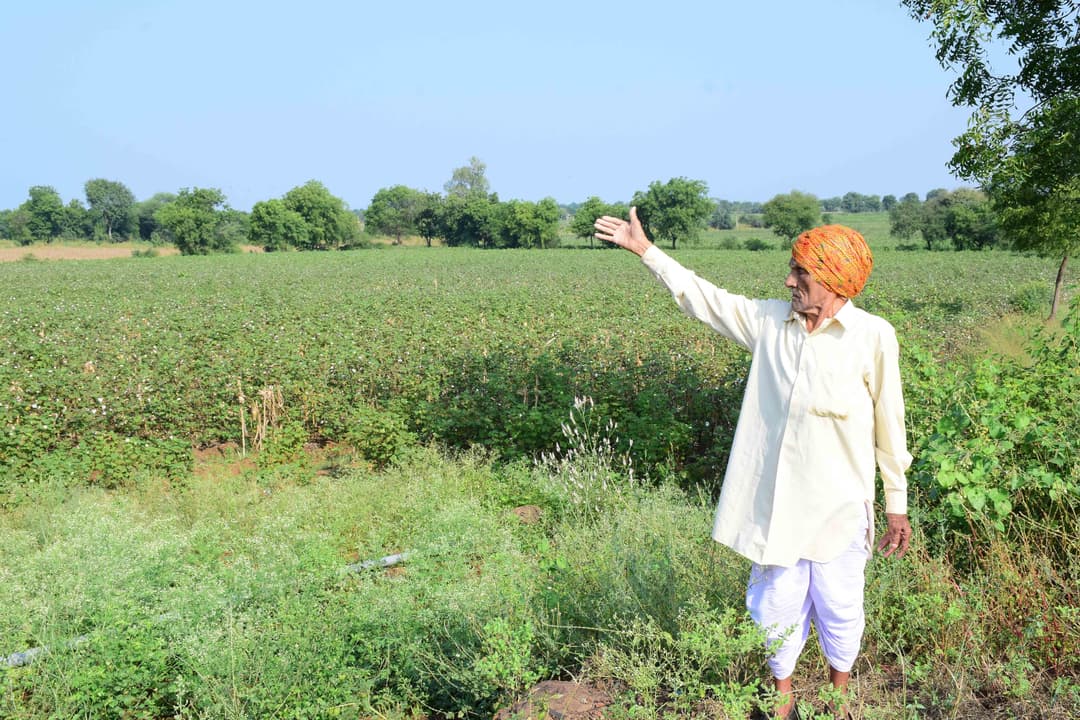

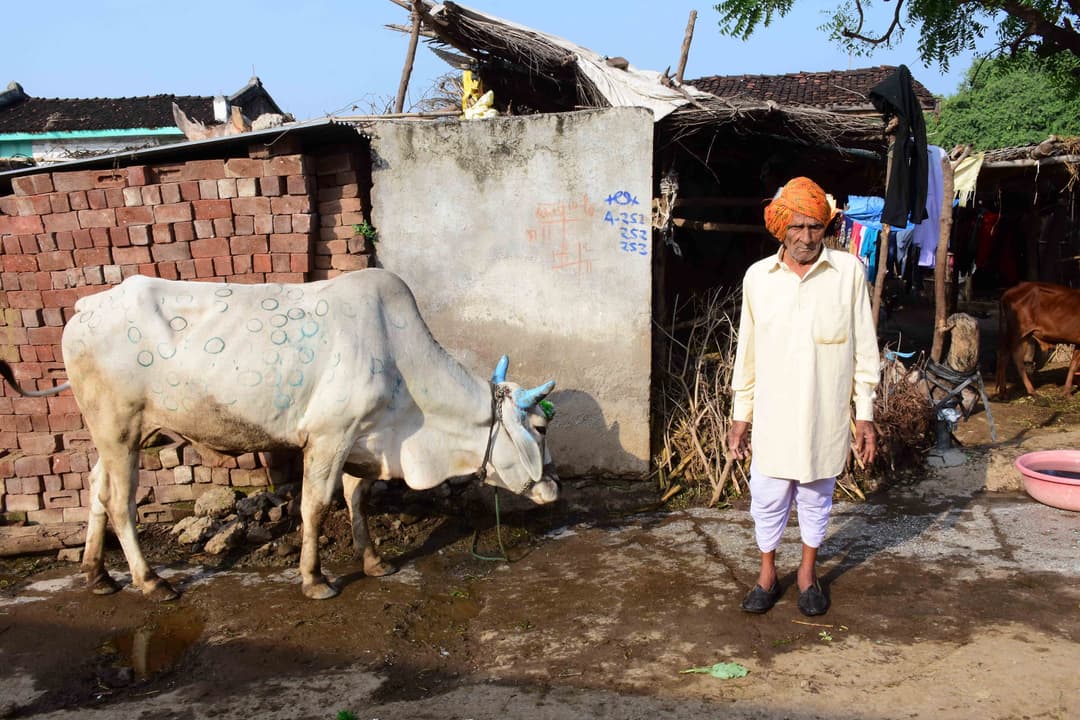
“There weren’t many moneylenders when I was growing up, but now a lot of farmers are taking loans because today they need money for machines, pesticides and fertilisers,” says Sukhlal Suliya, of Badgaon village.
“We used cow dung, which was good for the soil and didn’t cost us any money. But then the government started advertising urea and pesticides by saying it will give you more crops. Now, 40 years later, these are still used by most farmers and they spend so much on fertilisers and pesticides, which are destroying the soil. And then they sell in the markets for very little profit, through middlemen, who buy the produce for far less money than what they sell to customers. So farmers make very little money,” he adds, with sadness.
We spoke to Sukhlalji, an 83-year old farmer, in his village in Anjad taluka of Madhya Pradesh, during our visit to the Adharshila Learning Centre in Sakad village of the state’s Niwali taluka. He was visiting with his son Badri, who is a teacher there. We wanted to learn something about how childhoods have changed in the last half century and more. Sukhlalji spoke in Nimadi, the language of his Bhilala community (a Scheduled Tribe), and Badri helped us translate.
“Growing up, I didn’t have access to buffalo carts or cycles; I went everywhere on foot. I have carried 48 kilos for seven kilometres. Cycles were a luxury back then. In fact, a person approaching the village on a cycle was usually a government official, which frightened us!” Sukhlalji recalls, smiling.