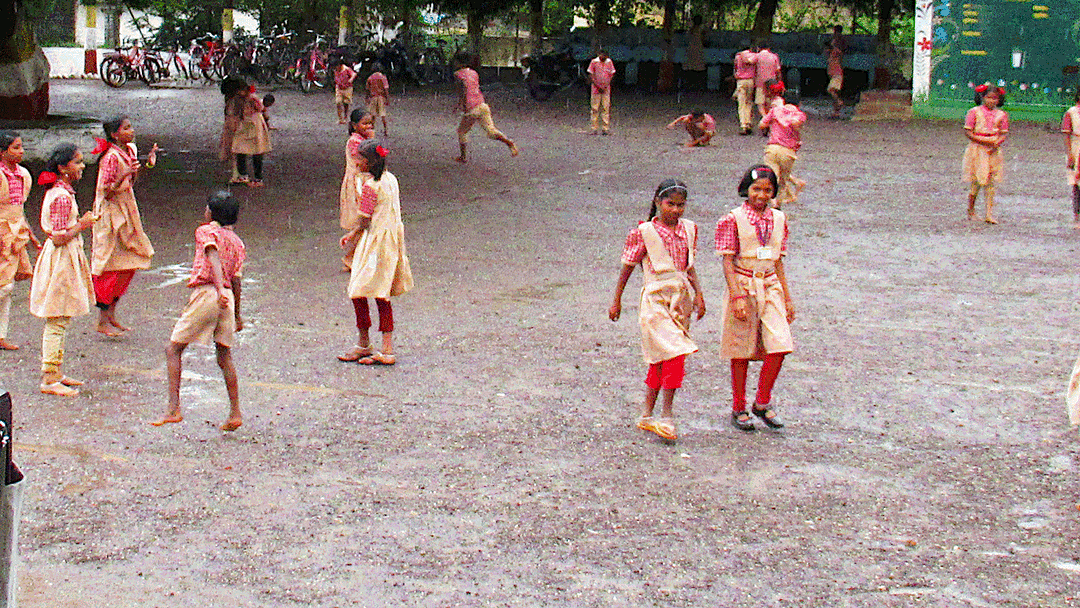


Ram Wakchaure purchases vegetables for 275 students and others every morning from a market near his home – three kilos of potatoes, cauliflower, tomatoes and more. “I know the price of every vegetable by heart. I hang the bags on my motorbike and go to school,” says the teacher at the zilla parishad school in Virgaon village.
In June, Wakchaure, 44, a resident of the Kalasgaon village in Ahmednagar’s Akola taluka was transferred to the school in Virgaon, around 20 kilometres away. He had worked as a teacher in the Kalasgaon primary school for 18 years. Now, his main duty is to ensure the mid-day meal scheme is implemented (under the National Programme of Nutritional Support to Primary Education).
“The principal cannot do everything, so he has delegated responsibilities,” he says, barely looking up from the mid-day meal register he is filling. “A government job gives you security, but I don’t feel like I am a teacher.”
Wakchaure’s extra-curricular duties are not uncommon – teachers at zilla parishad (ZP) schools in Maharashtra are frequently assigned non-academic work. This, they say, leaves them with barely any time to teach.
Sabaji Datir, 42, Wakchaure’s colleague at the Virgaon school, which has classes till the seventh standard, says the tasks in the course of the year total more than 100. On an average, Datir spend 15 hours a week on non-academic work. “These often coincide with school hours [four hours a day],” he says. “We try and work after school as much as we can.” When the two overlap, non-academic tasks are prioritised.