In one of the alleys of Gothi, two women are placing pieces of stone on bigger ones, holding them down with clamps, and hammering them. The stones shatter. Their hands, feet and faces are grey with the dust. They don’t wear any protective gloves or masks. “Sometimes, tiny pieces of stone get in our eyes and we rush to the hospital [in Dharchula, six kilometres away]. Sometimes our fingers are injured. But that is all,” says 65-year-old Batuli Devi. It is afternoon, and she has collected a sack full of stones. She says she will work until the daylight fades.
Crushing stones has become a full-time livelihood activity for the women of Gothi not only because of the increased demand for the stones, but also because of the falling demand for their traditional handwoven products. Most of the women here are from the Bhotiya tribe, known for their excellent weaving skills. They can weave anything, from mats to blankets, sweaters to socks, all from wool fetched from herds of sheep in the region. Weaving is what the Bhotiya women most enjoy. This was how they used to earn a living. Their craft commanded respect. But that was in another time, recalls Batuli Devi.
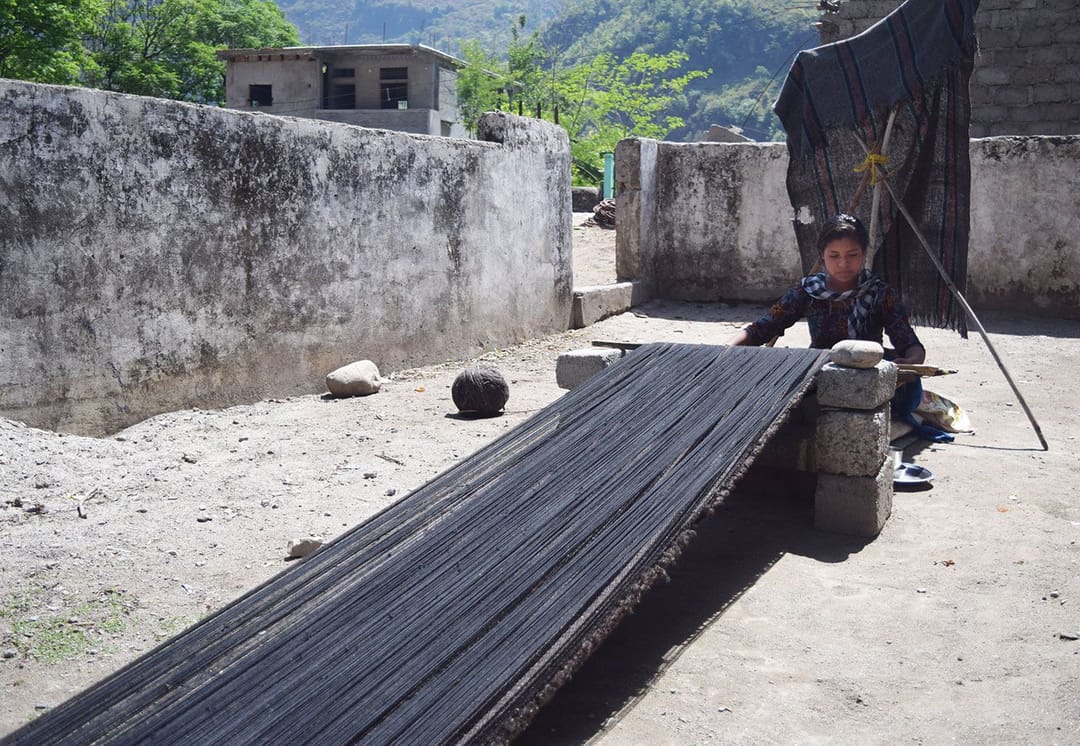
Now the wooden looms – many were washed away or damaged in the flood and had to be remade – are gathering dust in the corners of many homes. Some of the looms that survived the flood are a hundred years old, handed down as precious gifts from mothers to daughters and daughters-in-law. The weaving skills too have been passed down the generations. “If nothing else, a Bhotiya girl will know how to weave and make wine [from wheat],” says Kismati Devi, 52.