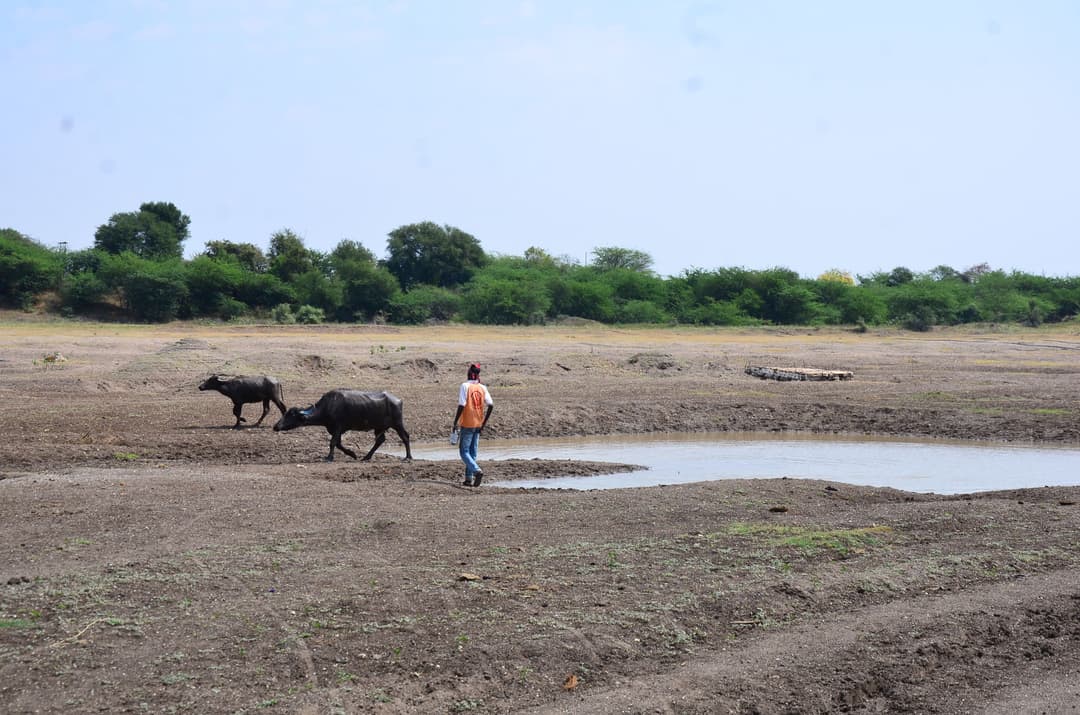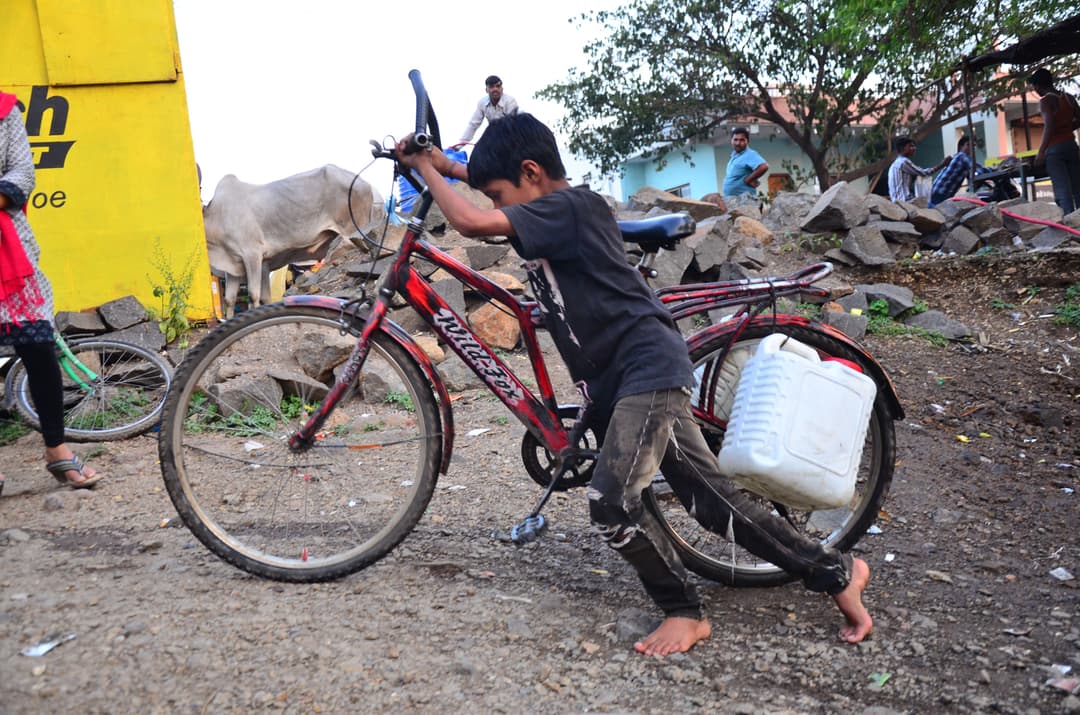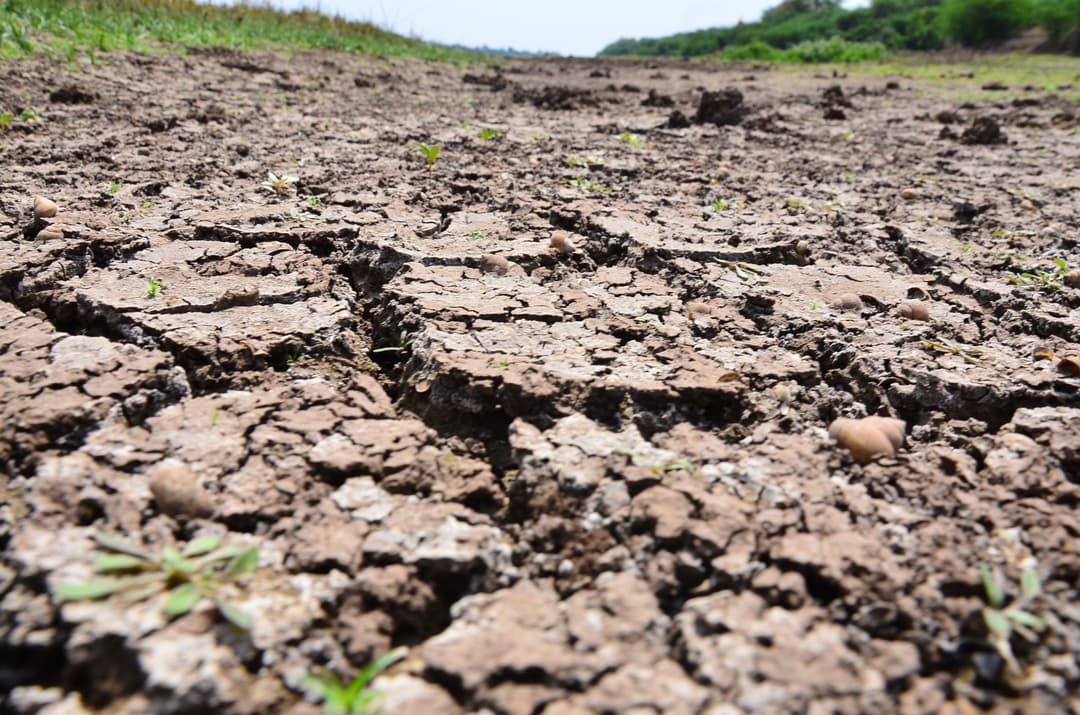

BEED & JALNA: In pitch darkness at 3 a.m., the village of Katchincholi empties out onto the bone-dry bed of the Godavari. Armed with as many pots as they can carry , the women start digging the gravel with their hands.Once a muddy pool of water appears, they scoop it into their pots. Then they strain the sludge and stones. This is the water the village drinks. A single pot takes up to two hours to fill. And each home needs at least three pots of water daily . "I am here for at least six hours every day . My wrist-bones have started jutting out," says Gangubai Shinde, who is in her 60s. As hundreds queue up at the waterholes, bitter fights break out.
Katchincholi's residents cannot bathe more than once a week. "We wipe ourselves with a wet cloth. We wipe our plates and hands after a meal instead of washing them," says former sarpanch Limbaji Khote. None of the toilets in the village has water supply .
The water crisis is building in this village in Beed's Georai taluka. In the arid region of Marathwada, which received just half its regular rainfall, water storage in the dams is down to 15%. Across the region, wells and borewells are drying up. Officials say the drought in Maharashtra -- among the most widespread in recent years --has affected crops more than drinking water. Yet Marathwada is already in the grip of a crisis which is set to intensify in the summer months.Last October, the region received water from 22 tankers. Now, that has swelled to 640.
Distress sales of cattle
Villagers have begun selling their cattle at half-price in Beed's Georai taluka, because they are running out of water and fodder. In the last month, Datta Parhad sold four of his animals. He sold a pair of bullocks for Rs 20,000 even though they are worth twice the sum. And he ended up giving away two cows worth Rs 30,000 free of cost to a relative.
"I had grown up with these animals. I could not eat for two days. But I have barely enough water for my family, how could I keep my cattle?" he said.