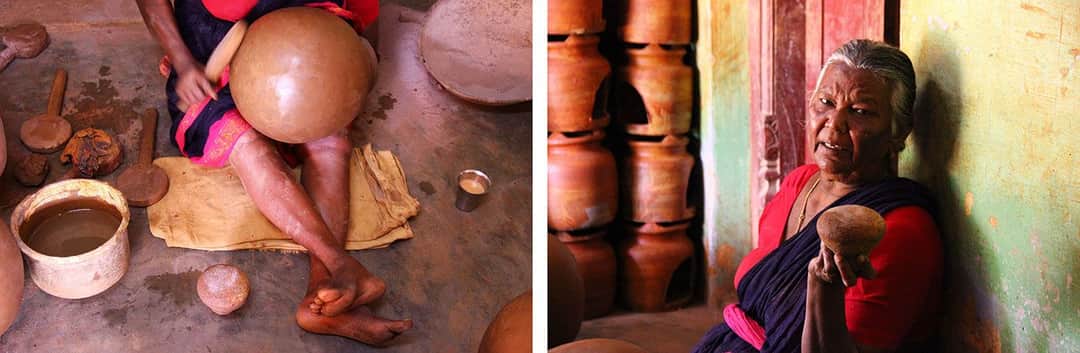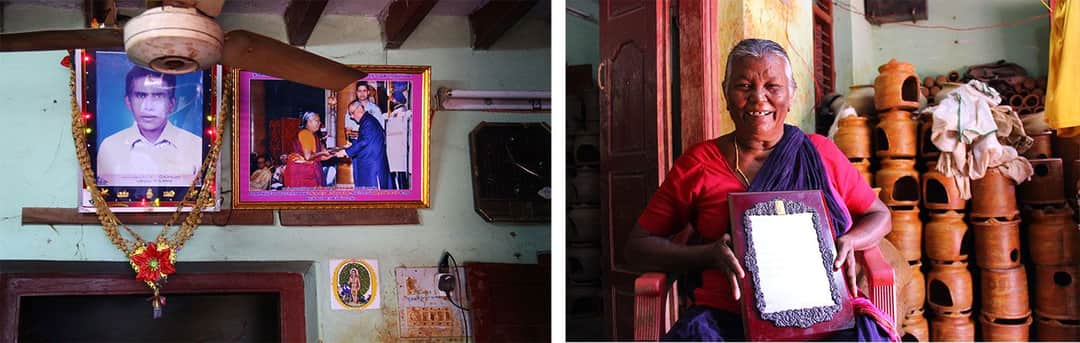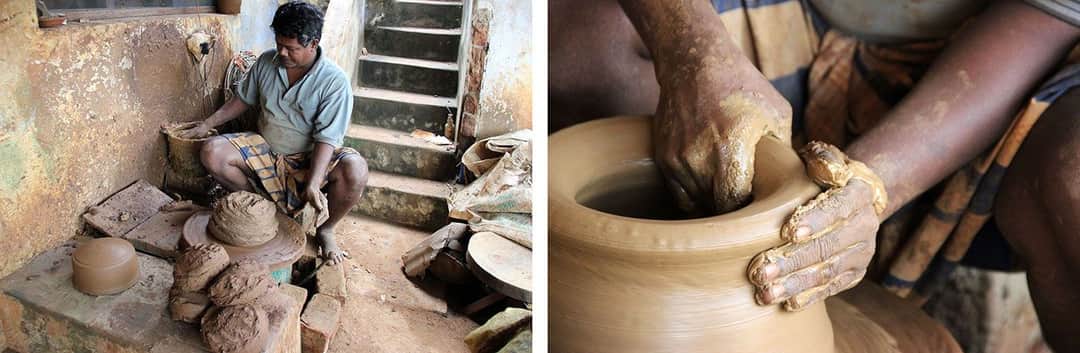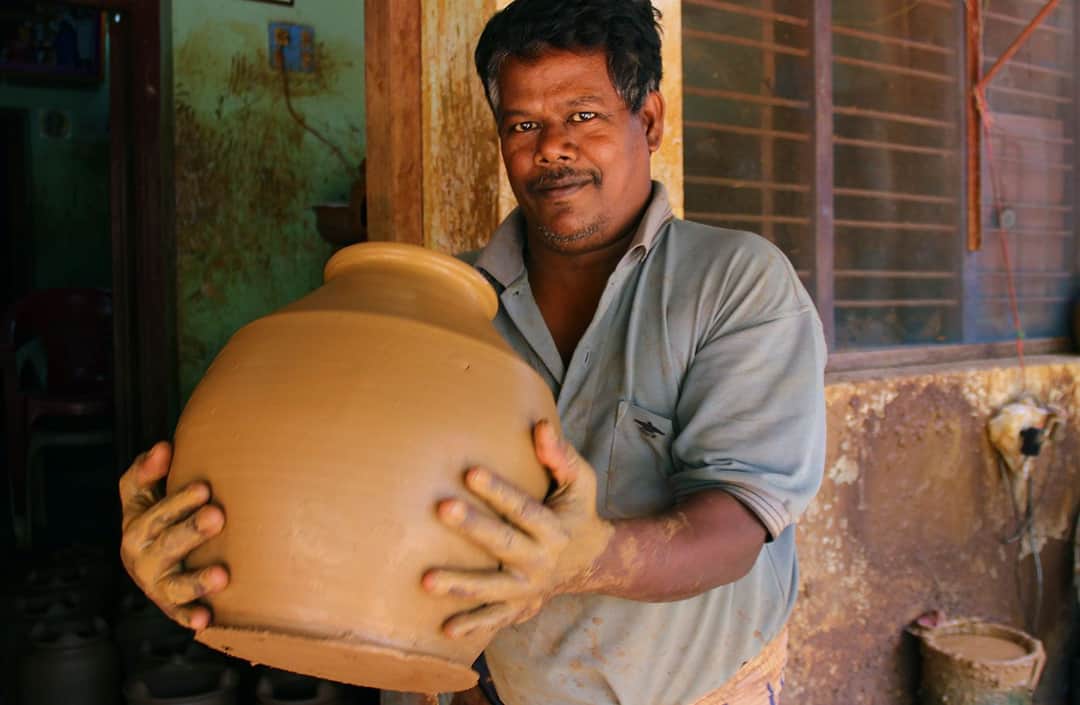


“You have to beat it 3,000 times,” says Meenakshi. And sets about doing just that. 'It' is an unfired clay pot that looks like any others used in cooking. This one, though, she will shape into an earthenware percussion instrument. Placing it on her lap, she starts slapping the sides with a big wooden spatula. When fully finished, the pot will be a ghatam, a high-quality musical instrument commonly used in south Indian Carnatic concerts. Meenakshi Kesavan is an expert ghatam maker. The 63-year-old and her family could be the only ones producing the unique type she specialises in – the manamadurai.
An hour’s drive from Madurai, Tamil Nadu, Meenakshi’s hometown Manamadurai is famous for its ghatams. At age 15, she says, “I got married into a family where at least four generations have made this instrument.” She learnt the craft from her husband and father-in-law. “It takes six years to master,” says her son Ramesh. And that’s on the fast track. “It takes longer if you’re not a traditional potter.”
“The tricky part is tempering the ghatam to improve the tone,” Meenakshi explains, whacking the sides with her right hand. With her left, she rotates a round stone inside the pot. “That’s to see the wall does not collapse. And to make it smooth,” she says, pausing for a brief rest. After four decades of moulding mud, her hands hurt all the time. She explains how the pain shoots down from her exhausted shoulders to her fingertips. But a minute later, picks up the wood and stone and adjusts the pot on her lap. The beating resumes.