
“It’s 350 rupees. Don’t reduce the price, we are already not earning anything due to corona,” said Prakash Kokre, while a buyer tried to bargain. He picked up a white male lamb and put it on a weighing scale placed on the ground. “Teen kilo [three kilos],” he announced to the two customers who insisted on Rs. 200 per kilogram. “That’s too low, but I need the money,” said Prakash, as he gave the animal to its new owners.
“Let it go now, what can we do?” he told me, when I met his family that afternoon in the last week of June in an open field in Desaipada, a hamlet in Vada taluka. It was three months into the Covid-19 lockdown.
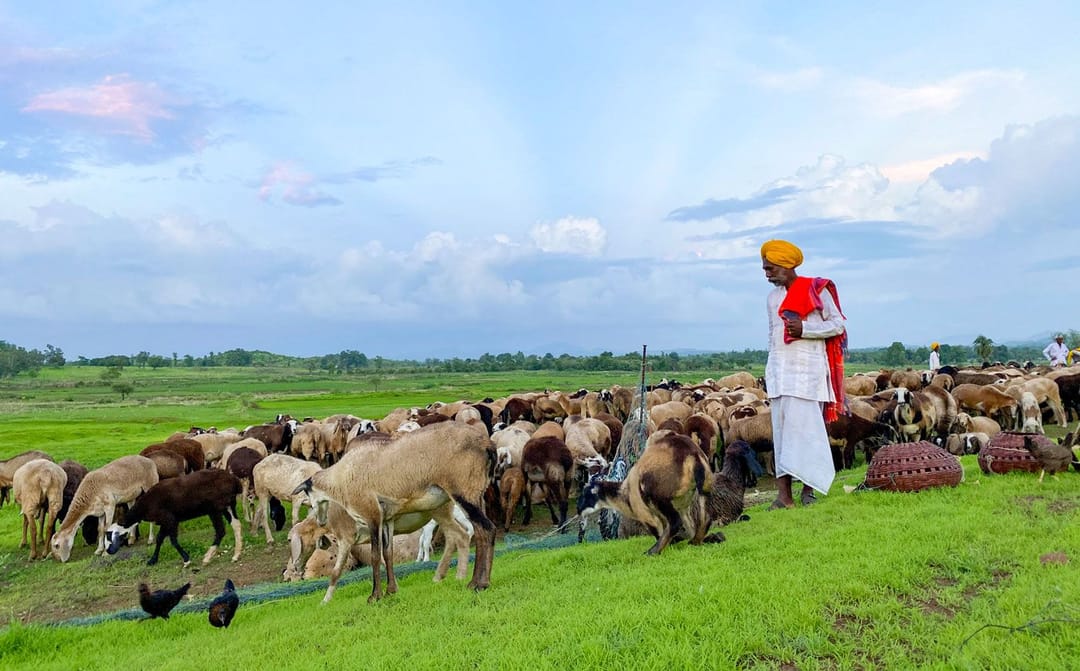
Prakash’s family, along with six other families, all nomadic pastoralists from the Dhangar community, had halted in that field in Palghar district of Maharashtra for two days. A few women were setting up nylon netting to keep the younger animals from straying. Sacks full of grains, aluminum pots, plastic buckets and other items were strewn around the field. Some children were playing with lambs.
Selling lambs, sheep and goats – like the one that Prakash had just sent off at a bargain price – is the main source of sustenance for this group of Dhangars. The seven families own around 500 animals, including 20 horses. They rear the sheep and sell them for cash or grains. The goats are usually kept for their milk for the families’ own use, and occasionally sold to meat traders. At times, their animals graze on farmlands, and in exchange for their manure the landowner gives the families food, water and a place to stay for a few days.
“We only sell the mendha [male sheep] and keep the female sheep,” said 55-year-old Prakash, the head of this group of pastoralists. “Farmers buy sheep from us because they are useful in grazing their lands. Their manure makes the soil fertile.”


