

Gudapuri Balaraju removes the rear seat in his autorickshaw and loads the vehicle with around 700 kilos of watermelons. He has just purchased them from a farmer in Vellidandupadu hamlet of Koppole village, around 30 kilometres from his own village, Vempahad.
He then drives around to various villages in Nidamanur mandal in Nalgonda district, and manages to sell a few melons, weighing between 1 and 3 kilos, for Rs. 10 each. It’s an uphill sales day for Balaraju, who also ferries passengers in his autorickshaw when he is not selling fruit. The villagers are reluctant to let him in. “Some are calling it ‘corona kaya’ [melon],” says 28-year-old Balaraju, “They say ‘Do not come here. You are bringing the virus with the melon.”
After March 23 – when the Covid-19 lockdown started in Telangana – he has made barely Rs. 600 a day from selling the melons. Before the lockdown, he was earning nearly Rs. 1,500 a day for some weeks after the harvest. Watermelon is usually planted here by early January and harvested two months later.
With the falling sales and people’s comments, Balaraju says he does not wish to go out after he has managed to sell the batch of melons he bought on April 1. Like him, many farmers, labourers and traders involved in producing and marketing watermelons have taken a hit due to the Covid-19 crisis.
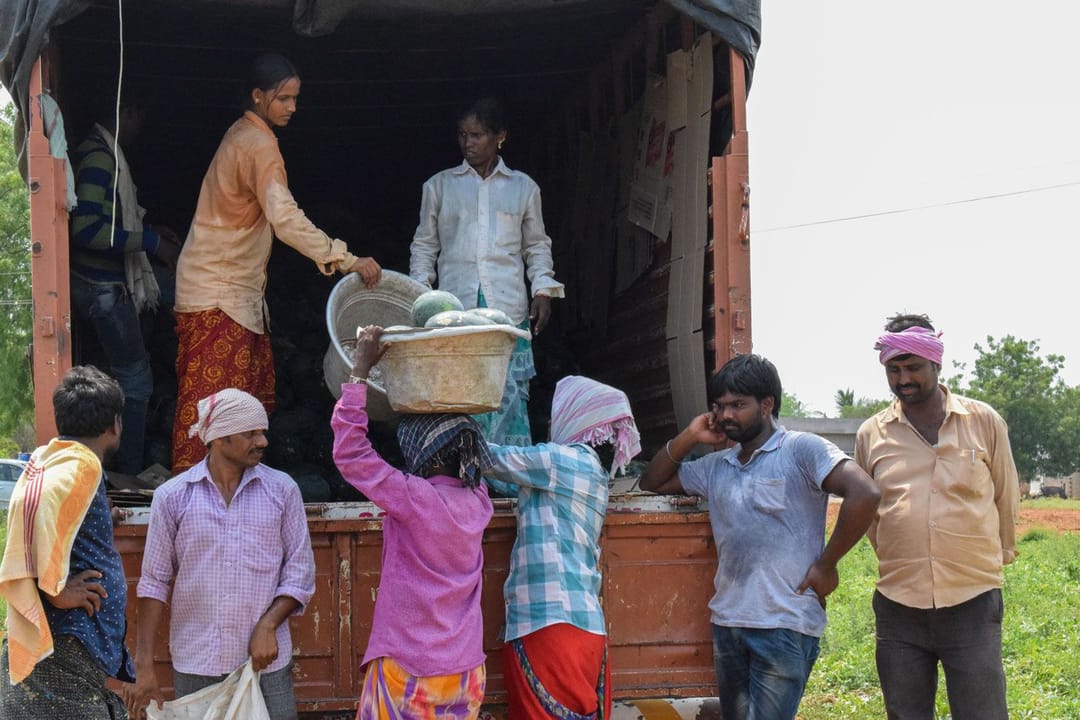
The labourers, most of them women, who pluck the fruits and load them onto truck, depend on daily wages. For loading a 10-ton truck, a group of 7-8 women earns Rs. 4,000, which is equally distributed among them. On most days, a group manages to load two trucks, sometimes three. However, as the number of trucks transporting fruits to the cities of Telangana has reduced after the lockdown, their wages too have shrunk.


