
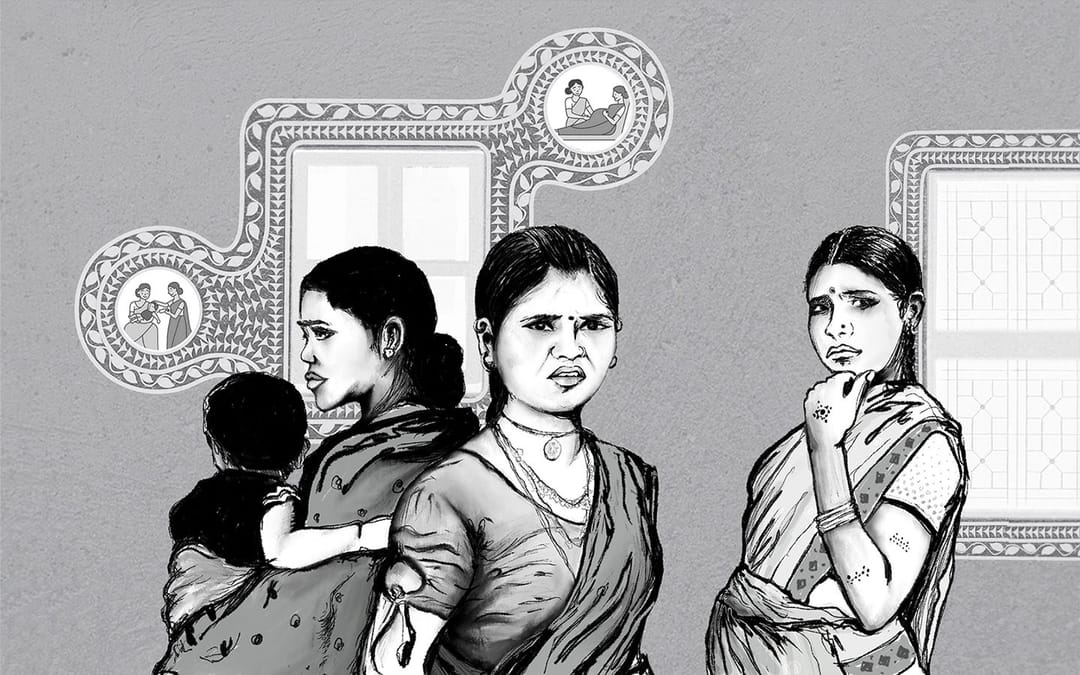
When Kamala got pregnant for the fourth time and decided not to keep her baby, her first stop was not the Benoor primary health centre, 30 kilometres from her hamlet. She had only ever travelled as far as the weekly haat, a short walk from her home, and says, “I didn’t even know about this place. My husband found out later.”
Kamala, who is in her early 30s, and her husband Ravi (names changed), 35, both from the Gond Adivasi community, first approached a local 'doctor' not far from their hamlet. "A friend told us about him,” she says. Kamala grows vegetables on a patch near her home which she sells at the haat (market), while Ravi is a labourer at the local mandi, and cultivates wheat and corn on three acres along with his two brothers. The clinic she is referring to is easy to spot from the highway. It calls itself a ‘hospital’, and while there is no nameplate with ‘doctor’ at the entrance, the flex panels draping the walls of the compound carry that title before his name.
The 'doctor' handed her five pills to be taken over three days, Kamala says, charged her Rs. 500, and summoned the next patient. No information was provided about the pills, the likely reactions, and most important, when and how she could expect to abort.
A few hours after taking the medicine, Kamala began to bleed. “I waited a few days but it didn’t stop, so we went back to the doctor who had given the medicines. He told us to go to the PHC and get a safai.” That refers to a ‘cleaning’, a vacuum aspiration of the uterus.
Seated on a bench outside the Benoor primary health centre (PHC) in the mild winter sun, Kamala is waiting to be called in for the medical termination of pregnancy (MTP) procedure, which will take around 30 minutes to perform, but requires her to rest for three to four hours before and after. The mandatory blood and urine tests were completed the previous day.
The PHC, the biggest in Narayanpur district of Chhattisgarh, was refurbished in late 2019. It has special maternity rooms with bright paintings of beaming mothers and healthy children, a 10-bed ward, three-bed labour room, autoclave machine, a residential facility for full-term women awaiting delivery, and even a kitchen garden. It paints a promising picture of public health services in this predominantly Adivasi part of Bastar.


