
Rupeswar Boro is excitedly telling us stories about the hoolock gibbon, imitating their movements. He tries to echo the calls of the primates, and gesticulates to show us how they move from one tree to another.
We met Boro in the Loharghat Range Office; he works as a driver with the forest office. He admits to never having seen a gibbon, though. “We have heard the whoops of the giants several times from my home. But they never come close to our village. We hear their calls from the distant hills,” he says. His village, Muduki, in Kamrup district of Assam, is around 35 kilometres from the Rani forest range. His imitations of the ape are drawn from watching reports about them on Assamese television channels.
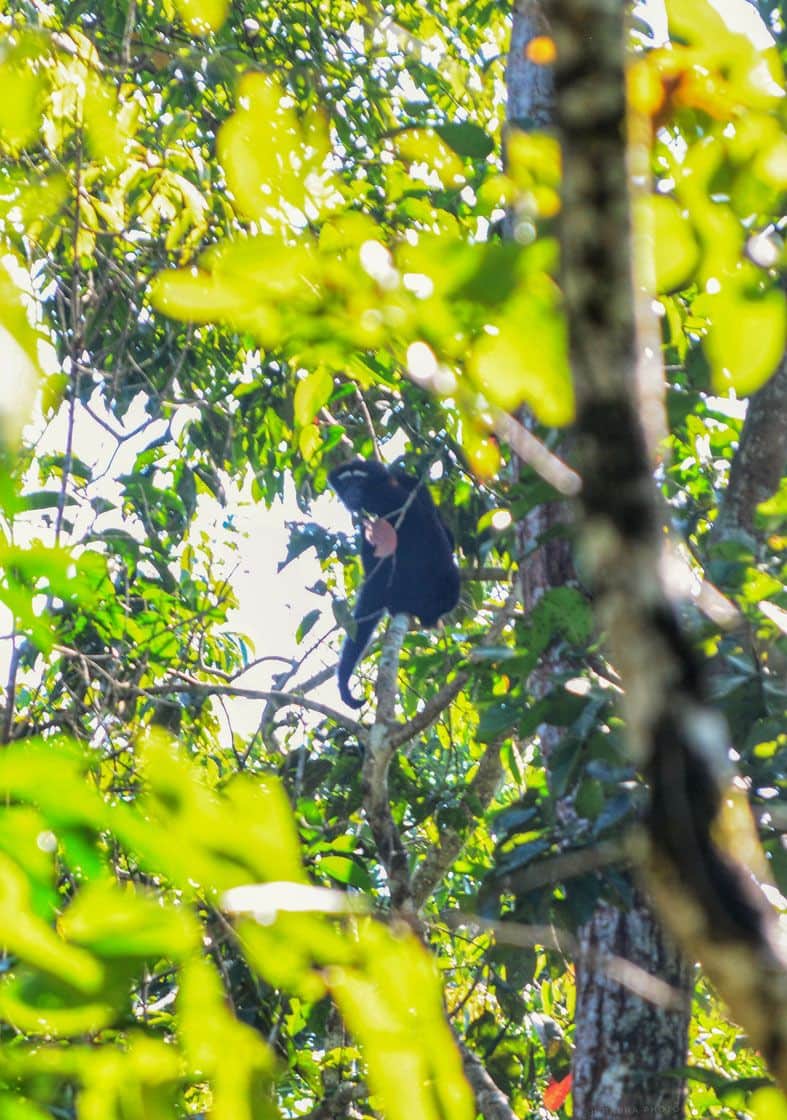
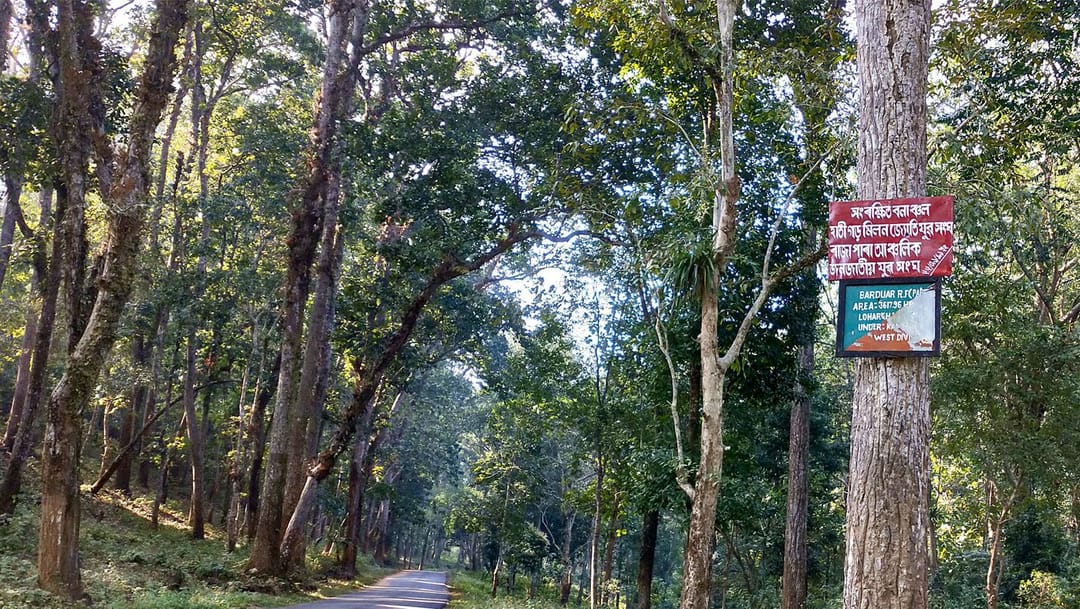
However, on December 8 last year, members of the Goalpara Photographic Society, who were out on a trek in the Barduar Reserve Forest (contiguous with the Rani range), spotted a pair of the western hoolock gibbon (Hoolock hoolock). The bon manuh or ‘wild man’ – as this gibbon is referred to locally – is a rare sight in the Assam-Meghalaya border area.
This species the gibbon, which inhabits the forest tracts of the north-east states in India, as well as eastern Bangladesh and north-west Myanmar, is listed on the International Union for Conservation of Nature’s (IUCN) Red List of Threatened Species. The eastern hoolock gibbon (Hoolock leuconedys) inhabits pockets of Arunachal Pradesh and Assam, and southern China and north-east Myanmar; this specie is listed as ‘vulnerable’ in the IUCN list.
“With long and slender arms, hoolock gibbons are swift creatures, barely needing to step on the ground,” notes the World Wide Fund for Nature-India. “They swing from tree to tree in a mode of locomotion known as brachiation, and can brachiate at speeds upto 55 km/hr, covering upto six meters in just one swing!”