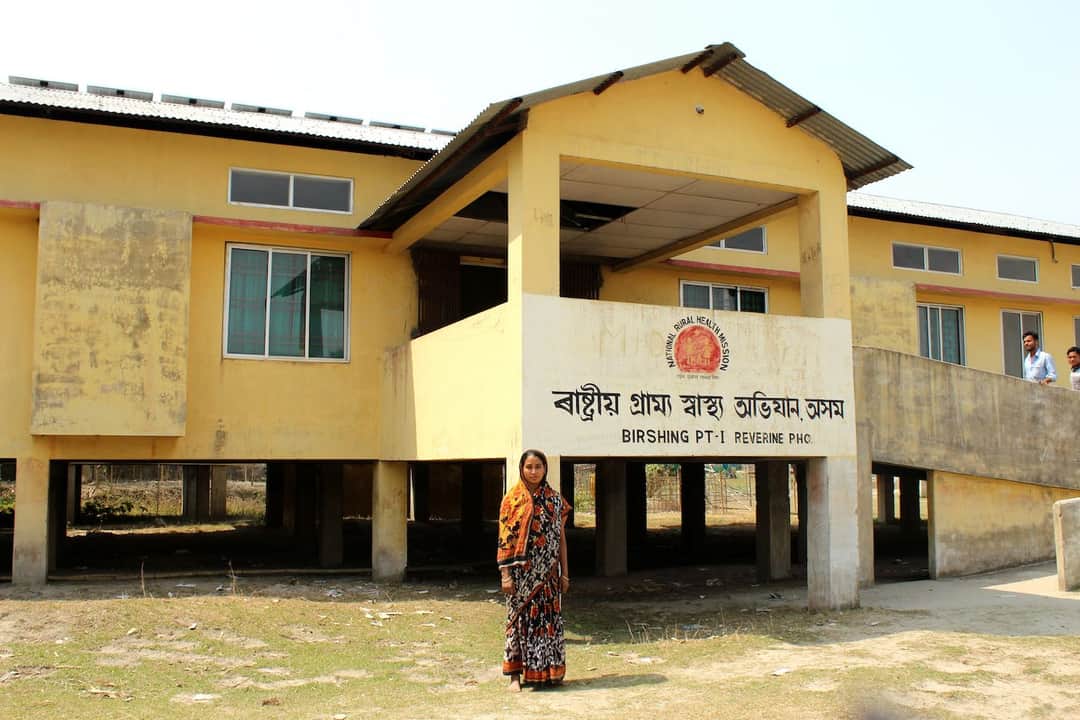
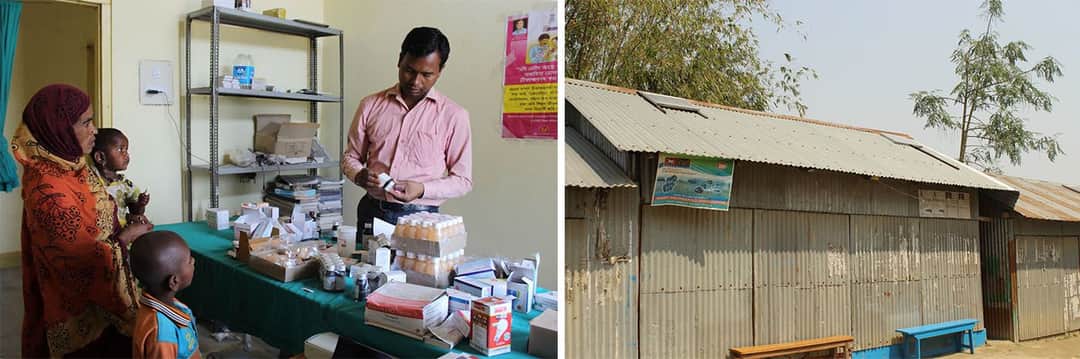
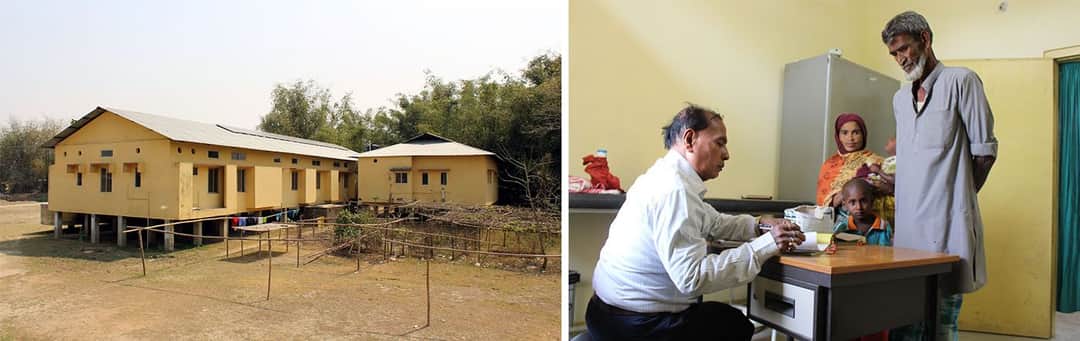
Shahida and a few other patients are chatting as they wait at the PHC. The conversation centres around the solar panels installed in January 2017 on the tin roof of the 18-room health centre. The 20 panels and 16 batteries, installed by the Assam Energy Development Agency, can generate 5 kilowatts of electricity.
Solar energy has transformed the quality of healthcare available to the char residents, after decades of darkness. “This PHC now has electricity and running water," says Shahida, pointing to the solar panels. "Now pregnant women can come here for check-ups and to give birth to their babies.”
Shahida knows the importance of institutional deliveries in a geographically isolated area like Birsing. She says, “I delivered [two children at home] with the help of a midwife and neighbours. I was worried both times, I was uncertain of their expertise. But I had no option, and they assured me that everything will be alright…”
Before the PHC got solar energy, only pregnant women facing medical emergencies were rushed to the government or private hospitals in Dhubri town, across the river. Renting a boat can be expensive – costs range from Rs. 2,000 to Rs. 3,000 – at night, when the regular daytime boat services stop; added to this are the hospital expenses.
Although the PHC on Birsing closes in the afternoon and thereafter, for any emergency, people still have to rush to Dhubri, the arrival of solar electricity has given the health centre a new life. “The solar plates were installed in January 2017, and from February to March we have had 18 deliveries," says Dr. Jawaharlal Sarkar. He heads at PHC, after retiring as a sub-divisional medical officer (epidemics) in Fakirganj in 2014. "We have 10 ASHA workers [Accredited Social Health Activists] on the char, and all of them work to ensure that pregnant women come for institutional deliveries.”