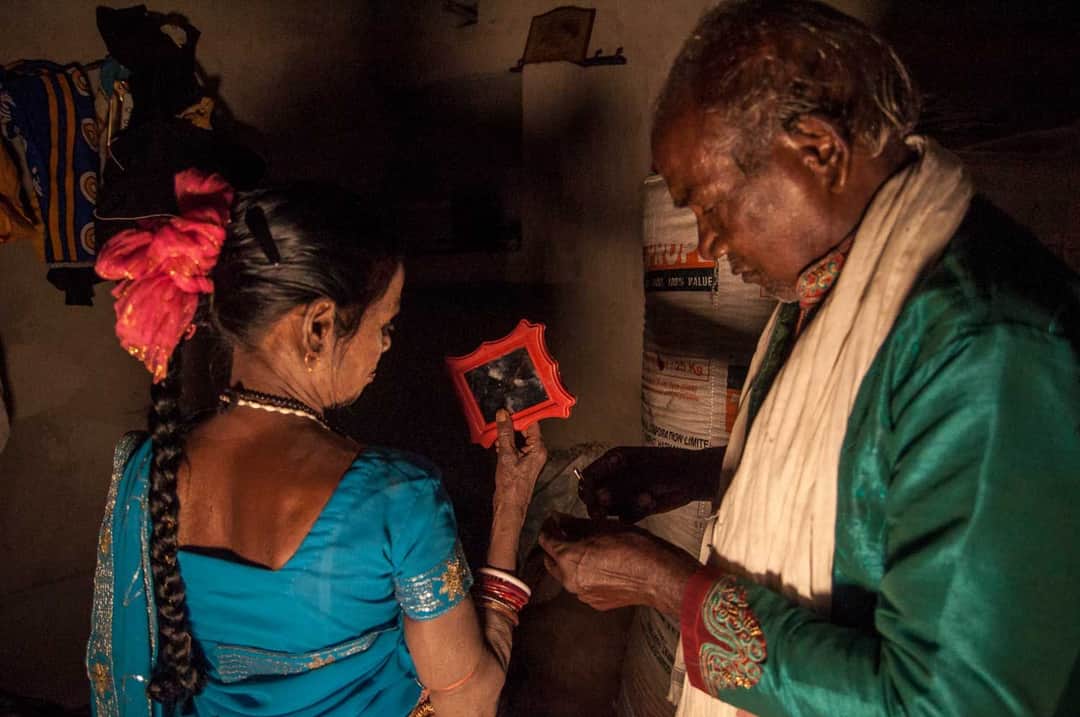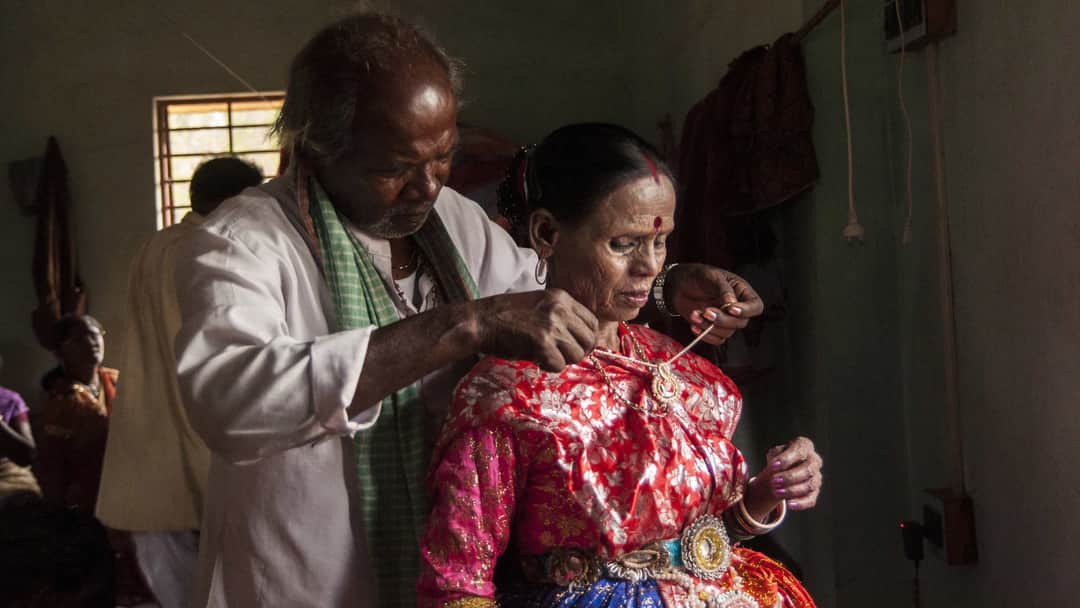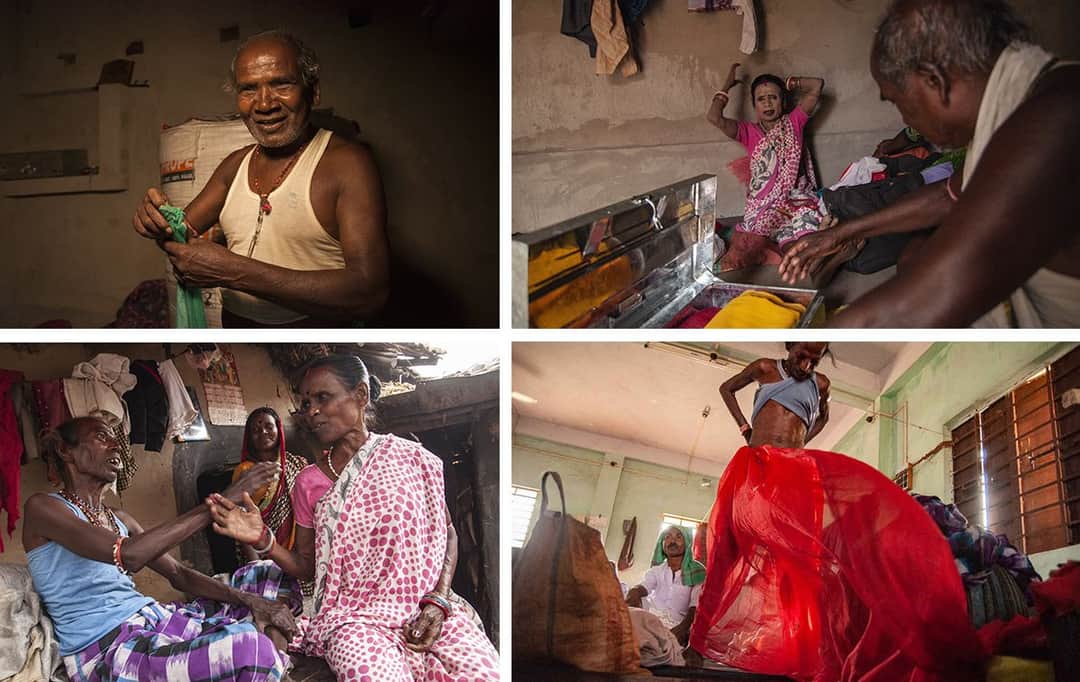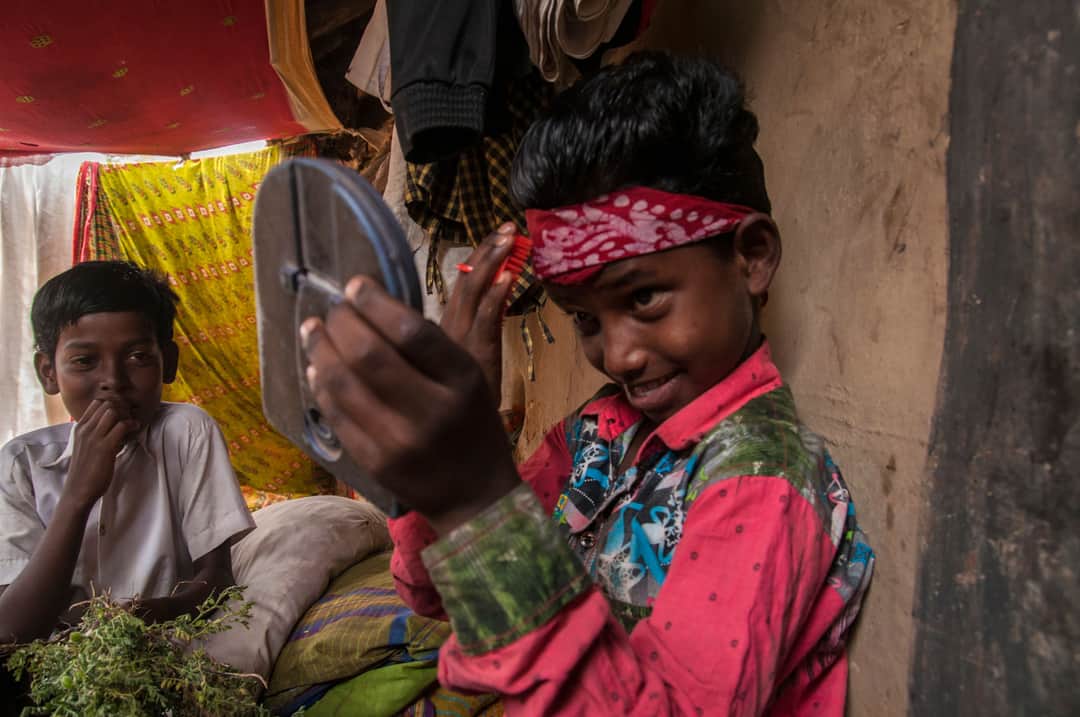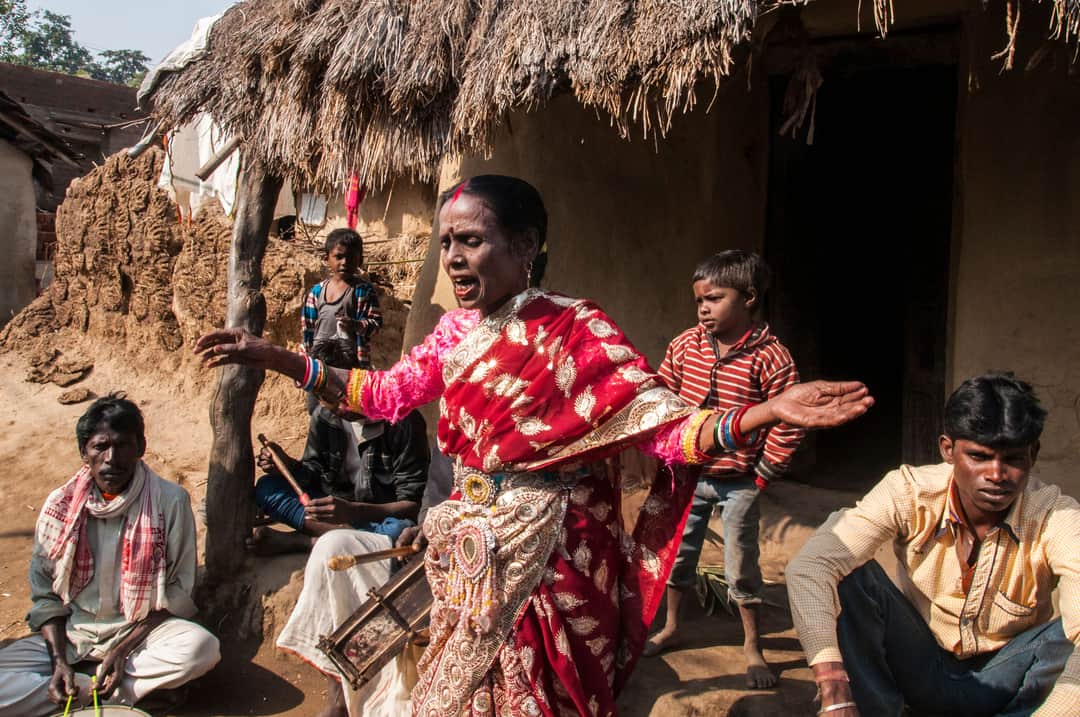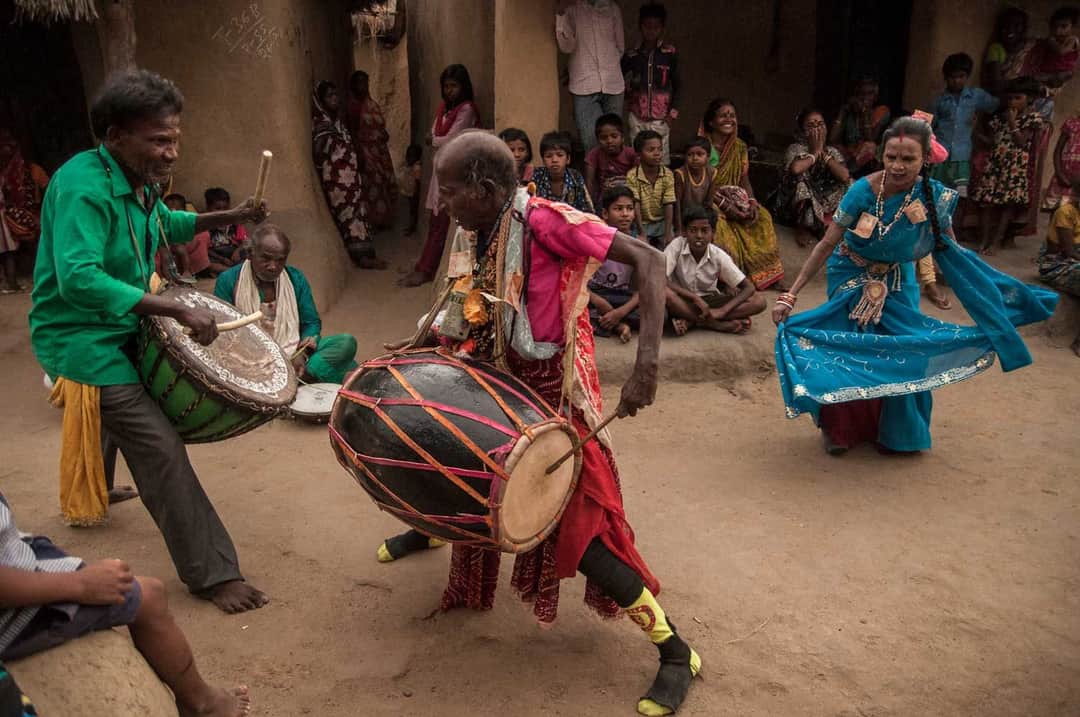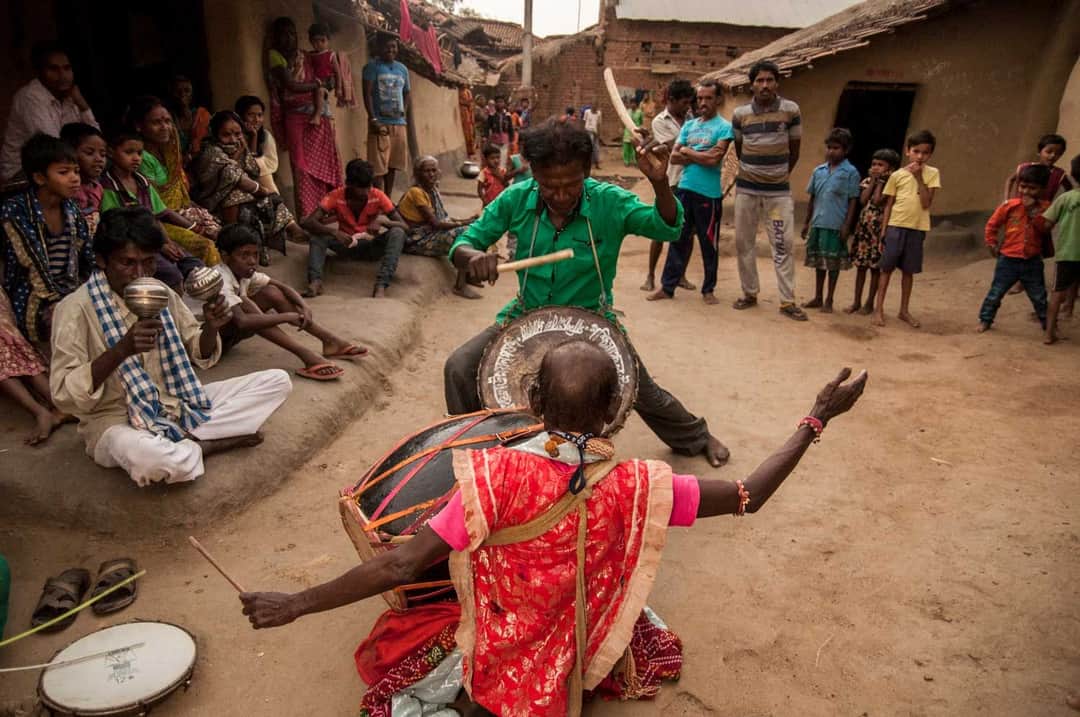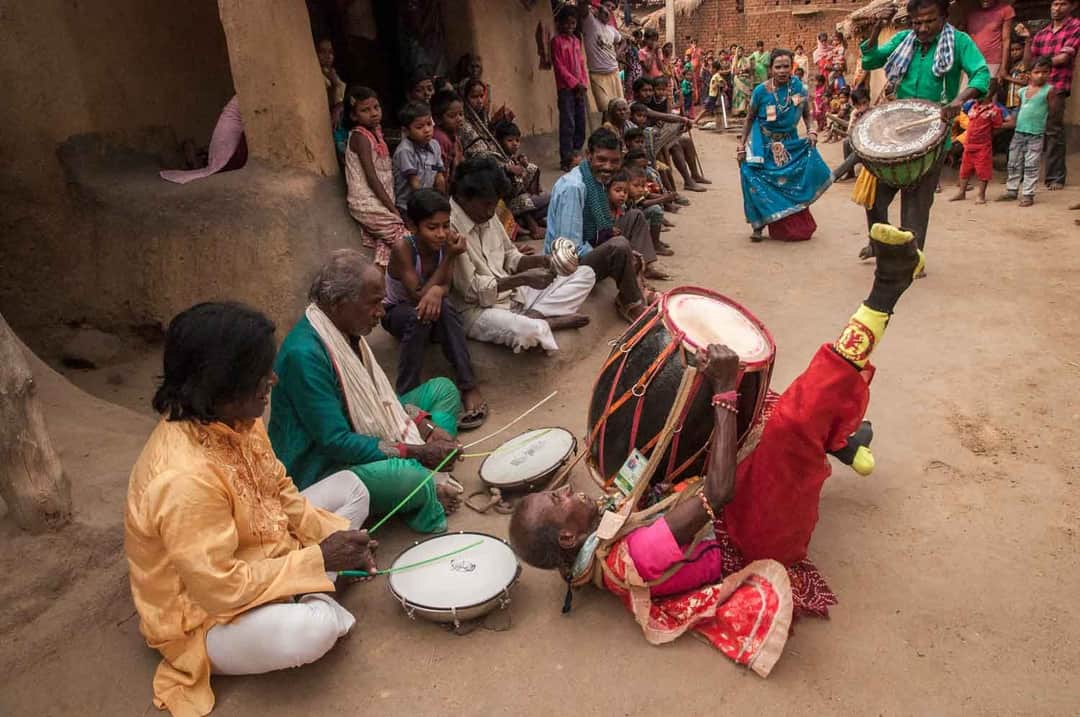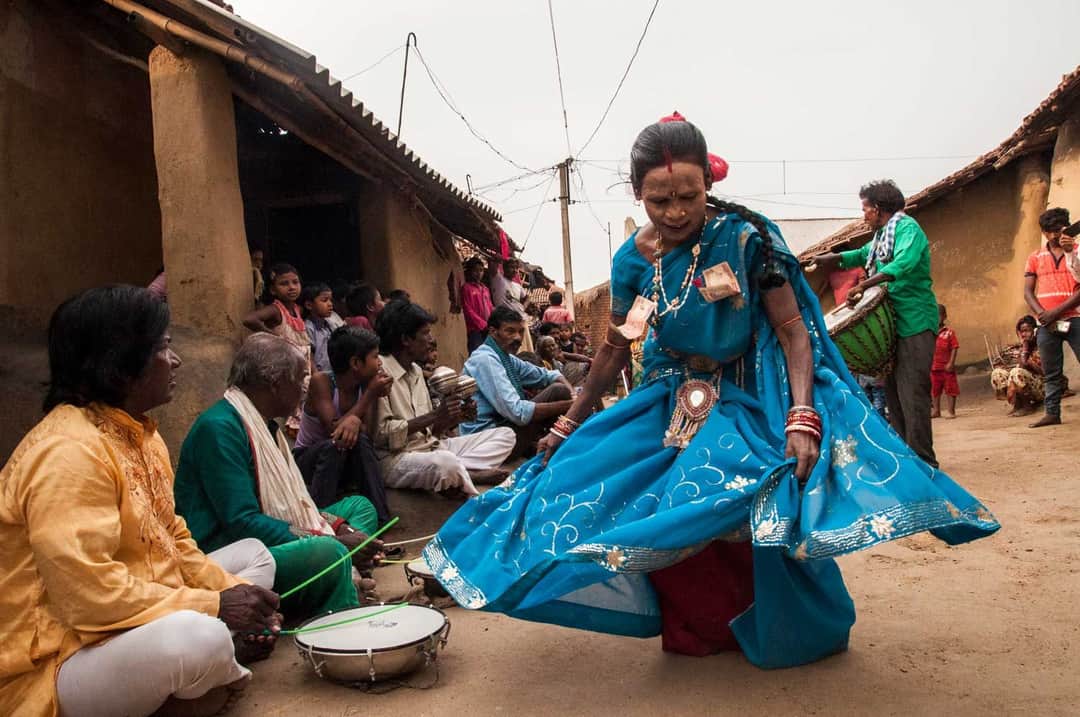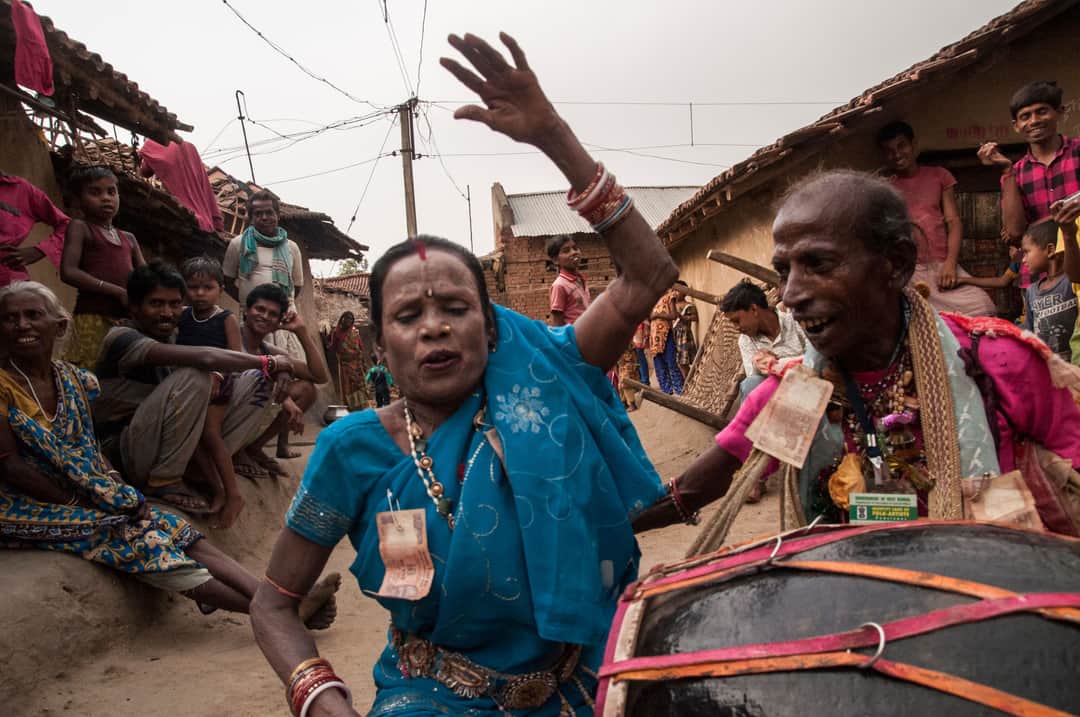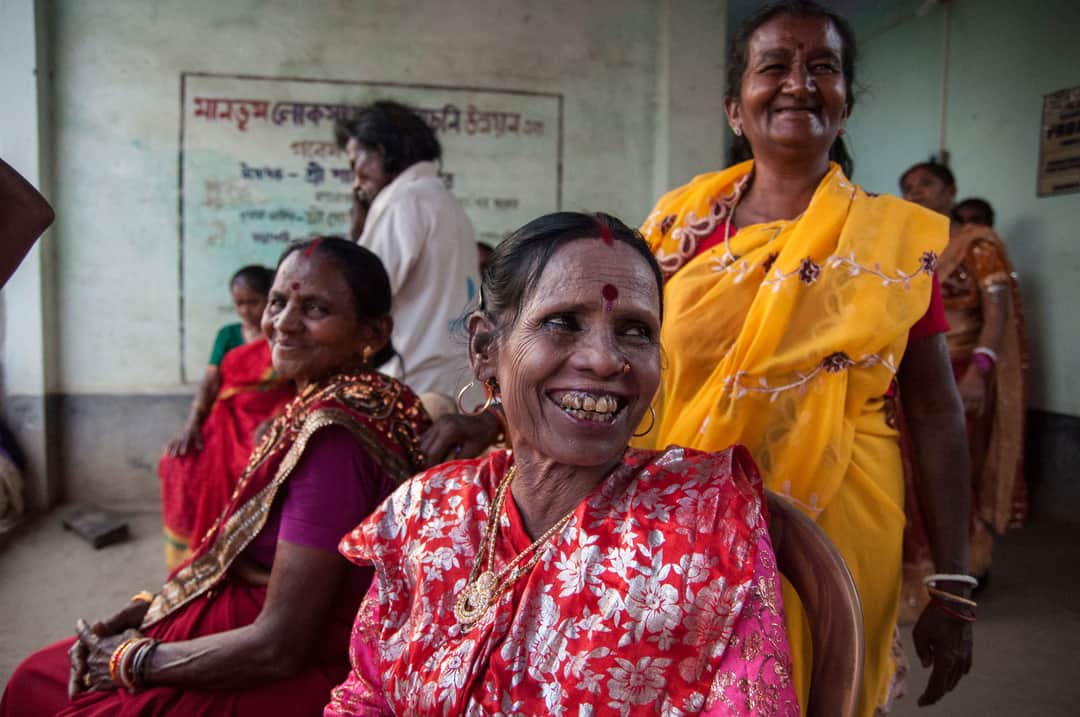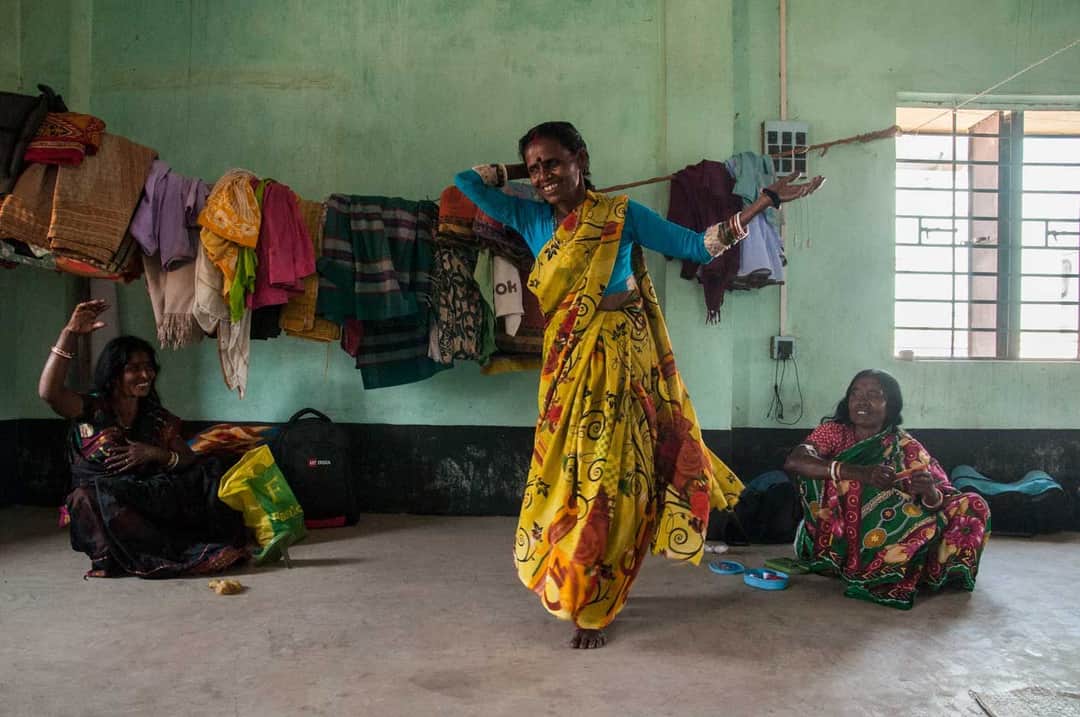

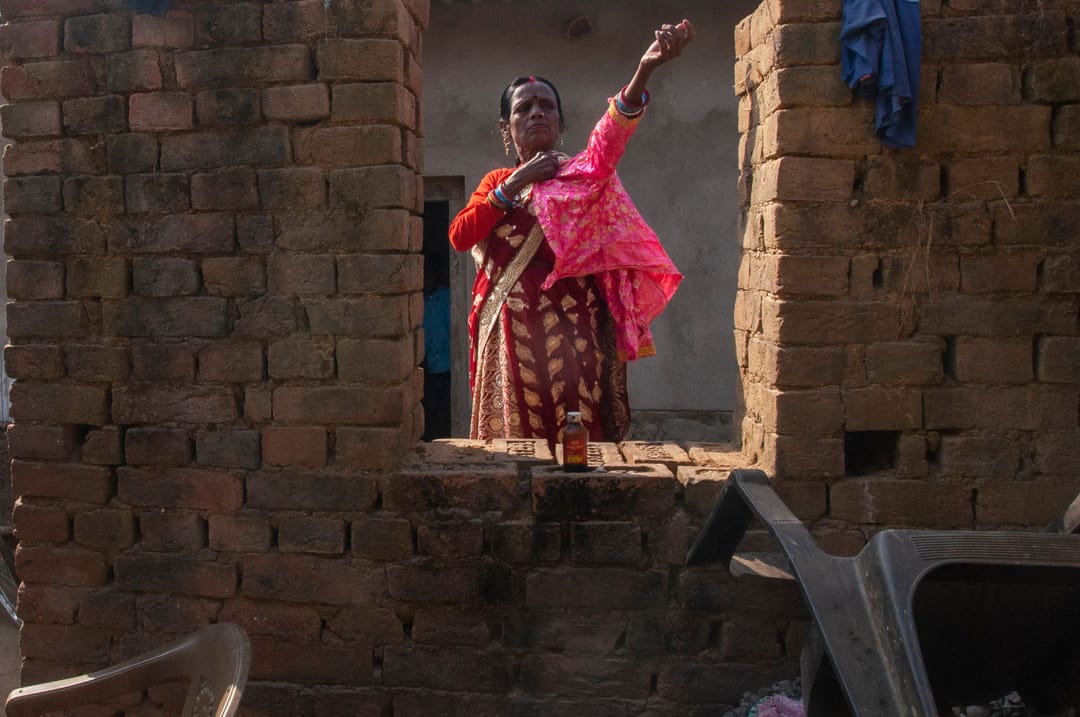
The colourful napkin in Charubala Kalindi’s hand glimmers like lightning for a moment. The red and blue ghaghra swings vigorously to the Jhumur song. The musicians gathered for the performance begin to play in unison.
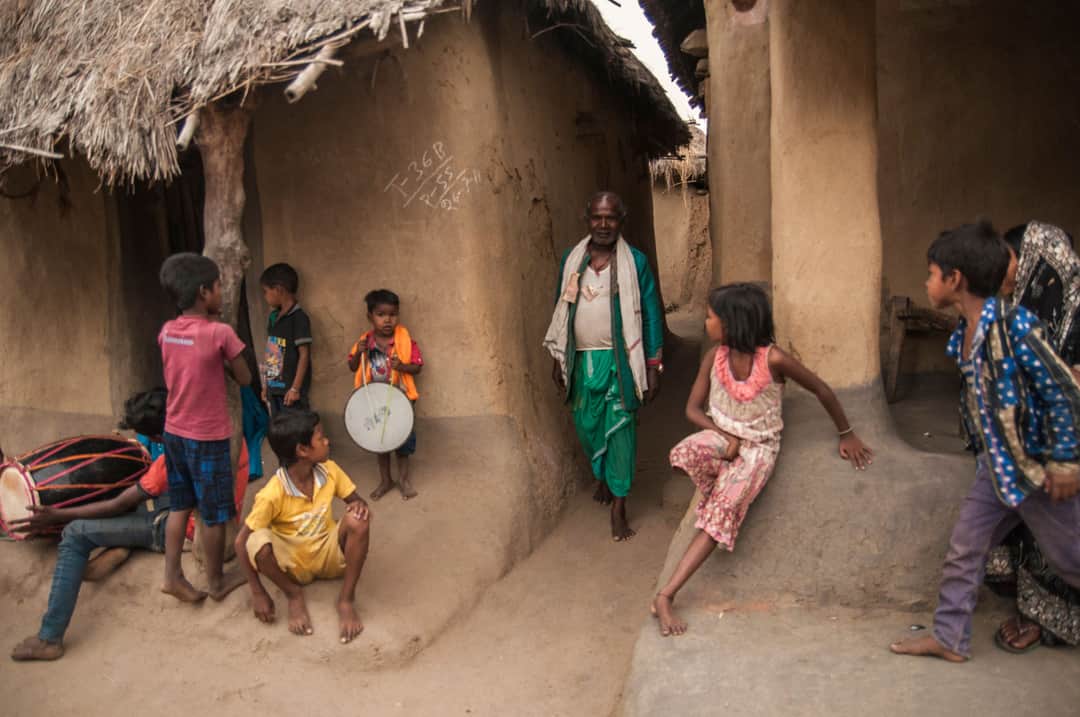
An audience of 80-90 people – old and young, men, women and children – is watching the performance in Senabana village in Arsha taluka of West Bengal. Though 65 years old, Charubala dances briskly.
It is said that the word ‘jhumur’ came from the sounds made by the anklets worn by the dancers. The dance form is popular mainly in the south-west parts of West Bengal and adjacent regions of Jharkhand (while another variant is performed in Assam). Most of the poets who have traditionally composed Jhumur songs are from the oppressed castes, and some of their songs speak of social issues, and of drought, flood, politics and other ills. The love and longing between Krishna and Radha is also a recurring subject of Jhumur songs.
Charubala's own life reflects some of these themes. She once lived in Belma village in Purulia II taluka of West Bengal's Purulia district (Puruliya in the Census). When she was around 16-17, her father Mohan Kalindi – the family belongs to the Kalindi community, listed as a Scheduled Caste in some states – an agricultural labourer and construction site worker, got her married to Shankar Kalindi of nearby Dumdumi village.
Shankar was in his 20s, and he too did whatever labour was available. He turned out to be physically abusive. The beatings got so severe that Charubala left him and returned to her father. But Mohan turned her away, saying he was too poor to take care of her. So Charubala became homeless and lived on the streets for a while.