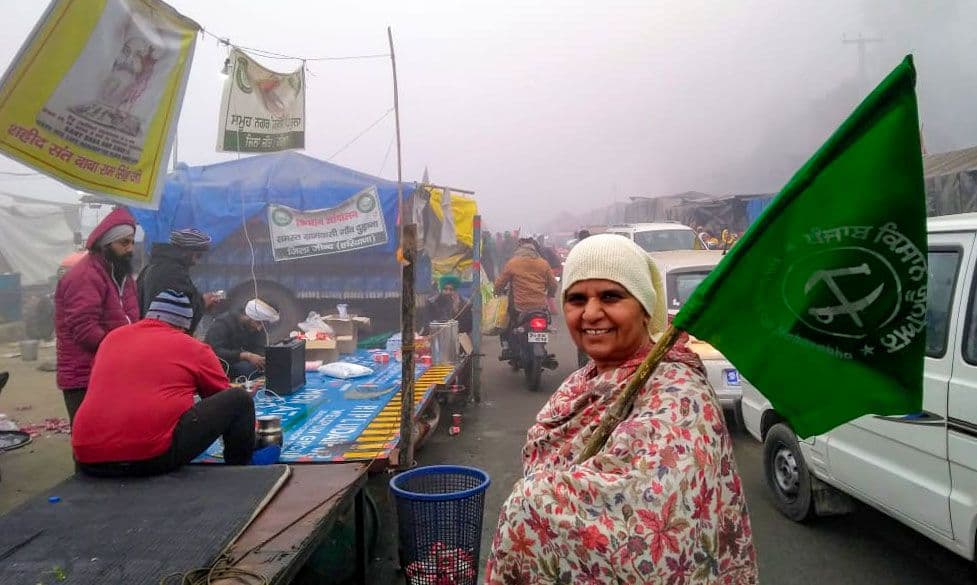


“The movement taught me to come forward and fight my own battles. It has given us respect.” By ‘us’ Rajinder Kaur means women like her who took part in the movement against the Centre's farm laws introduced in September 2020. Rajinder, a 49-year-old farmer from Patiala district in Punjab, had often travelled the distance of 220 kilometres to Singhu, and given speeches at the protest site.
Her neighbour in their village of Daun Kalan, Harjeet Kaur, 50, spent 205 days at Singhu, on the Delhi-Haryana border. “I don't remember a time when I didn't grow food,” she says. “With each crop I harvested, I grew a little older." Harjeet has been a farmer for 36 years, “but this was the first time that I saw, and participated, in a movement like this,” she says. “I saw children, the elderly and women arriving at the protests.”
Lakhs of farmers had gathered on the outskirts of the country’s capital, demanding the union government roll back the controversial laws. Farmers from mainly Punjab, Haryana and Uttar Pradesh had camped there for a year from November 2020 until the laws were repealed in November 2021. The farmers’ protest was historic, and one of the largest people’s movements in recent memory.
Women from Punjab were at the forefront of the movement. They say the solidarity they experienced then continues, and the courage and independence they discovered being part of it have become stronger. “I never missed home when I was there [at the protests]. Now that I am back, I miss the movement,” says Kuldip Kaur, 58, from Mansa district.
Before, her workload at home in Rali village, in Budhlada tehsil, used to affect her mood. “Here I must do one thing after another, or attend to guests with whom we have to be formal. There I was free,” says Kuldip. At the protest sites, she volunteered in the community kitchens. She says she could have worked there all her life. “I would see the elders and think that I was cooking for my parents.”