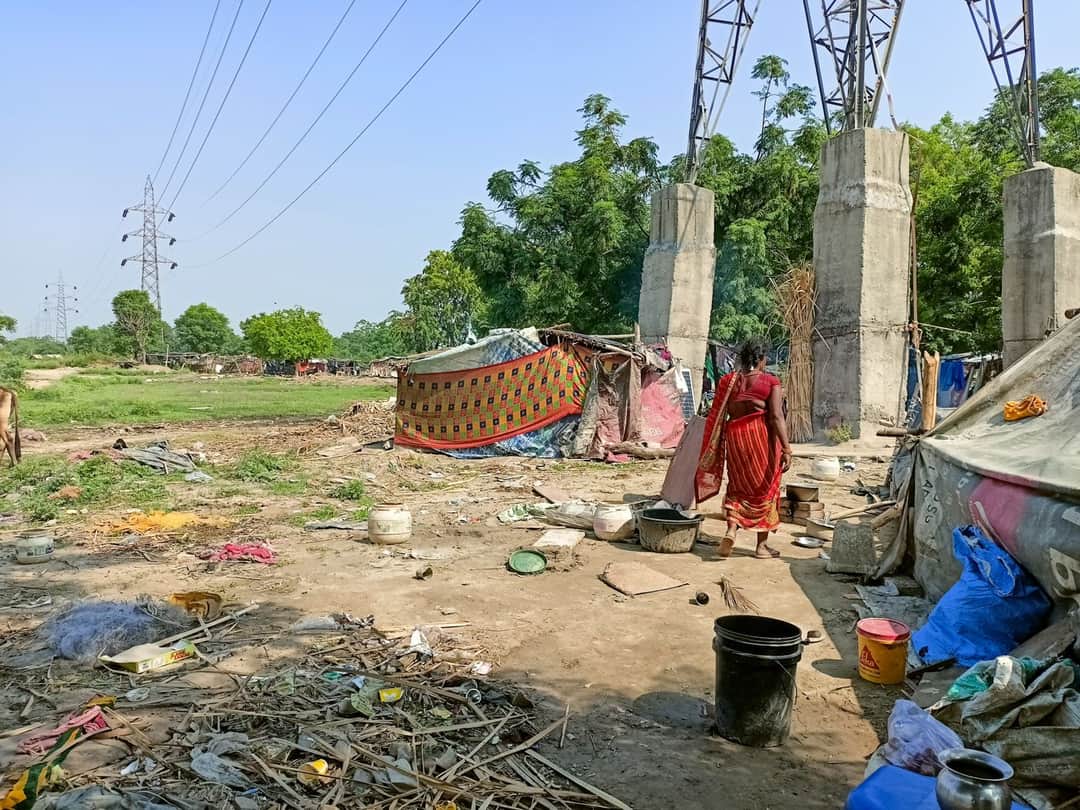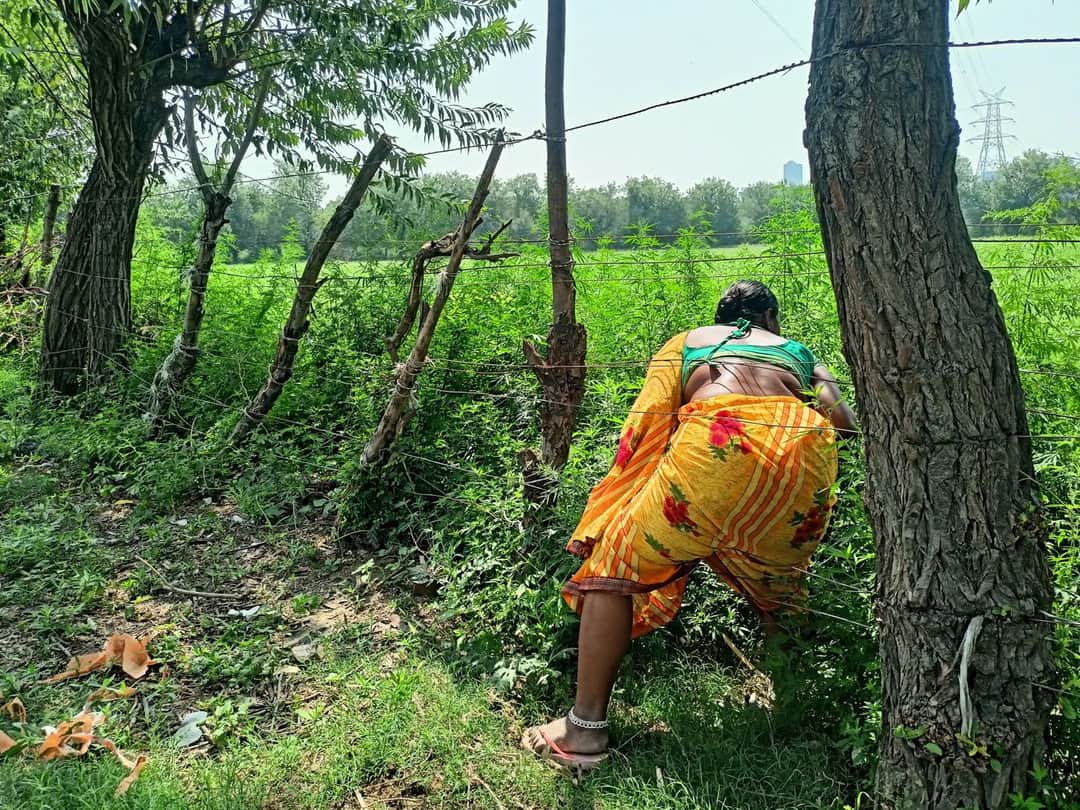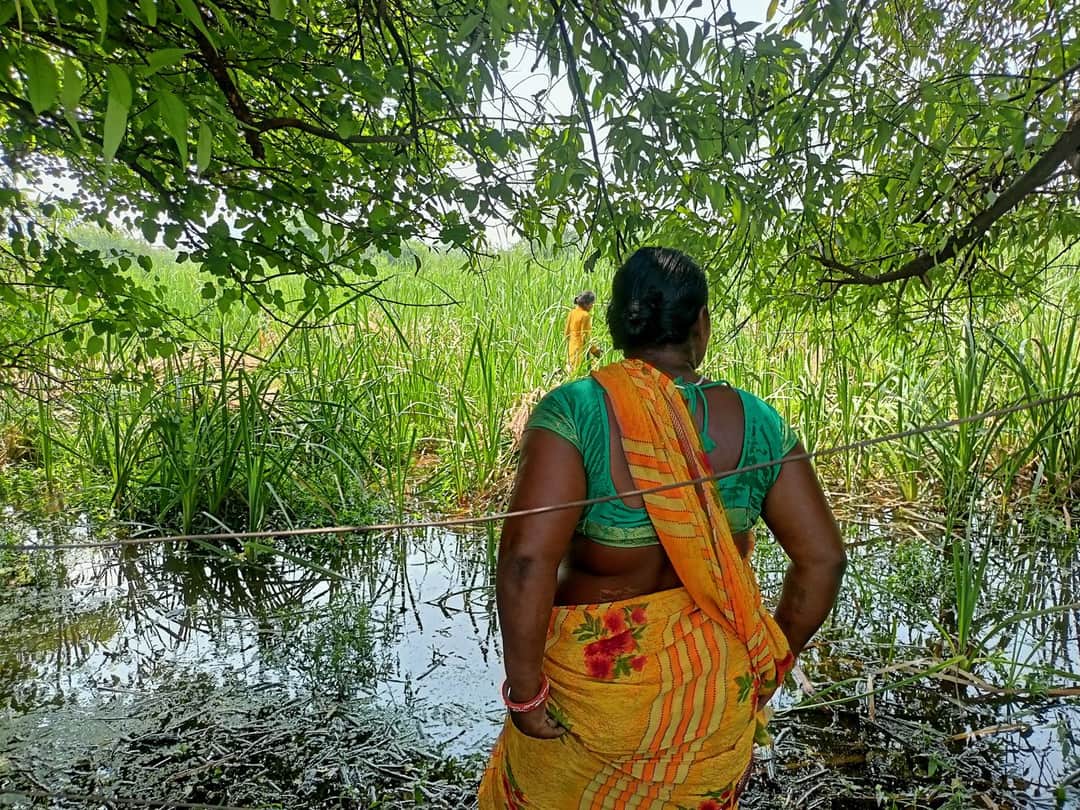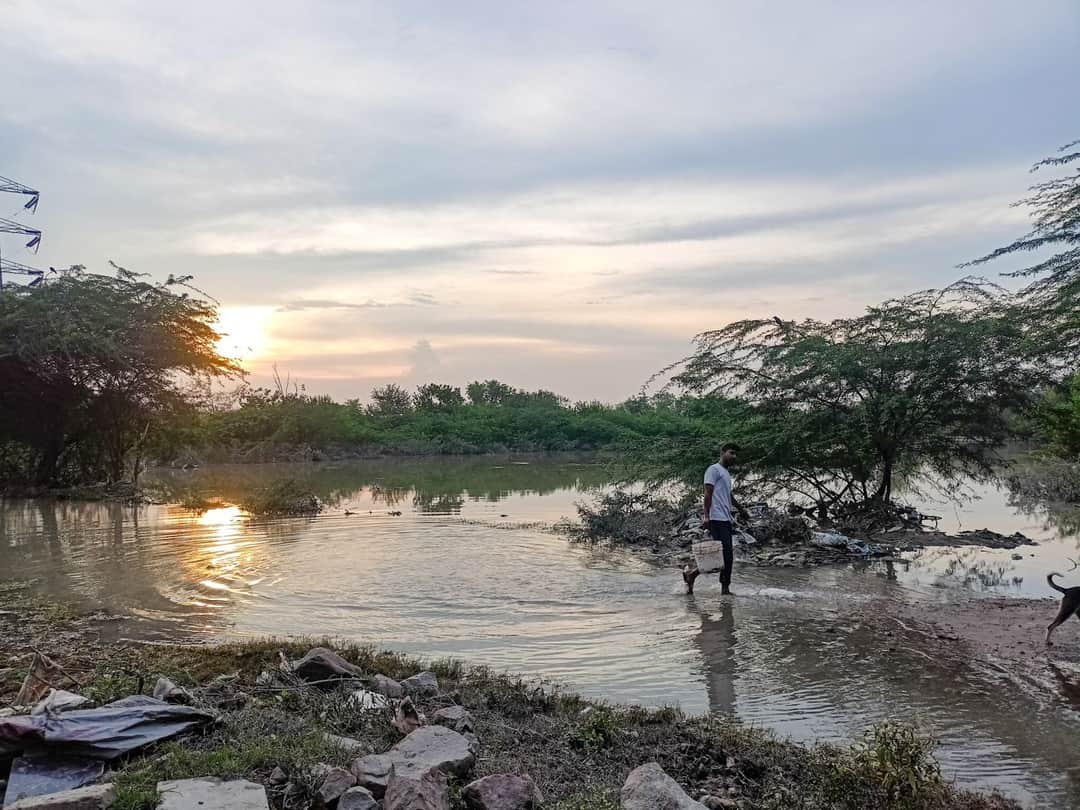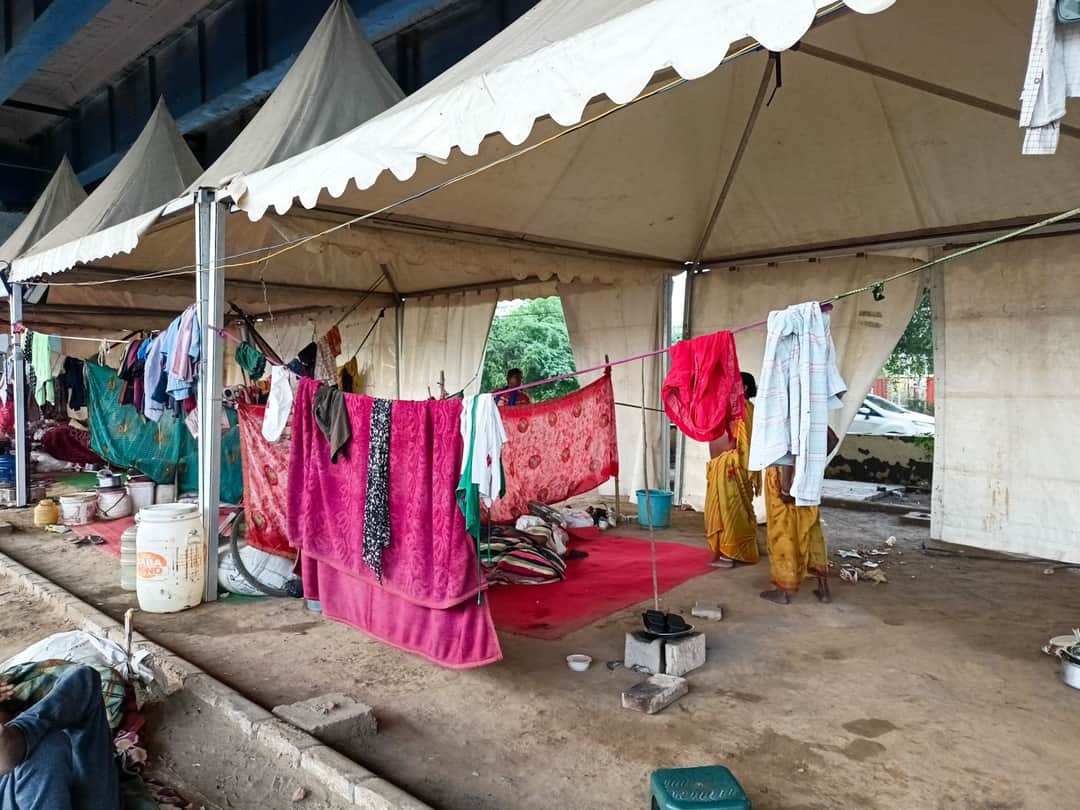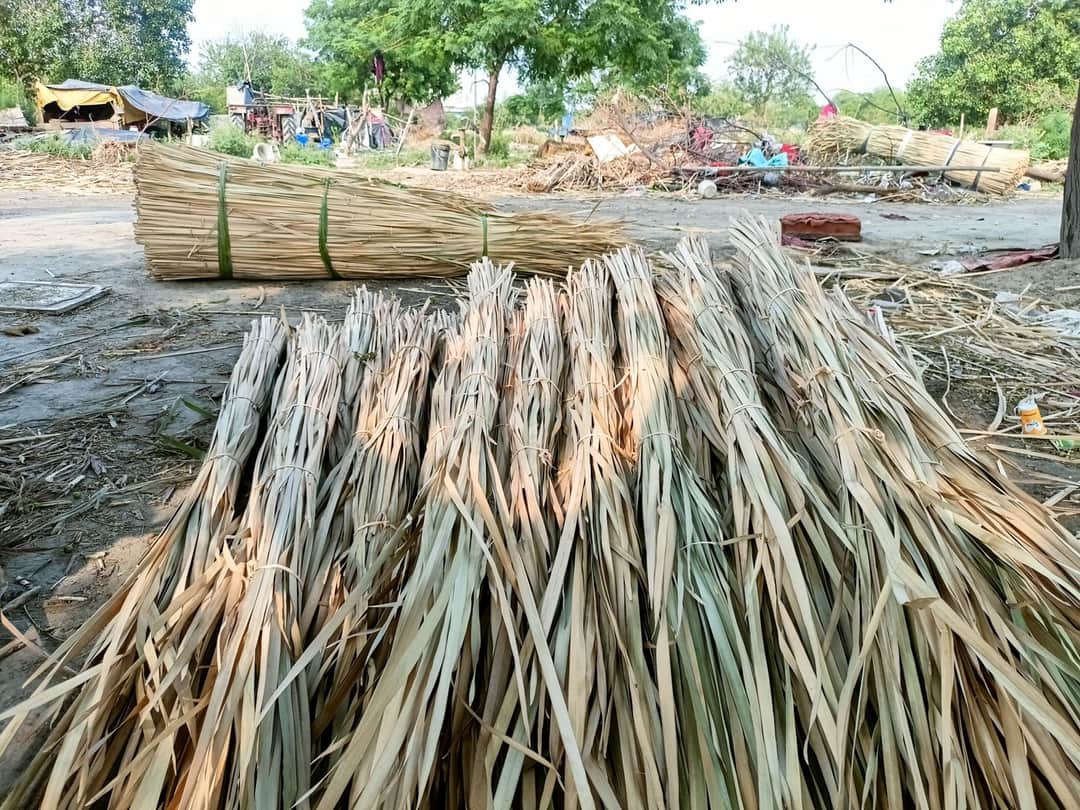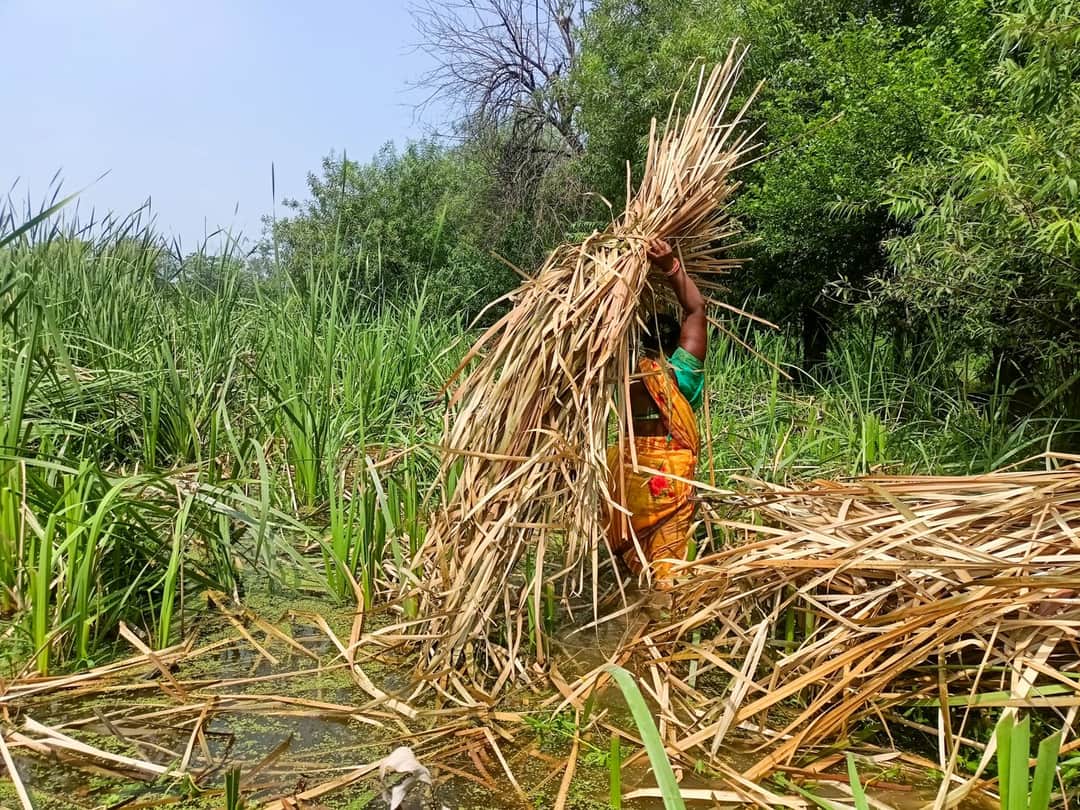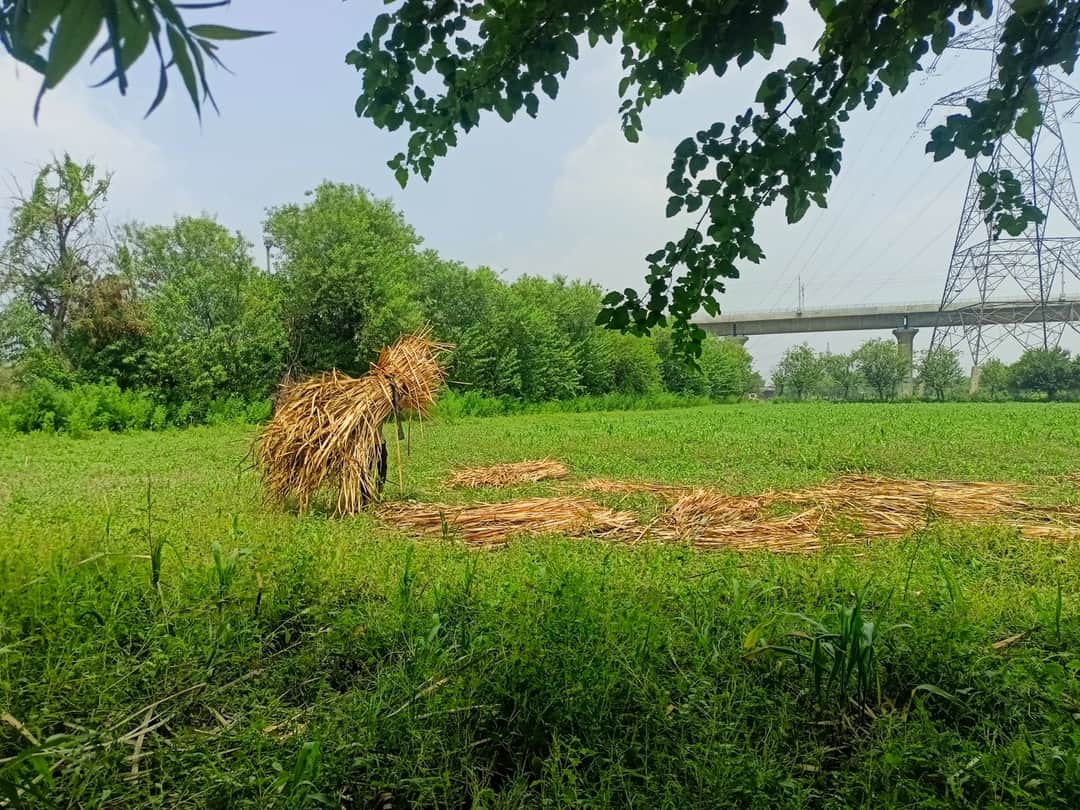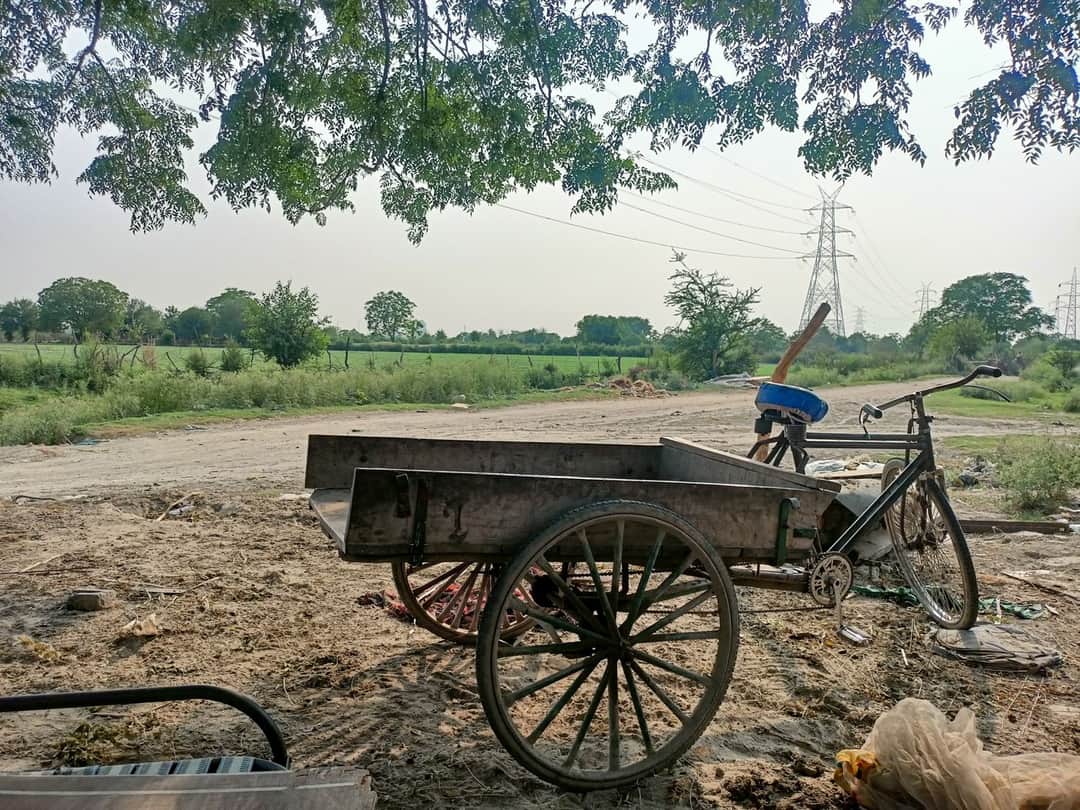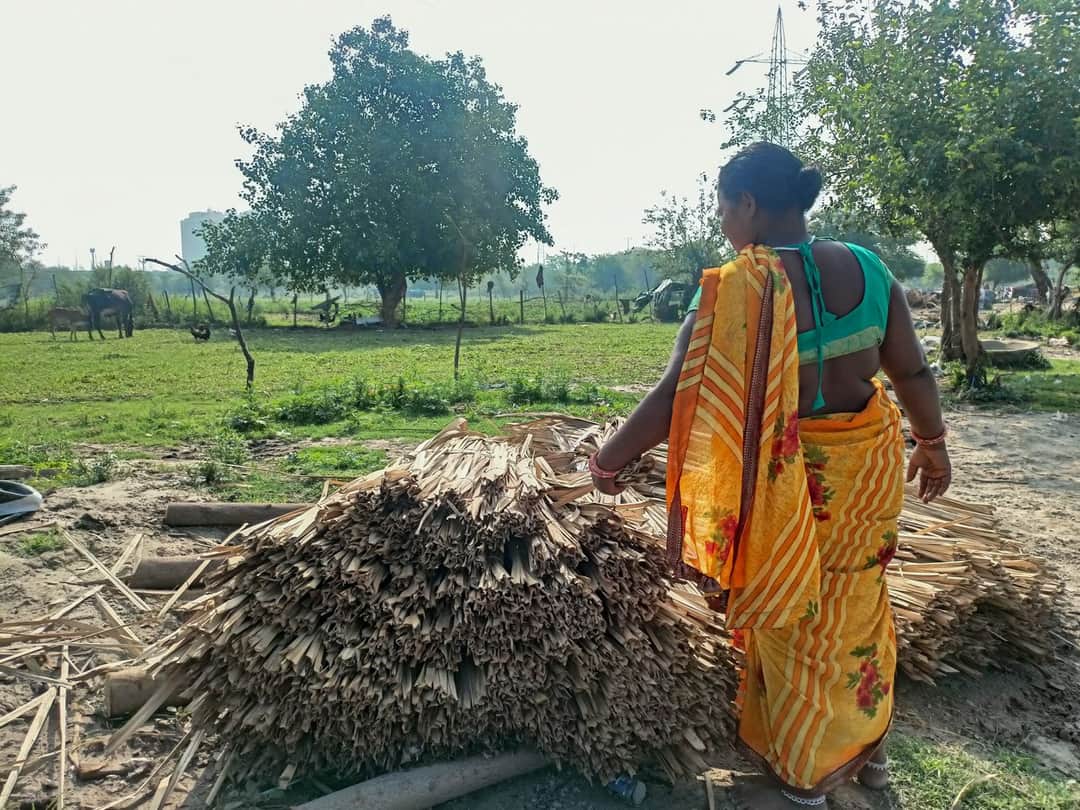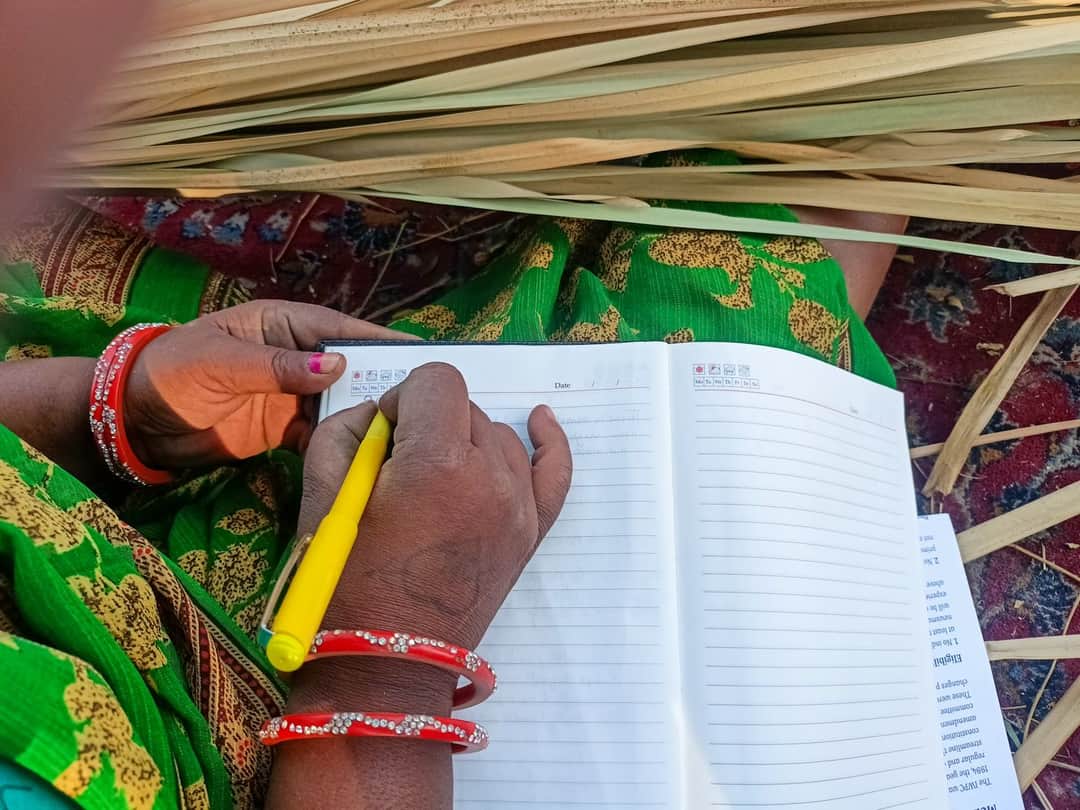

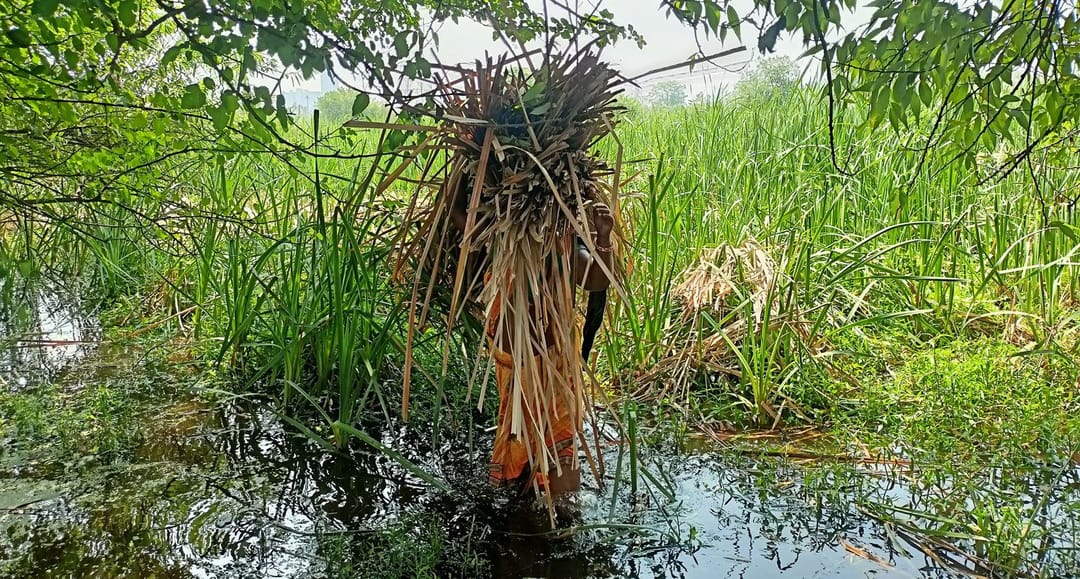
She is sitting on a big bundle of dry grass amidst a rather appalling scene of destruction. Broken bamboo sticks, torn tarpaulin sheets, plywood planks, rope pieces, crumpled sarees, household utensils, mud-soiled clothes and other everyday items lie in complete disarray. This is the place they called home. It still is. But looks very different a couple of days after the Delhi Development Authority’s bulldozers flattened their makeshift houses. Rita Devi’s was one among the 10 to 15 huts within this settlement in the census town of Chilla Saroda Khadar.
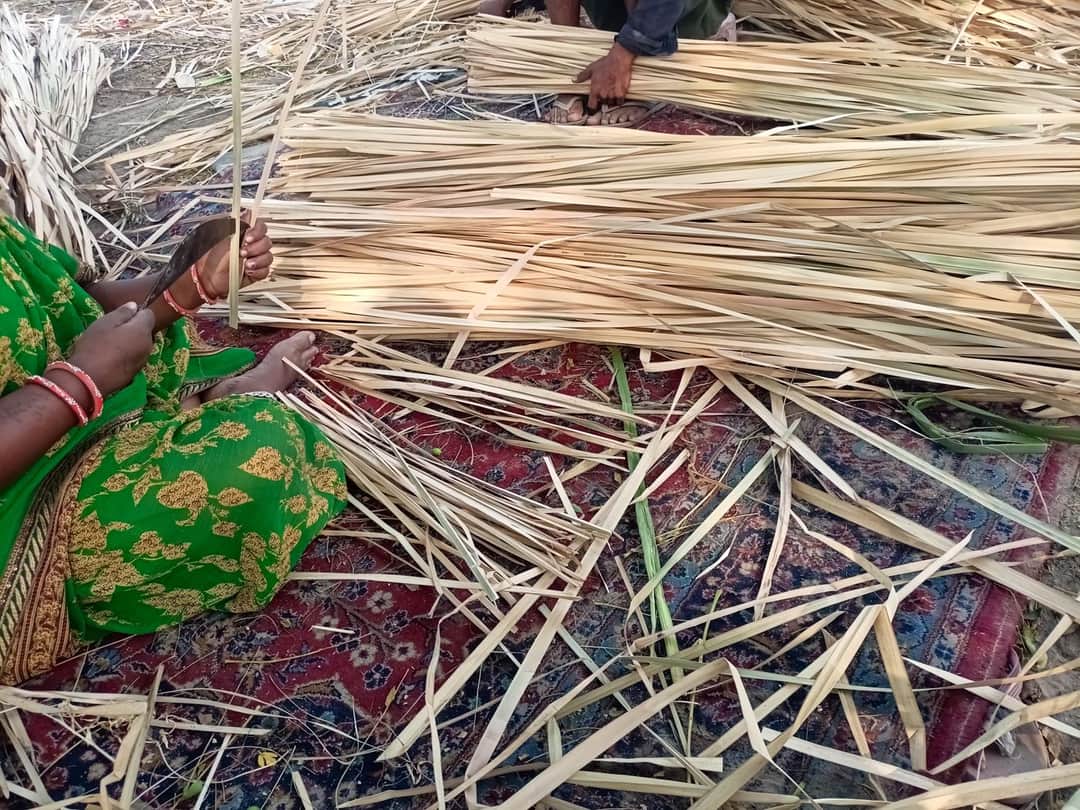
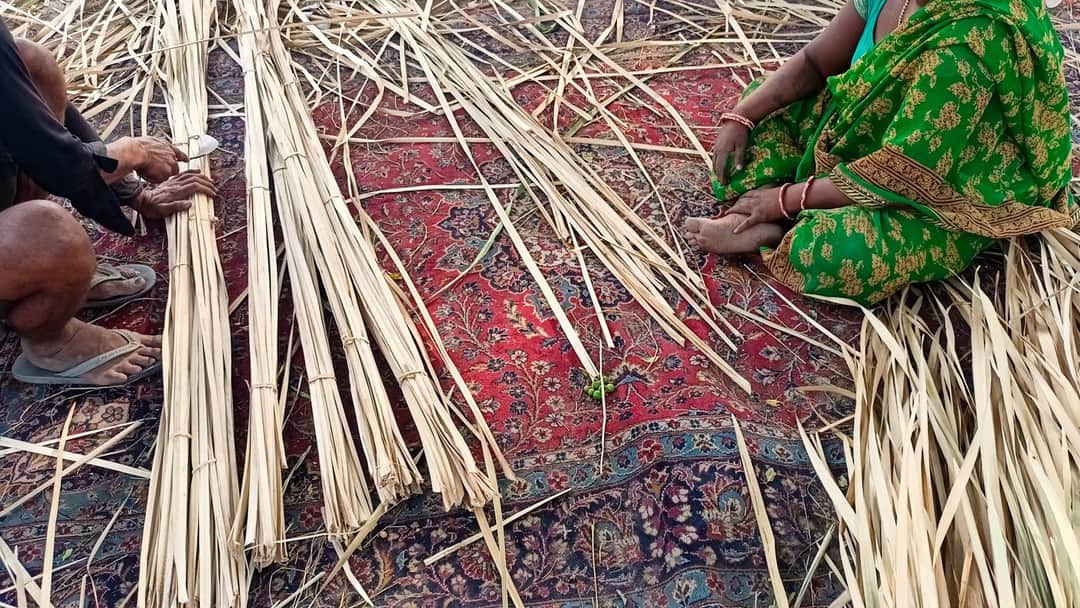
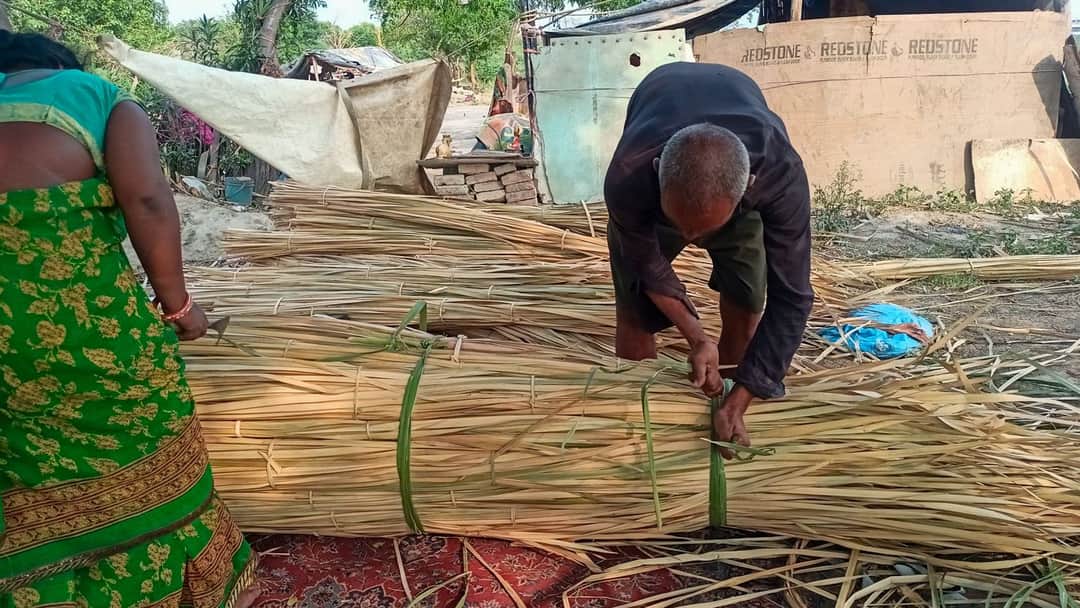
She, however, looks quite unfazed as she holds in one hand a flat, golden-brown leaf blade of grass, about an inch wide, and rips it into two or three thinner strips with a sickle that she is holding in another. A bulldozer at the door is neither new nor any longer scary for her or any of the people in her settlement near the Yamuna Kshetra, where the government plans to develop one of the six biodiversity parks in Delhi. “Yah zameen sarkari hai isliye to zhuggi-vuggi tod deta hai. Patte par zameen yah vahi log saal bhar ke liye lete hai jo kheti karte hai. [The land belongs to the government, so they break our huts. Only those who cultivate take the land on lease for a year.]”
“This happened when we were near Akshardham also,” Rita says. “Someone was cleaning the fish, and a crow took some of the fish waste inside the temple. So, they demolished the entire jhuggi [settlement]. That was in 2015. Then we came to this neighbourhood in Chilla Khadar. Here also 4-5 times the same thing has happened. But we are staying here.” Her family has built a small 8X10 feet room on the land she is renting for 500 rupees a month.
“We give the rent to a Gujjar guy. His is name is Rajveer. He stays in Chilla only. This land was already sold to the government by his grandfather. They even got compensation for it. But he still claims he owns this land. He beats and threatens us poor folk and extracts money,” says Rita. “Tumhara khet, tumhari zameen, tu jaan. Hamara to rahene se matlab hai [Your field, your land, you know better. What do we care? We just want a place to stay]. We never make pucca houses. Who will keep making a new house every time they demolish?” She is tying the strips of grass she cut into one small bundle.
Rita’s family has managed to put back the two side walls of their hut and a plastic roof after the latest demolition drive. Most of the people in the settlement are daily wage migrants from Uttar Pradesh and Bihar. Rita herself is from Bihar’s Supaul district. She has been in Delhi since 1993 when her parents moved from Baspiti village to Delhi in search of livelihood. About 9.3 million people from Bihar migrate to other states for the same reason, according to the 2011 census. Rita belongs to the Mallah, a fishing community also known as Nishad and Dhimar, now listed as a Scheduled Caste in Bihar.