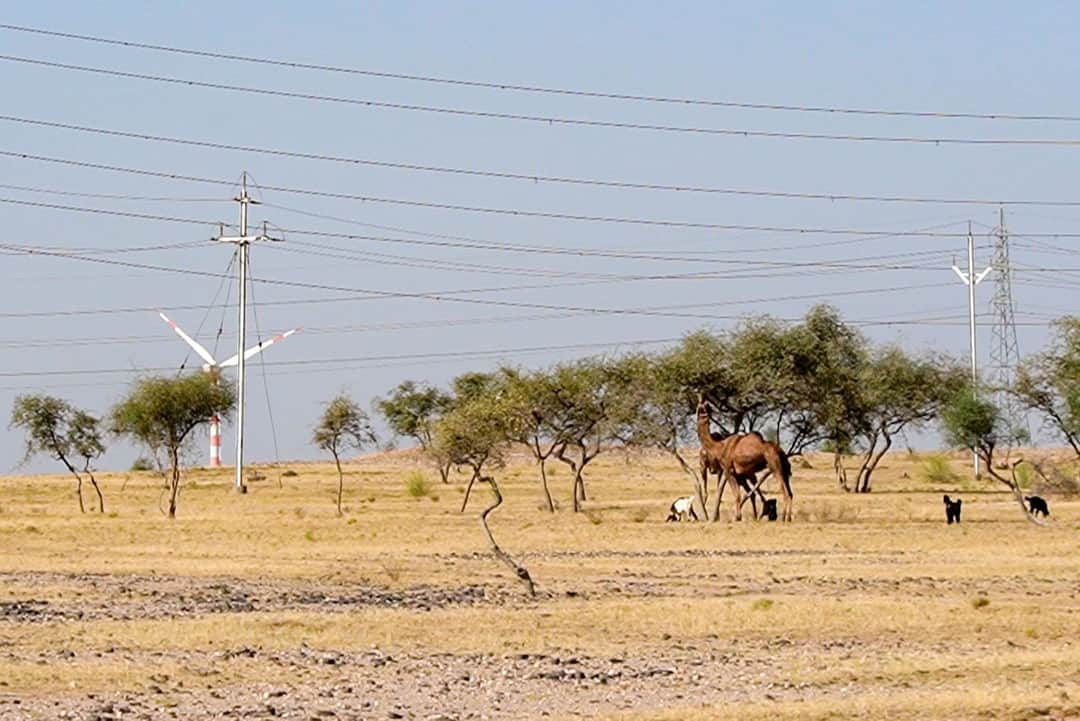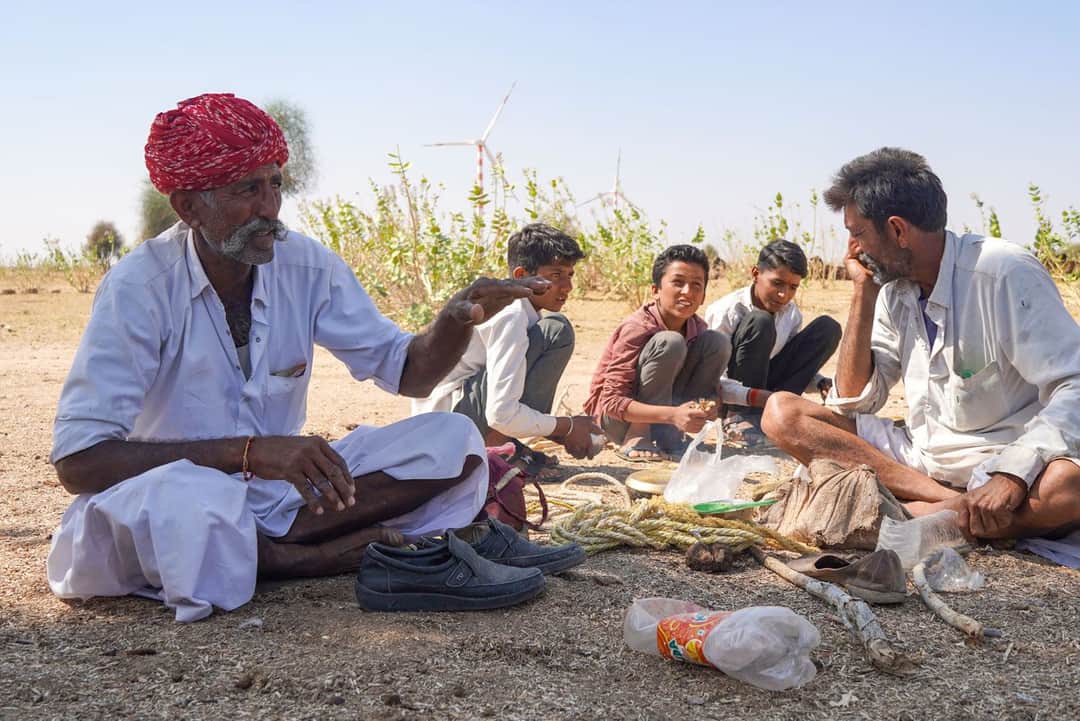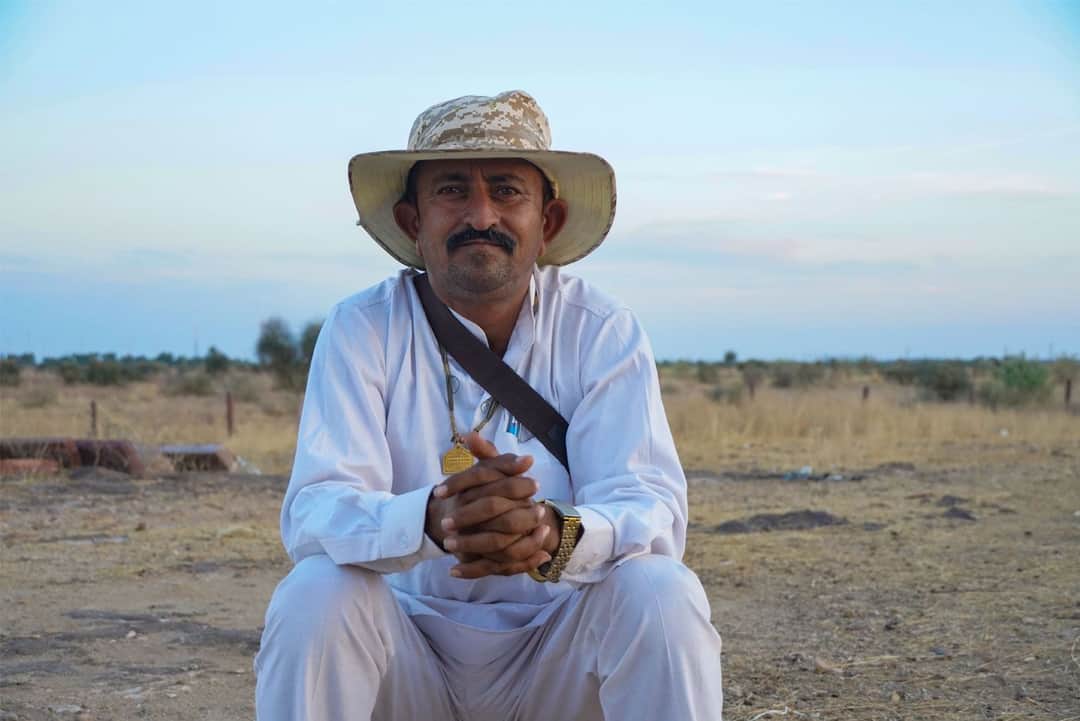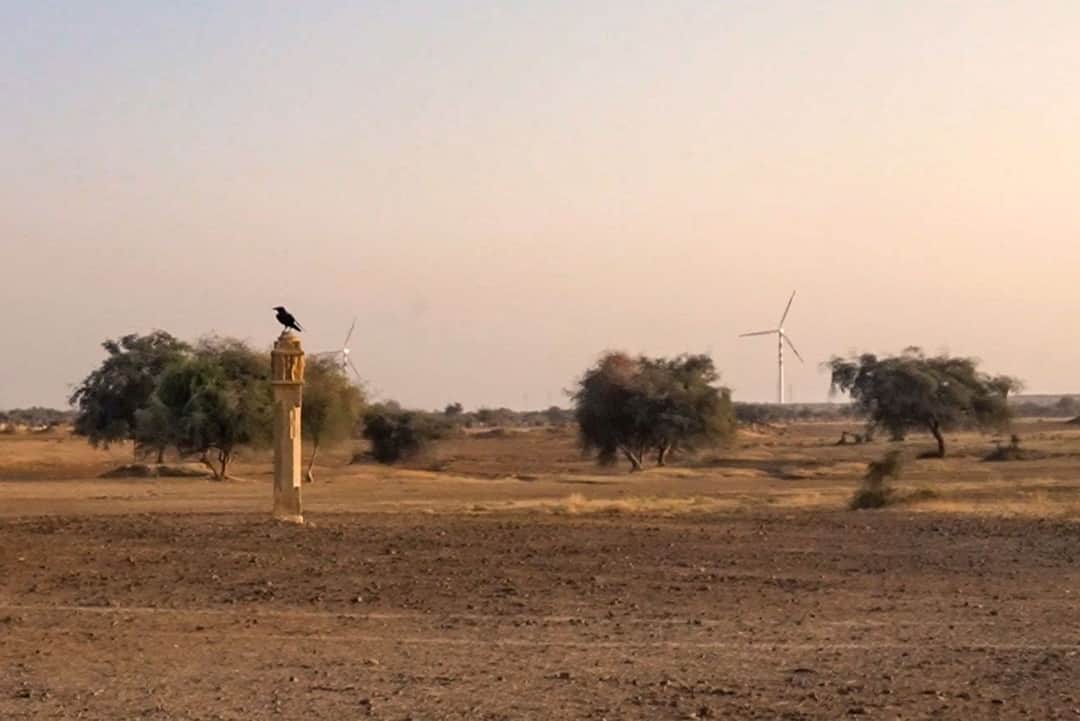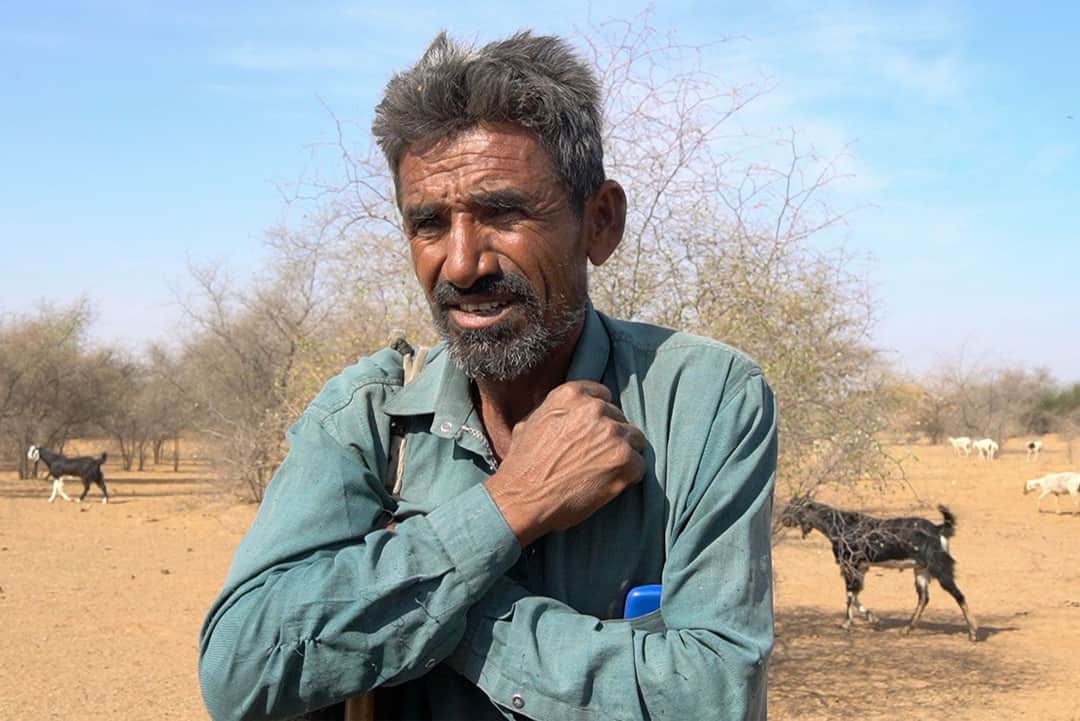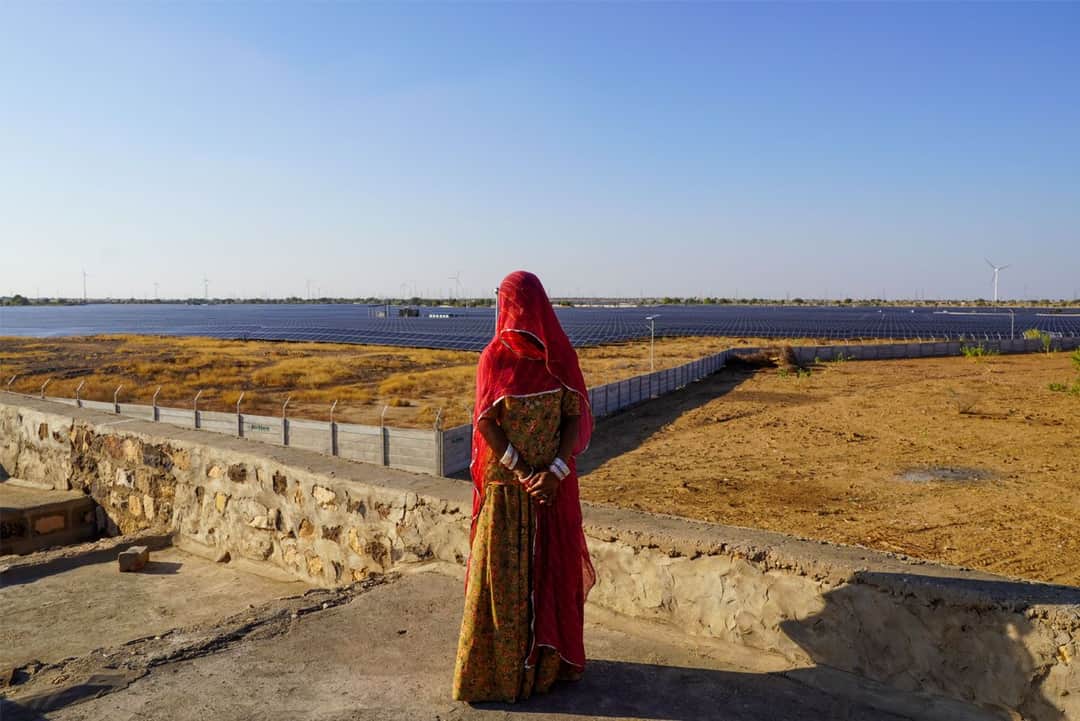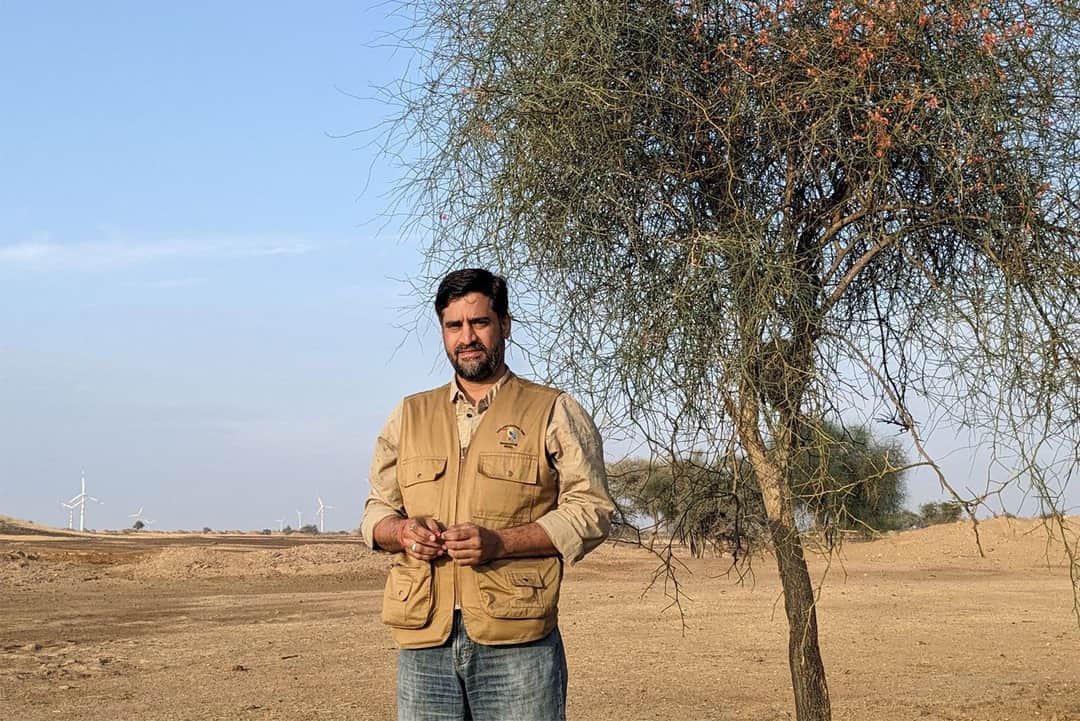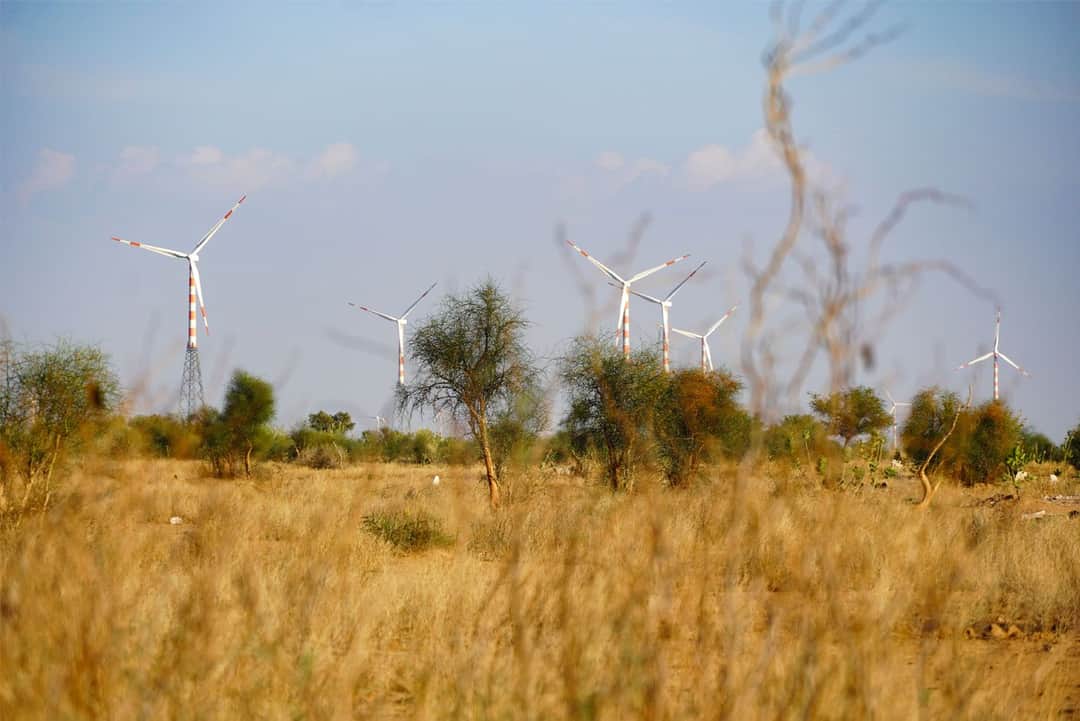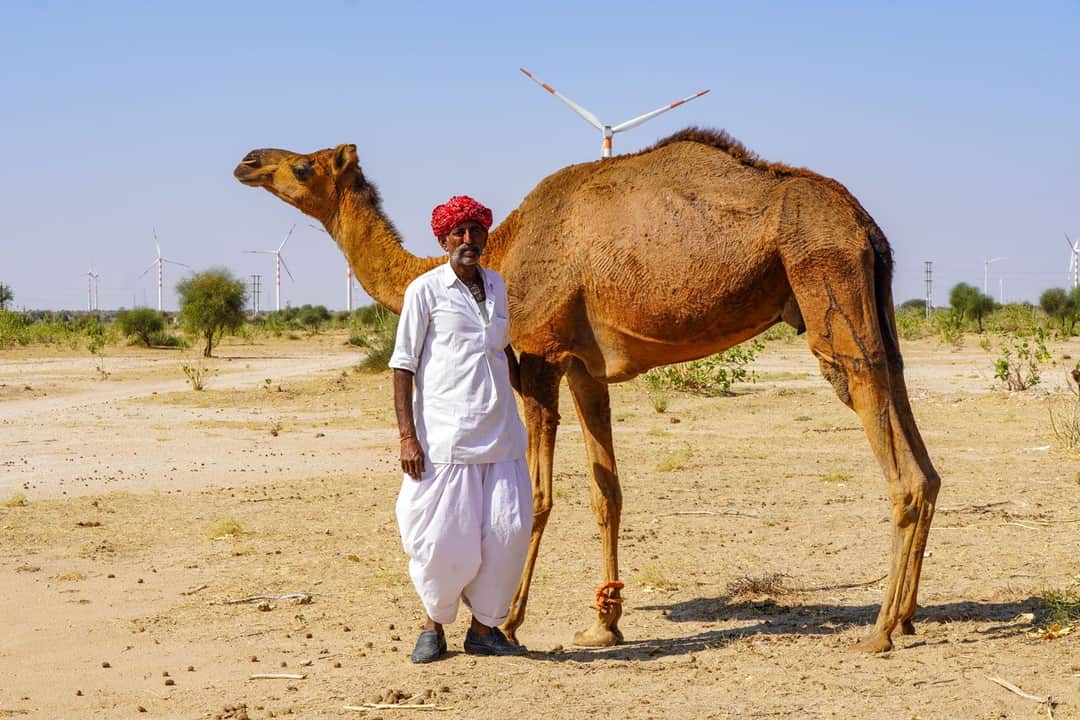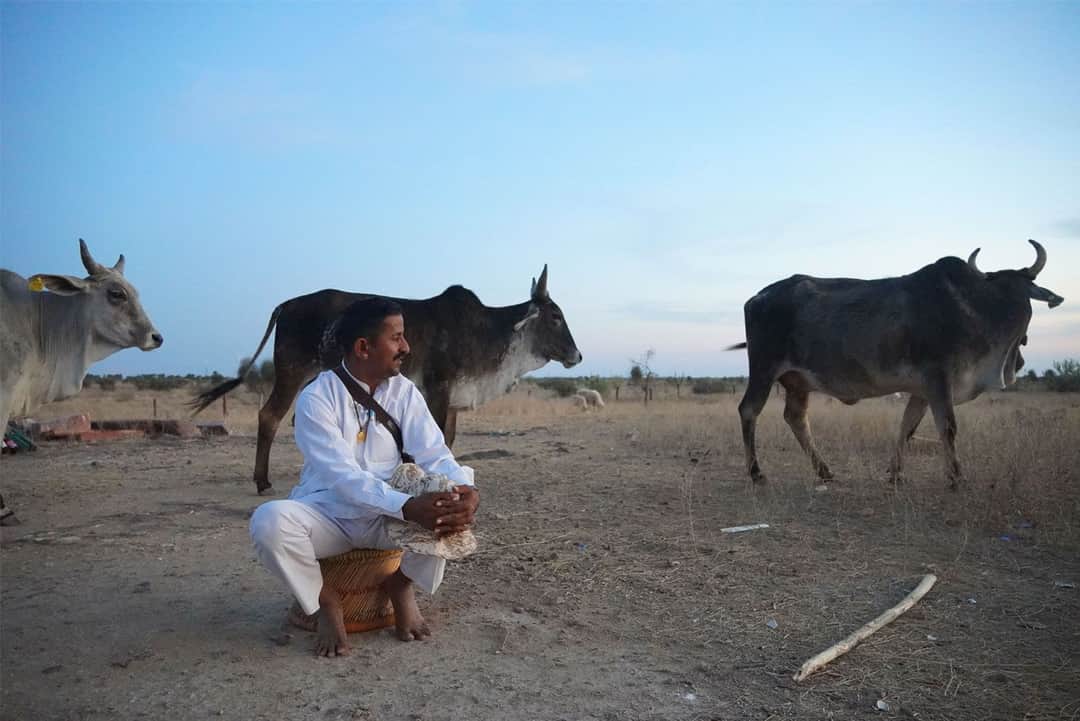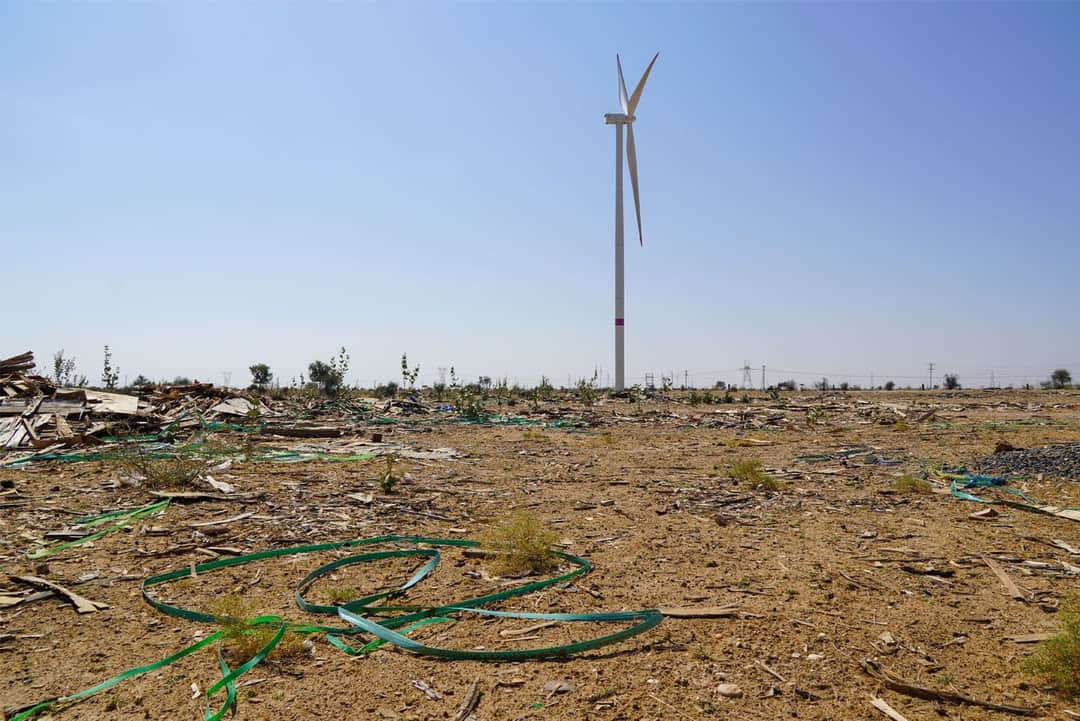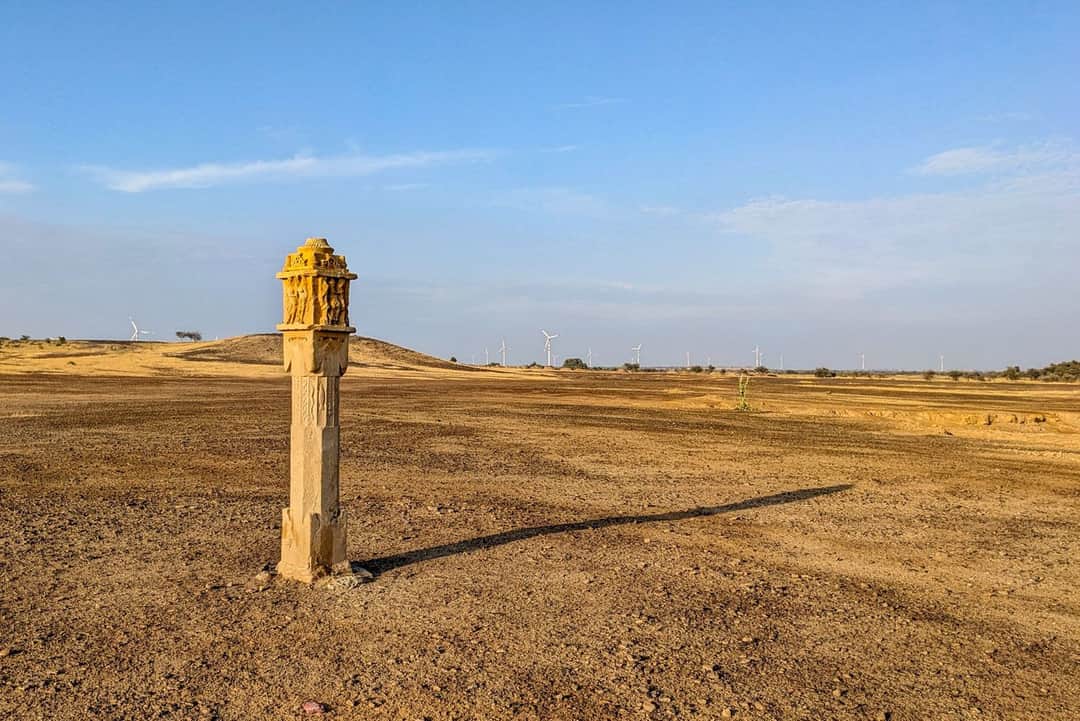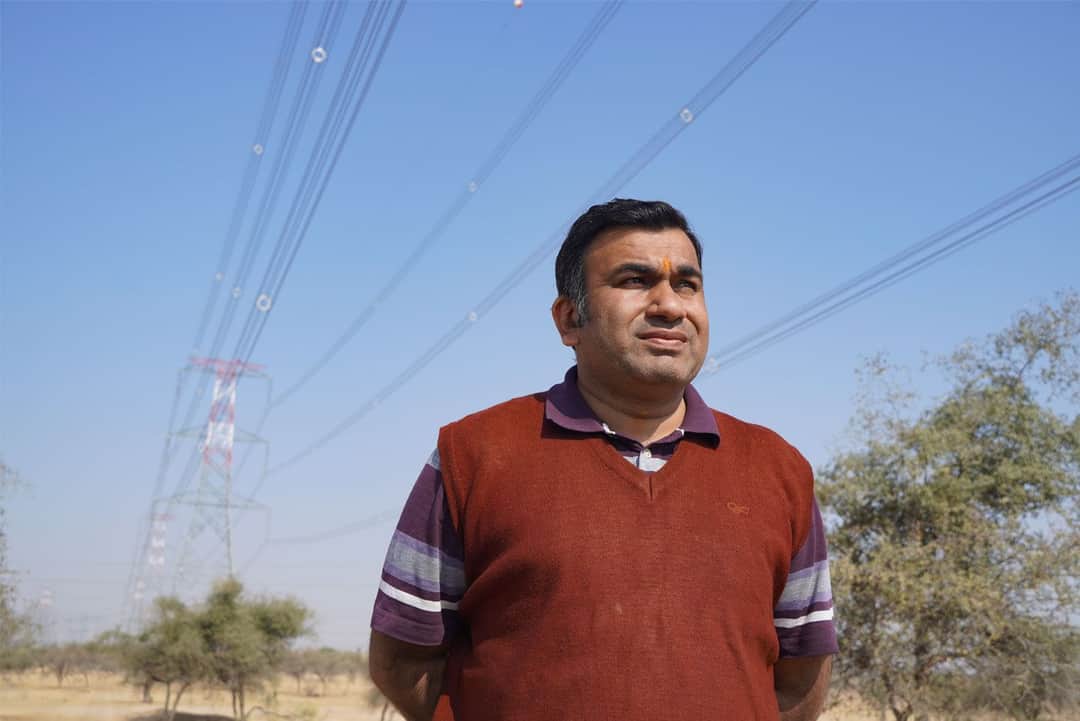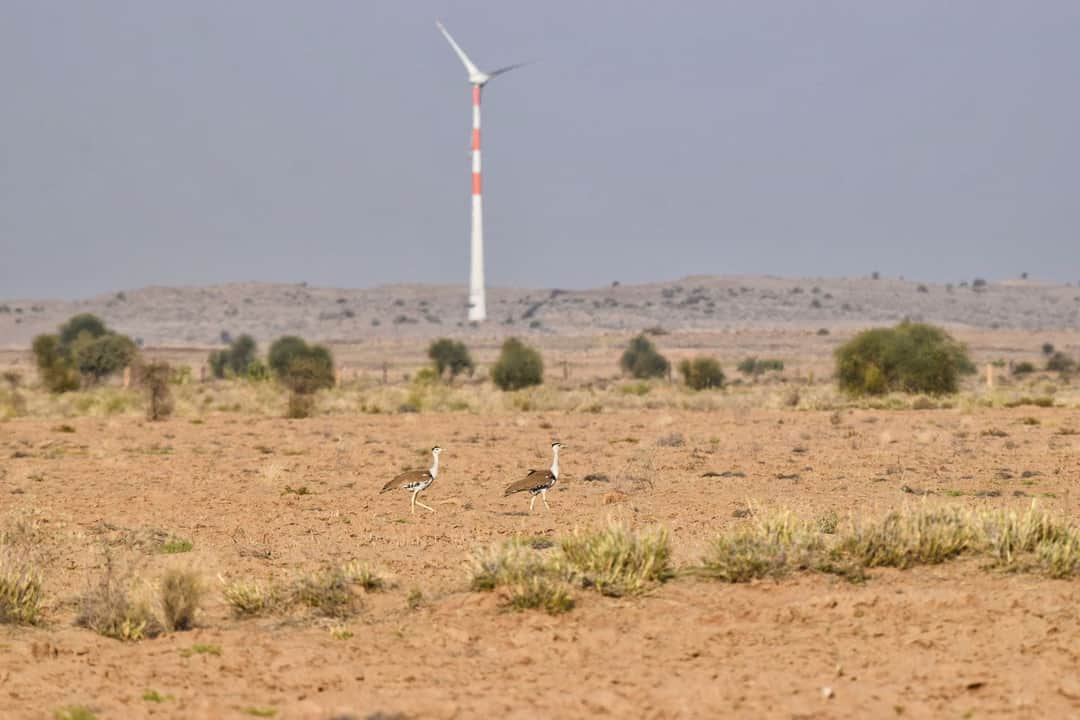


“Pankhe wale [windmills], blade wale [solar farms] are taking over our orans,” says Sumer Singh Bhati, resident of Sanwata village. A farmer and herder, his home is adjacent to Degray oran in Jaisalmer district.
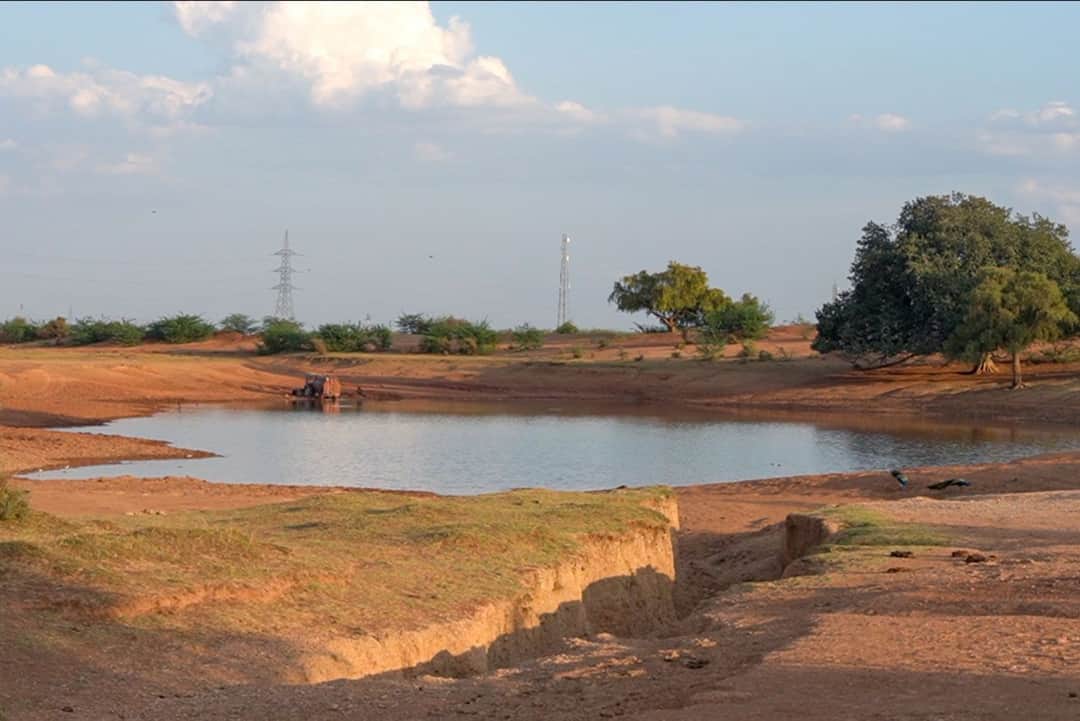
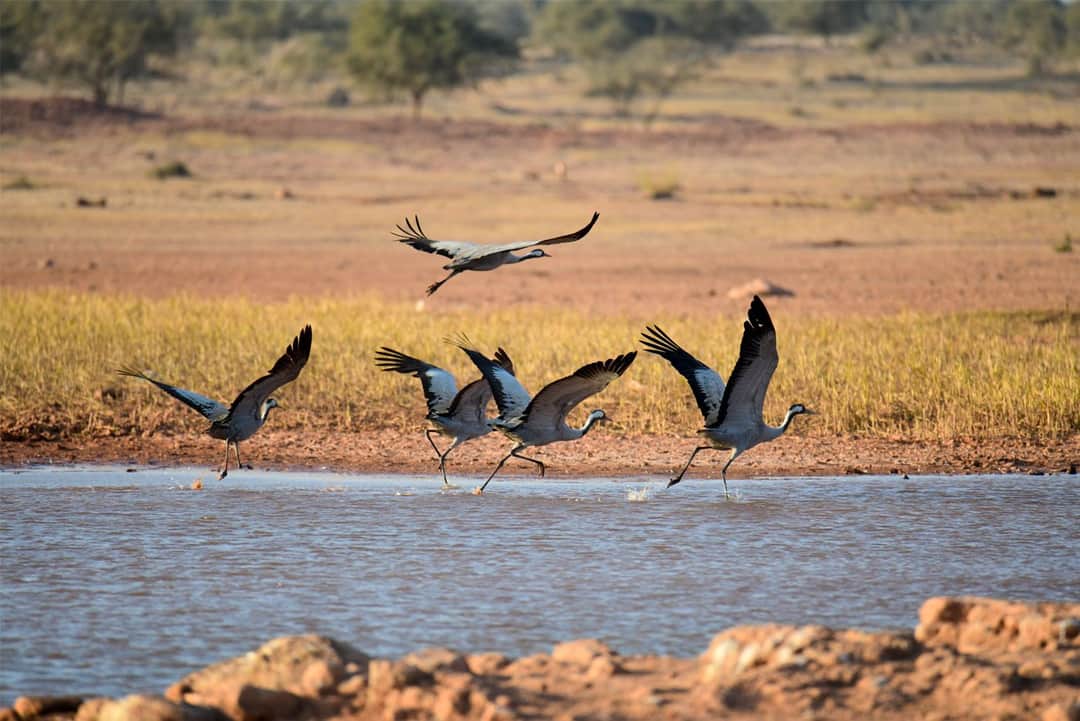
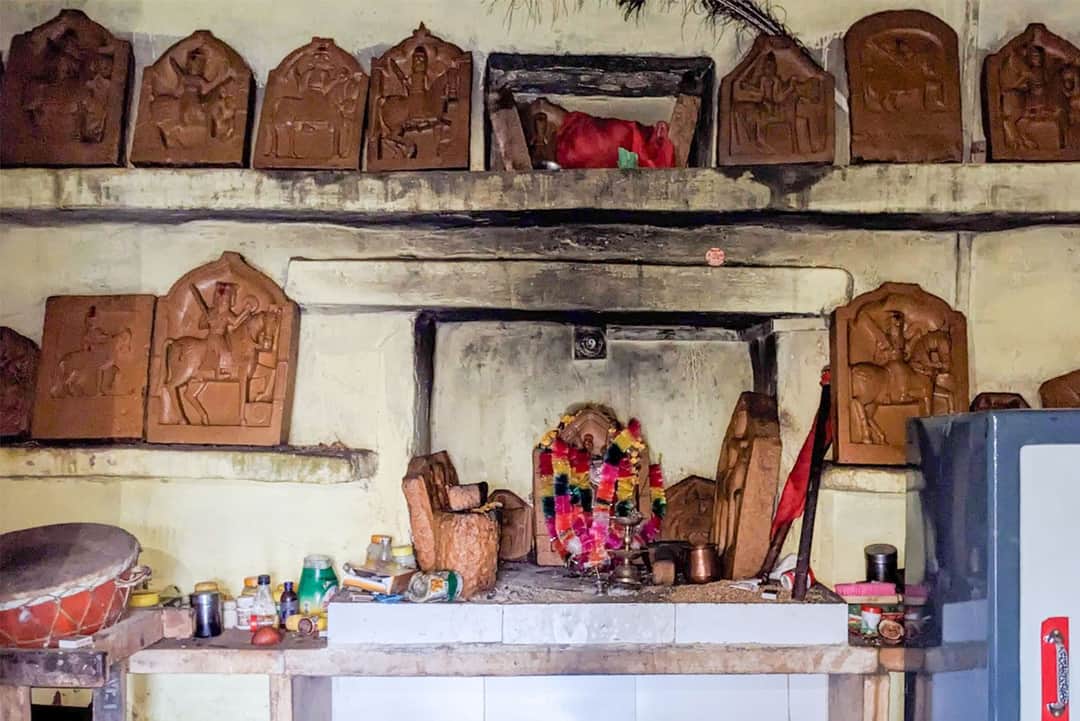
Orans are sacred groves, and considered common property resource, accessible to all people. Each oran has a deity who is worshipped by the villagers nearby, and the land around is kept inviolate by the community – trees cannot be cut, only fallen wood can be taken as firewood and nothing is allowed to be built here, and water bodies are holy.
But, says Sumer Singh, “they [renewable energy companies] have cut down centuries-old trees and uprooted grasses and shrubs. It seems nobody can stop them.”
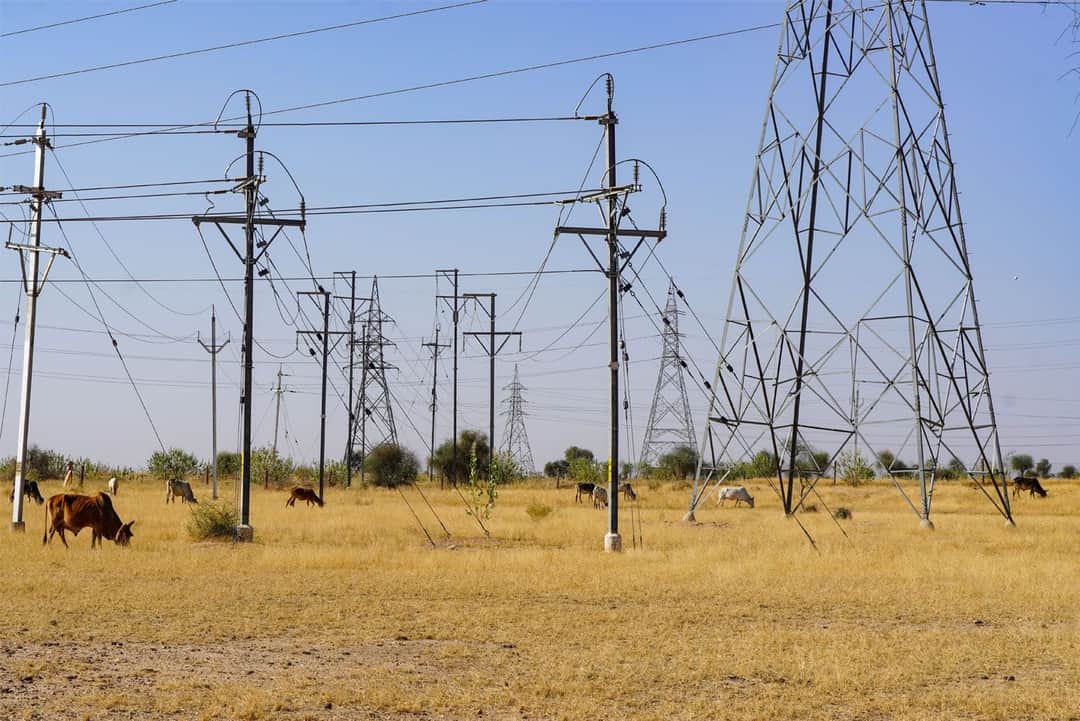
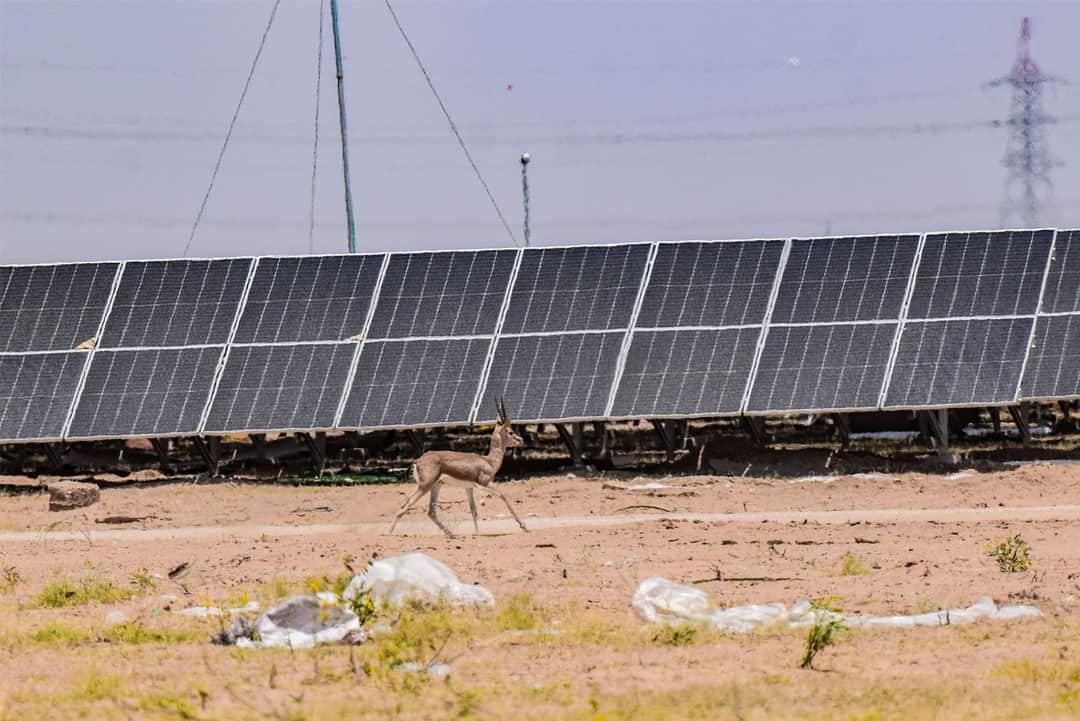
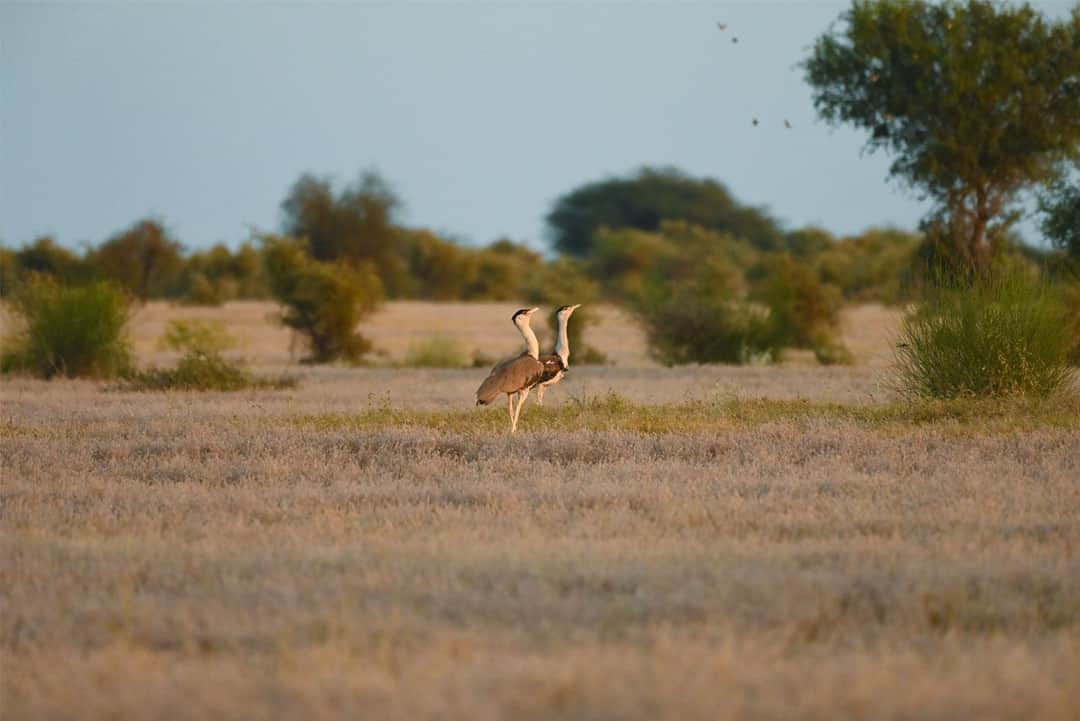
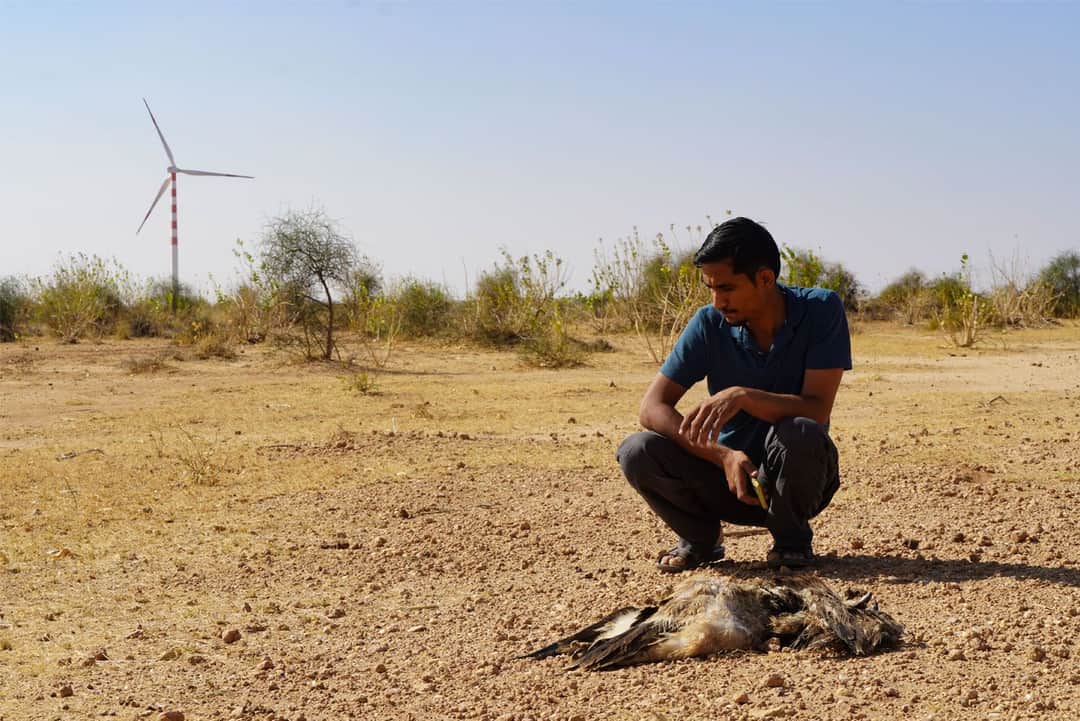
Sumer Singh’s outrage is echoed by residents of hundreds of villages in Jaisalmer who find their orans being taken over by renewable energy (RE) companies. They say in the last 15 years, thousands of hectares of land in this district have been given over to windmills and fenced-in solar farms along with high tension power lines and micro grids to evacuate the power out of the district. All this has violently disturbed the native ecology and is destroying livelihoods of those who depend on these forests.
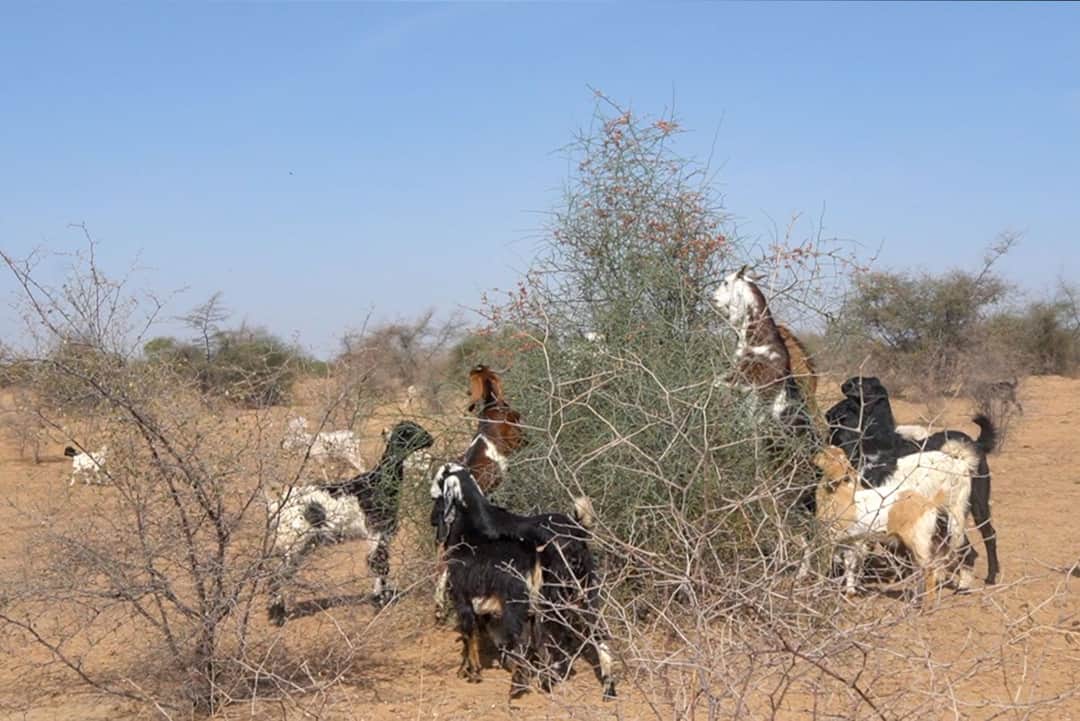
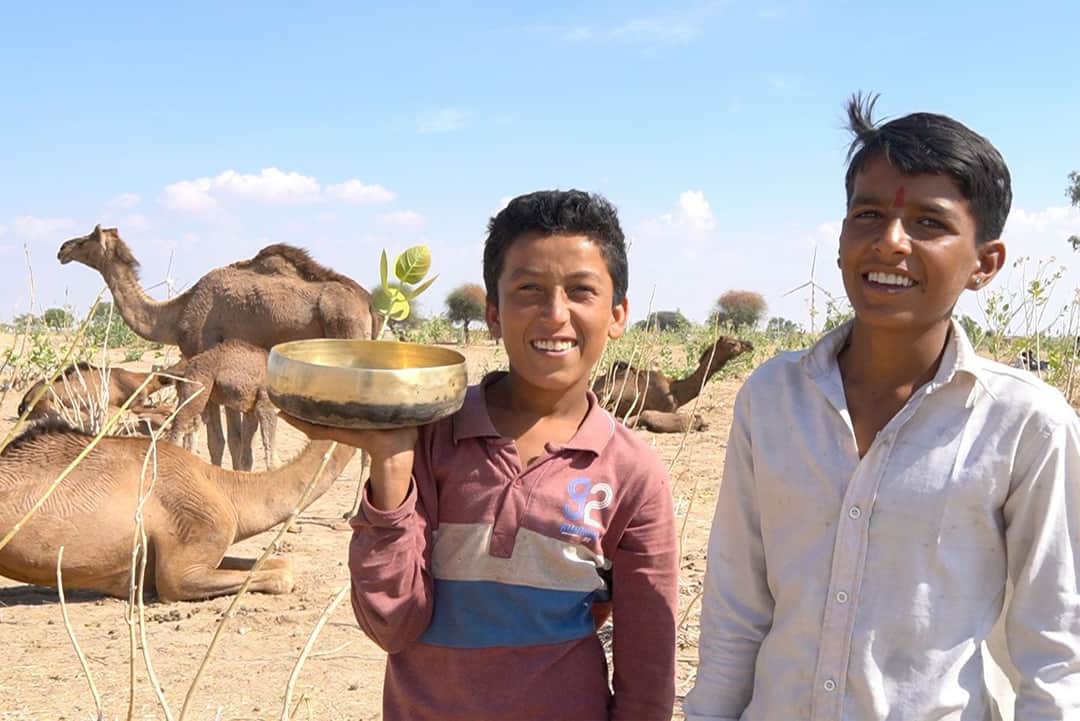
“There is nowhere left to graze. The grass is already gone [in March] and now our animals have only the leaves of ker and kejri trees to eat. They are not getting enough food and so they give less milk. It is down from 5 litres to 2 litres a day,” says pastoralist Jora Ram.
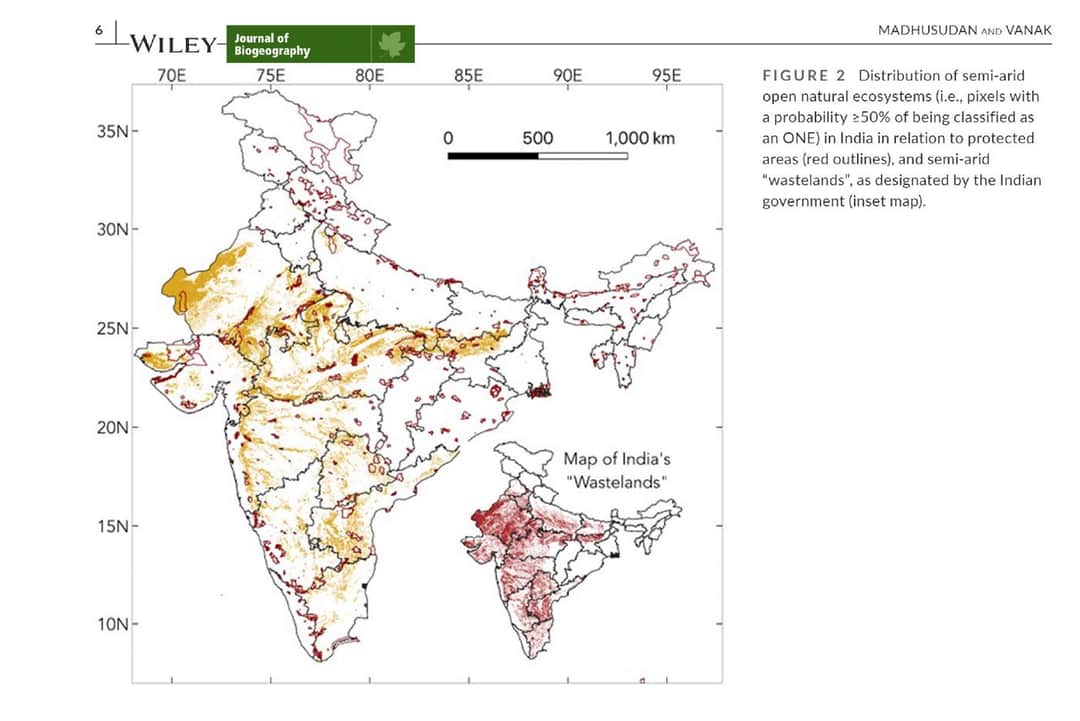
The semi-arid savanna orans are meant for the welfare of the community – they provide fodder, grazing, water, food and firewood to the thousands of people who live around them.