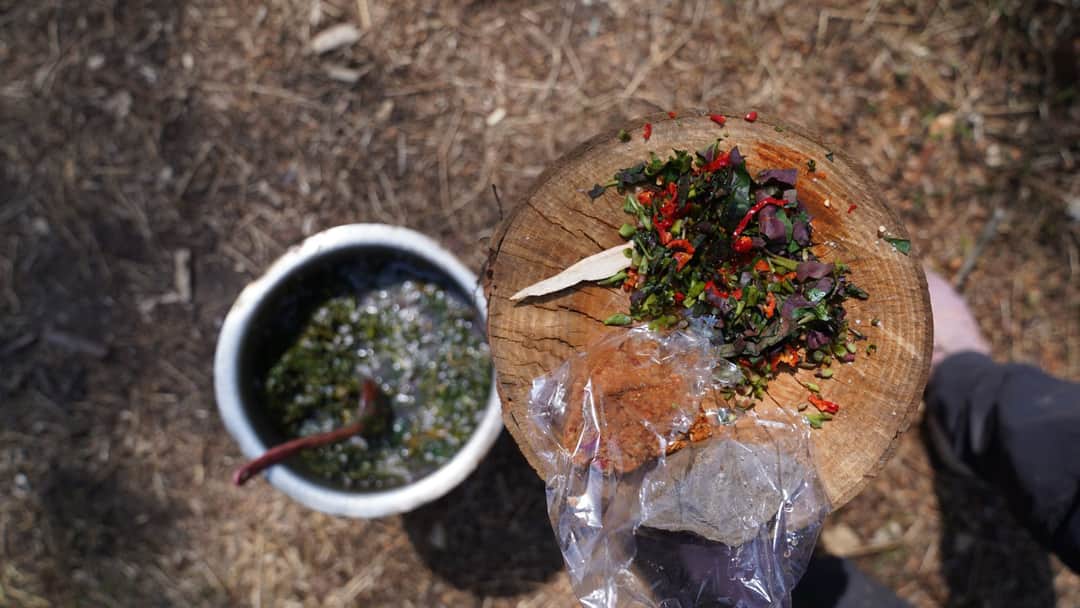

"We usually cook gabie for lunch when we're working," says farmer Asino Mhiesisieno Meyase. The lightly seasoned curry requires only a handful of ingredients – all local to Khonoma in Nagaland. And is within easy reach of farmers working on their land.
"Sometimes we also make galho," she adds, referring to the hearty dish of rice cooked with fresh leafy greens or wild vegetables, local seasonings, and meat such as smoked pork or beef into a porridge. "It's an Angami speciality," the 36-year-old Asino tells PARI.
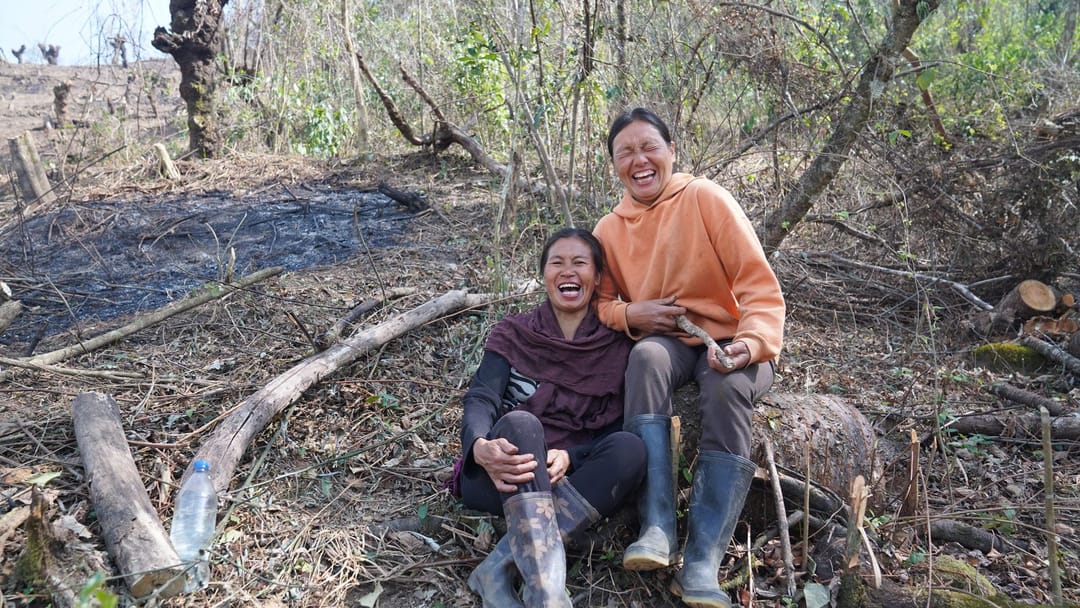
On a mild winter morning Asino is walking with her dear friend, Ütsono Meru on a narrow path leading to the jhum fields of Khonoma. In Nagaland, jhum (shifting cultivation) is commonly practised on the hillsides. As we walk along, the duo suddenly bends down and pick greens and parts of plants, all the while talking and laughing. "We're actually best friends," Asino says. "We're happiest when we're together." And so, these childhood friends coordinate their time and get to work together on their jhum fields.
Ütsono, 42, points to the bundle of freshly gathered herbs in her hand and reels off their names in Tenyidie: gatha (fish mint, Houttuynia cordata), gagei (Himalayan knotweed, Koenigia polystachya), khamhü (wild perilla, Perilla frutescens) and gakra (java water dropwort, Oenanthe javanica).
"We'll use the gatha to make a chutney with king chilly to eat with gabie, and the remaining greens will go into the gabie. Whatever is left over we'll take home to cook later," she explains.