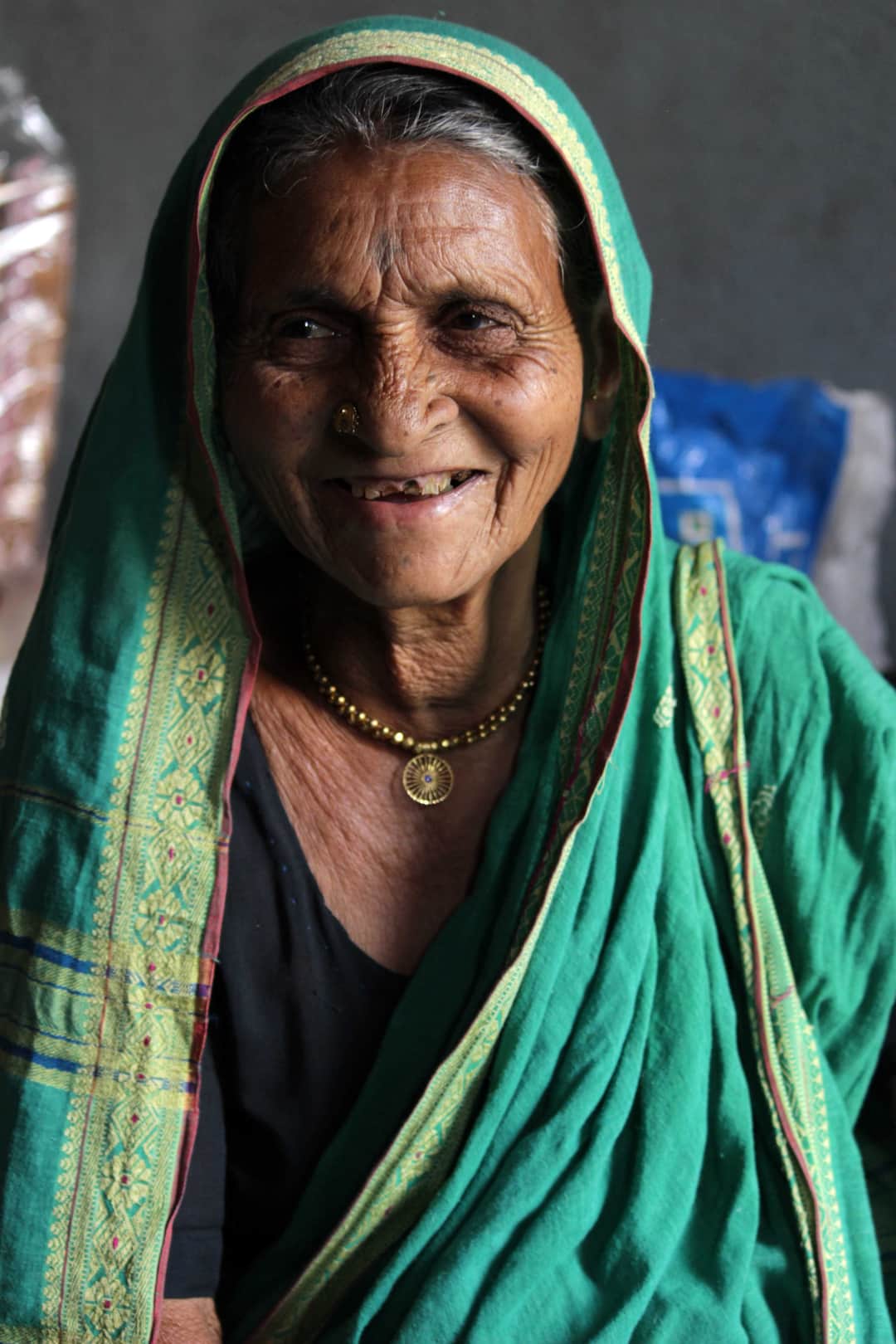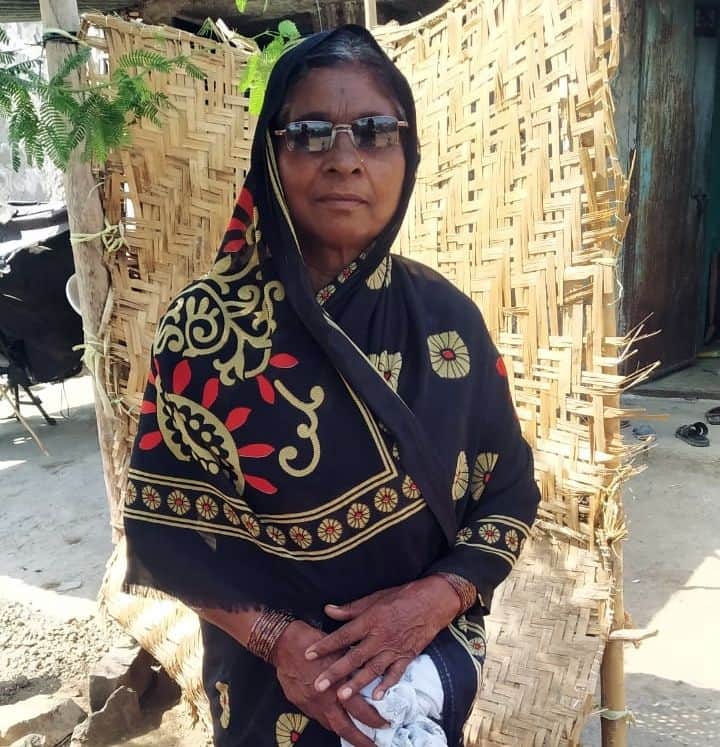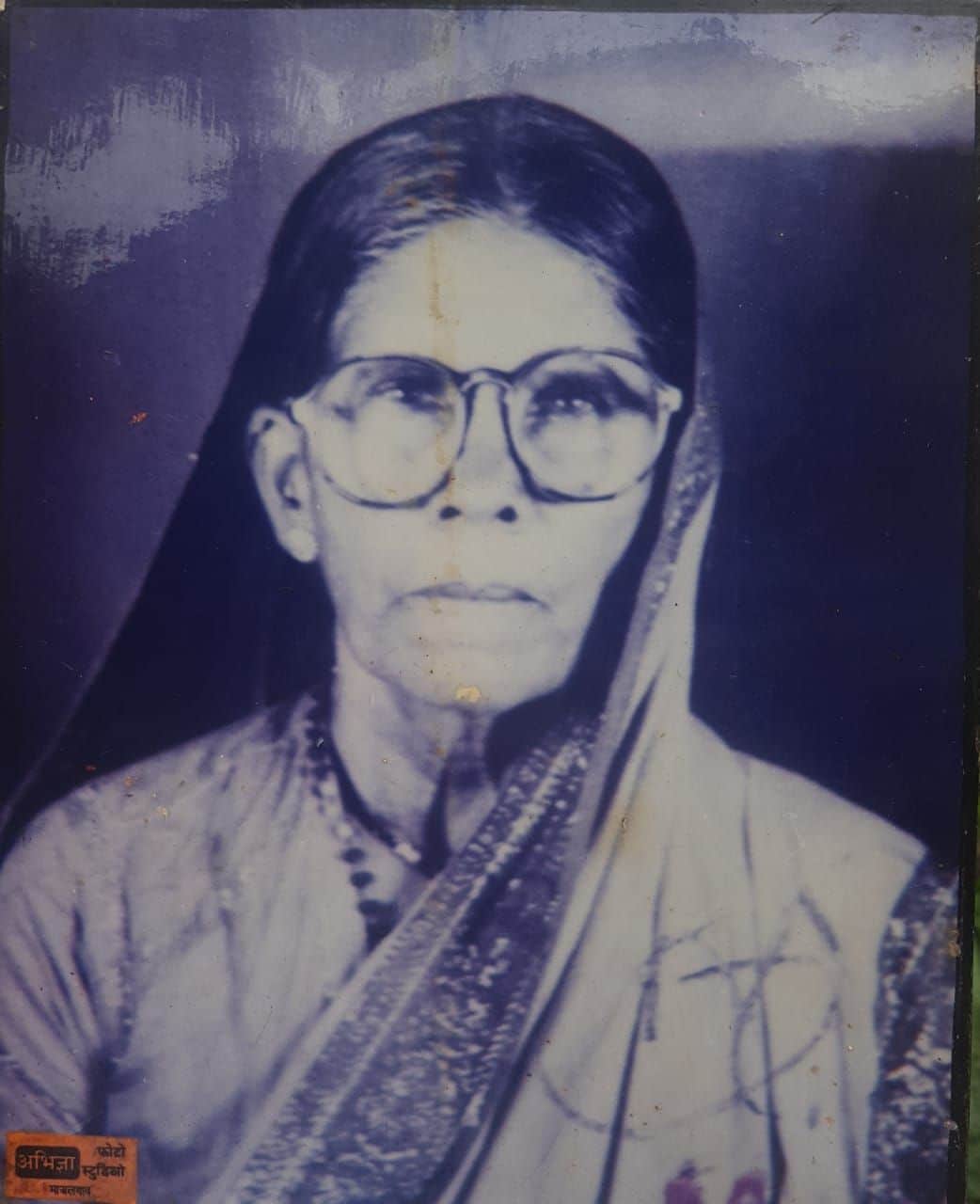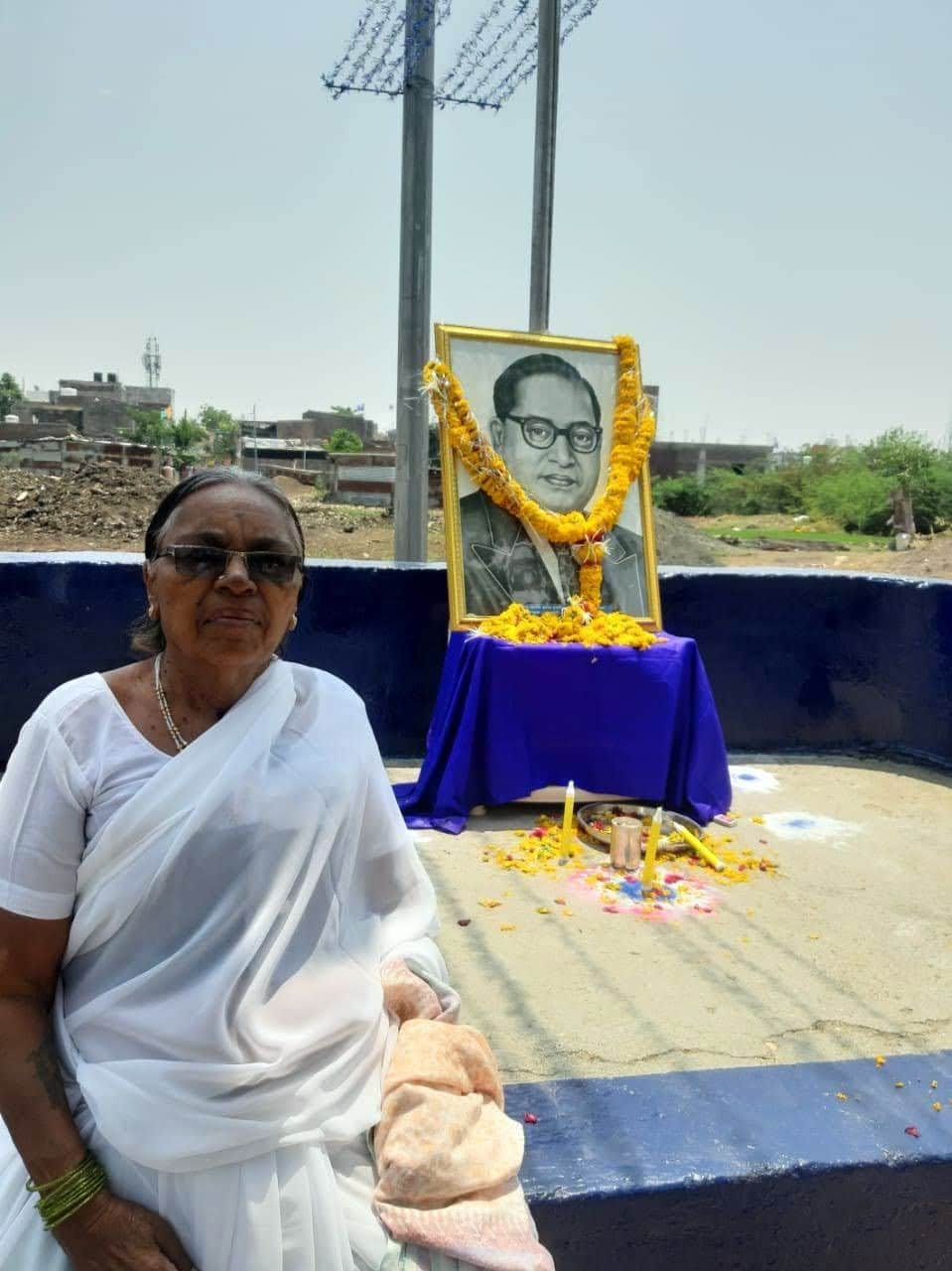

Two mothers and their daughters, from Majalgaon in Beed district, sing in devotion to Gautam Buddha. Their songs highlight his presence in people's daily lives, and how he leads his followers through his teachings
It is Buddha Purnima today, May 26, but there haven't been any public festivities to mark the birth of Gautam Buddha this year. “Now with the corona everywhere, we can’t have big celebrations for anything,” says 75-year-old Radha Borhade from Savargaon village in Maharashtra’s Beed district.
“We will pray at home and make kheer as a special treat for the children.” The Covid-19 pandemic and lockdown prevented public celebrations of Buddha Purnima in 2020, and again this year, says Radhabai with some disappointment in her voice, speaking to me over the phone.
In April 2017, when the PARI team visited Beed’s Majalgaon taluka to meet singers of the Grindmill Songs Project (GSP), we were sent to Radhabai in Savargaon. The village is about 12 kilometres away from Majalgaon village, in the same taluka. Later, PARI published some of her songs, which had been recorded by the original GSP team. Her ovi presented in ‘Even one lakh songs are not enough for our Bhimrao,’ celebrate Dr. Babasaheb Ambedkar and the importance he gave to education, unity and self-respect.
In ‘Songs of Majalgaon, memories of Mhow,’ Radhabai and others, who belong to the Nau Bauddha community (formerly Dalits), express gratitude to Dr. Ambedkar for the new identity his Navayana Buddhism gave them to counter caste-based oppression. In ‘Songs of gratitude, chants of celebration,’ Radhabai sings about Buddha’s teachings and how Buddhism emerged for the welfare of Dalits and to remove the stigma of untouchability.
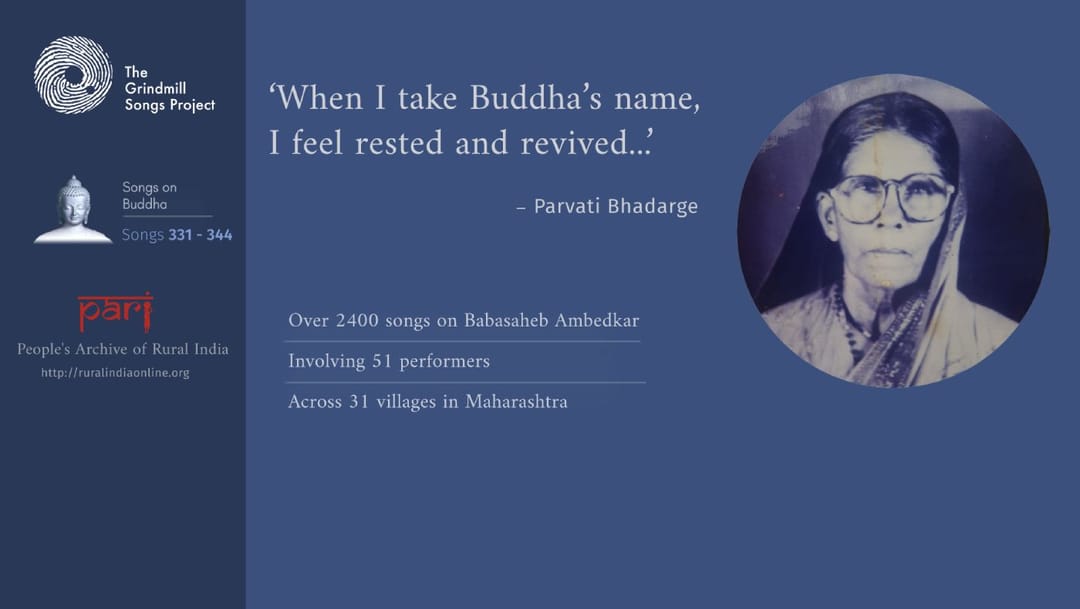
When we visited Majalgaon, it was to meet the ovi singers Kamal Salve (Radhabai’s daughter) and Rangu Potbhare. But they were away visiting relatives. We could not meet Parvati Bhadarge, Rangubai’s mother, as she had died a few years ago.