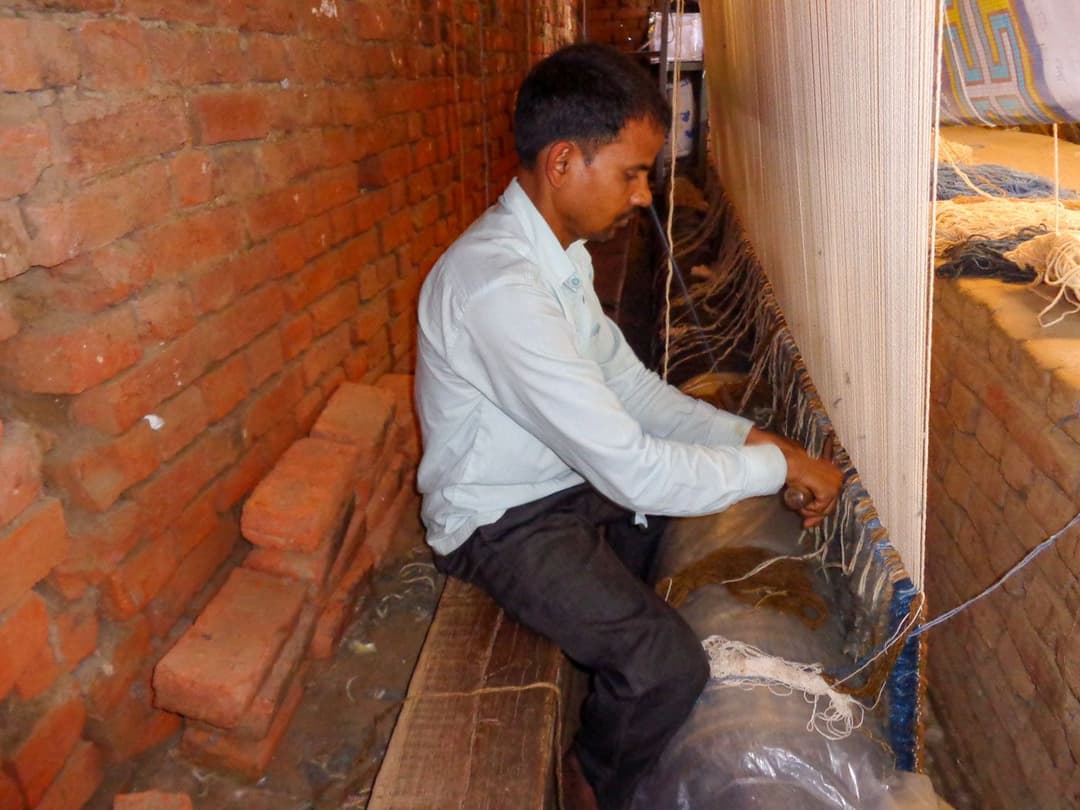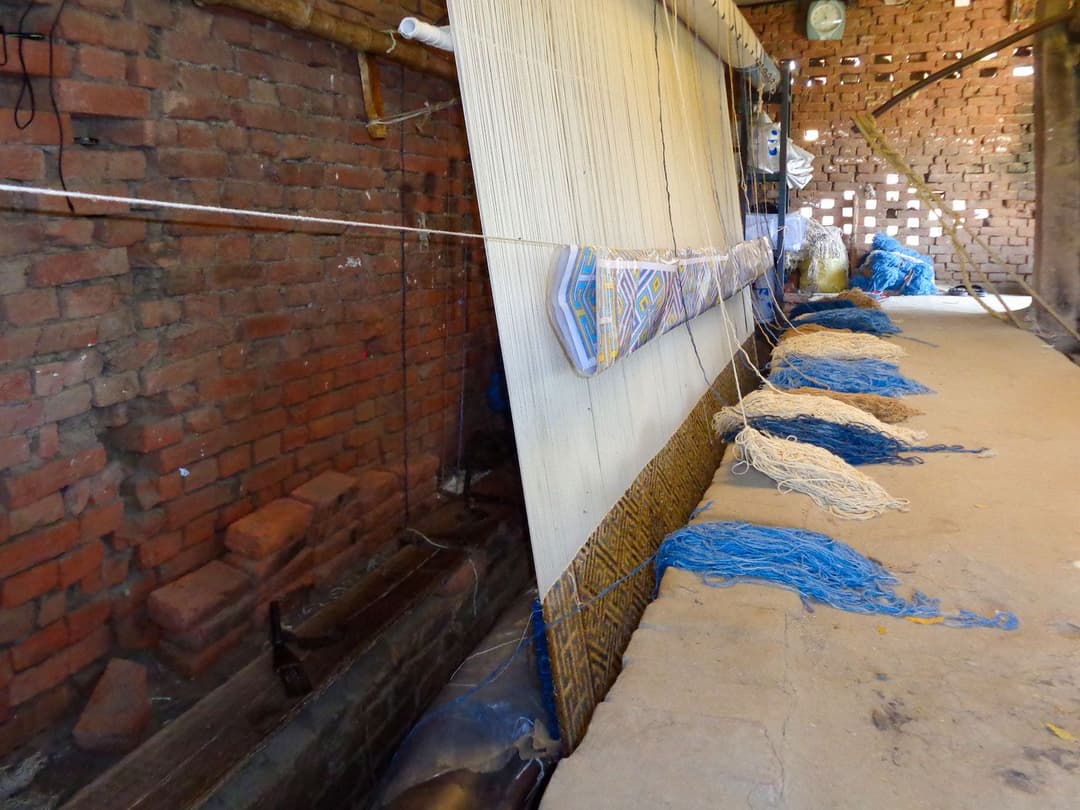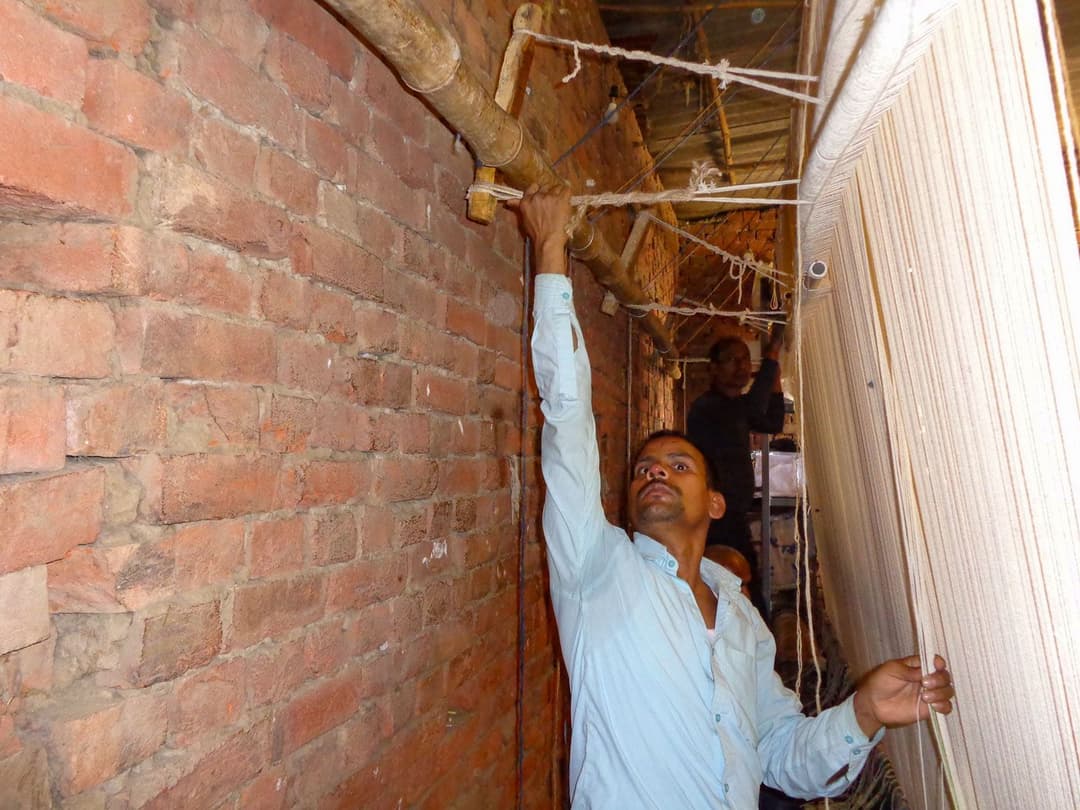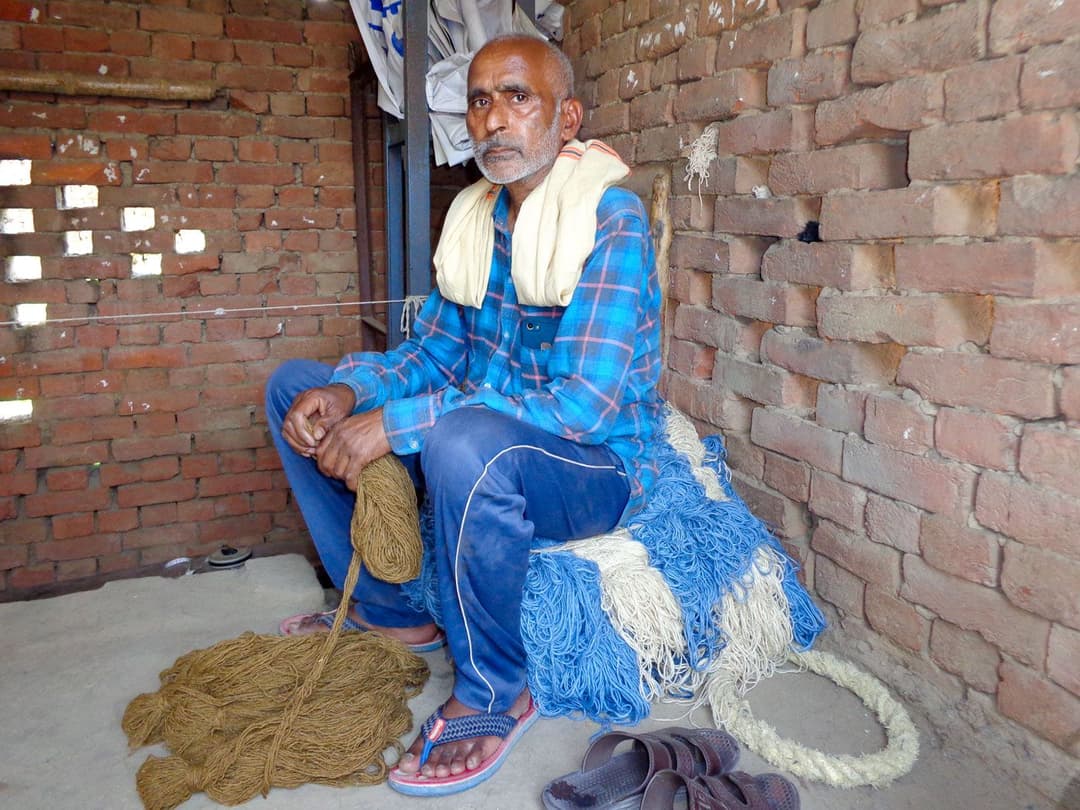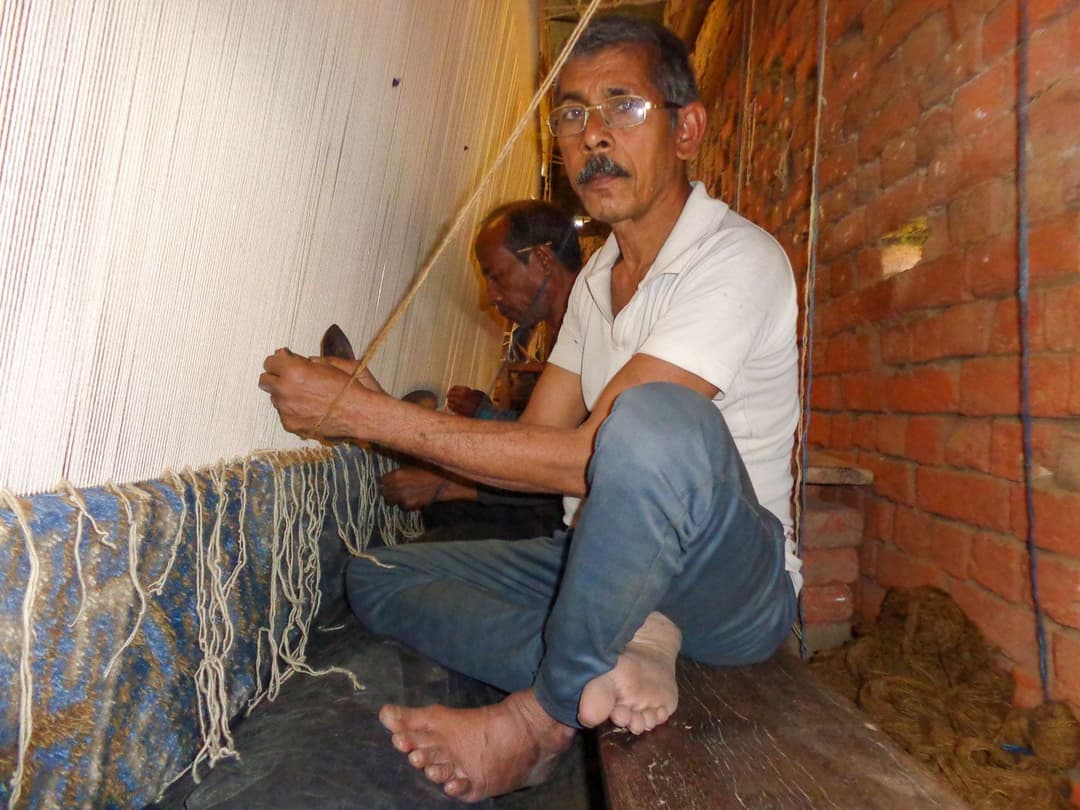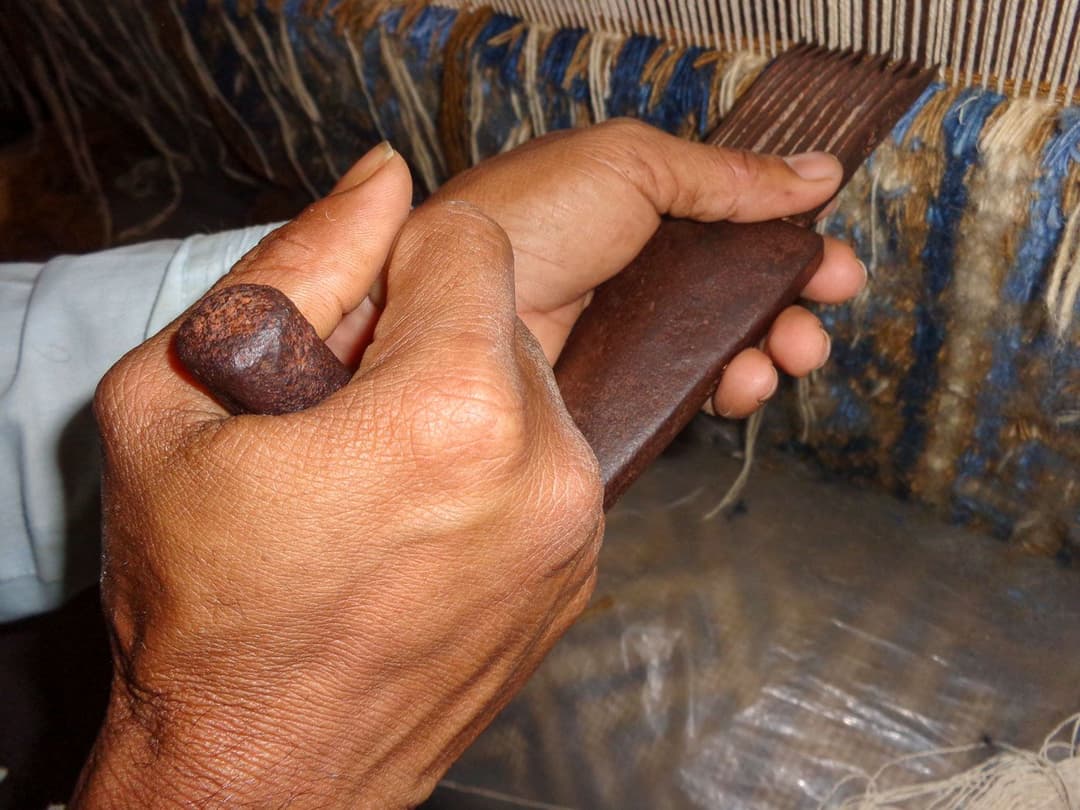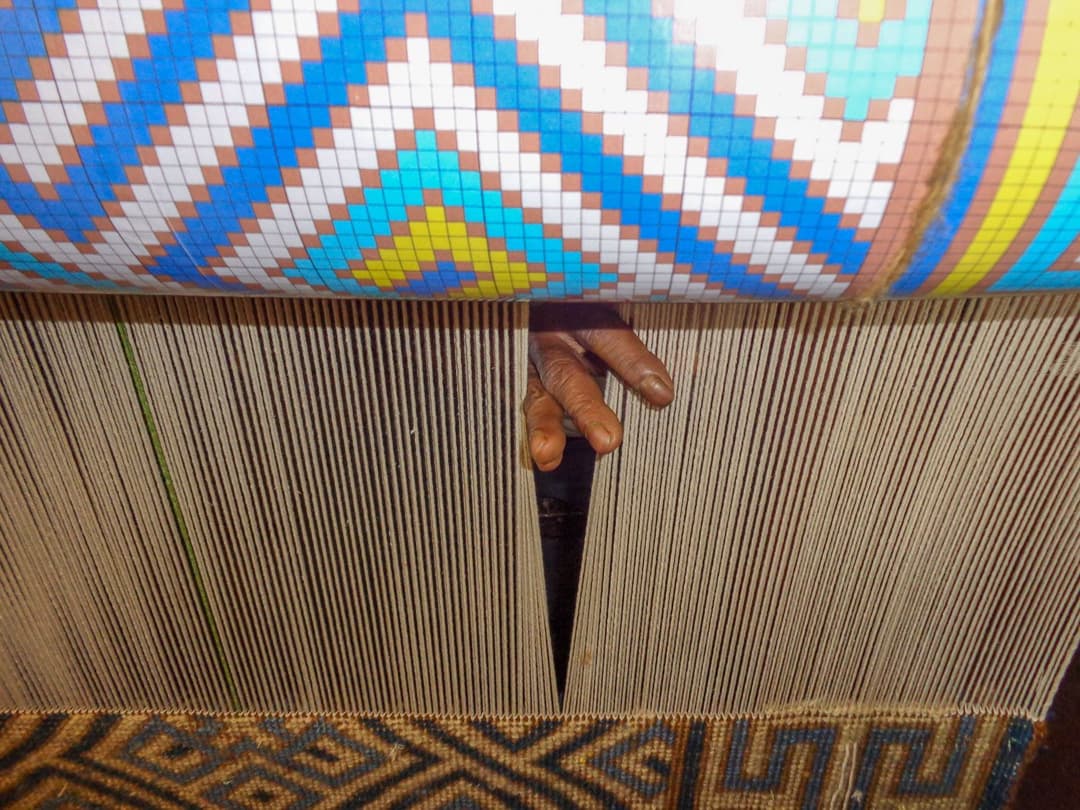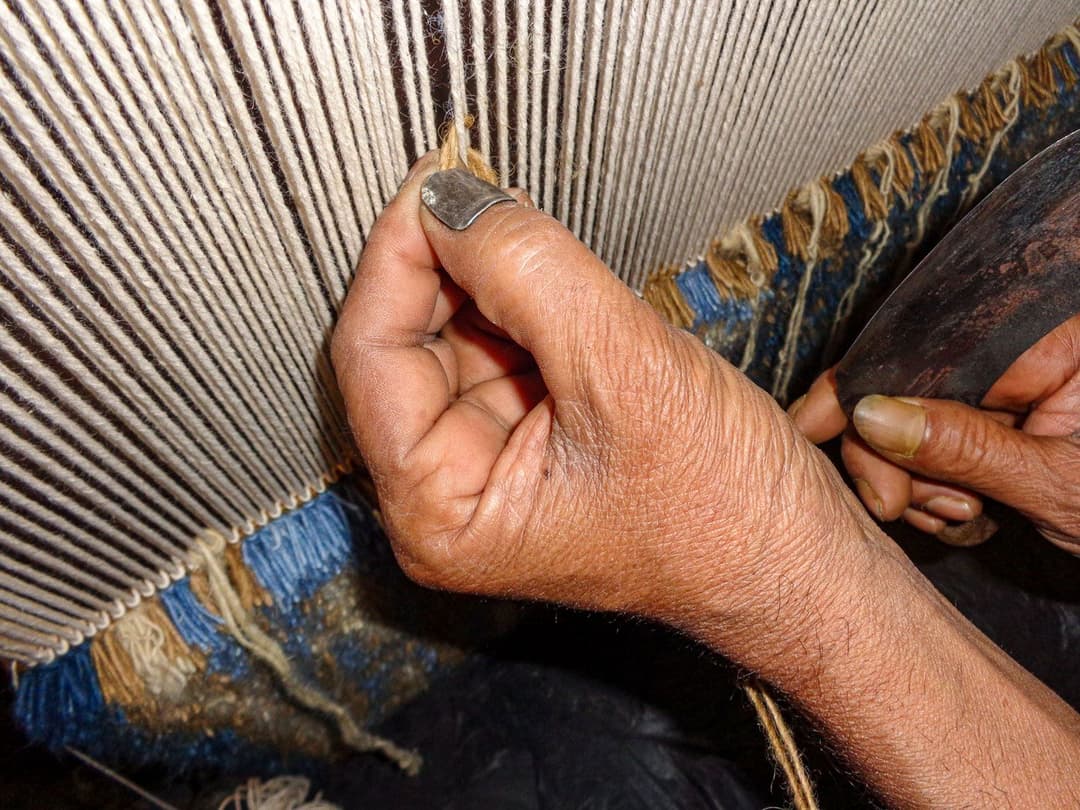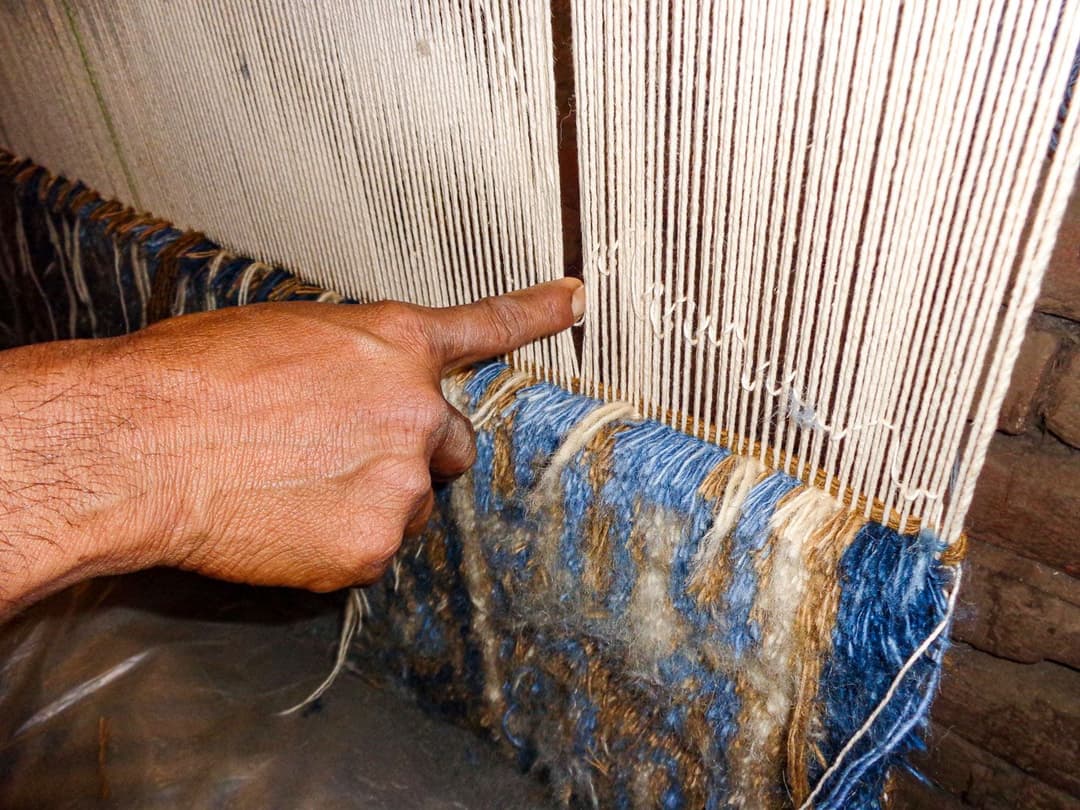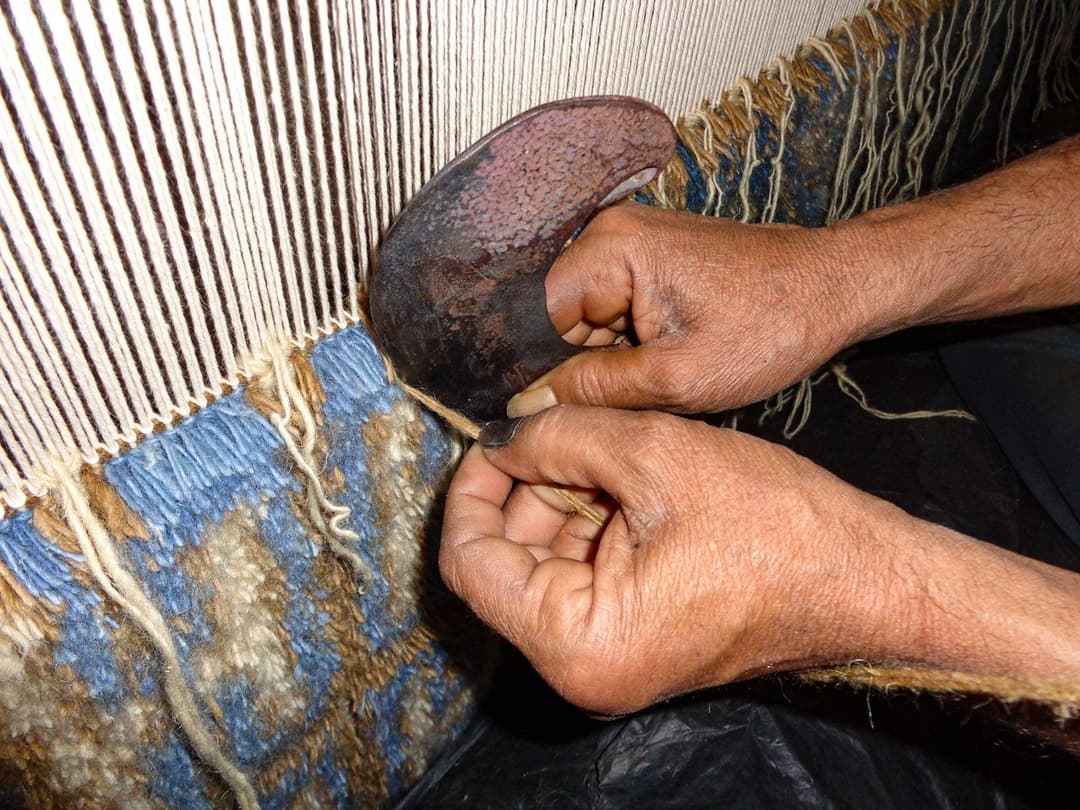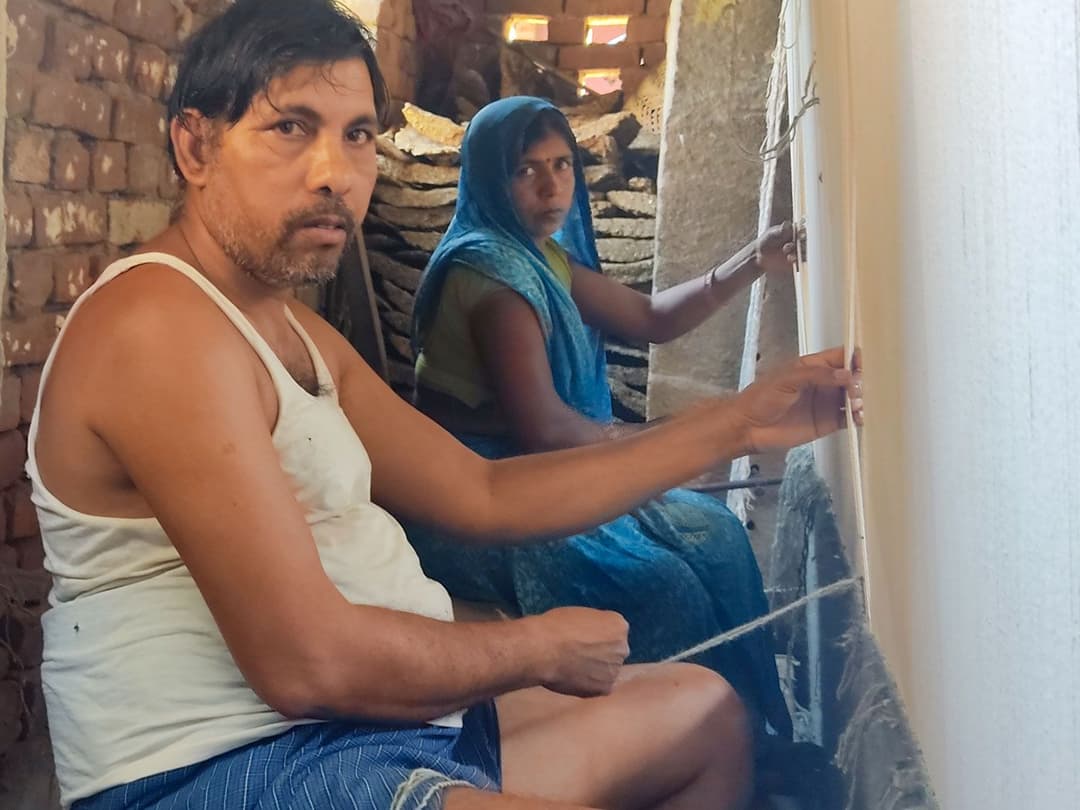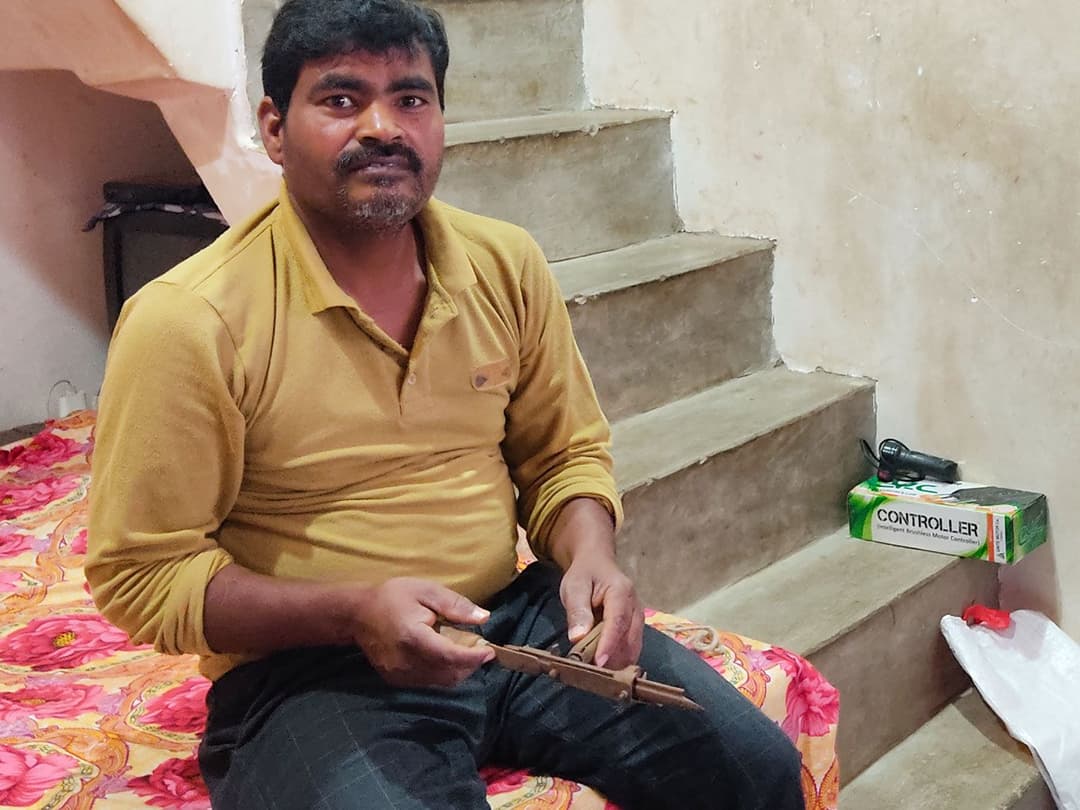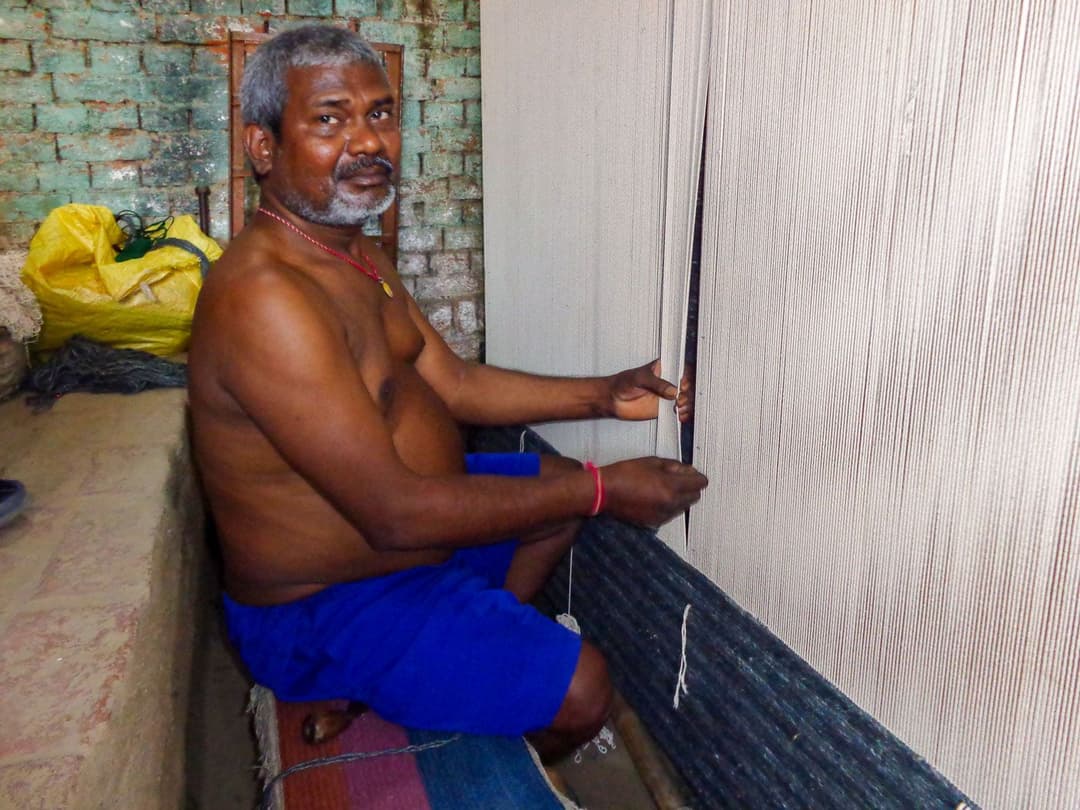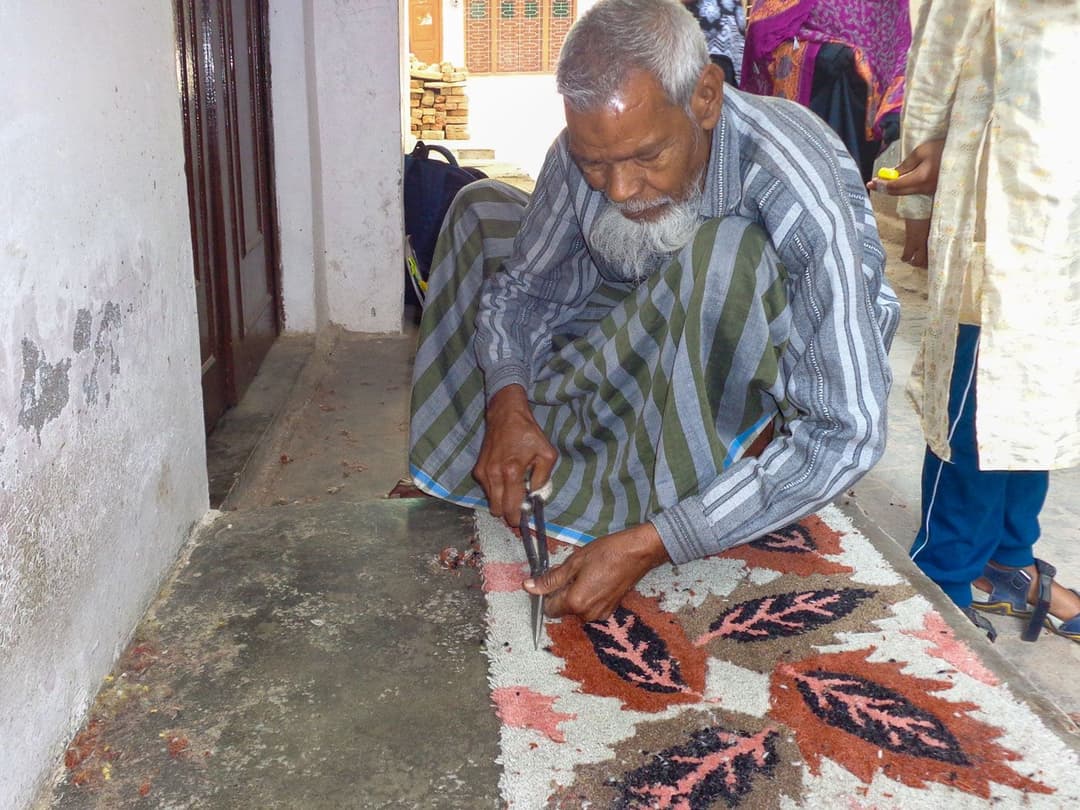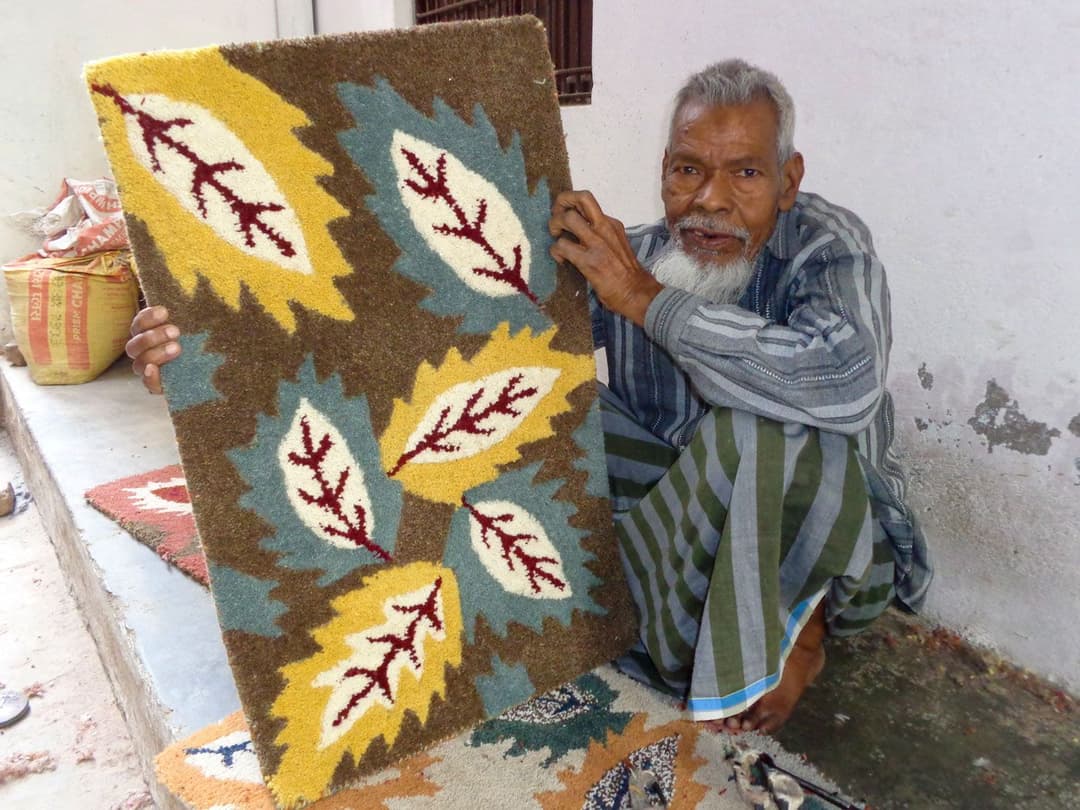

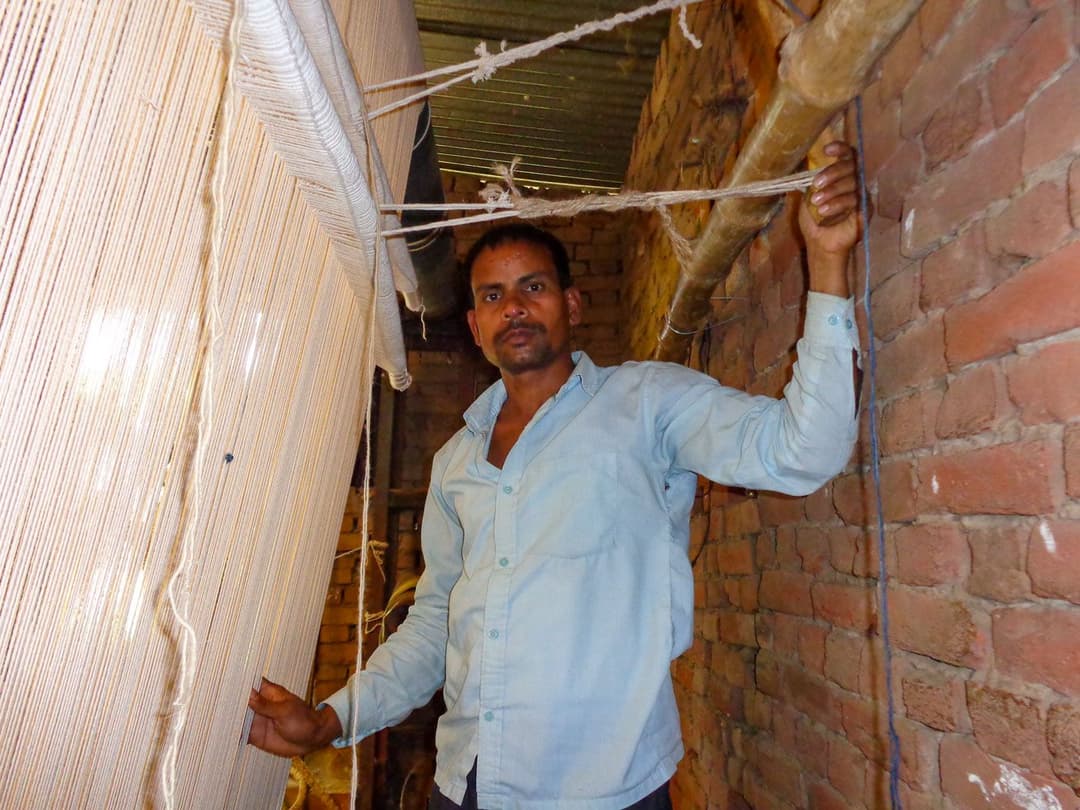
Toofani and his team of weavers have been working since 6:30 a.m. At the pace of 12 inches a day, the four of them will take 40 days to finish the 23x6 feet galicha (carpet) they are working on.
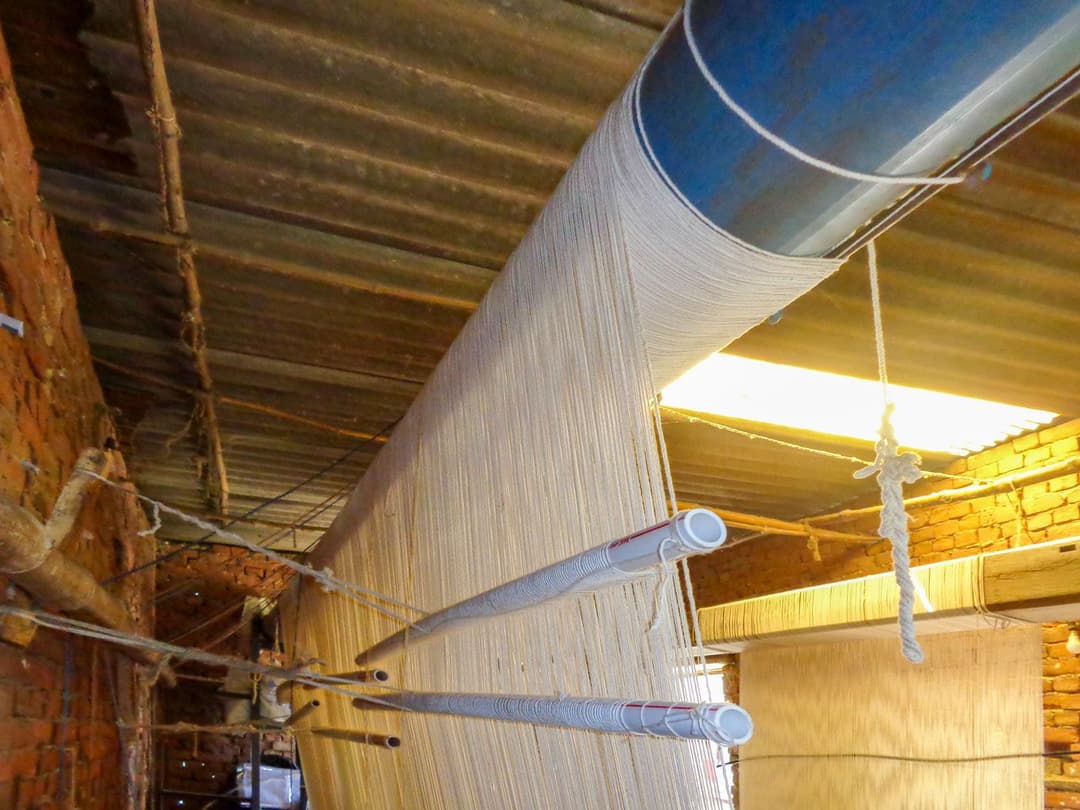
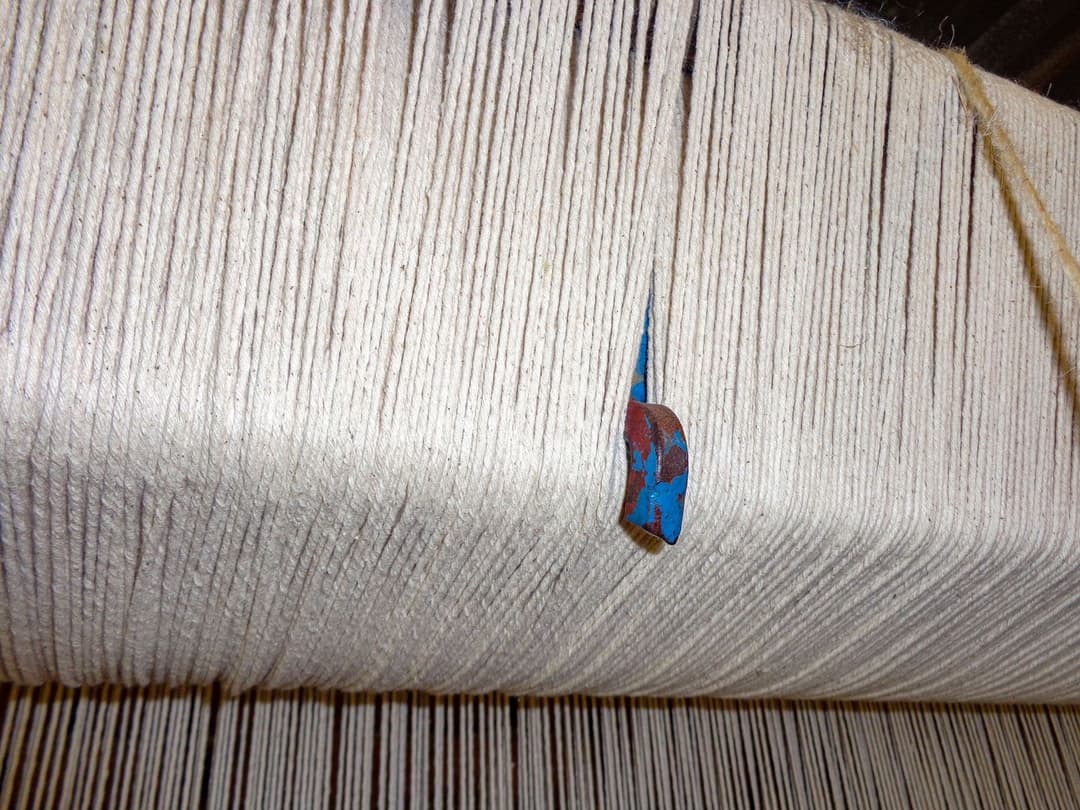
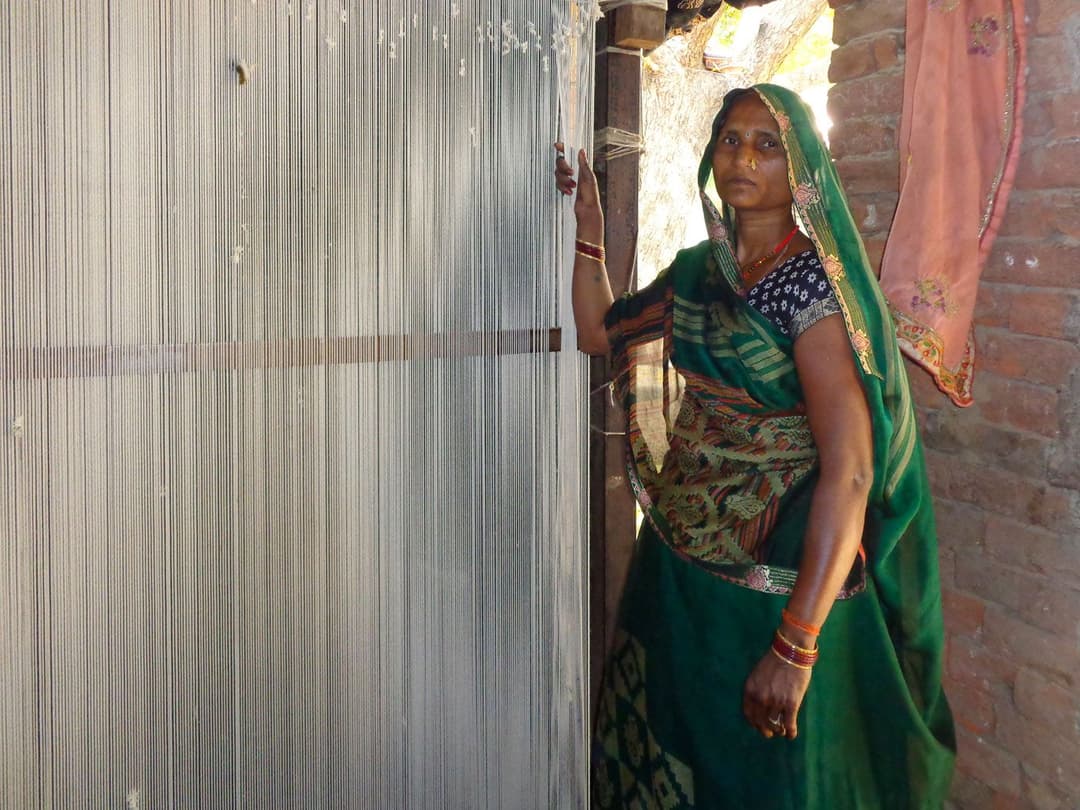
At half past noon, Toofani Bind finally sits down to rest on a wooden bench. Behind him, in the tin shed where he works, white cotton threads hang from a wooden frame at his workshop in Purjagir Mujehara village of Uttar Pradesh. This is the heart of the state’s carpet weaving industry, introduced in Mirzapur by the Mughals, and industrialised by the British. UP dominates the national production of rugs, mats and carpets, accounting for half the national output (47 per cent), says the 2020 All India Handloom Census.
The road leading up to the Purjagir Mujehara village gets narrower as one gets off the highway from Mirzapur city. On either side are pucca, mostly one-storeyed houses, as well as kuccha homes with thatched roofs; the smoke from cow dung cakes rising in the air. In the day, men are hardly visible outdoors, but women can be seen doing household chores like washing clothes under the hand pump or talking to a local vendor of vegetables or fashion accessories.
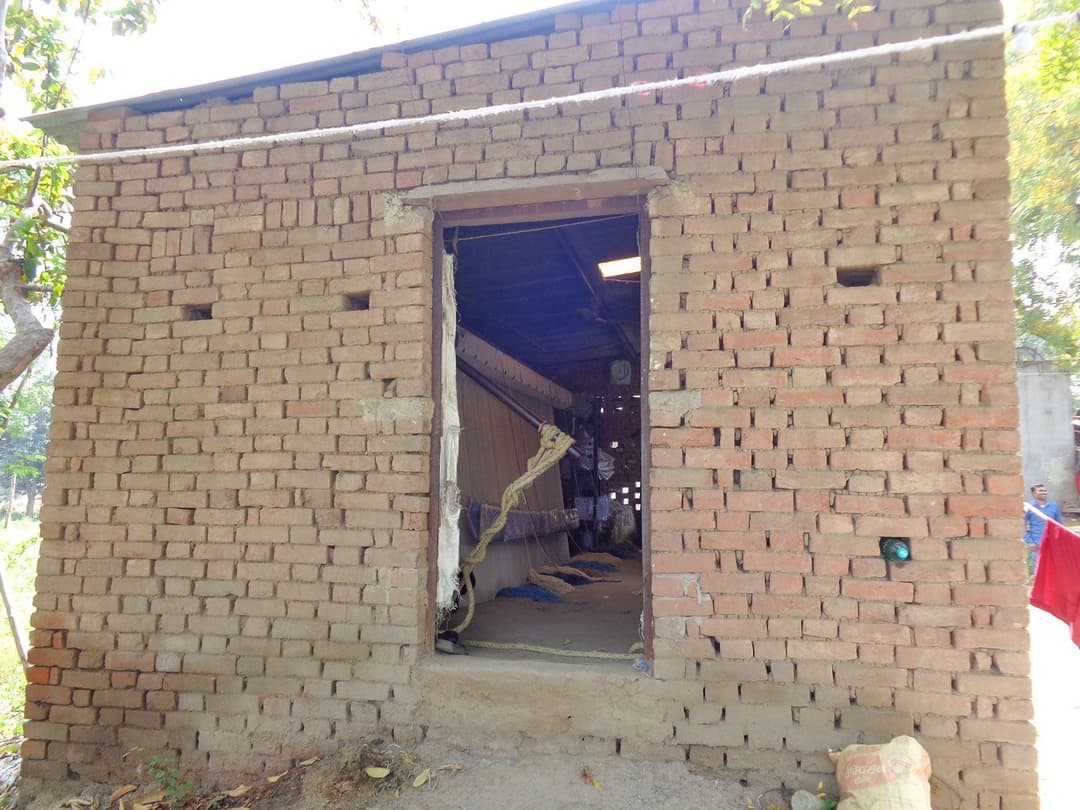
There are no signs that this is a weaver’s locality – no carpets or galicha as the locals refer to it, hang or are stacked outside. Although households have an additional space or room allocated for carpet weaving, once ready, middlemen pick it up for washing and cleaning.
Speaking to PARI as he rests, Toofani says, “I learnt it [knotted weaving] from my father and have been doing this since I was 12-13 years old.” His family belong to the Bind community (listed as Other Backward Class in the state). Most weavers are listed under OBC in UP, says the Census.