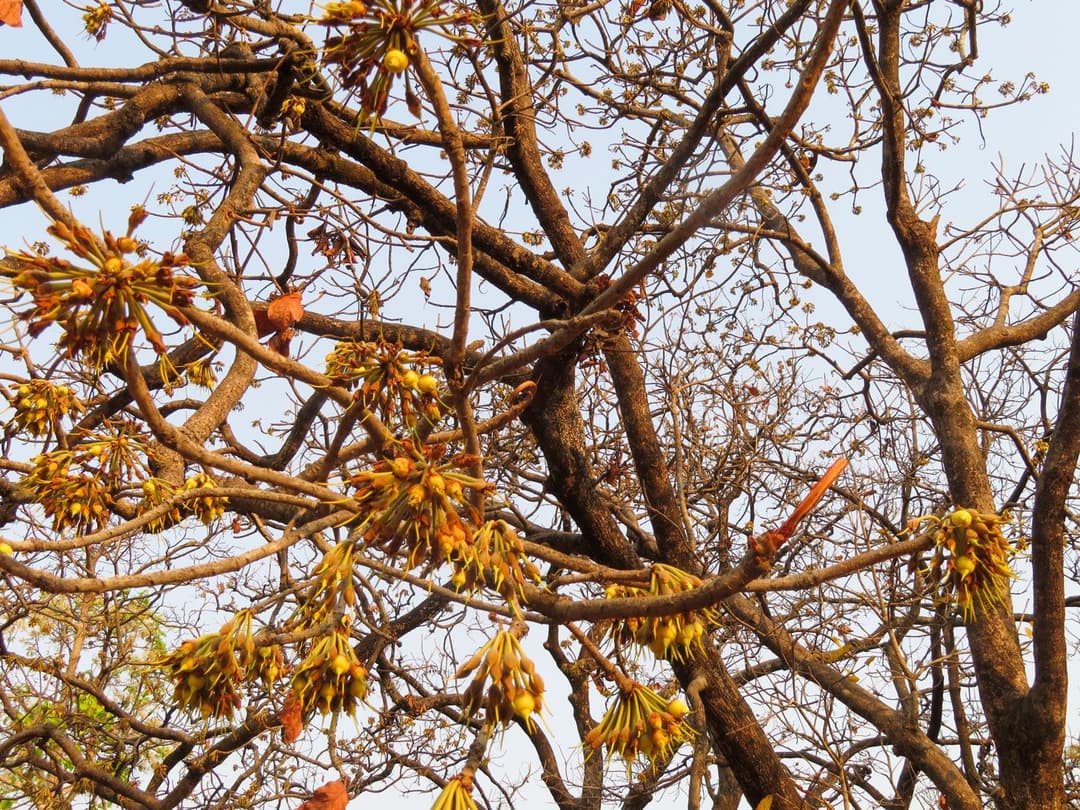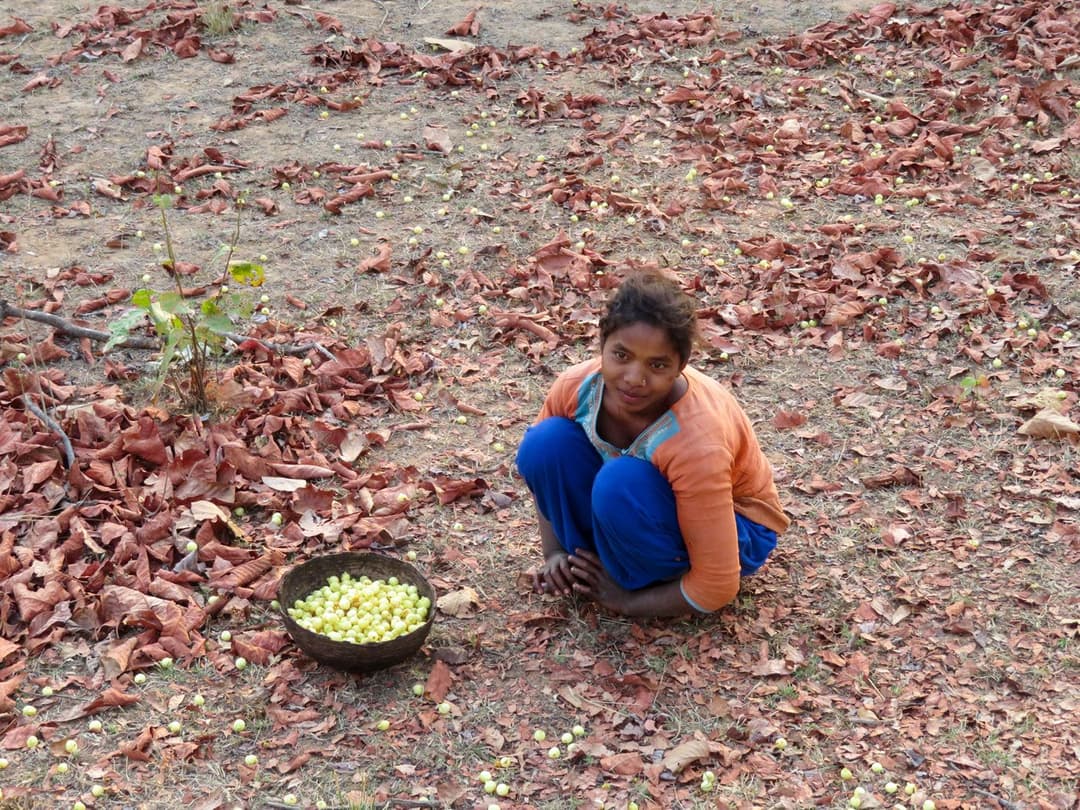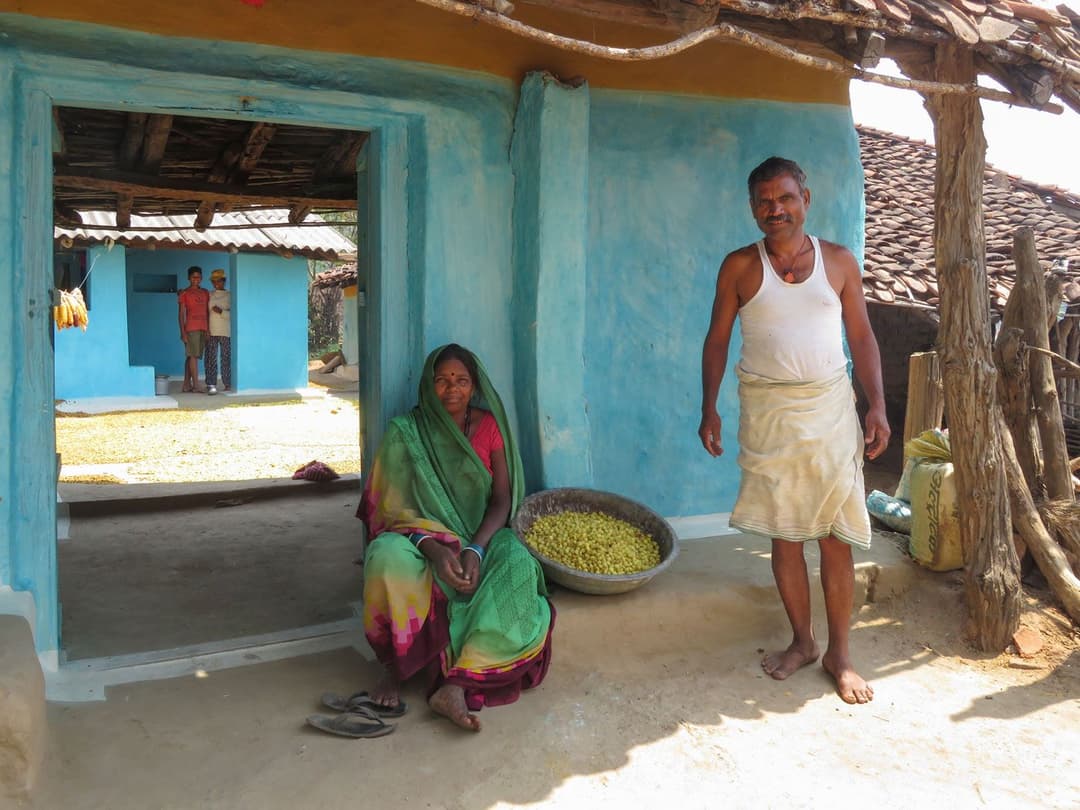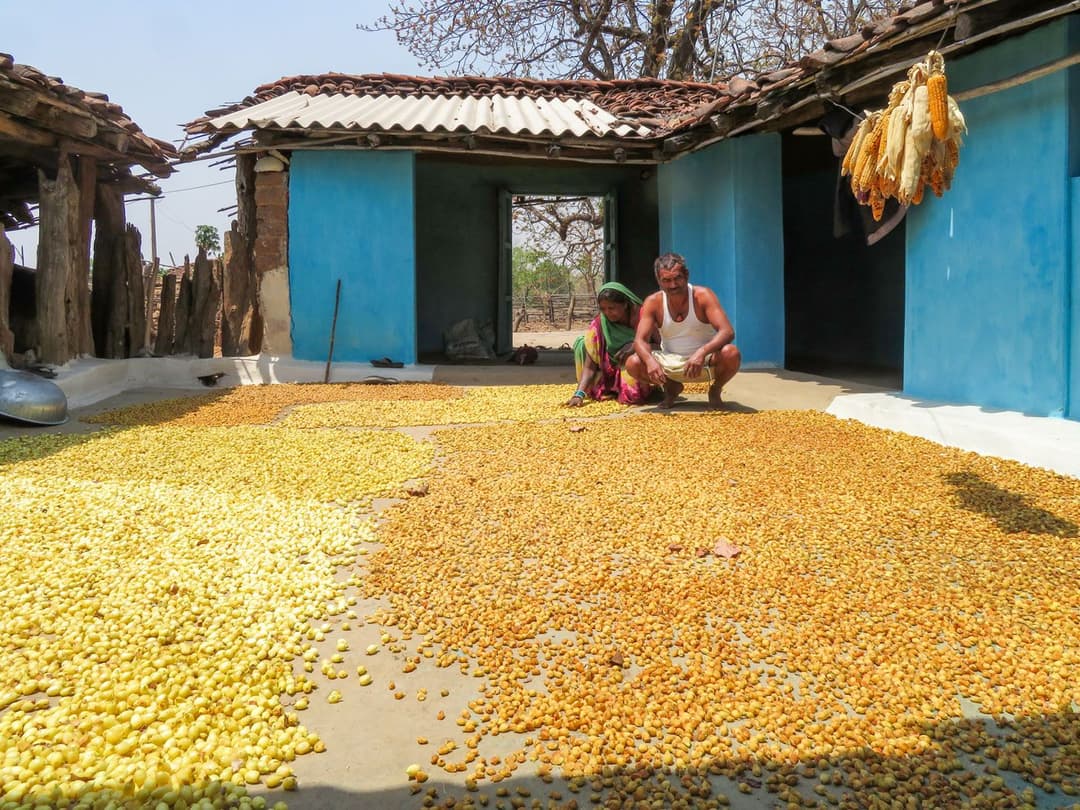

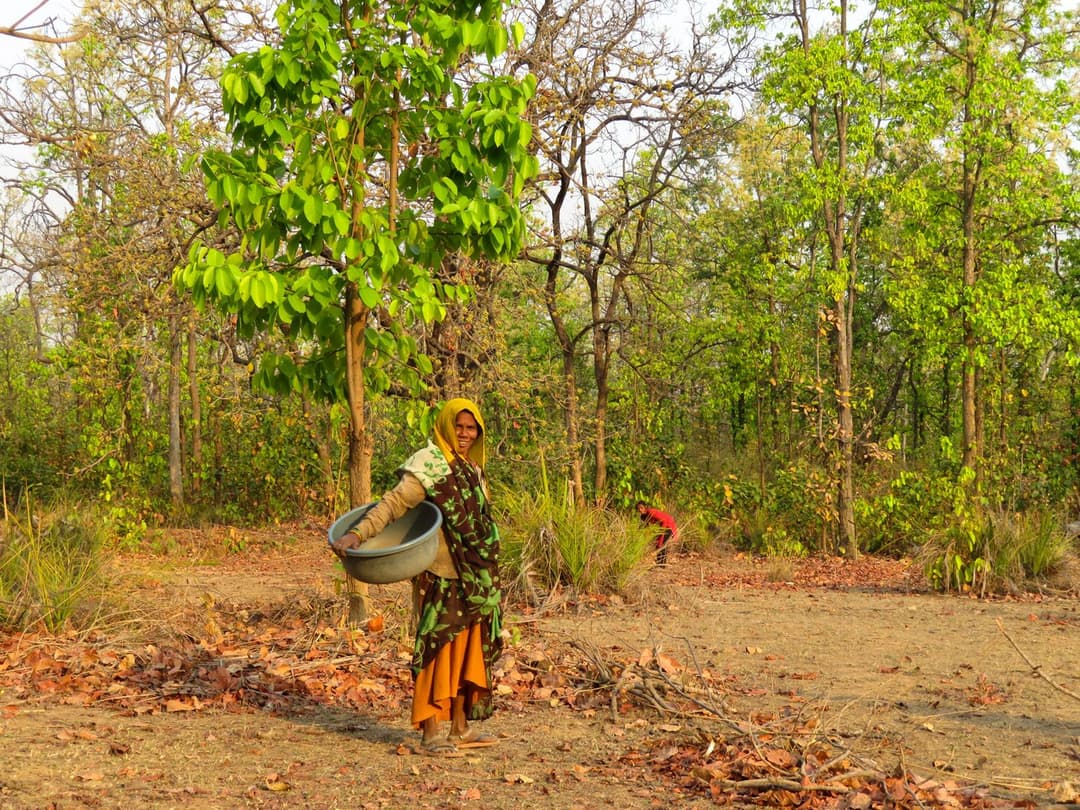
Sukhrani Singh does not remember a year in which she did not gather mahua flowers from the forest. “From when I was a young girl, I used to accompany my mother to the forest. Now I bring my children with me,” says Sukhrani, 45. She had left home at 5 a.m. to pick the bright green mahua blossoms just as they began to drop off the trees. She was there until noon, gathering the flowers that fell under the rising heat. Once home, she would spread them out to dry in the sun.
Mahua flowers are an assured source of income for small farmers like Sukhrani who live next to the Bandhavgarh Tiger Reserve in Madhya Pradesh's Umaria district. A kilo of the dried flowers earns Sukhrani about Rs. 40 in Umaria market – 30 kilometres from Parasi, her village in Manpur block. She usually manages to gather about 200 kilos in the season, which lasts about 2-3 weeks in April. “The tree is very valuable to us,” says Sukhrani. Besides its flowers, the fruit and the bark of the tree are valued for their nutritional and medicinal qualities.
During the season, Sukhrani returns from the forest by 1 p.m. and cooks and feeds her family that includes her husband and their five children. She steps out again at about 3 p.m. to join her husband in cutting and gathering the wheat harvest. Sukhrani and her husband, who belong to the Gond Adivasi community, own about four bighas of land (roughly one acre), where they cultivate rainfed wheat, mostly for self-consumption.