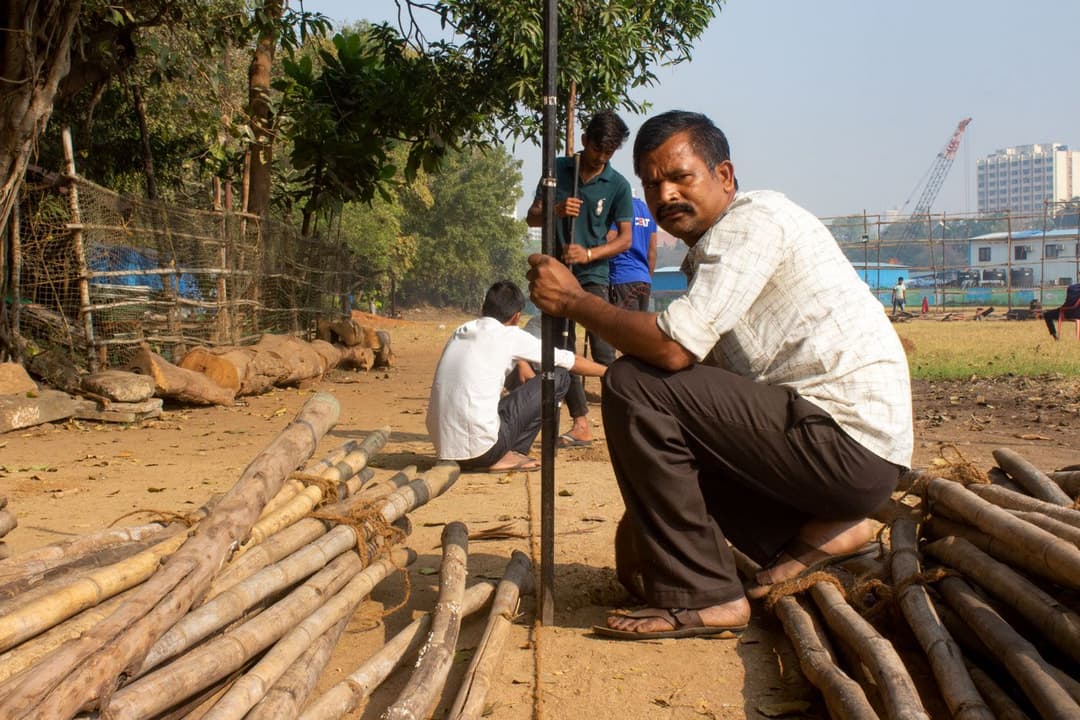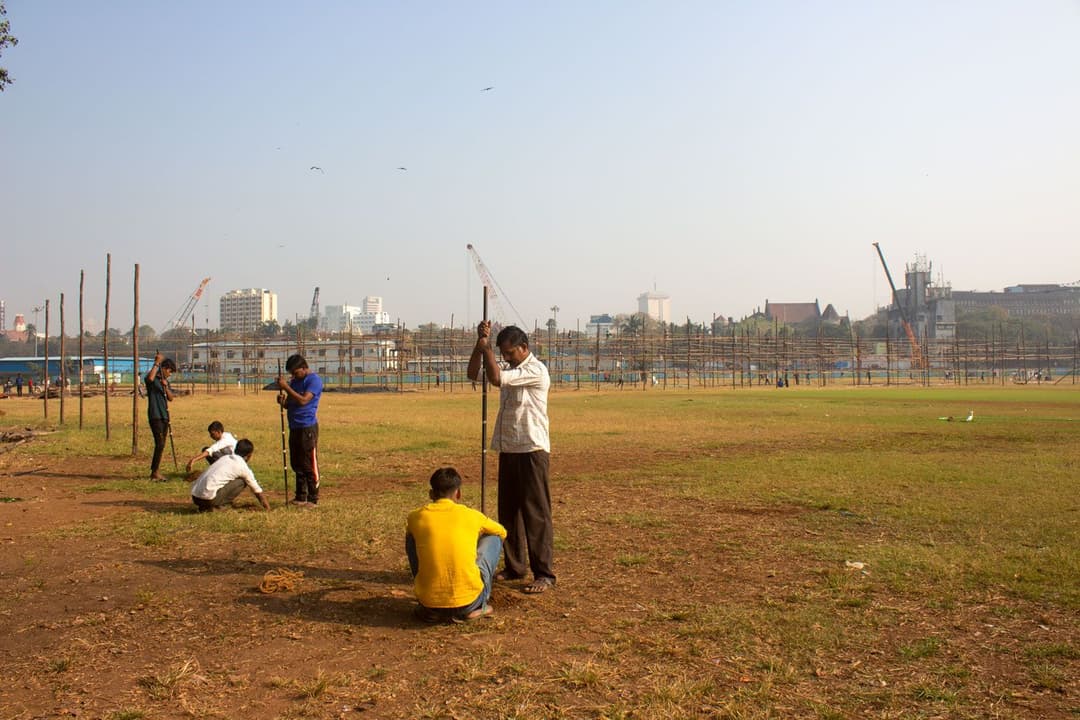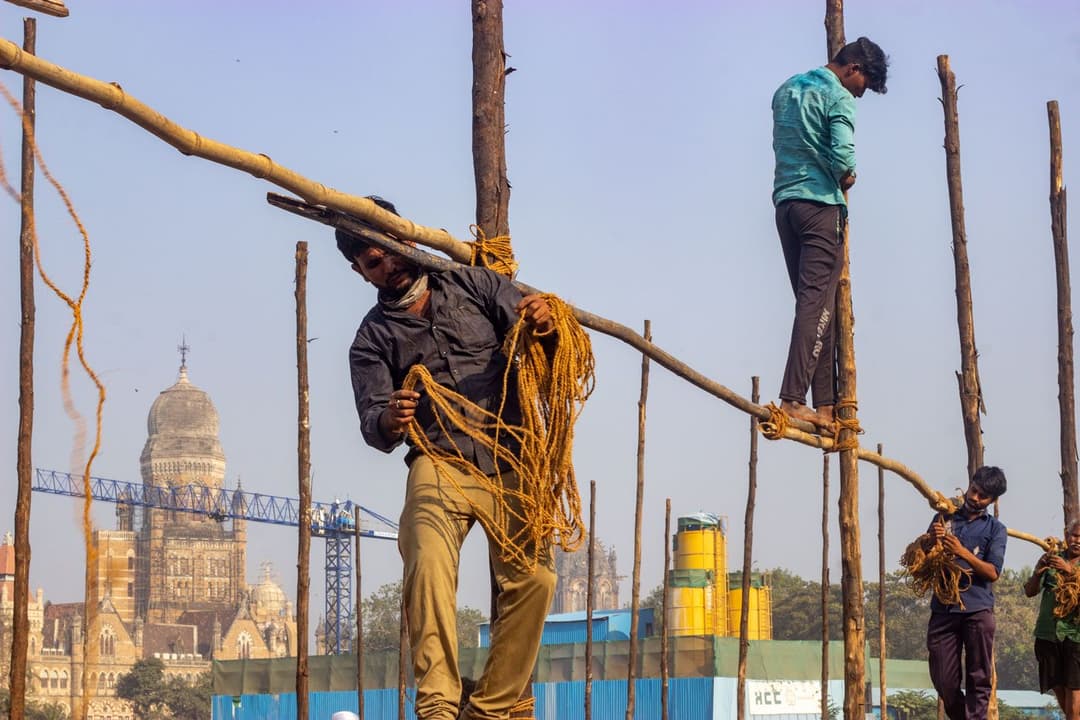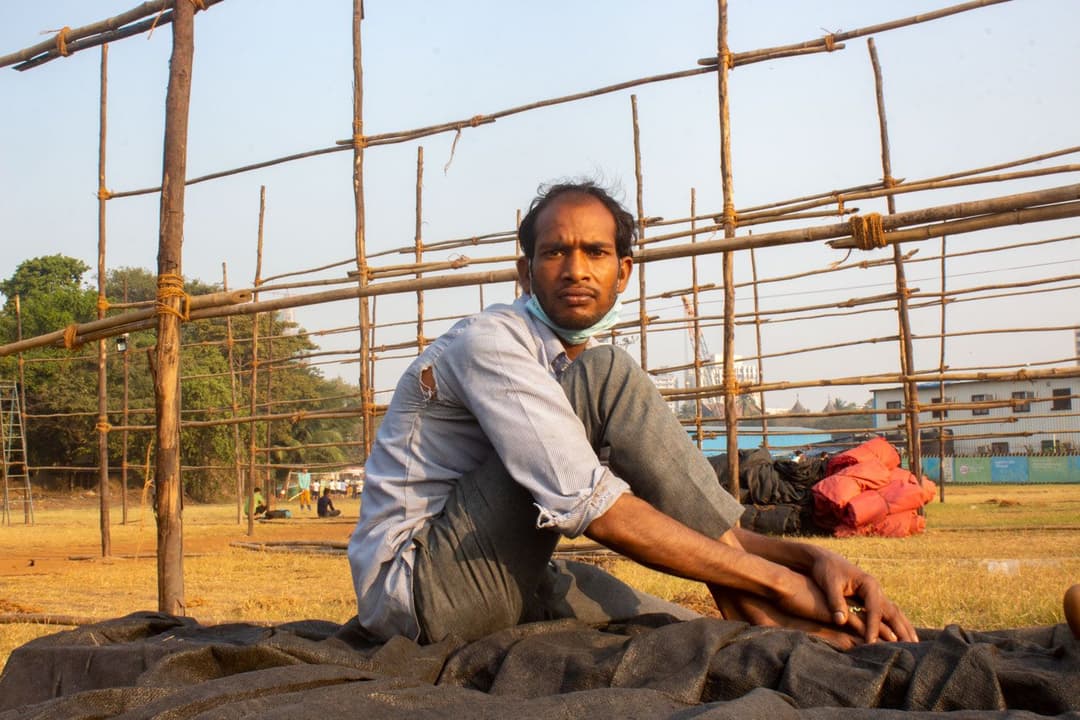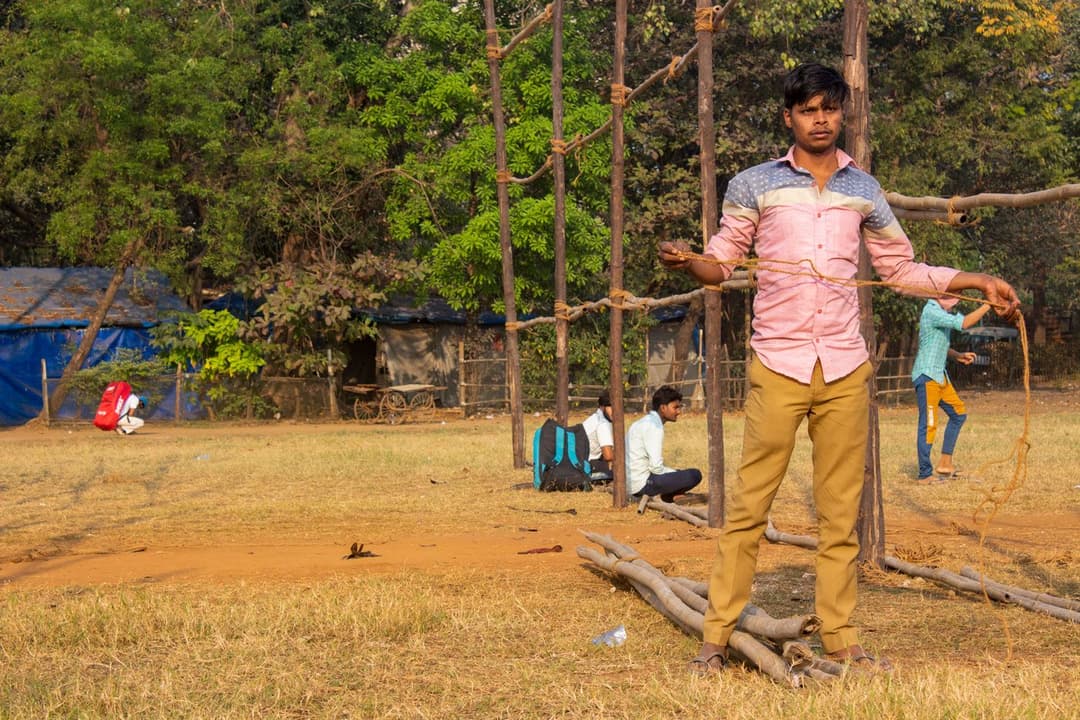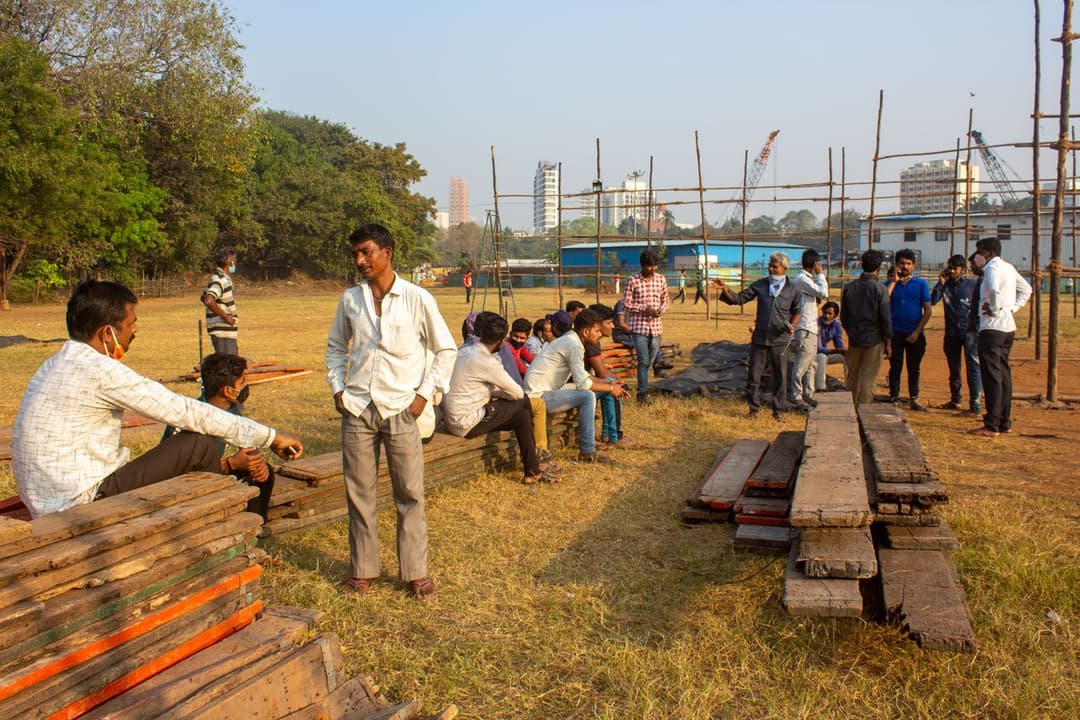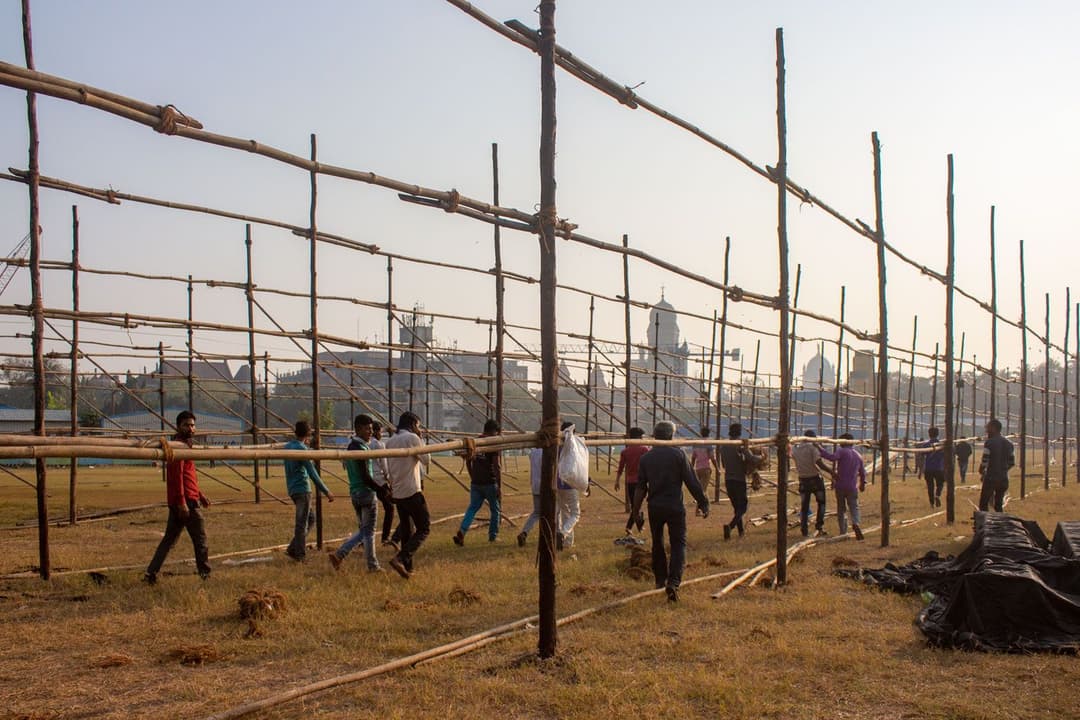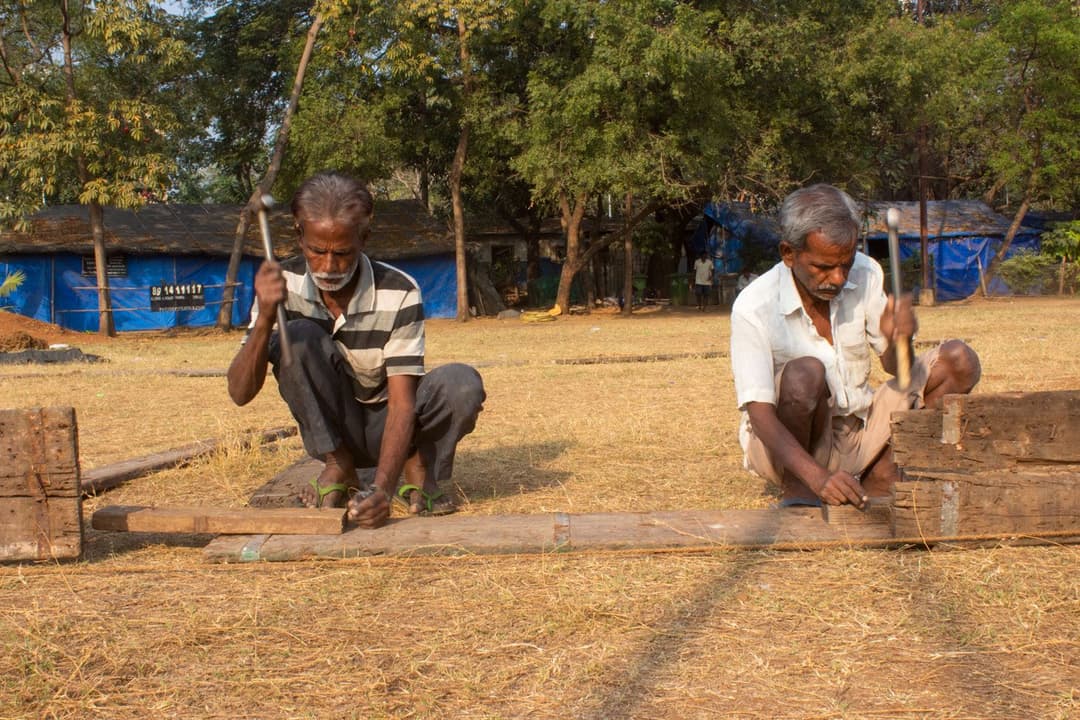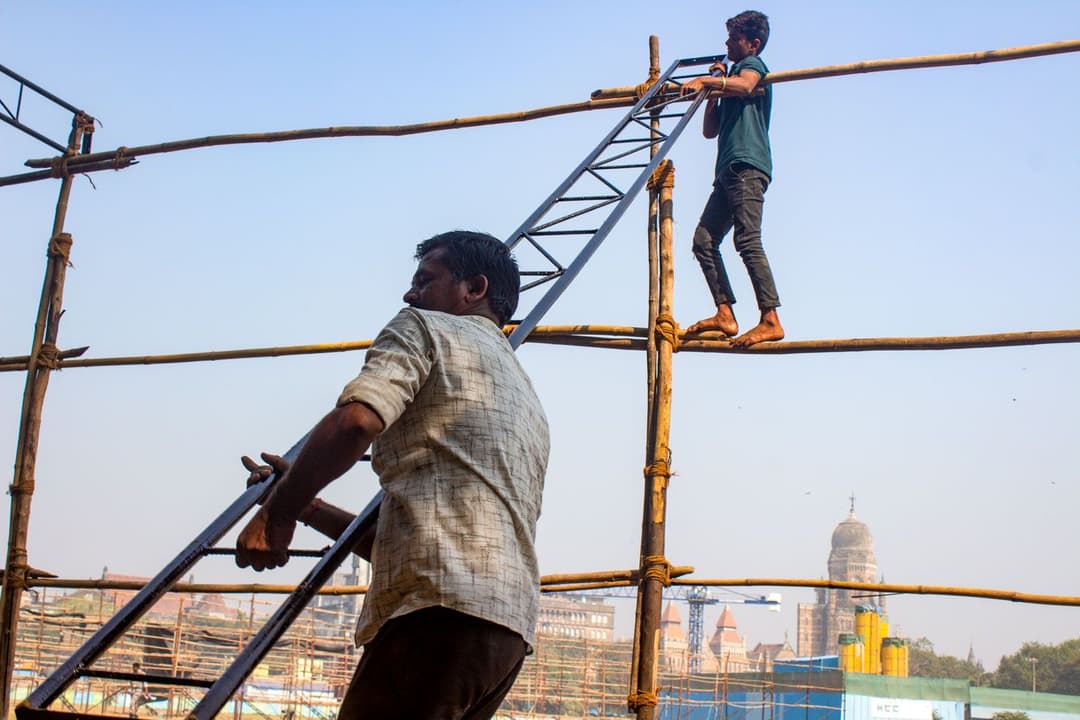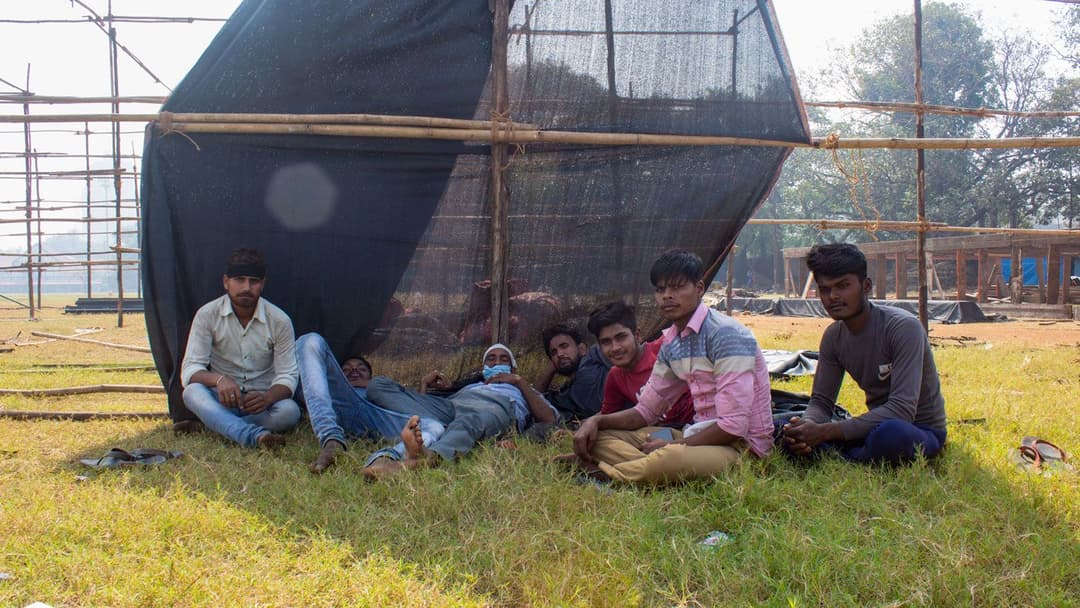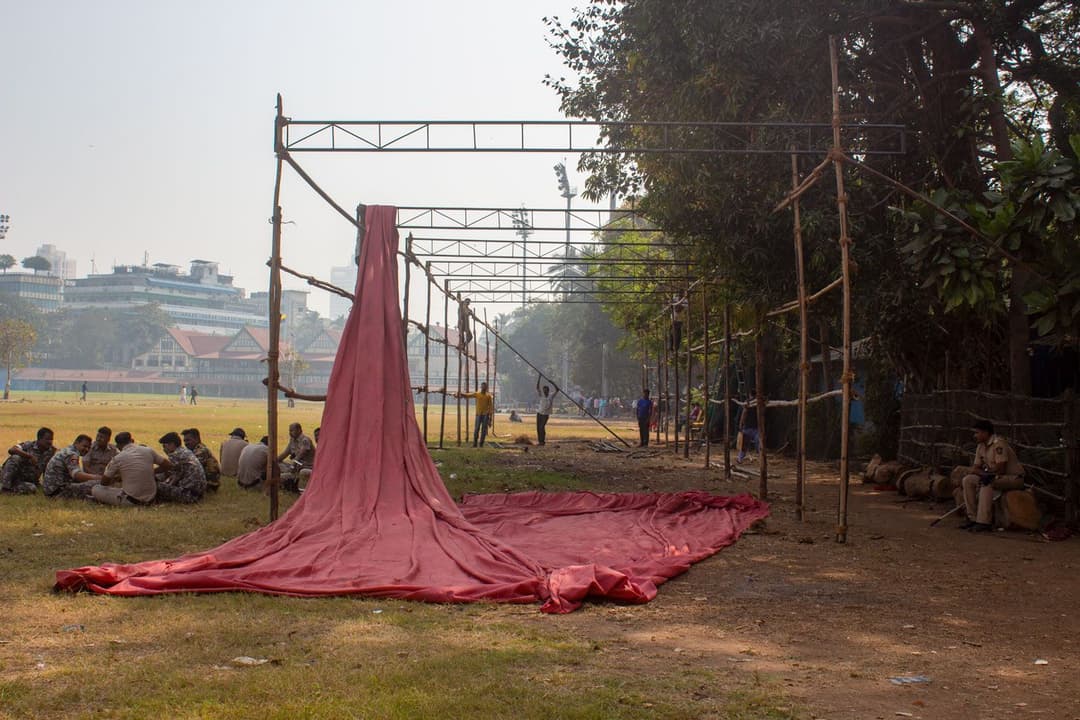

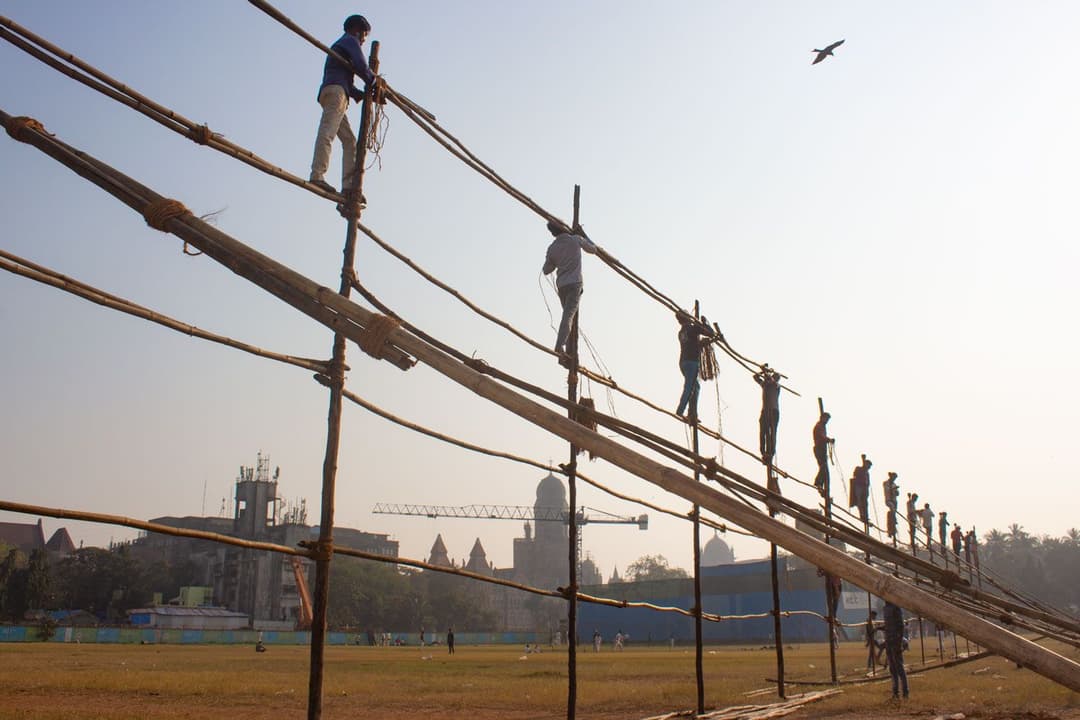
Someone calls from the distance – break time is over. A supervisor begins assigning roles, speaking in Awadhi – and work begins again. Ram Mohan is dispatched to a quieter corner of the maidan to work on the foundation for a small tent.
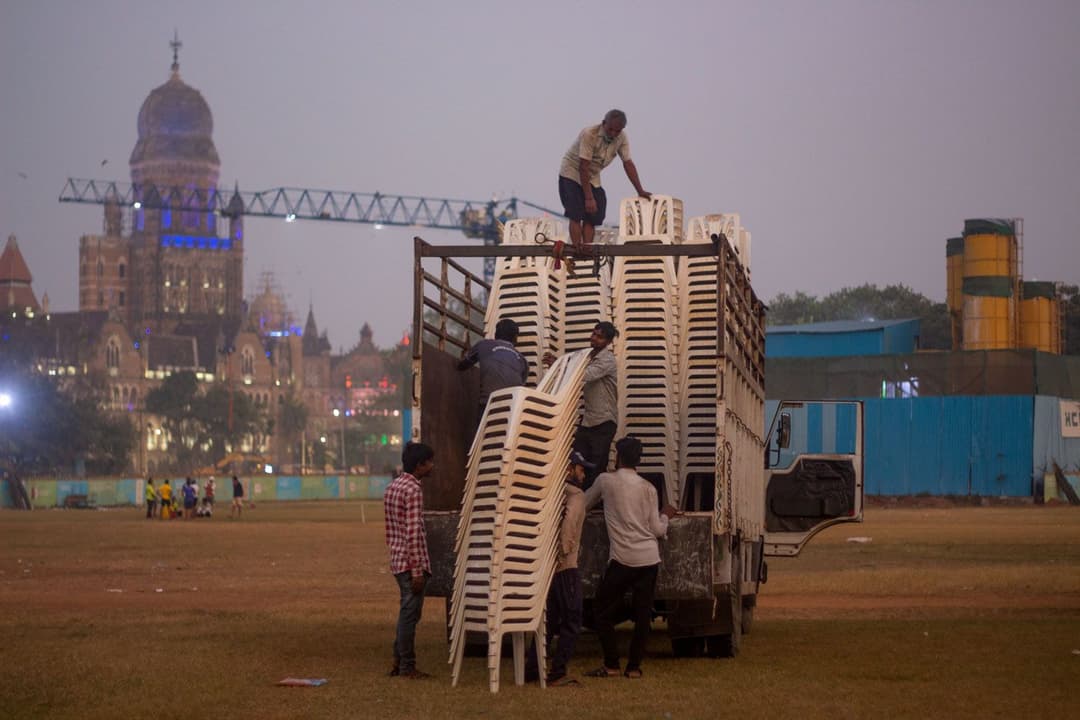
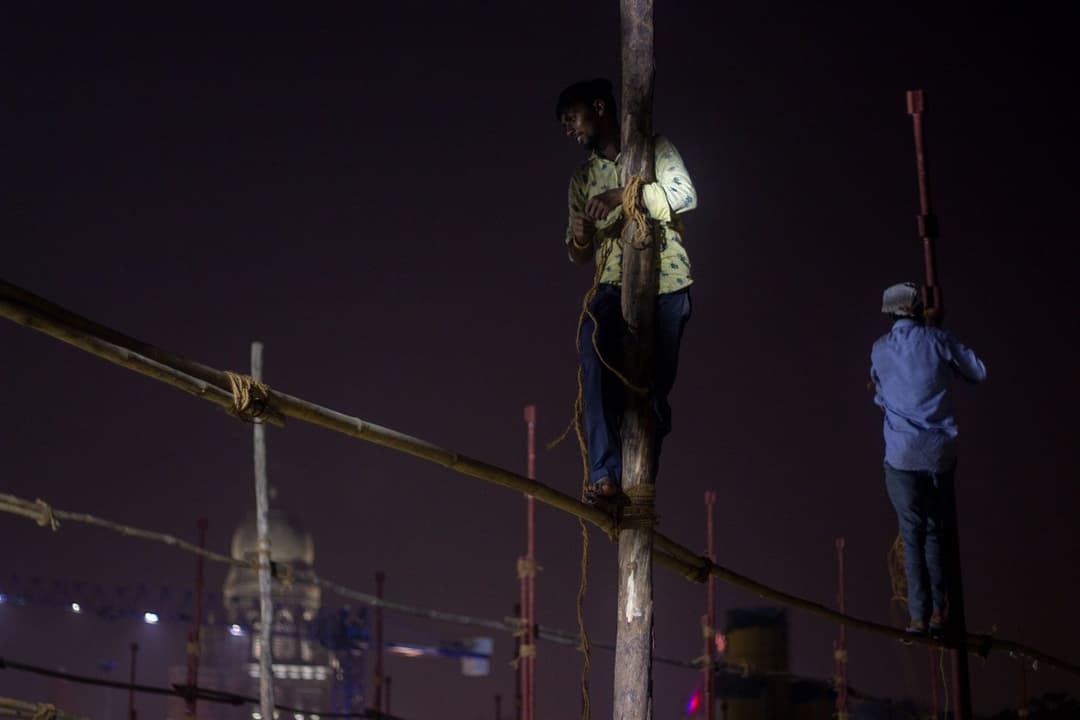
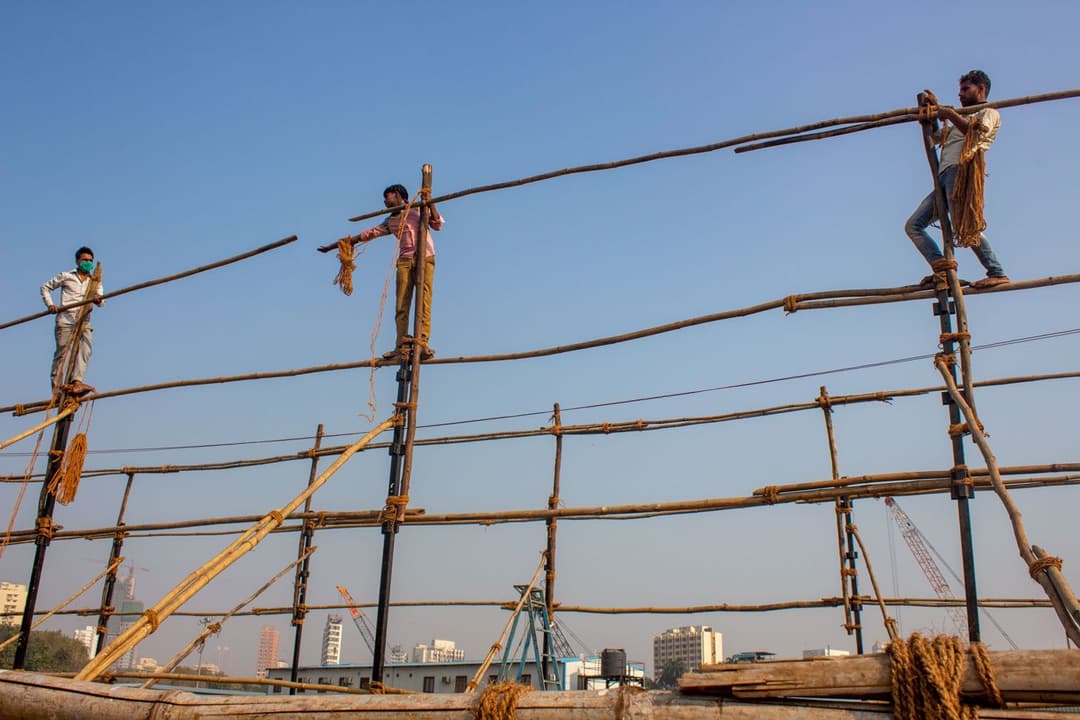
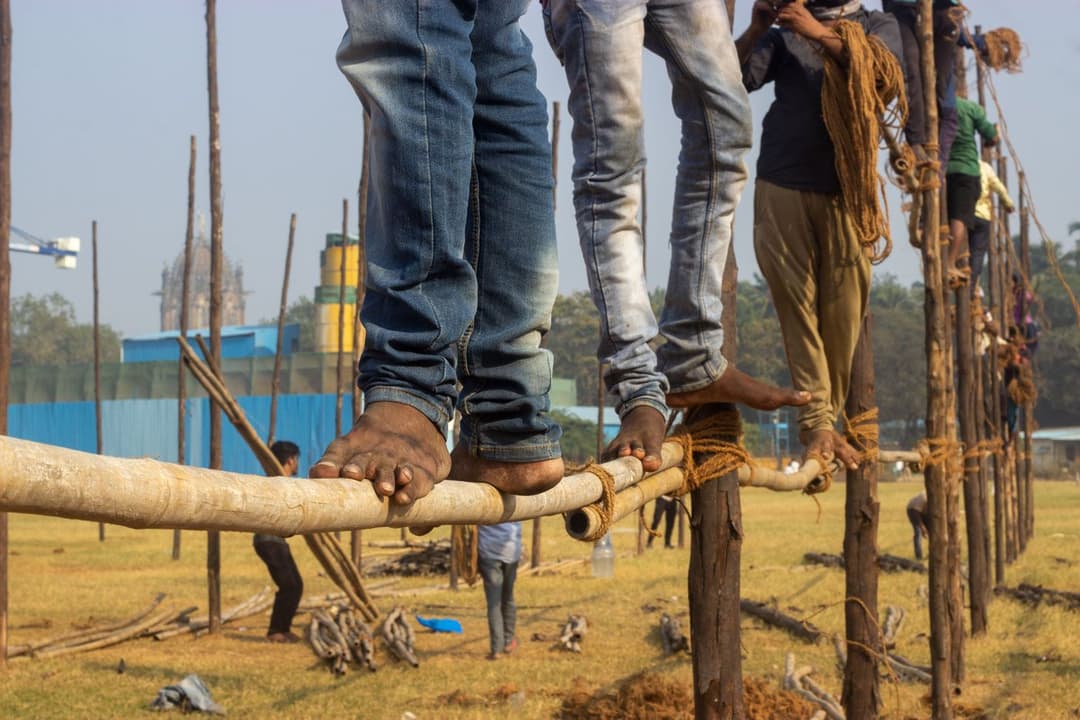
It’s Saturday, January 23, and Ram is among 50 men working 10-hour shifts for two days to pitch pandals (tents) for the tens of thousands of farmers who will start coming here from the morning of January 24 to protest against the three farm laws and to reiterate the demand that they are repealed. The rally will culminate on January 26, Republic Day.
Ram Mohan plans to stay on at Azad Maidan in south Mumbai to join the protesting farmers. “I have been trying to follow what is happening and I want to come to listen to what other farmers are saying – and how we too will benefit [from their demands],” he says.
His family in Umari Bdgamganj village of Gonda district in Uttar Pradesh cultivates wheat and paddy. “What can we do with 6-7 bighas [a little over an acre]? Enough for sustenance, but not much more,” he says. The rally for which he is busy making tents, he hopes, will help bring better prices for the produce of his and other farm families.
For 23 years, Ram Mohan, now around 43, has been doing daily wage labour in Mumbai. He finds work by waiting at the labour naka near Malad railway station in north Mumbai – and can earn, on days when he finds work, up to Rs. 700 as daily wages.