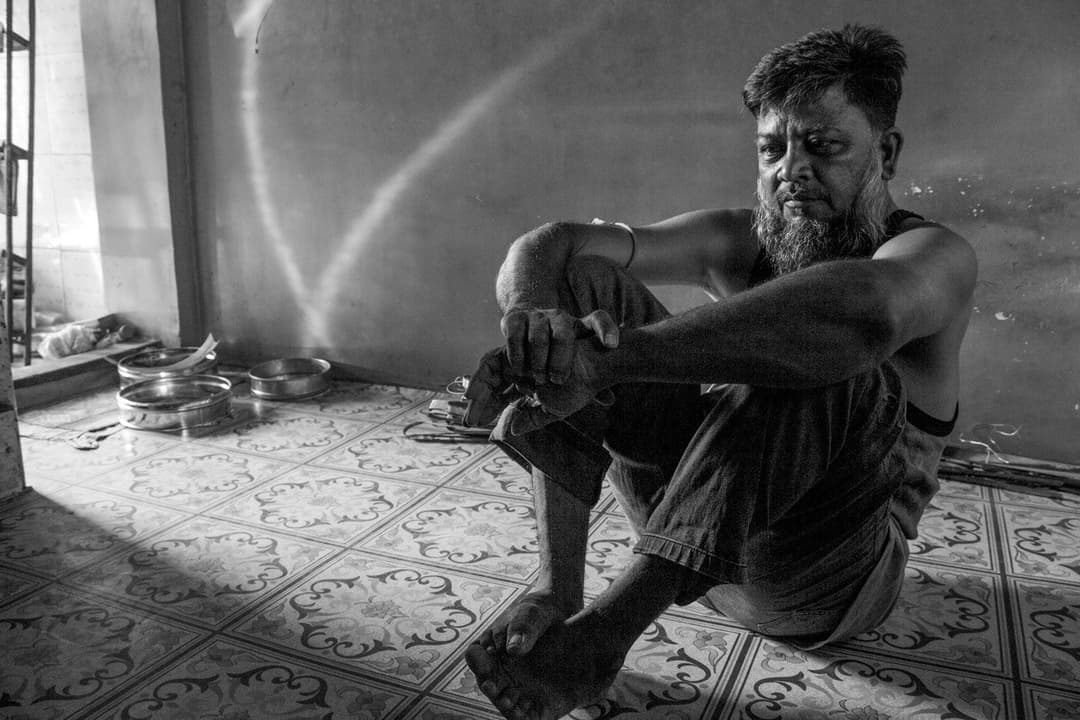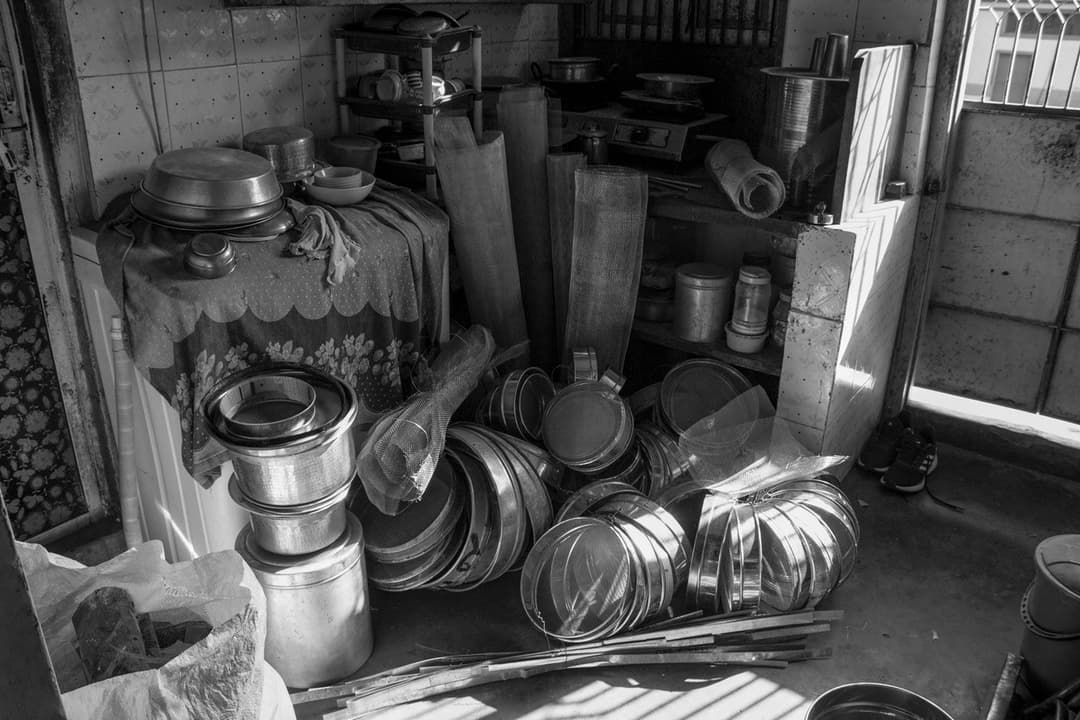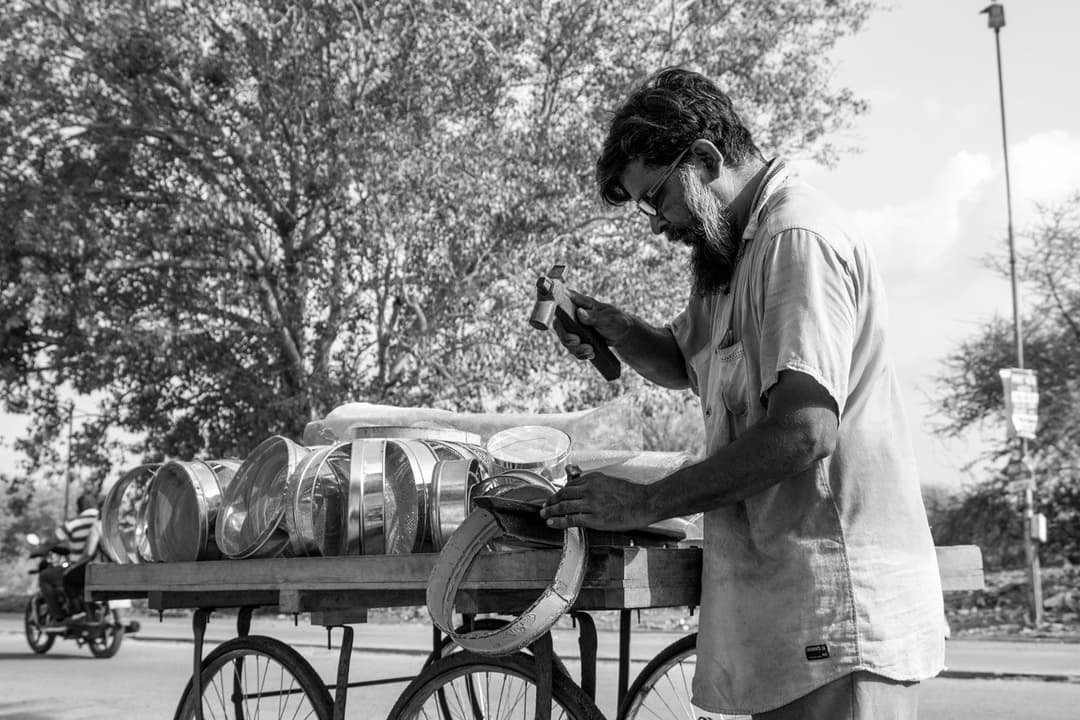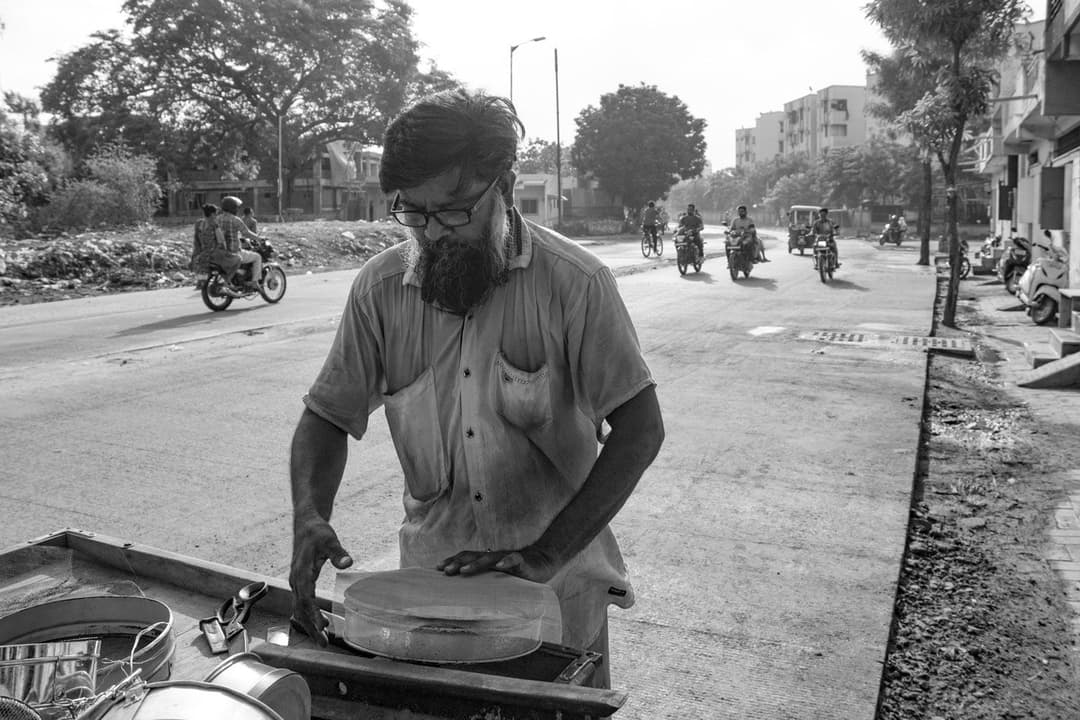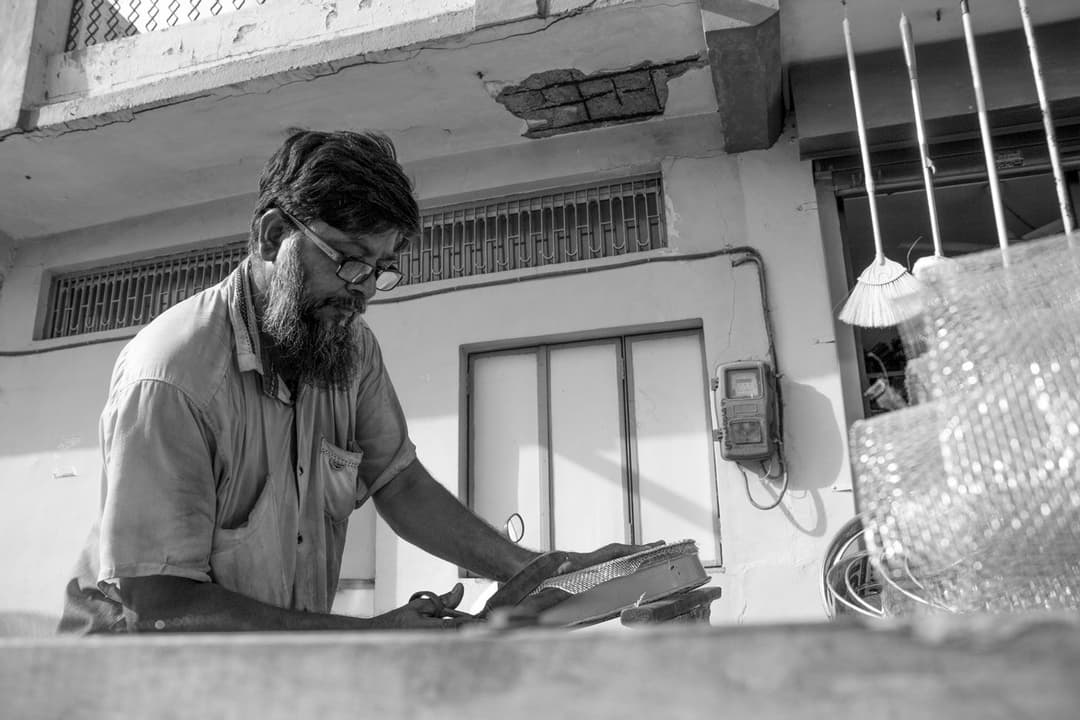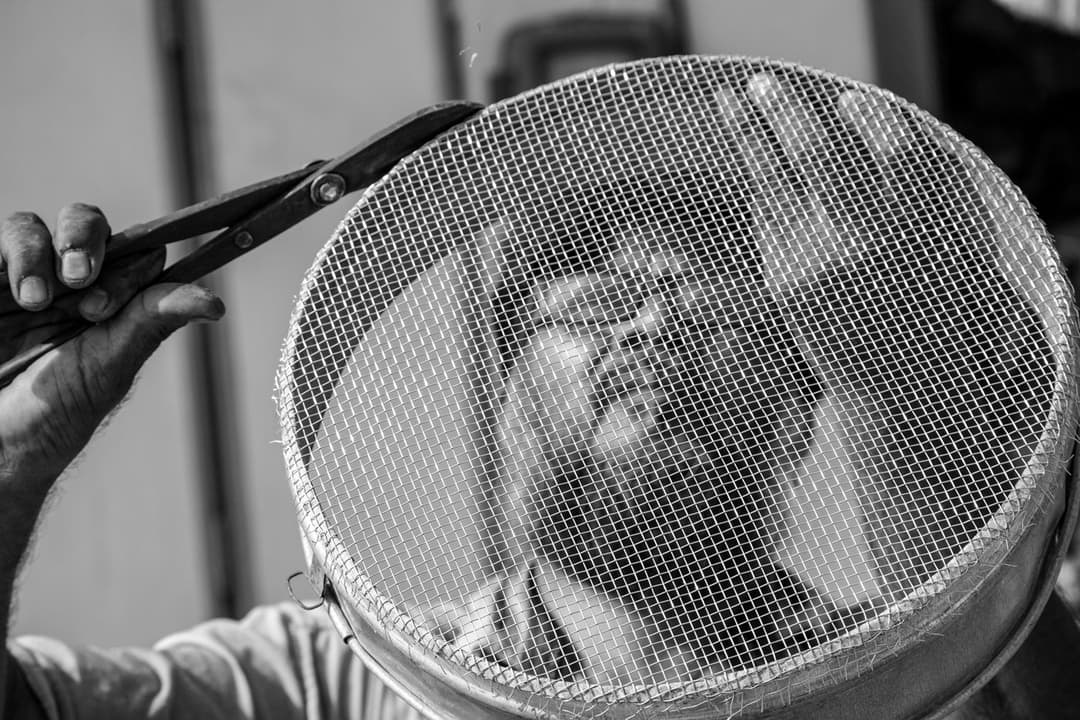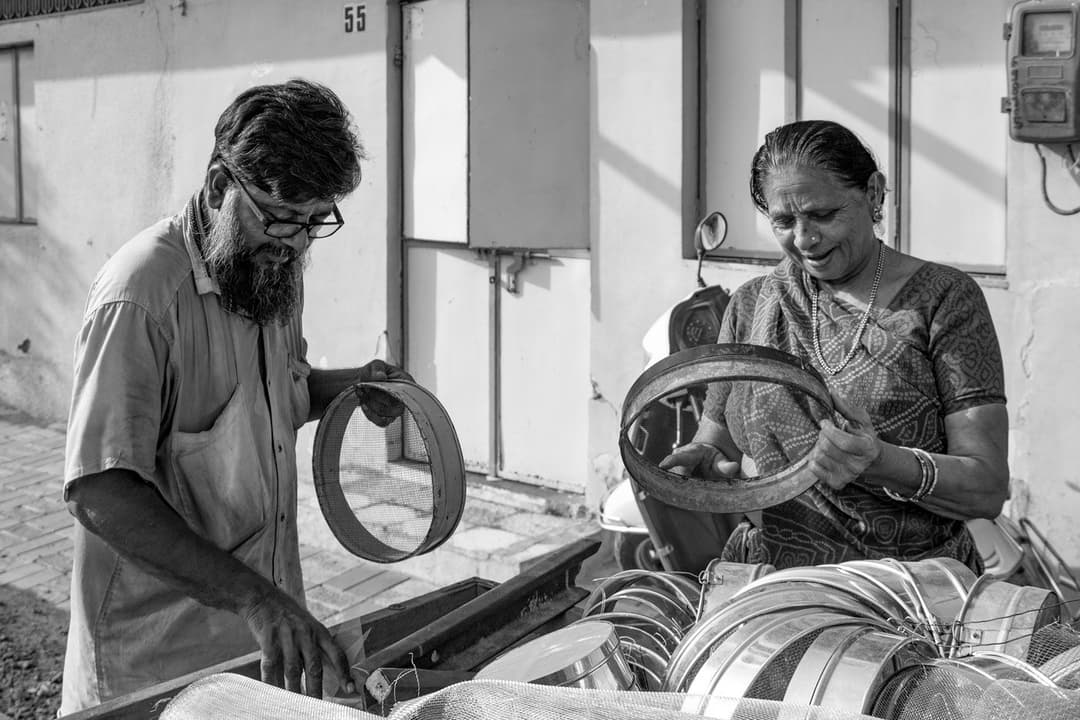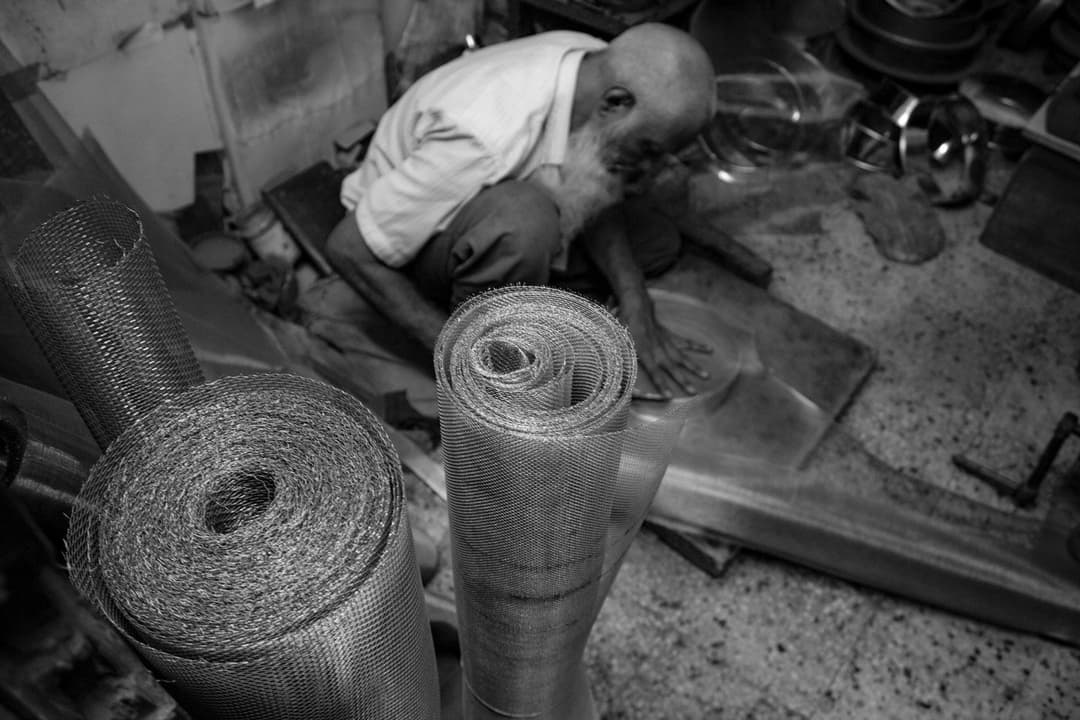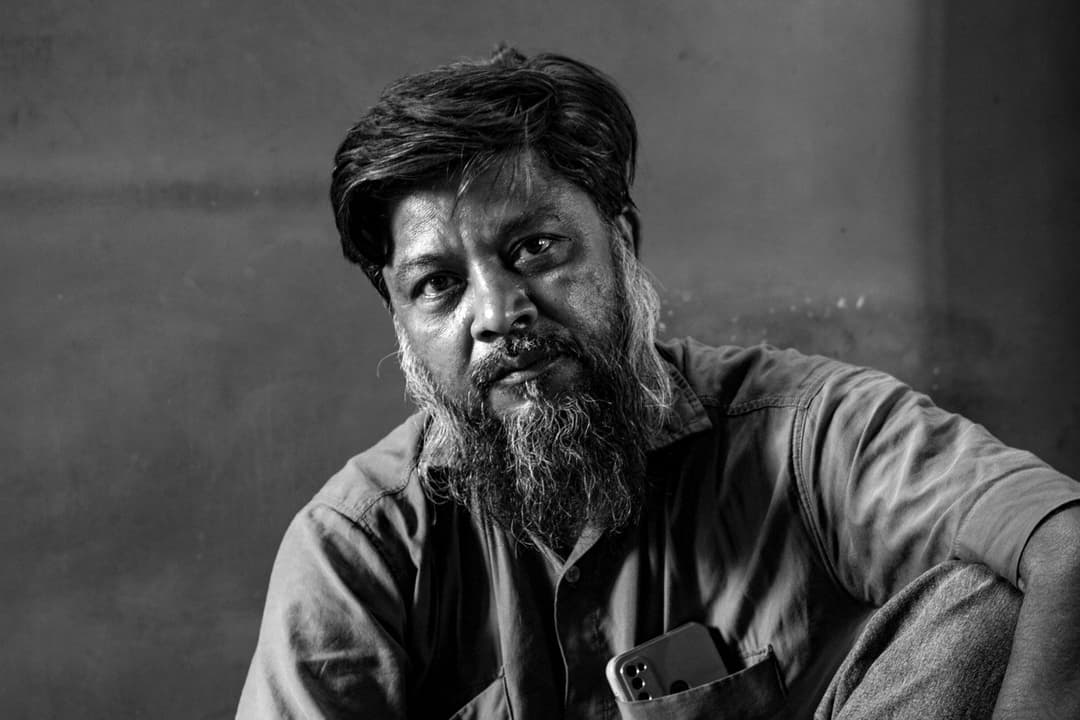


“Shuru shuru mein ek nang banane mein aadhi kalak lagati thi meri [Earlier it used to take me half an hour to make a single piece].” Mohamad bhai is stroking the cuts on his fingertips with his thumb as he speaks about sieve-making. He may still cut his fingers while working but it has got easy for him with time and experience. He speaks in a peculiar Hindi, a kind that is often spoken among Muslims in Gujarat, with a generous smattering of Gujarati words. “Ek mahina taklif padi mere ko. Ab ek nang paanch minute mein ban jaata hai [But once I got a hang of it, I was able to do it faster. It was tough for about a month, but now I can make one piece in five minutes],” he smiles.
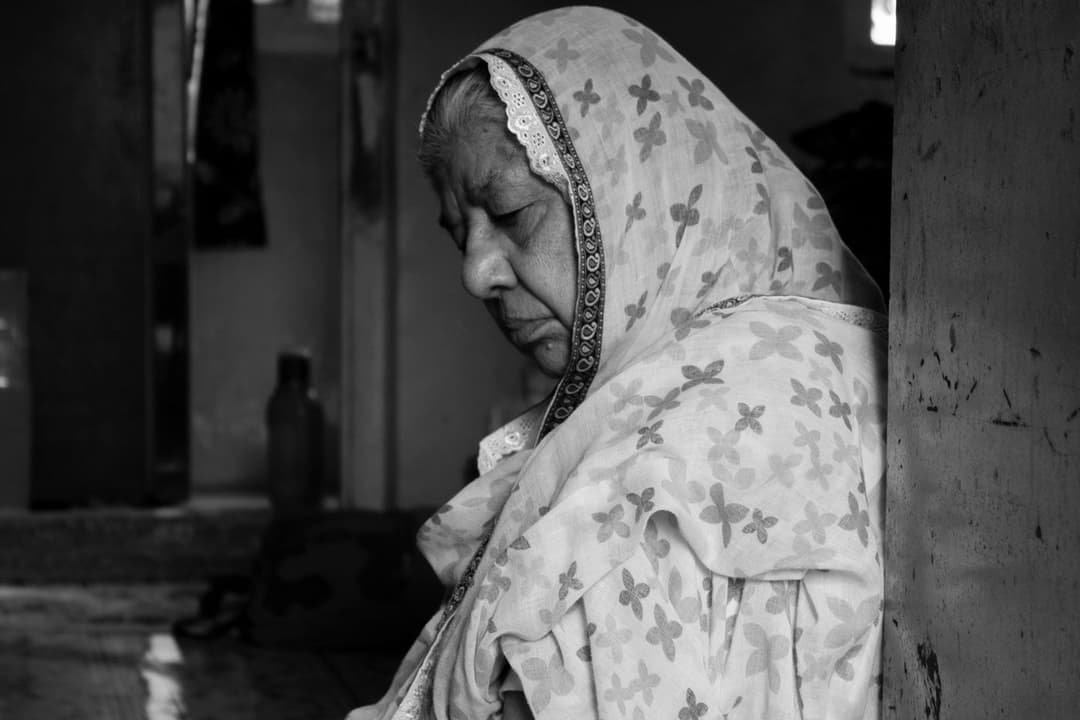
We are sitting in a 10 X 10 room inside Qutbi building in Ahmedabad, home to Mohamad Charnawala, 43, and his 76-year-old ammi (mother), Rukaiya Maujhusaini. Theirs is one of the 24 houses in this two-storey building in Daudi Vora’s Roza, a chawl, where working class Muslims reside, near Ahmedabad’s Kalupur station. Step on the other side of the modern looking railway station, and you are in the old city.
Making your way through the lanes, the food, the fights and squabbles, occasional abusive words in the air, and slow-moving traffic, you will hit a web of roads – one going diagonal, one winding towards the right, one turning left into a dead end, and one meandering, then straightening and then merging into another. That is the one that would bring you to Qutbi building, belonging to Vora Trust in Daudi Vora’s Roza, where a total of 110 families live.
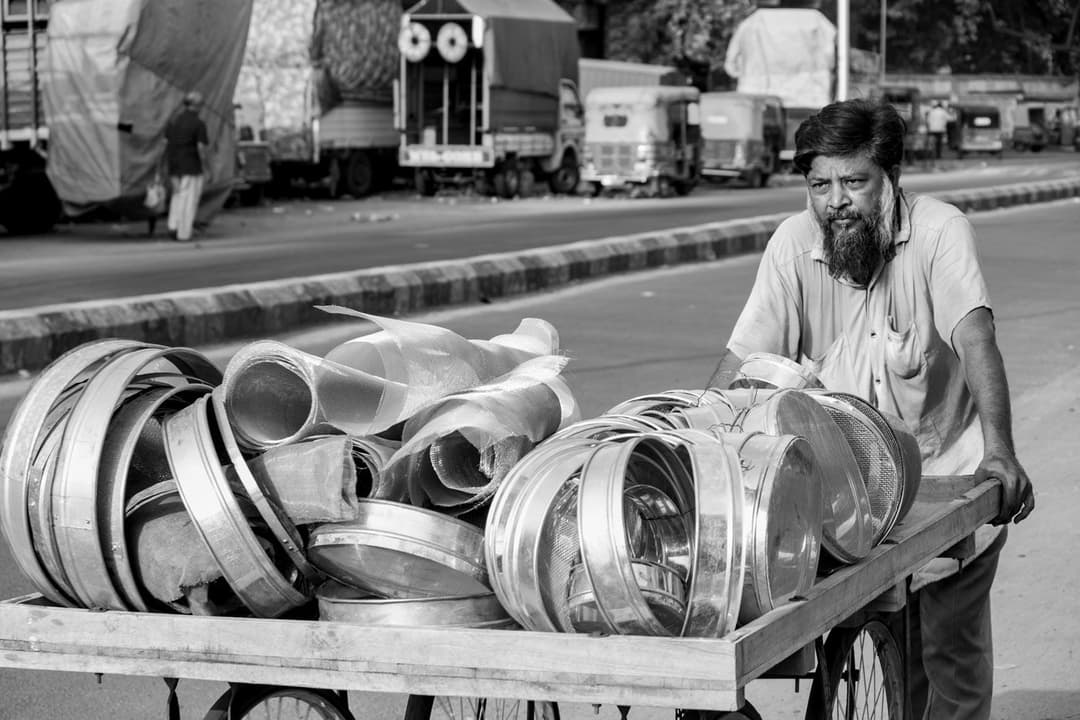
Mohamad bhai walks from here for about 30 kilometres, pushing his wooden cart across the city, every three days a week. He starts at six o’clock in the morning. “Where all his father used to go!” Rukaiya exclaims, remembering her husband, wiping her face with her chunni. “He used to go beyond the river, to the other side of the Sabarmati and return late at 9 or 10 in the night.” Abba Moijhusaini died in February 2023. He was 79 then.