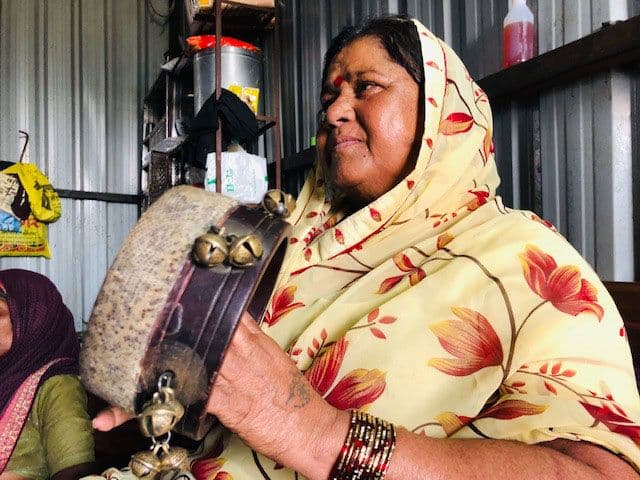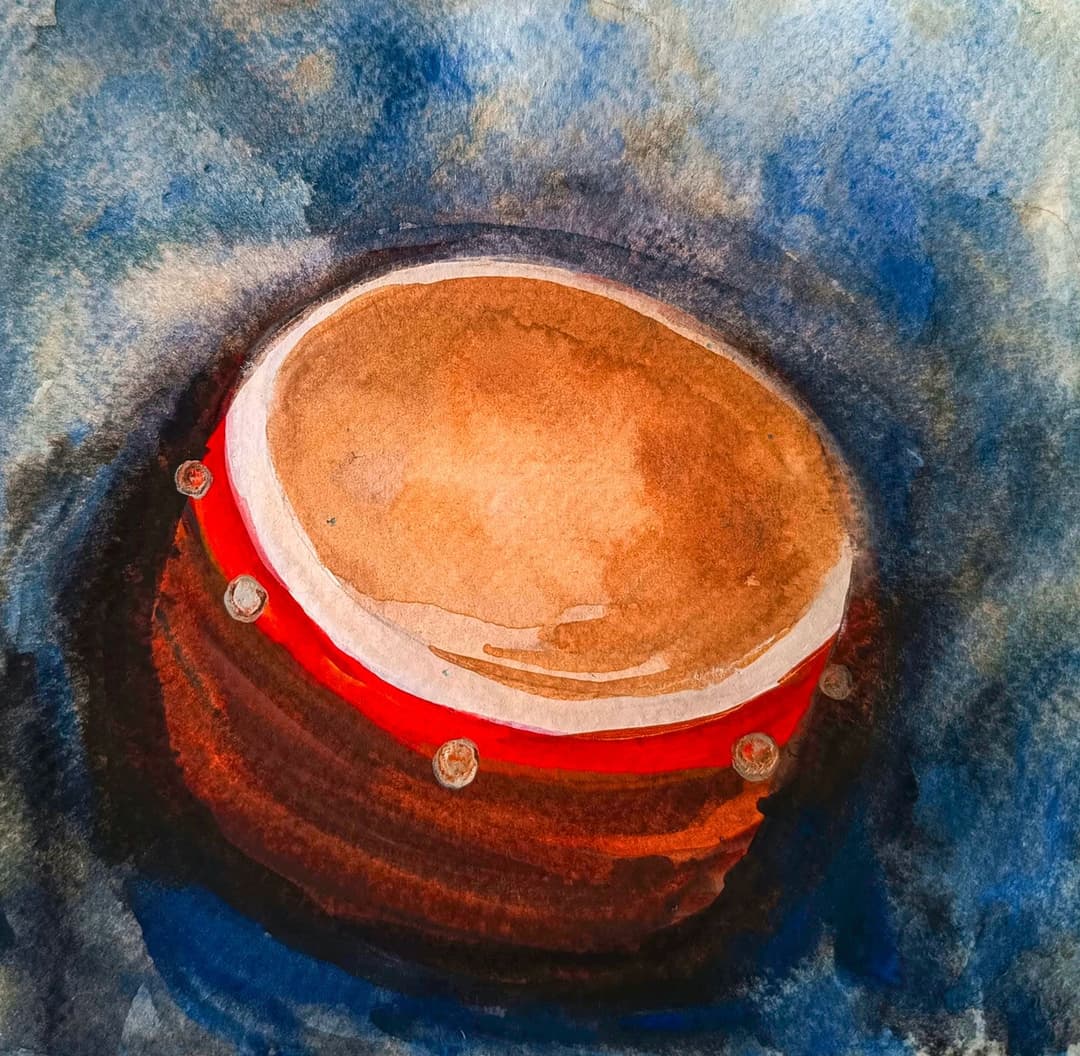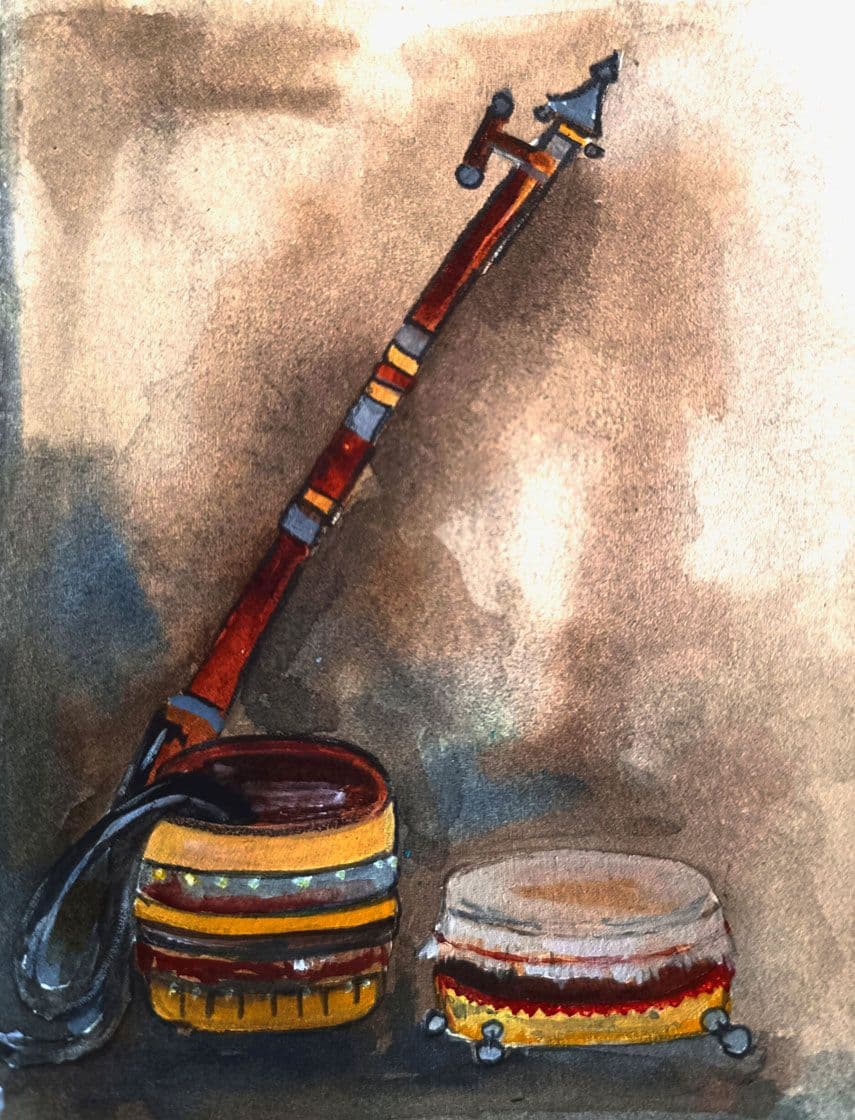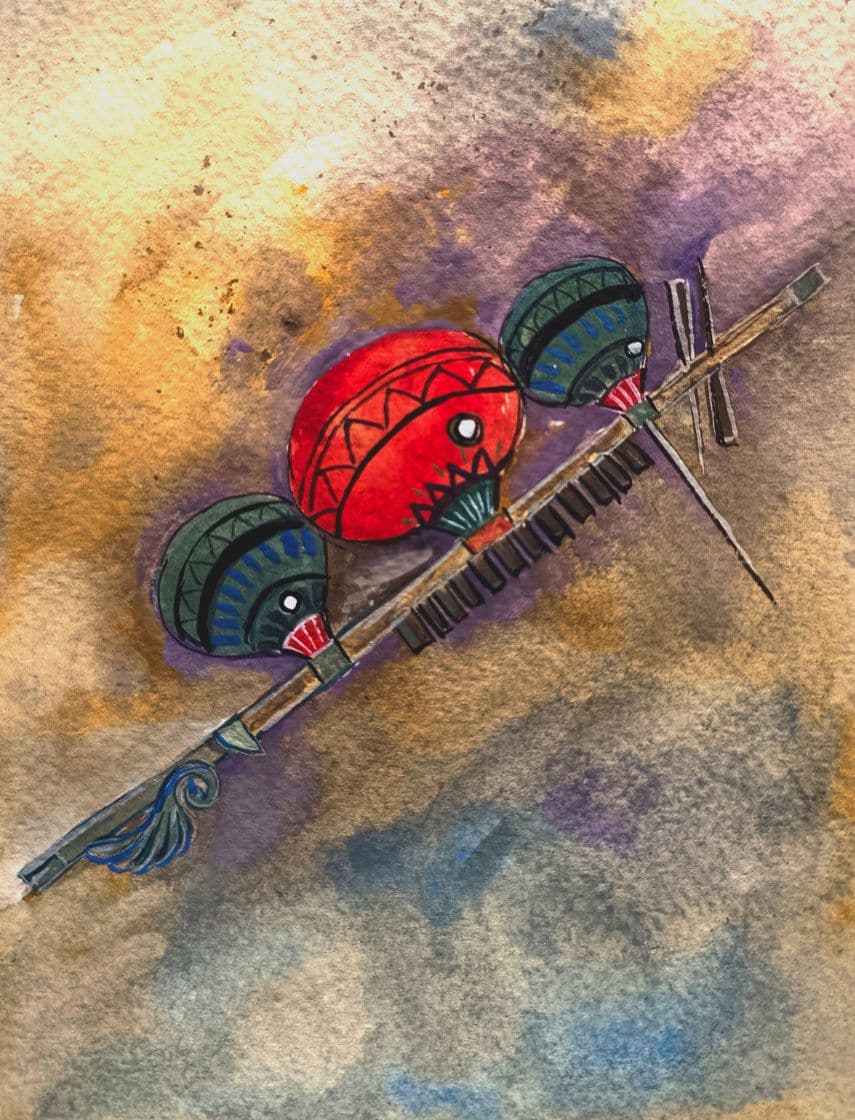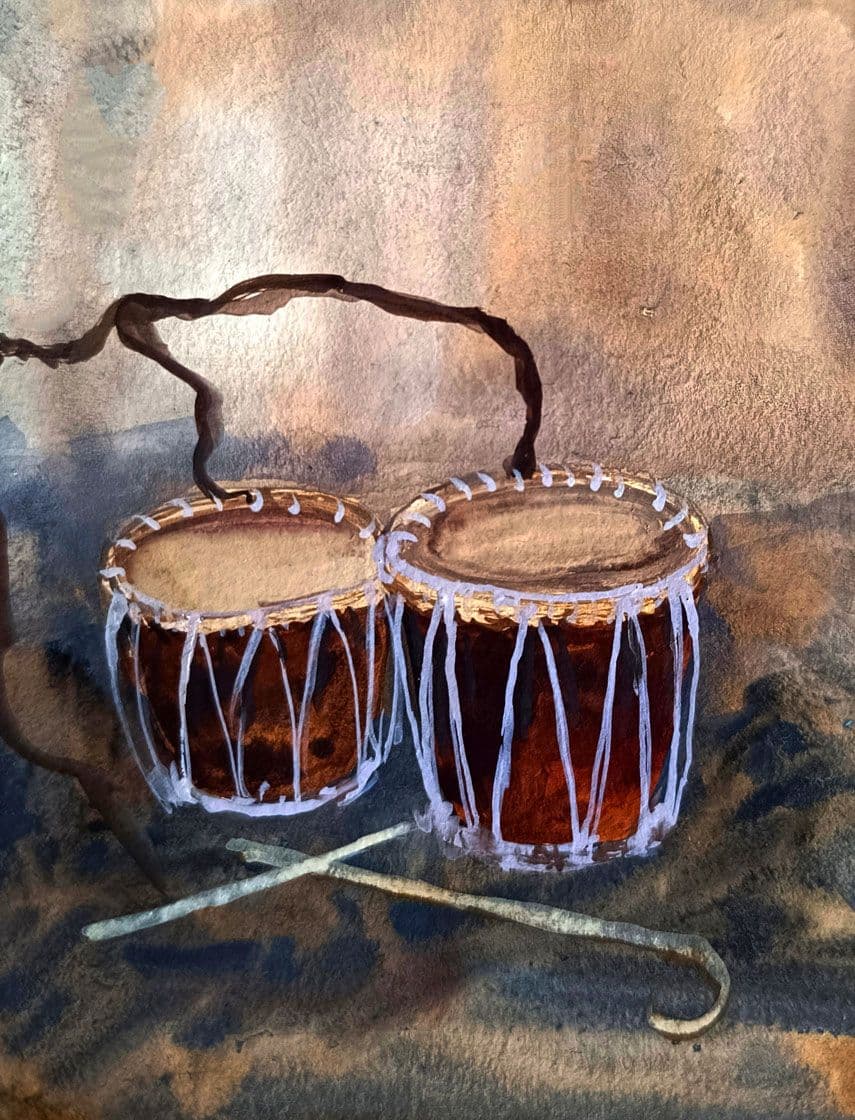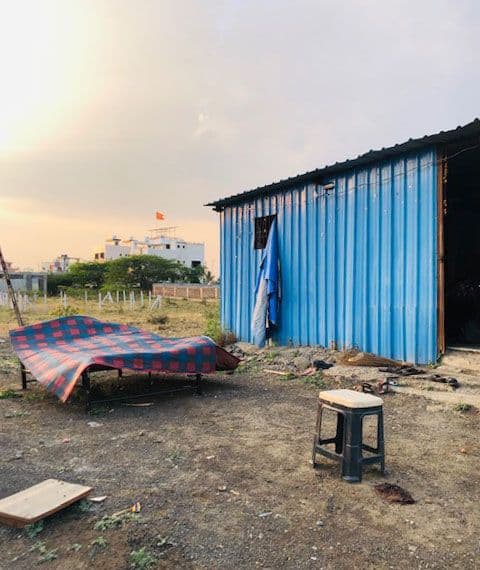


A man is travelling on foot towards Pandharpur with his seven-year-old daughter on an annual pilgrimage, the Ashadhi Waari – a festival where thousands of warkaris from across the state pay a visit to the temple of Lord Vitthal. On the way they decide to camp at Mhaisgaon, a village in Latur. As evening gathers, sounds of kirtan fill the air. The little girl, on hearing a faint tintinnabulation of the khanjiri (tambourine), begins pestering her father to take her to the programme.
Her father is reluctant. “People here do not touch Mahar and Mang like us,” he tries to explain. “They consider us worthless. They won’t let us in.” But she refuses to budge. Finally, the father gives in to her demand on condition that they stand at a distance and listen to the performance. Following the sound of the jingles they both reach the pandal. Rapt, they both watch maharaj playing the khanjiri as he performs a kirtan. Soon, the young girl begins to get restless, she wants to go on the stage. Suddenly, without a warning, she runs and does just that.
“I want to sing one bharud [a form of ancient poetry that deploys satire and humour in songs composed for social enlightenment],” she tells the saint performer on the stage. The audience is stunned. But the maharaj lets her sing. And for the next few minutes the young girl takes the stage, striking a metal pot for rhythm, she performs a song that happens to be the one written and composed by the same maharaj.
माझा रहाट गं साजनी
गावू चौघी जनी
माझ्या रहाटाचा कणा
मला चौघी जनी सुना
The wooden wheel on the well, my dear
Four of us, let’s sing together
The wooden wheel and its spine,
And four daughters-in-law of mine
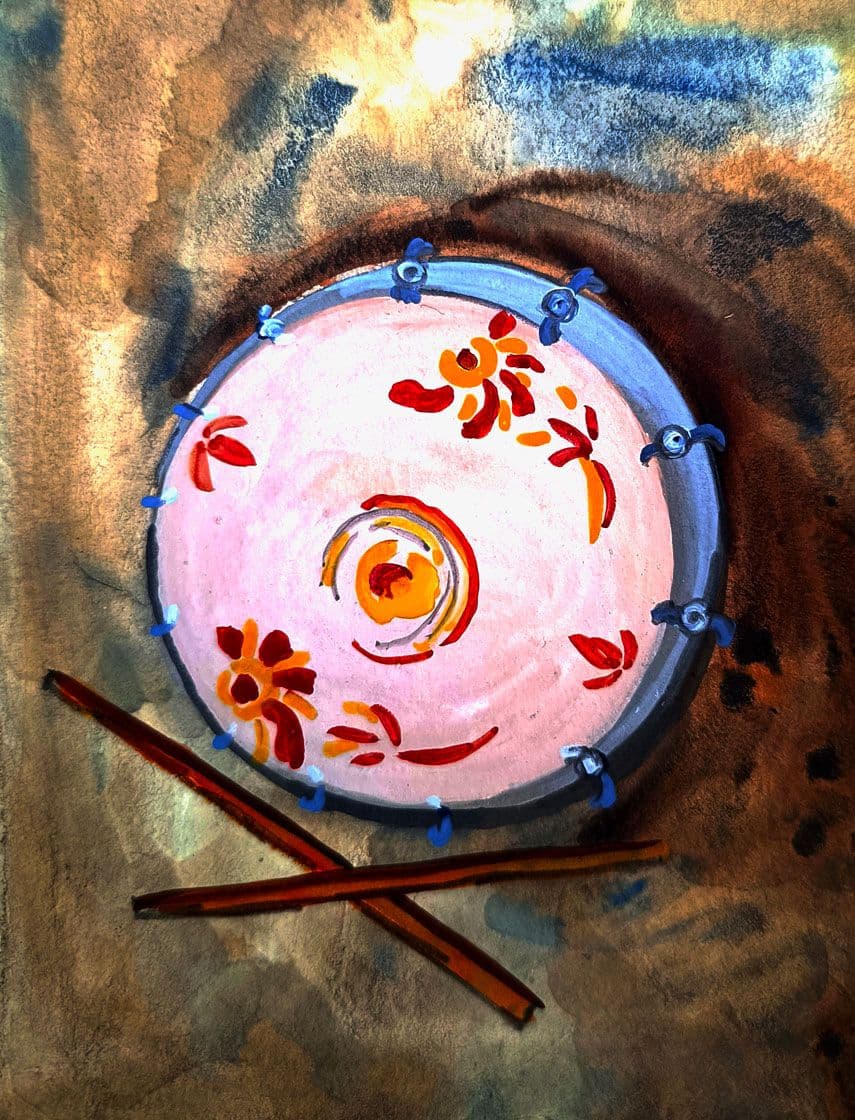
Impressed by the child singer, the saint performer gifts his khanjiri to her saying, “you have my blessings, always. You will enlighten this world.”