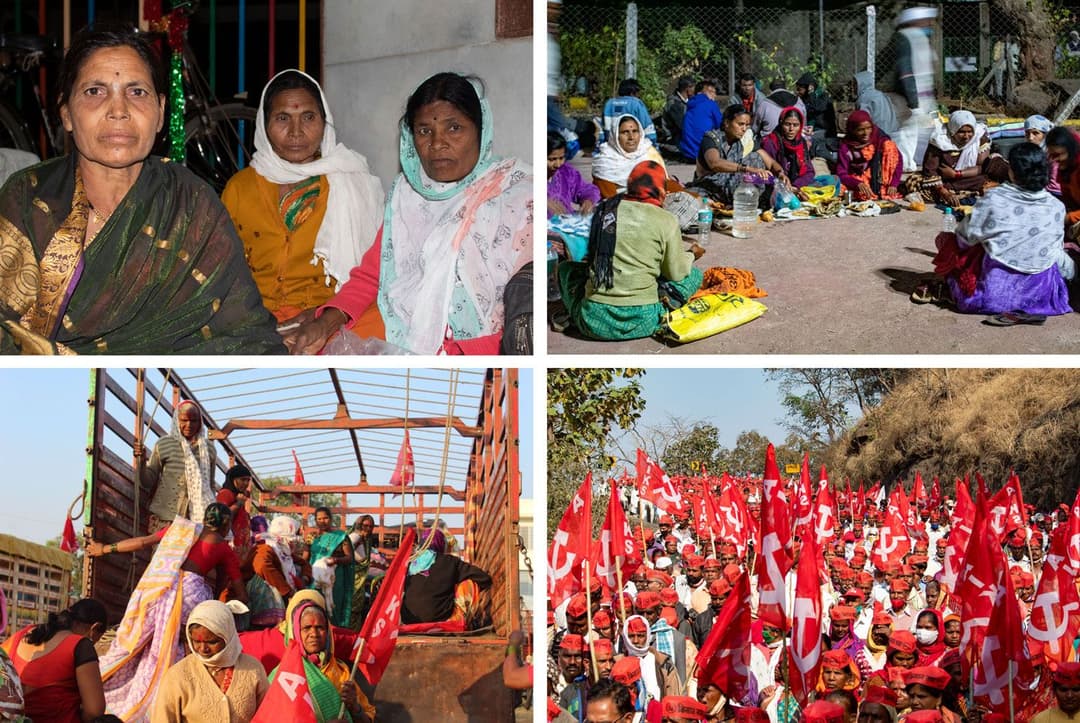


“They entered our village in the middle of the night and destroyed our crops. Overnight, they took our land away from us and built sheds on it,” said Anusaya Kumare, 48, describing how, in February 2020, her family lost a large tract of their eight-acre farm in Sarkhani village of Nanded district in Maharashtra.
Anusaya, who belongs to the Gond Adivasi community, believes it was a few local non-Adivasi businessmen and traders who hired goons to steal her family’s land. “These people created false documents and sold our land to non-Adivasi people. The saat baara [7/12; record of land rights] is still in our names.” Her family cultivates cotton, Bengal gram, tur and wheat on the land.
“During Covid [lockdown], we survived on the crops we grew on whatever little land we had left. Last month [December 2020], they took away even that,” said Anusaya, who was not the only one in Sarkhani to lose land. In the village of 3,250 people (Census 2011), about 200 Adivasis out of about 900 have lost their lands. They have been sitting in protest outside the local gram panchayat office every day since the beginning of January.
“We have been protesting for a month at the panchayat office. Our legs hurt,” said Anusaya rubbing her feet with both hands. It was around 9 p.m. on January 23 and she had just finished a dinner of bajra rotis and garlic chutney. She and a few other women had spread out thick blankets inside the Ghantadevi temple in Igatpuri for the night.
The women were a part of the vehicular jatha (march) going to Mumbai from Nashik to protest against the three new farm laws. They were also going to highlight their many struggles.