
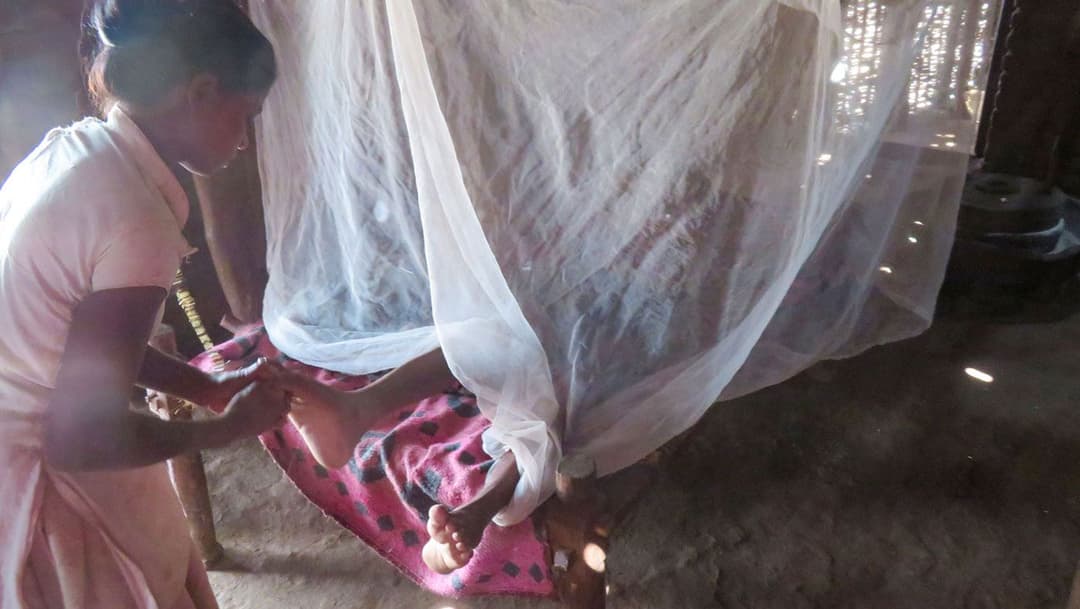
Kehalya Vasave was groaning in his sleep, restless and in pain, as he lay on his back on a charpai covered with a mosquito net. Seeing his discomfort, his 18-year-old daughter Leela began massaging his feet to try and give him some relief.
For months now, he has remained on that cot all day – a wound on his left cheek and a feeding tube in the right nostril. “He doesn’t move much or even talk. The wound hurts,” says his wife, 42-year-old Pesri.
On January 21 this year, 45-year-old Kehalya was diagnosed with cancer of the inner cheek cancer (buccal mucosa) at Chinchpada Christian Hospital in northwestern Maharashtra’s Nandurbar district
His illness – cancer – was one of the 20 comorbidities listed in the Ministry of Health and Family Welfare’s guidelines for vaccine eligibility in the 45 to 59 age group, in the second phase of Covid-19 vaccination in India that began on March 1. These guidelines say that vaccination is open “for citizens of age-appropriate categories, including initially the people above 60 years of age and those aged from 45 years to 60 years and have the comorbidities.” (From April 1, vaccination opened for everyone above 45 years, with or without any comorbidity).
But age brackets, comorbidity lists or expanded eligibility mean little to Keshalya and Pesri. The Vasave family – they belong to the Bhil community, a Scheduled Tribe – is just not able to access the vaccine. From Kumbhari, their hamlet in Akrani taluka, the nearest vaccination centre, Dhadgaon Rural Hospital, is 20 kilometres away. “We have to walk. No other option,” says Pesri.


