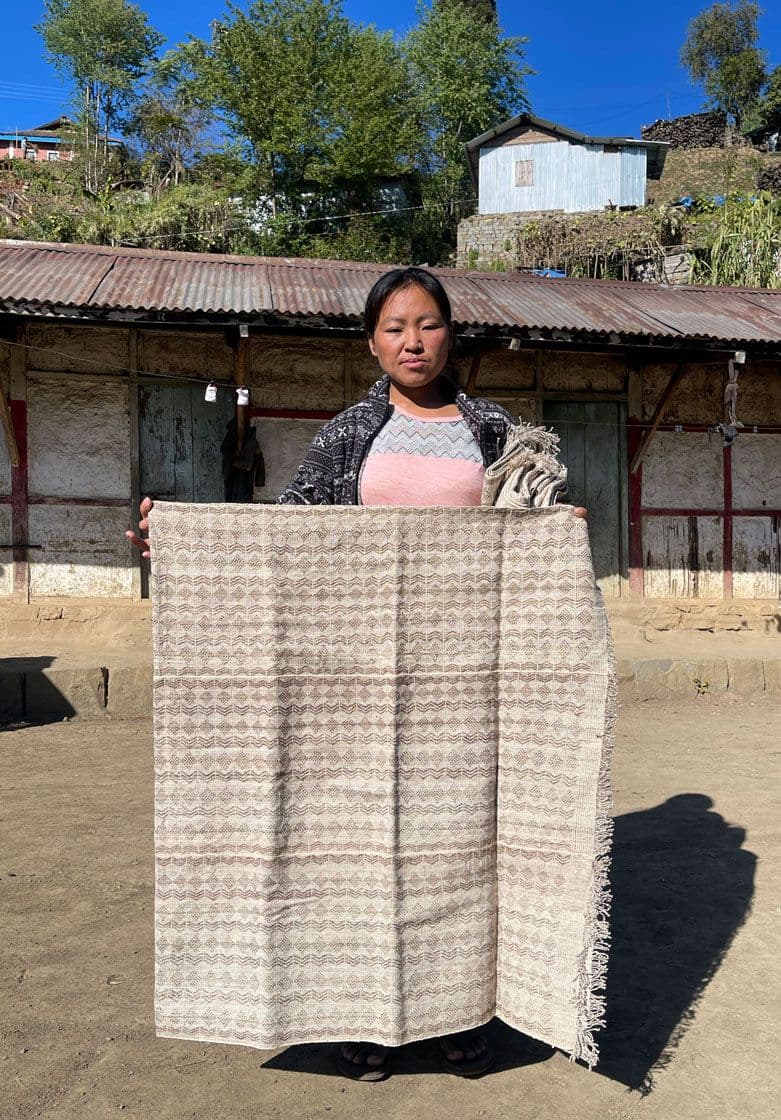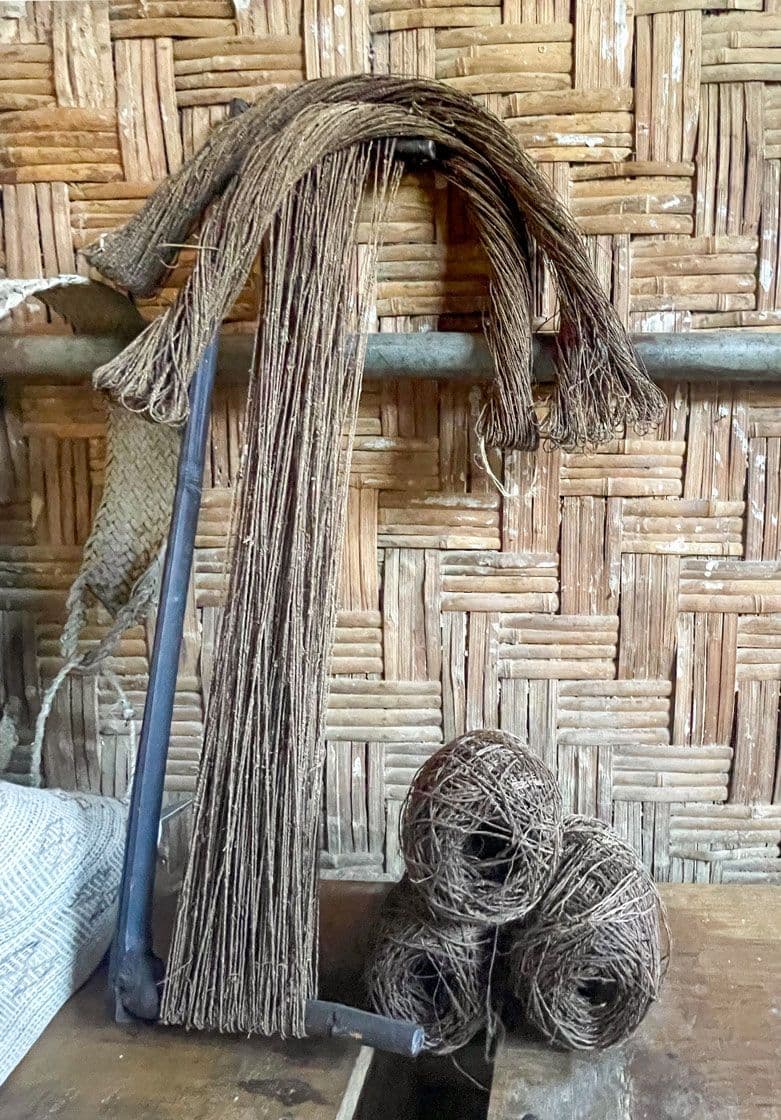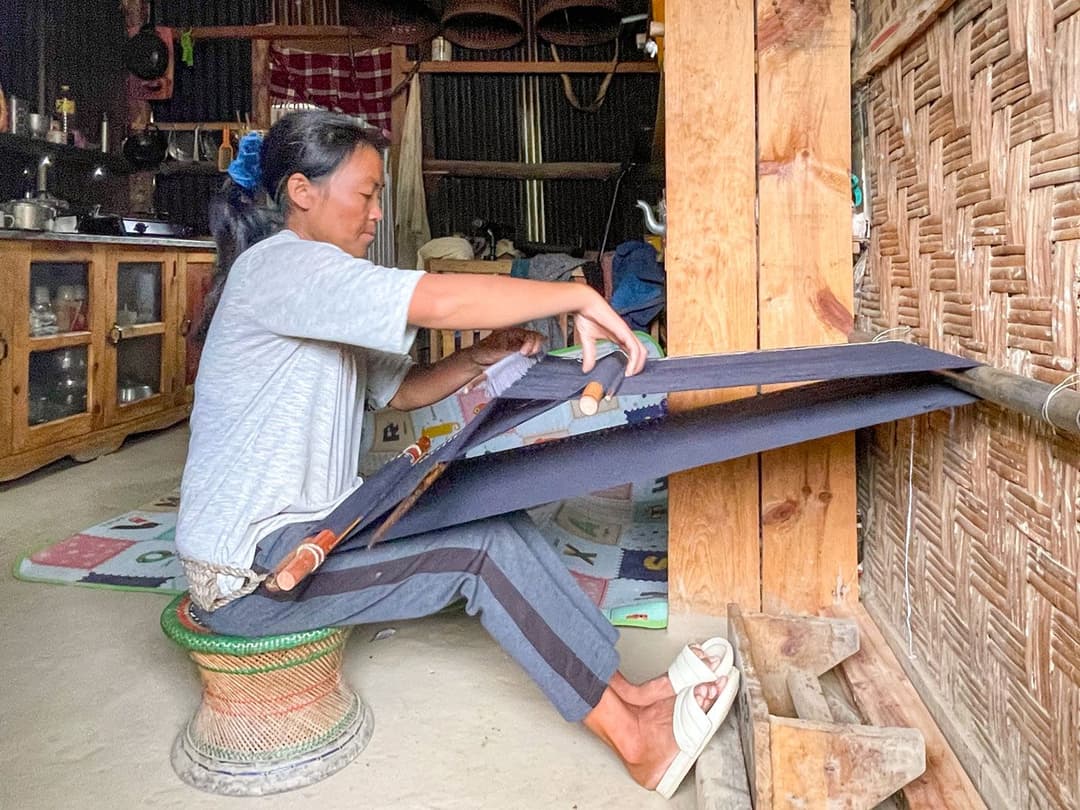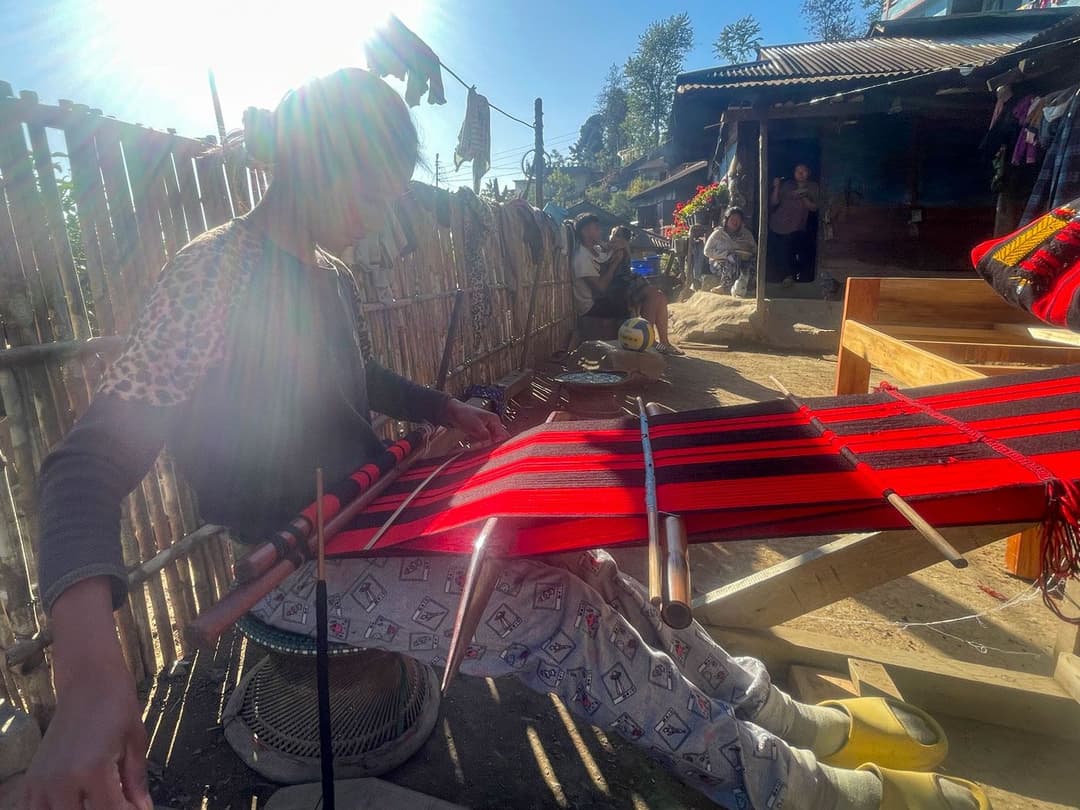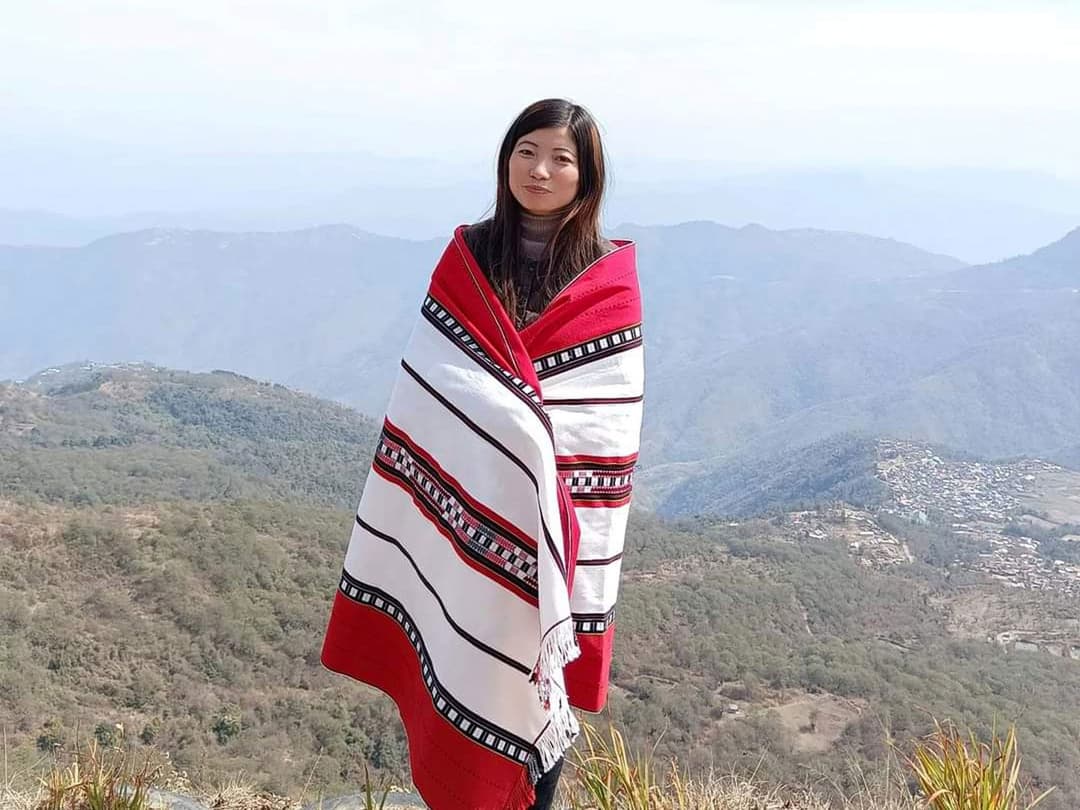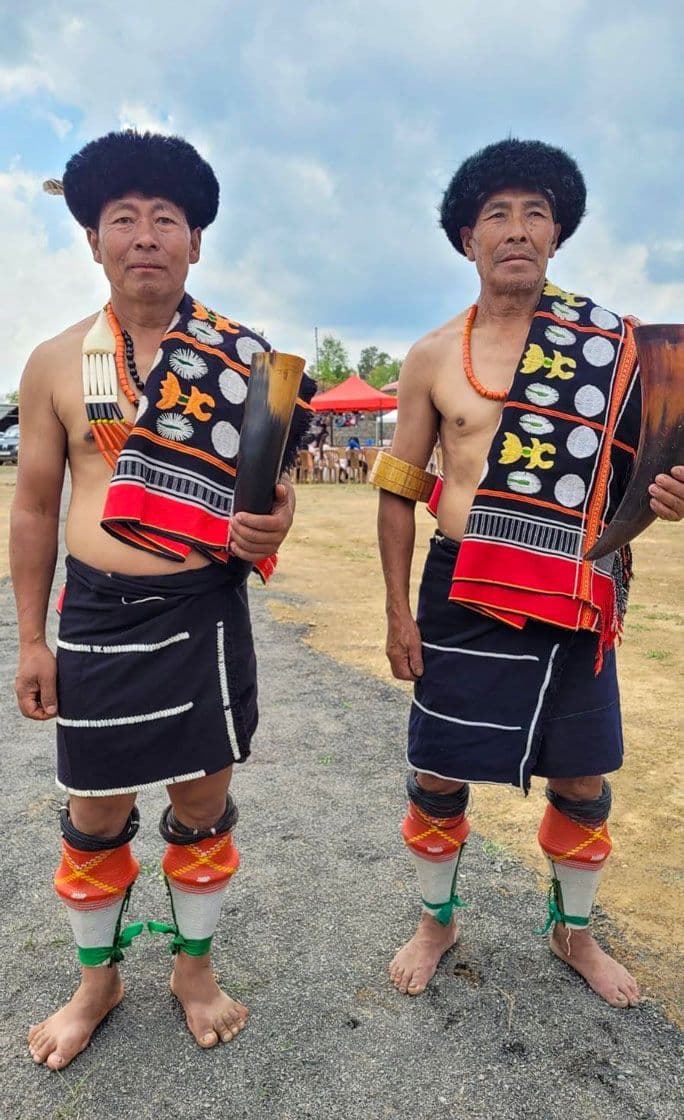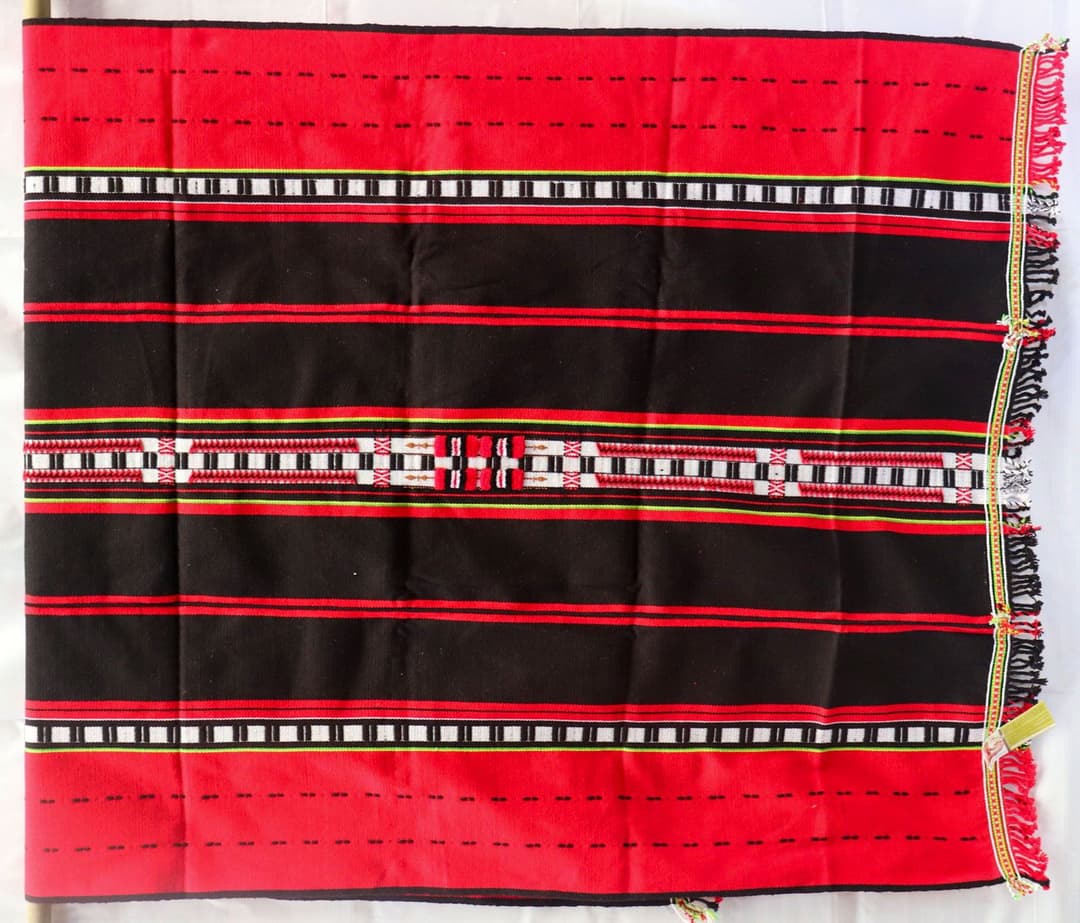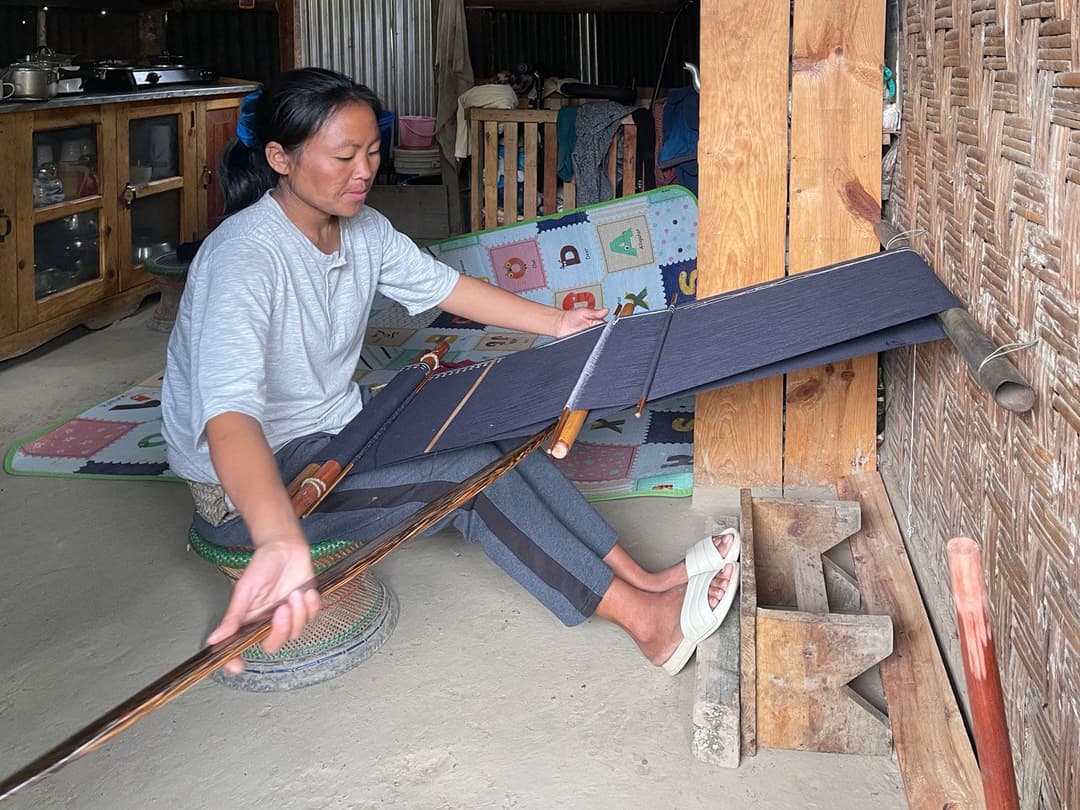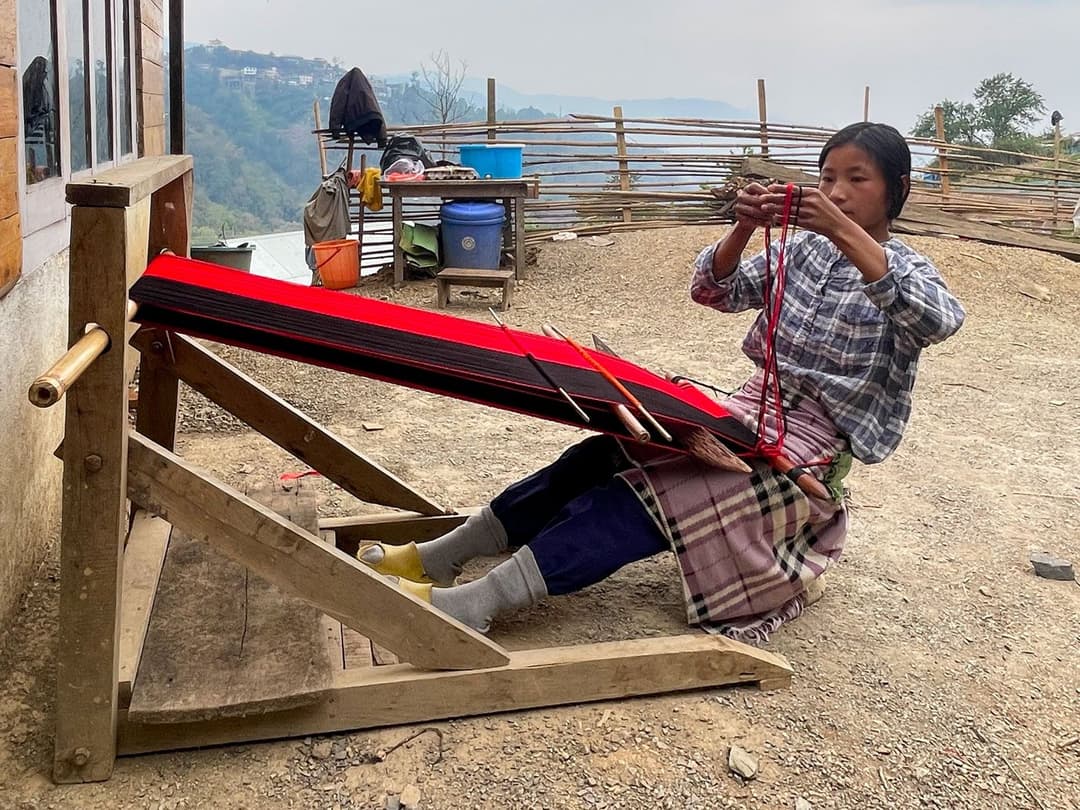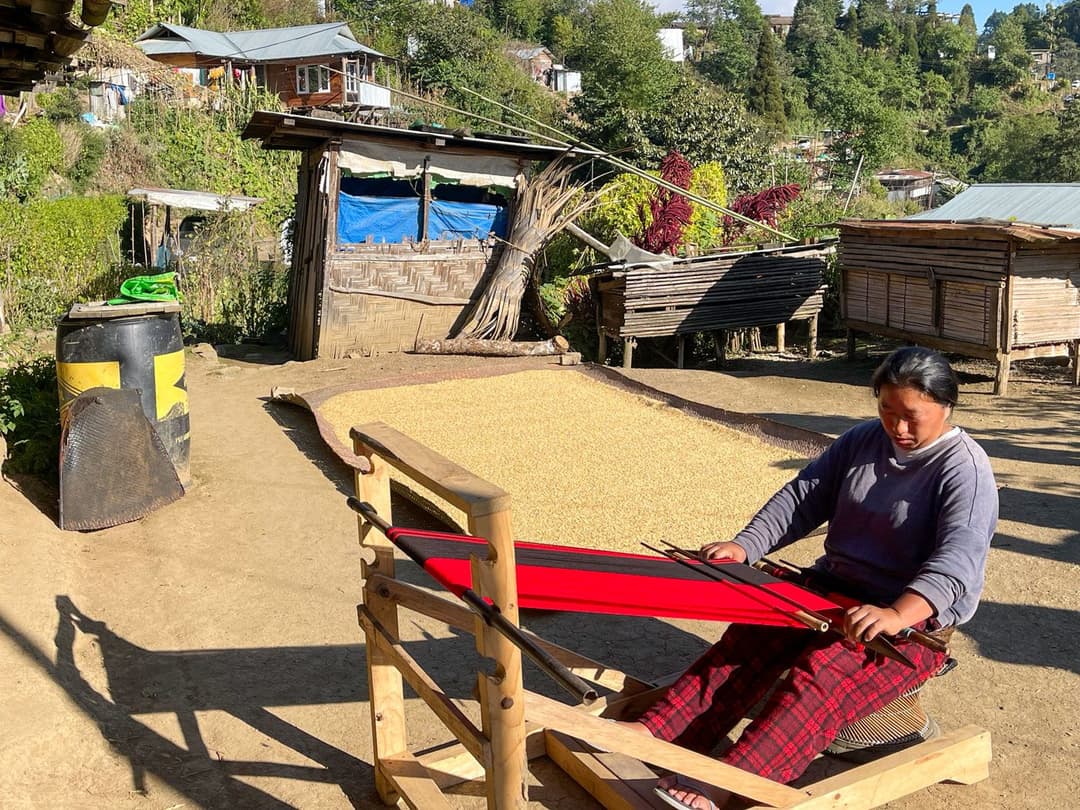


As a young girl, Kekuwe-ü had seen her mother and grandmother weaving with the stems of stinging nettle or thevo. She would pick up a piece left half-done by her mother and practice on her own. But she had to do it secretly, because her mother had given her strict instructions not to touch the piece. That is how Kekuwe-ü slowly and secretively picked up the skill of weaving Naga shawls without anyone really teaching her, she says.
Today, she is a master craftswoman, finding time between her farming and household work to weave. “While waiting for water to boil to cook rice, or if someone takes our children for a walk, we try to weave this much,” she says, indicating the length of her index finger.
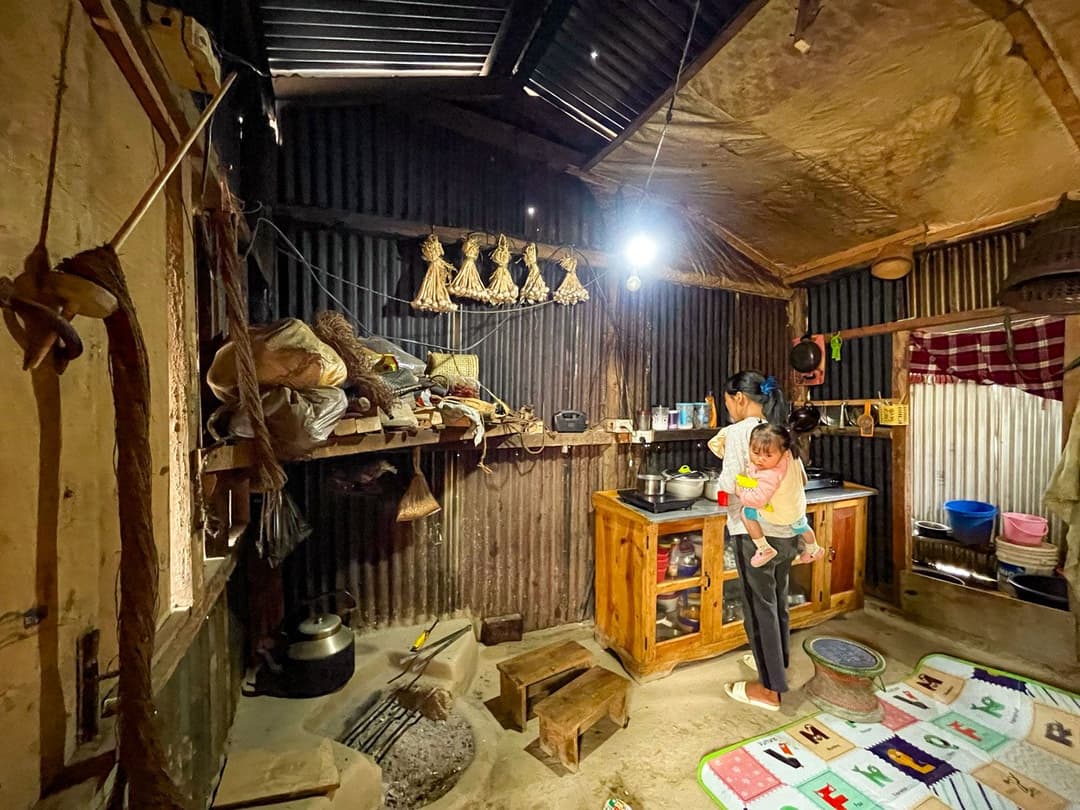
Kekuwe-ü is sitting with two of her neighbours – Vehüsülü and Ezhiehilü Chotso – in her tin-roofed house in Rukizo Colony. According to Kekuwe-ü's estimates, roughly 11 per cent of the 266 households in Pfütsero village of Nagaland’s Phek district practice weaving. And it’s largely the women of the Kuzhami sub-group of the Chakhesang community (listed as Scheduled Tribe) who do it. “Our husbands help,” says Kekuwe-ü, “they might cook too, but they are not ‘experts’ like women. We have to cook, farm, weave and do other chores.”