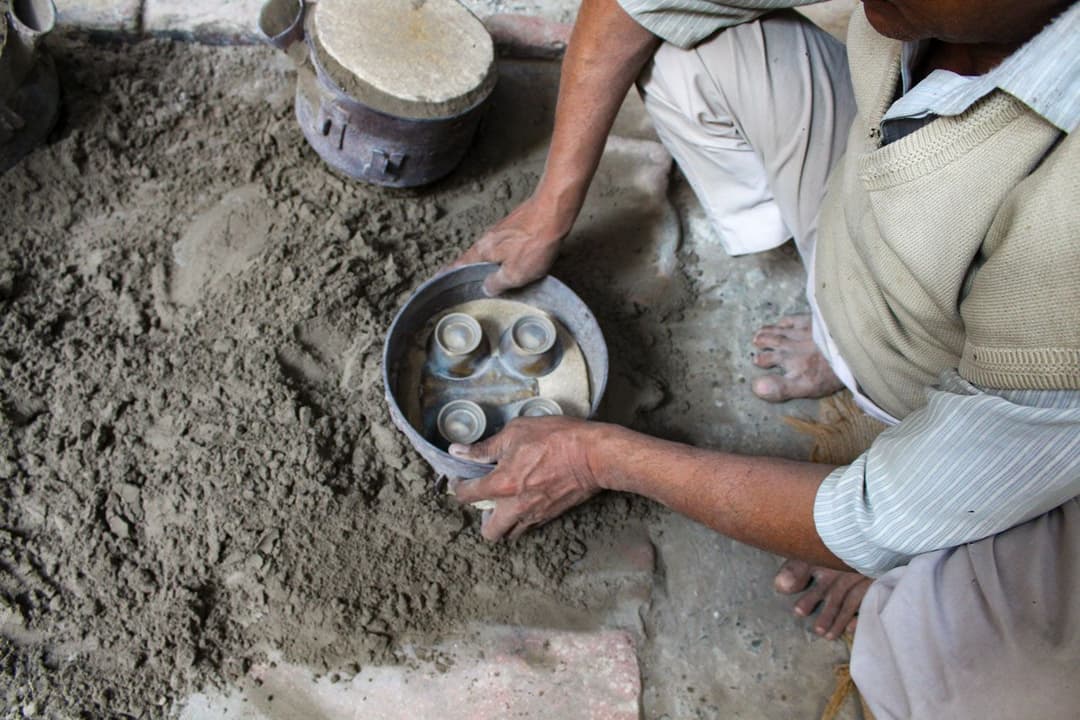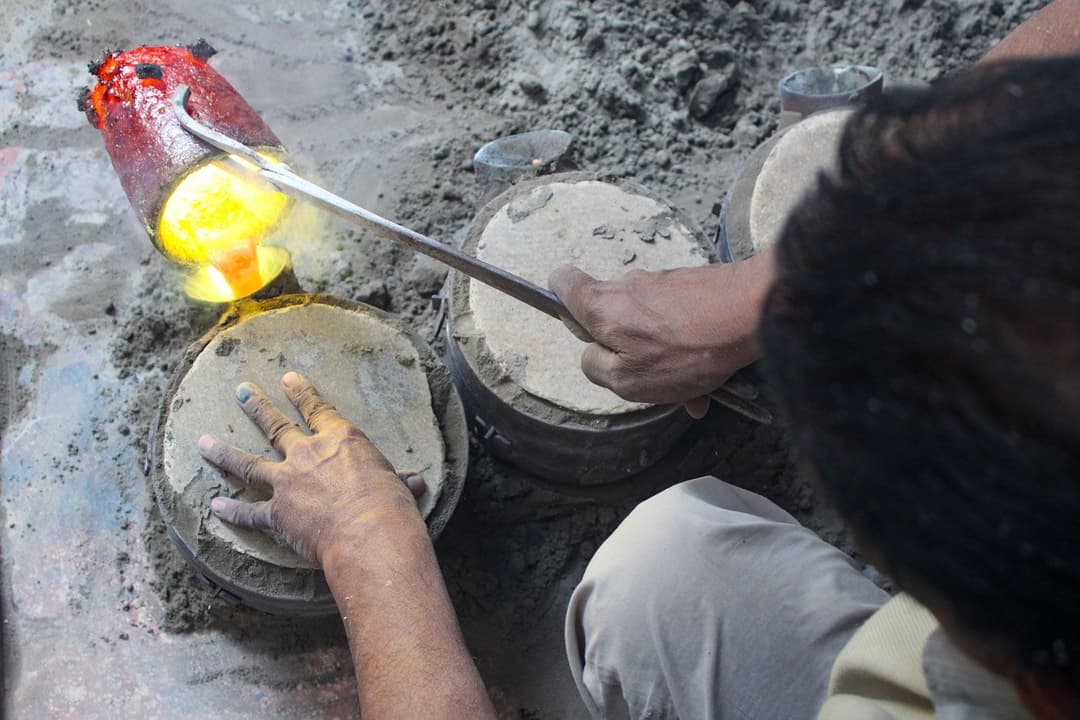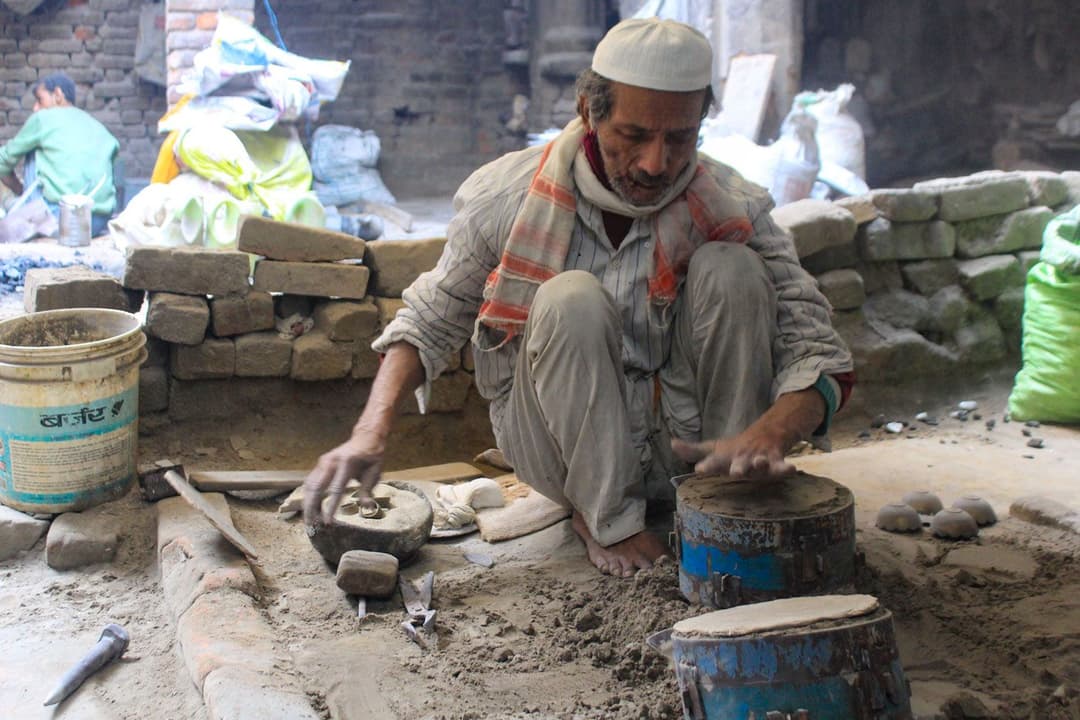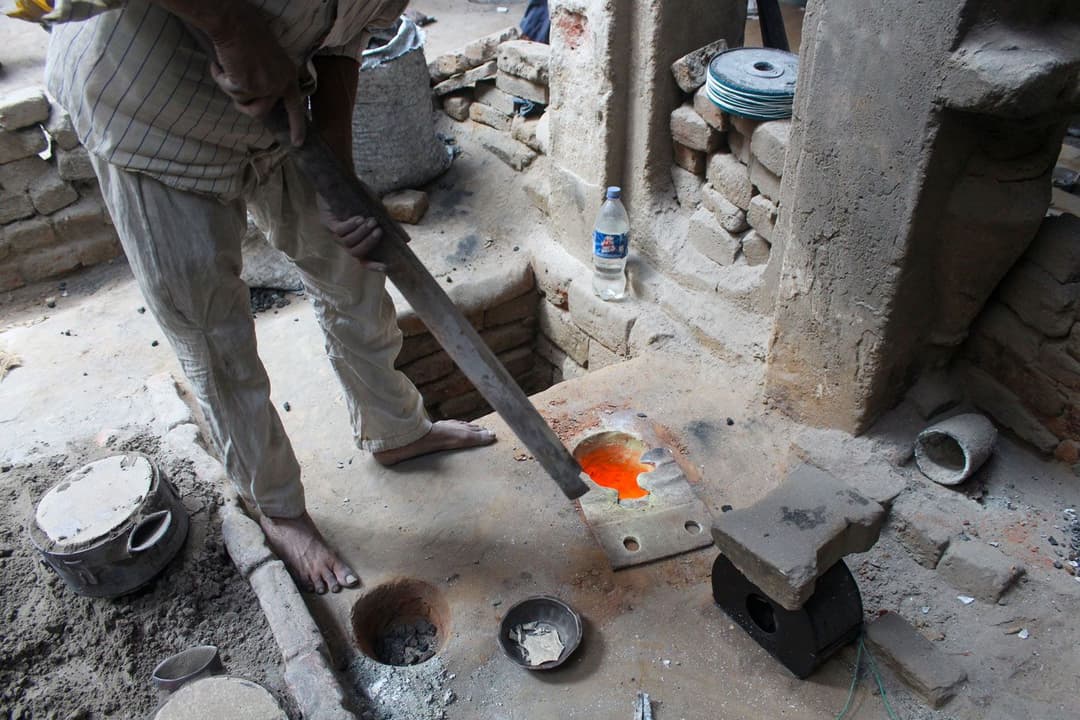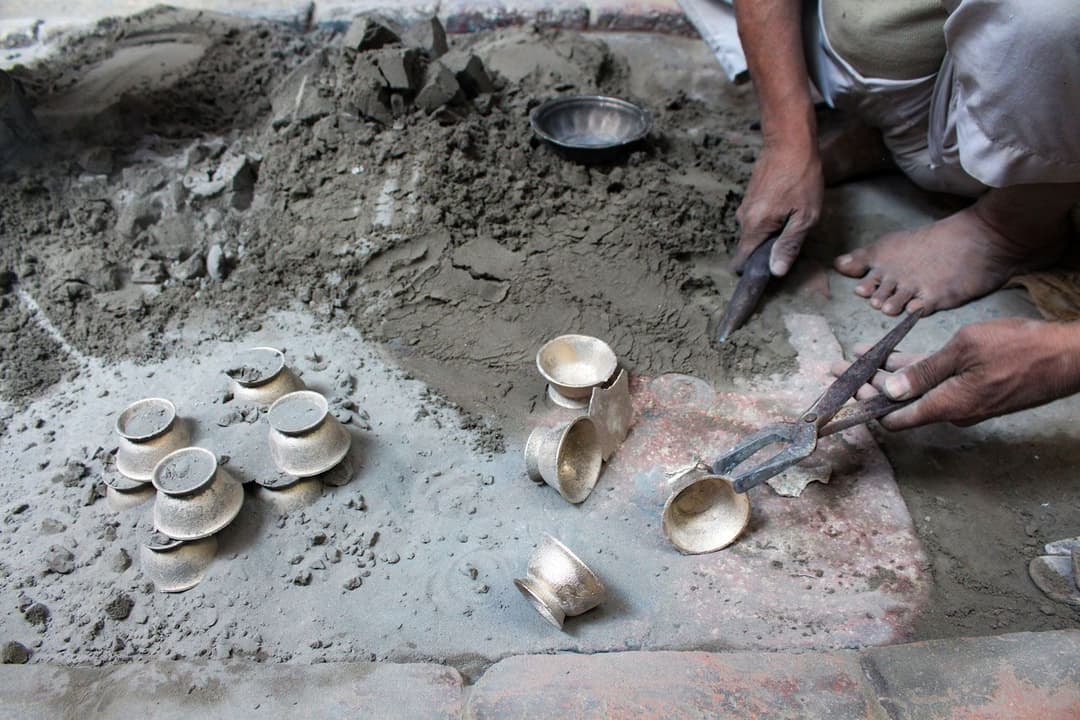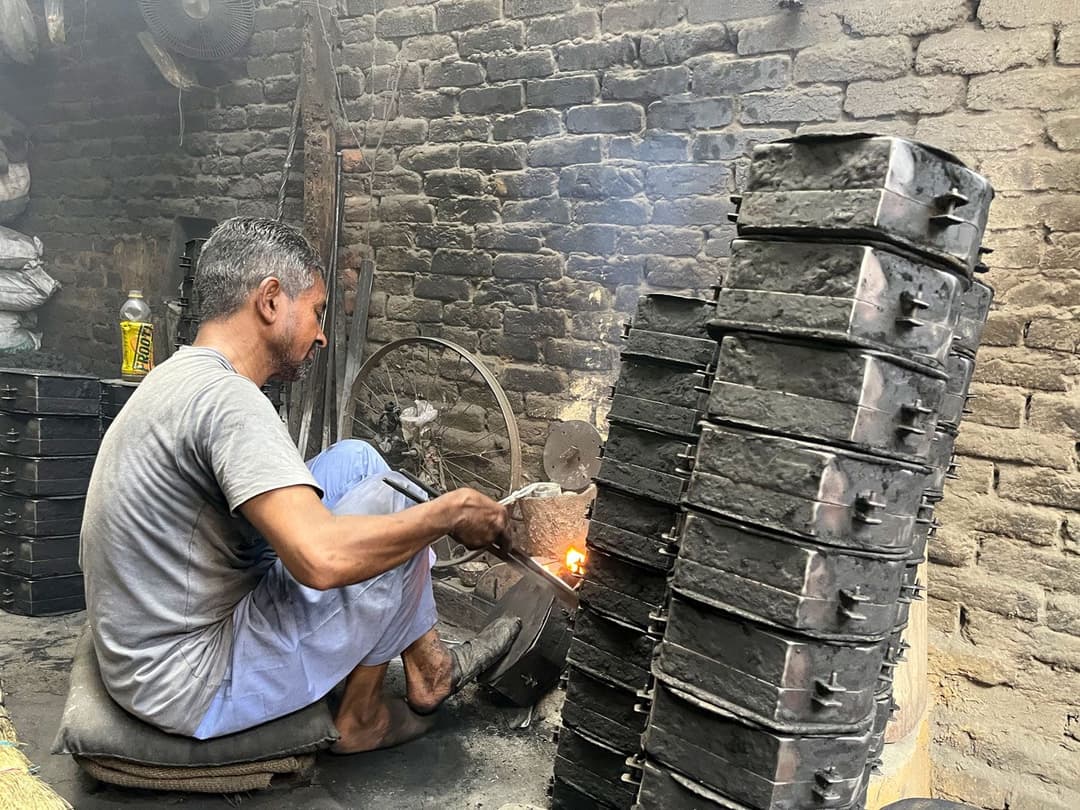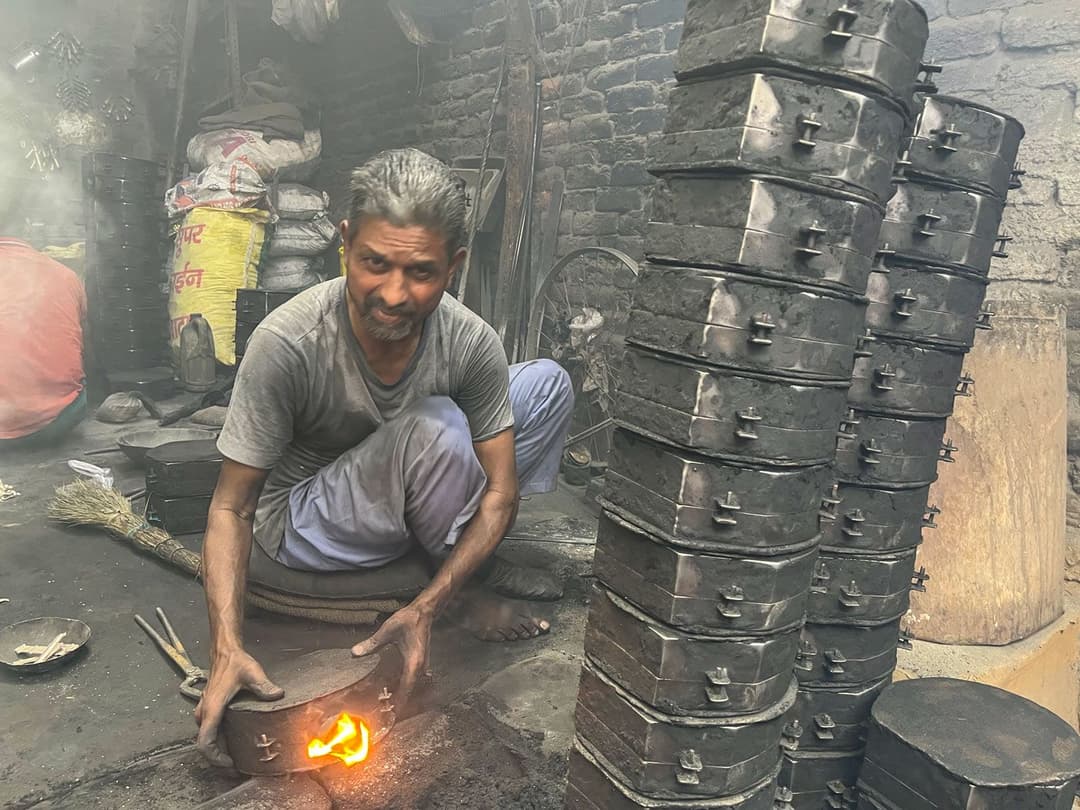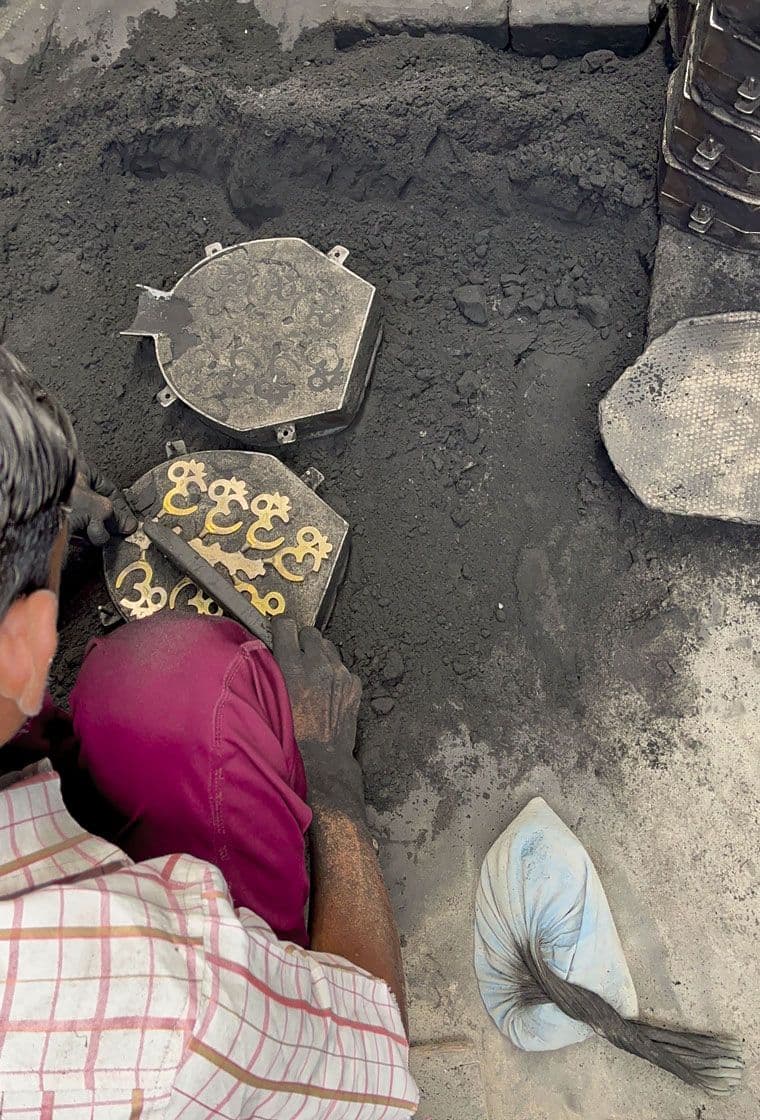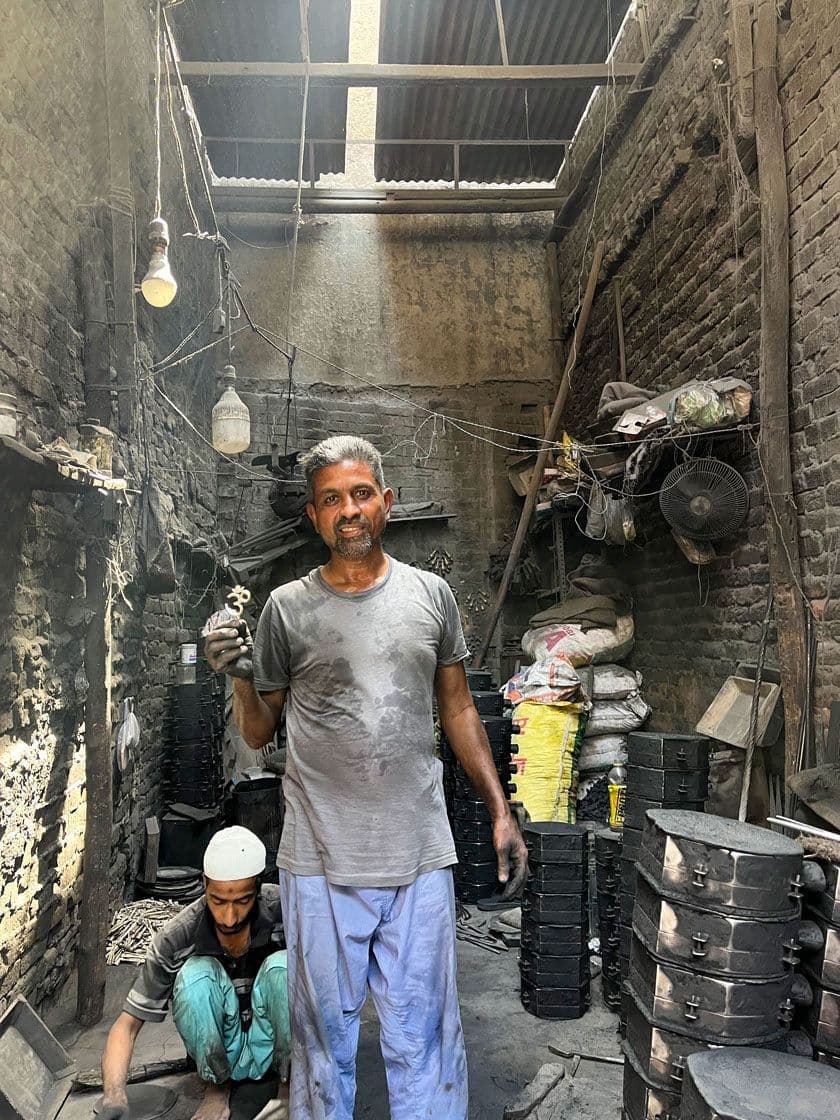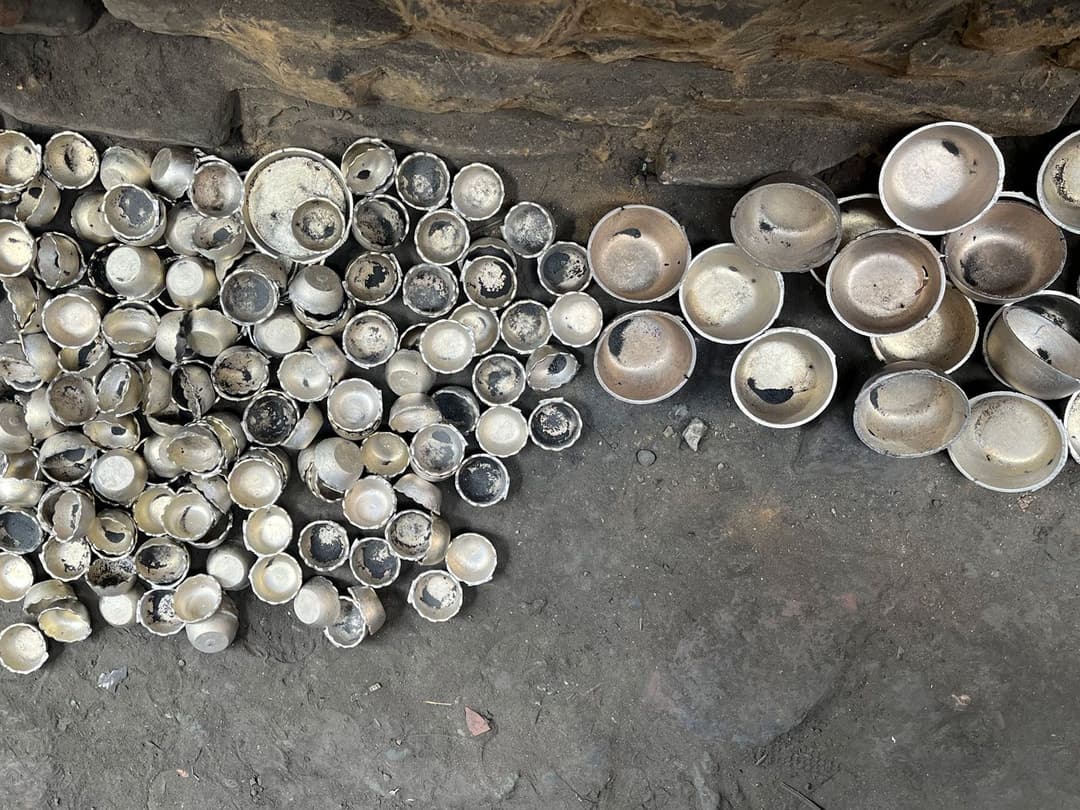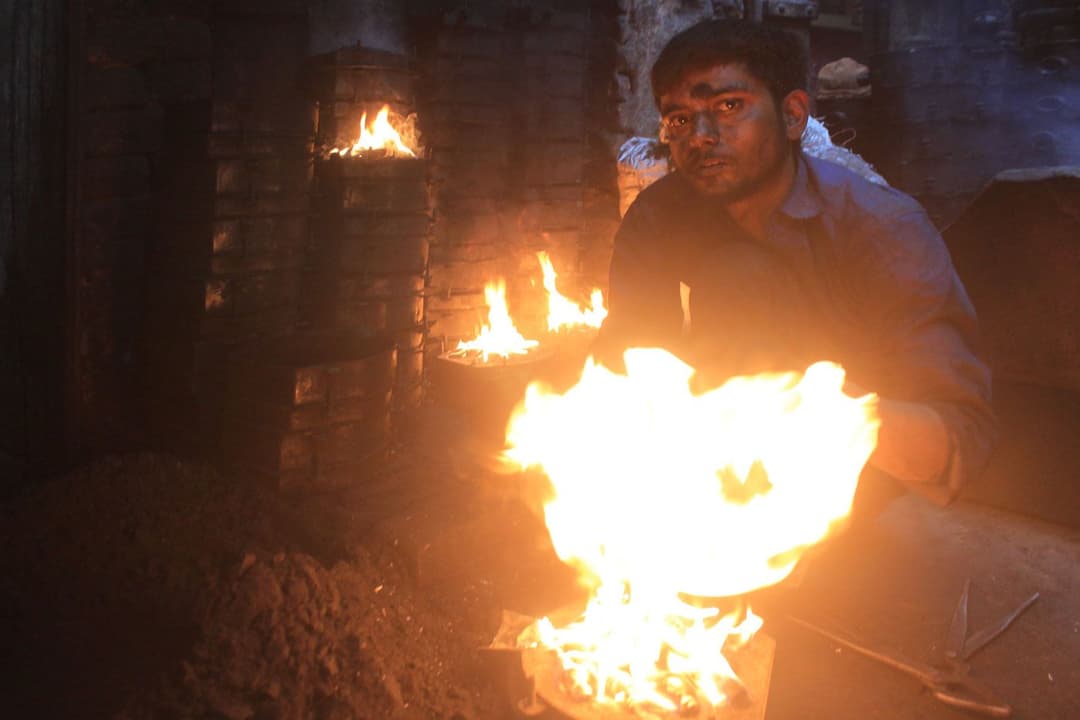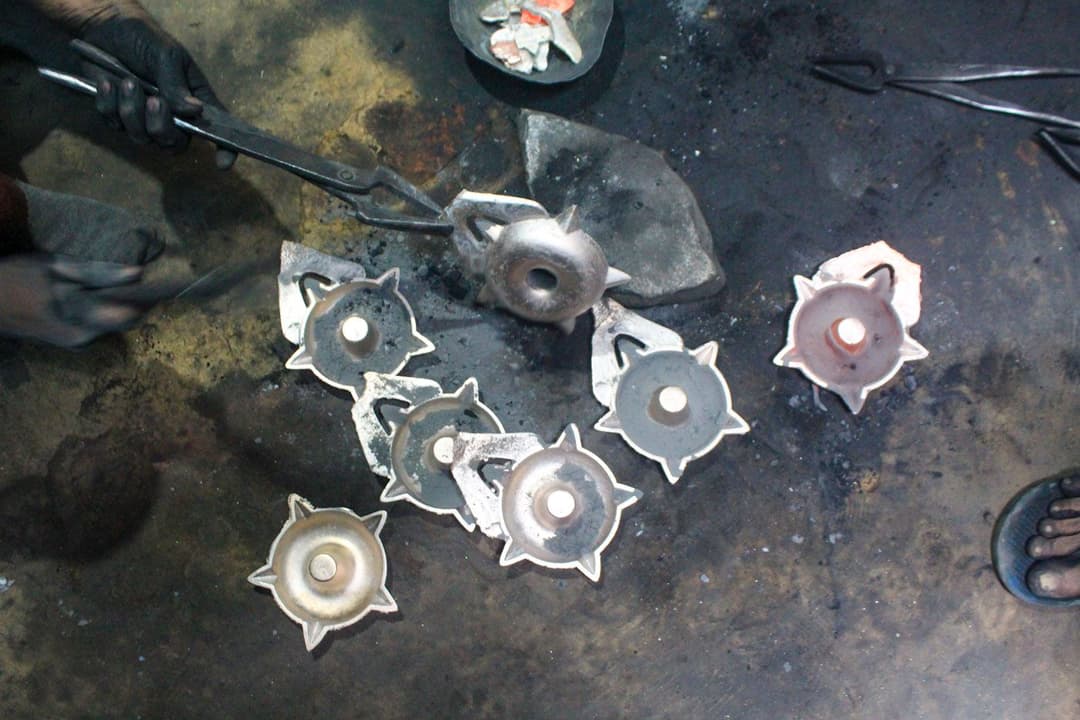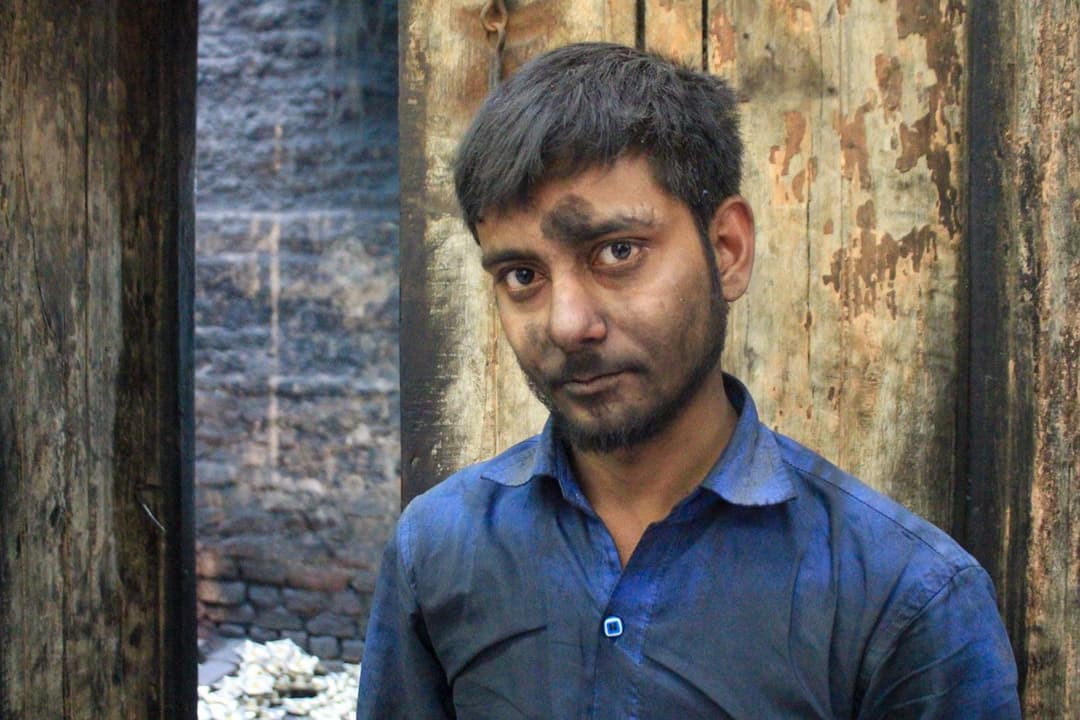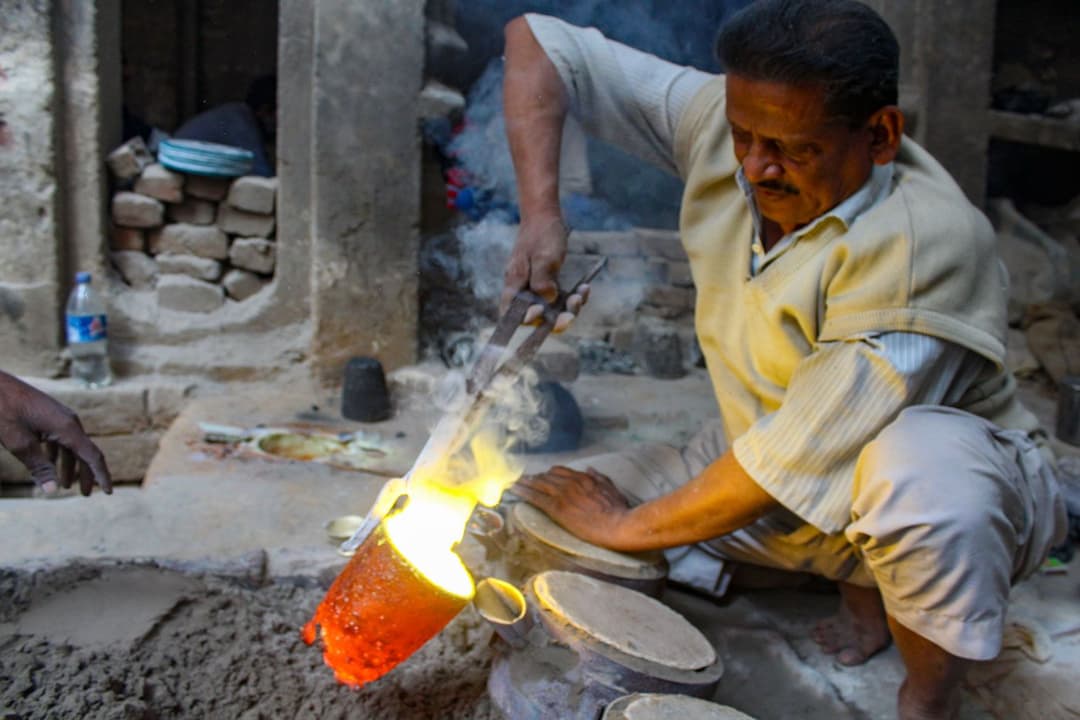
Tiny particles rise in the air as Mohammad Aslam pours hot molten brass into a sancha (mould container). This will shape the brass into a solid chandan piyali (a small bowl used for prayers).
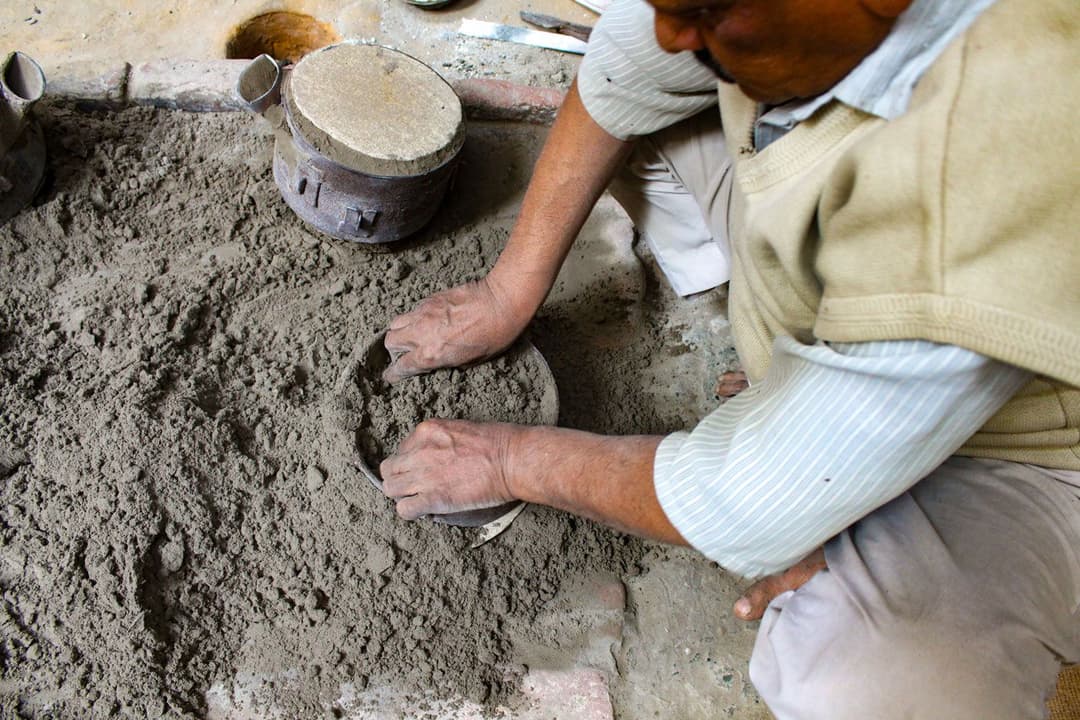
A metal craftsman specialising in brass work, Aslam’s hands move firmly and cautiously. He measures the pressure on the container as he pours the brass, ensuring the sand inside – which gives the product its shape – does not spill.
“You should keep your hands firm or the structure inside the sancha will be disturbed. The adat [the moulded product] will be spoiled,” says 55-year-old Aslam. However, the spillage of the sand does not worry him as much as the particles in the air. “Do you see them? This is brass and it’s going to waste. We will have to bear its cost,” he rues. For every 100 kilograms of brass that they mould, around 3 kilos is lost in the air. That’s roughly 50 rupees disappearing into thin air.
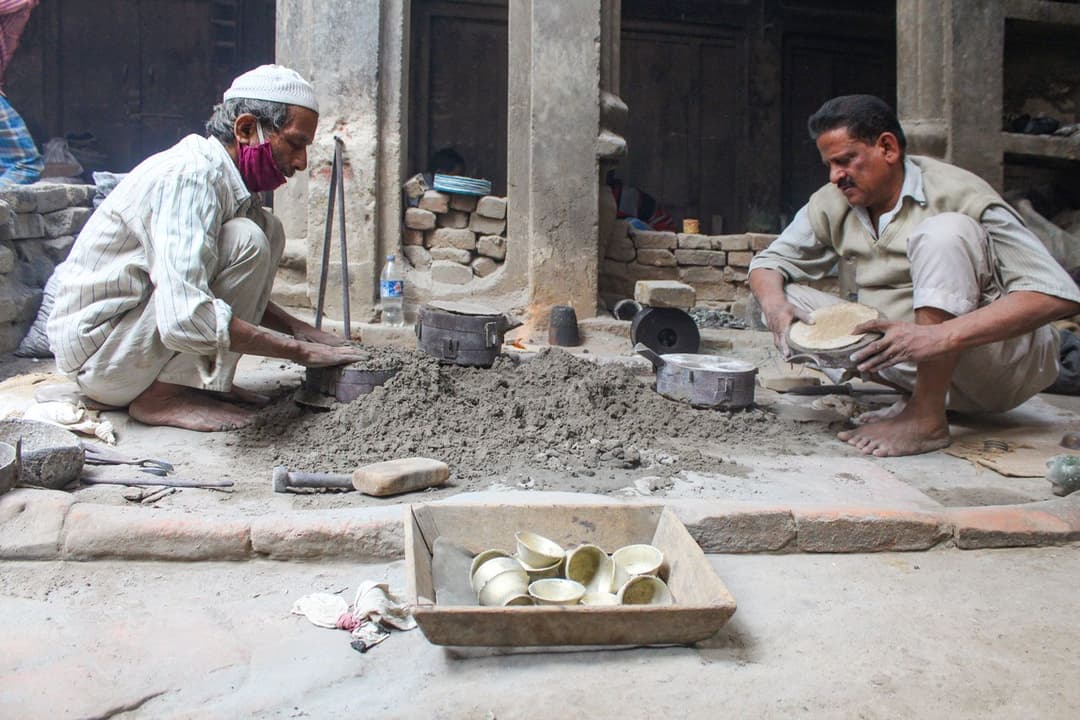
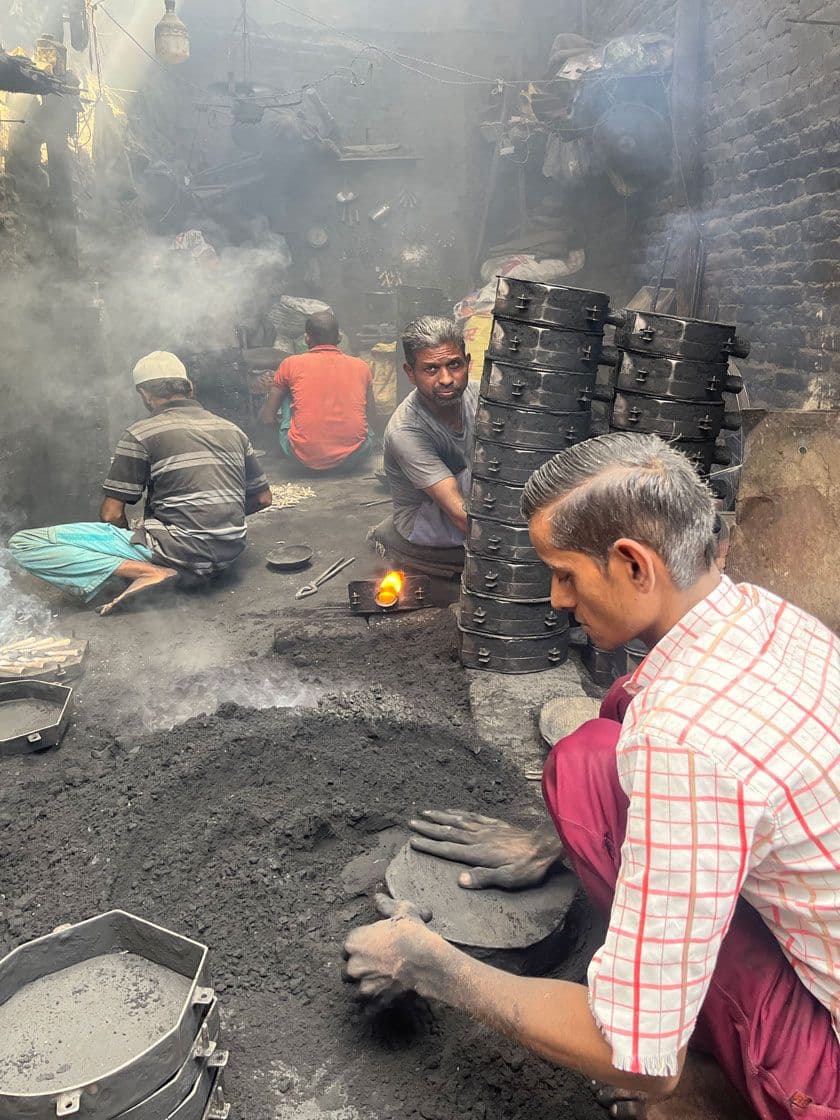
Aslam is among the handful of craftsmen working in one of the many bhattis (furnaces) located in Moradabad’s Peerzada area, famous for brass work. The craft is locally known as dhalayi ka kaam, or casting, in which craftsmen melt pieces of brass silli (ingot) and mould them into different shapes.
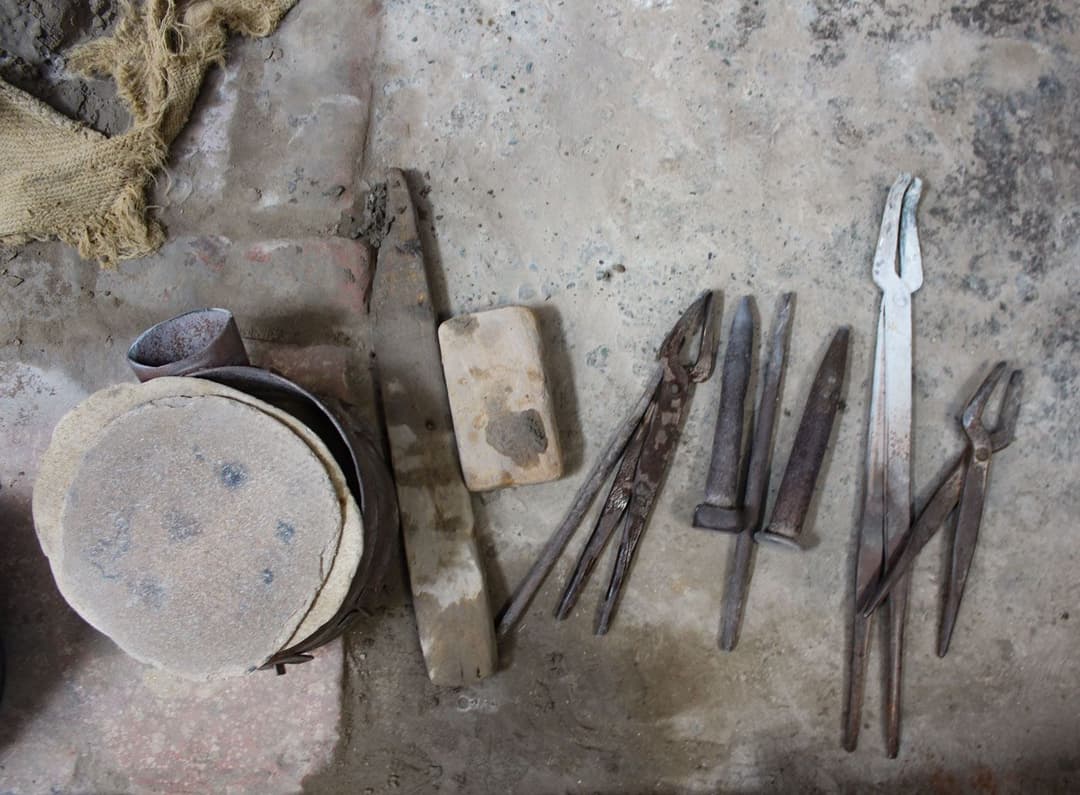
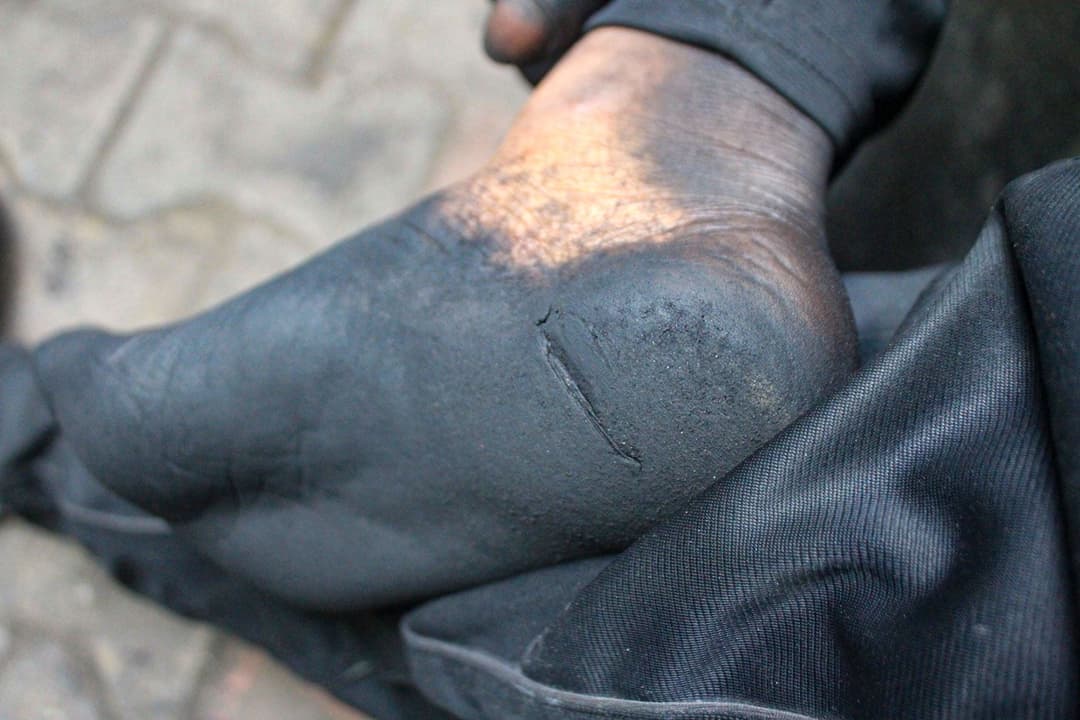
Their work material – coal, sand, wooden planks, iron rods, pliers and tongs of varying sizes – lie scattered around them in the workspace where Aslam and his assistant Raees Jaan spend 12 hours a day. Aslam pays Rs. 1,500 as rent every month for the crowded five square feet space.