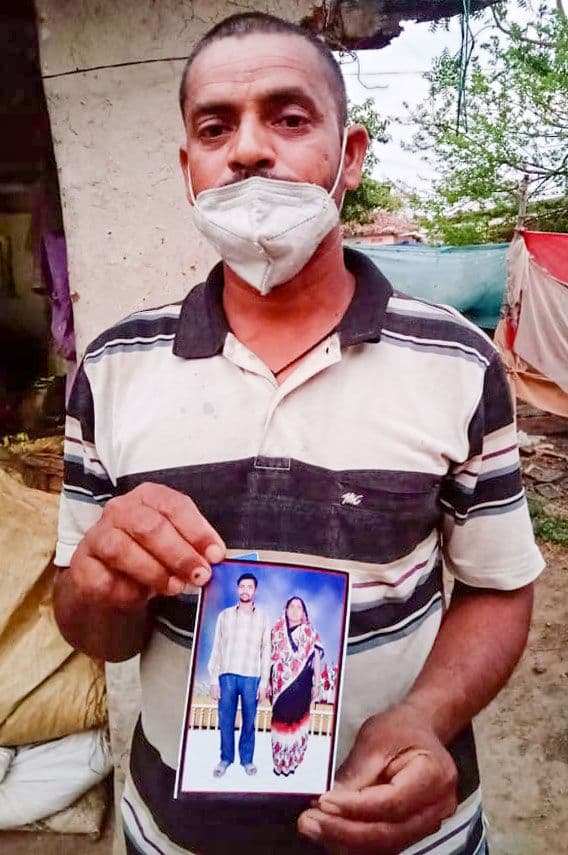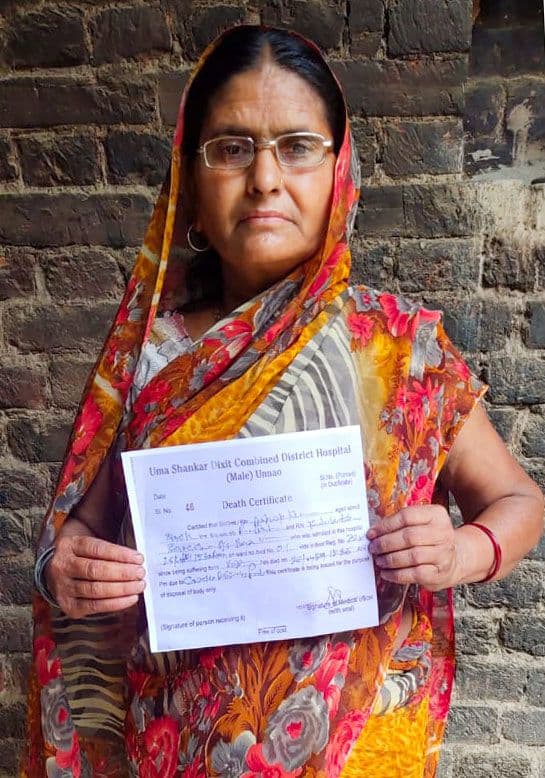

Early in the morning, Sunita Sahu turned over with some effort and asked, “Where are the children?” Her husband Bodhram said they were asleep. She sighed. It had been a sleepless night for her. And that worried Bodhram. He had often joked to her that she could fall asleep anytime, anywhere.
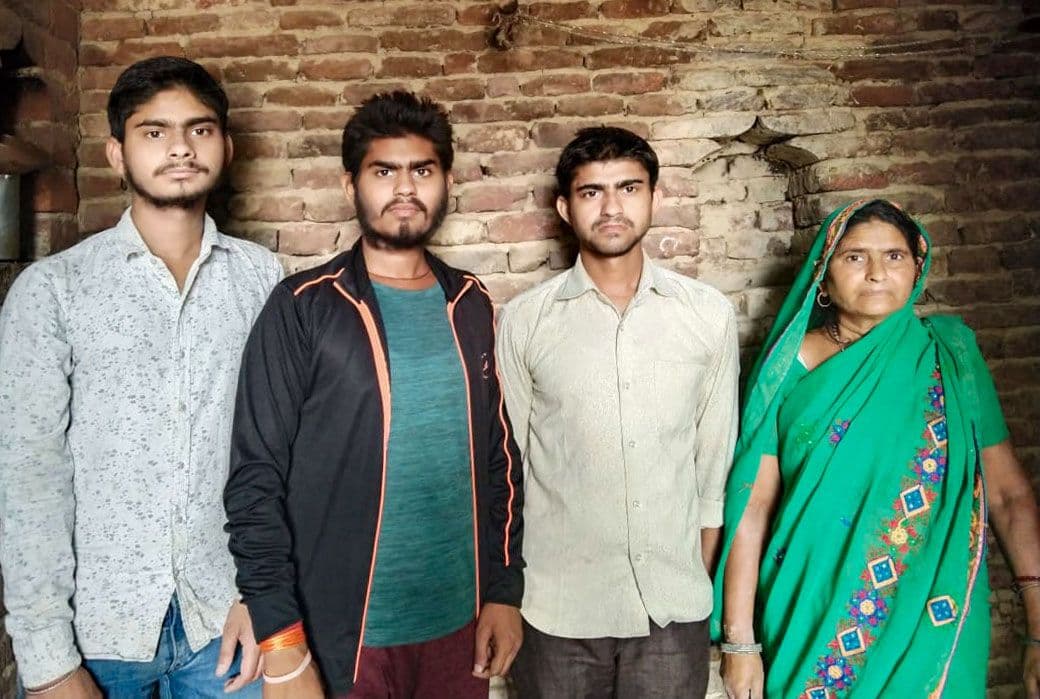
But on the night of April 28, as Bodhram and Sunita Sahu’s three sons (ages ranging from 12 to 20) took turns to massage their mother’s arms, legs, head and stomach with warm mustard oil, she groaned in pain. “Something is happening to me,” she mumbled – these are Bodhram’s recollections of the morning.
The Sahu family lives in a shanty in Khargapur Jagir in Lucknow district. They had moved to this village in Chinhat block over two decades ago from their village, Maro, in Bemetra district of Chhattisgarh. Bodhram, 42, works as a mason on construction sites; Sunita, 39, was a homemaker.
April was the month when the second wave of the Covid-19 pandemic had severely hit Uttar Pradesh. On April 24, the state recorded 38,055 new infections – its highest ever, though there have been concerns that UP has underreported the numbers.
“The actual number of cases could be four to five times higher. There is underreporting because people are not coming forward for tests due to the stigma. It is difficult to get the real picture,” says Rashmi Kumari, assistant professor, department of Community Medicine at the Ram Manohar Lohia Institute of Medical Sciences (RMLIMS), Lucknow.
The Sahus are sure that Sunita did not have Covid-19 because no one else in the family had it, though she had fever, body ache and diarrhoea – symptoms that are indicative of the coronavirus.