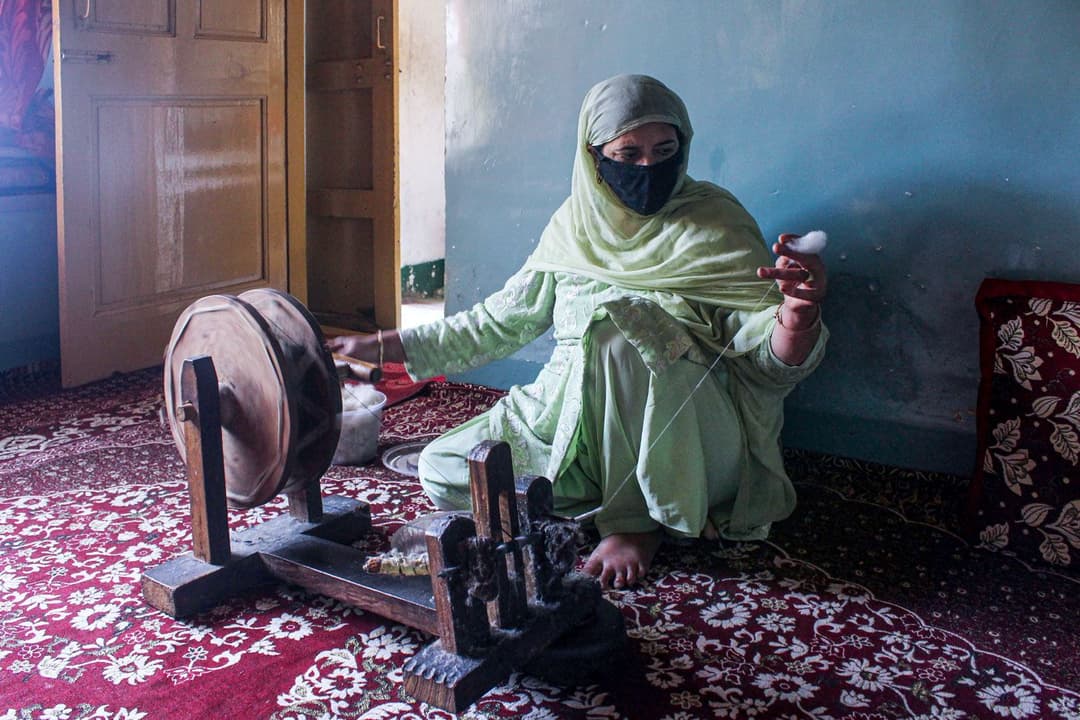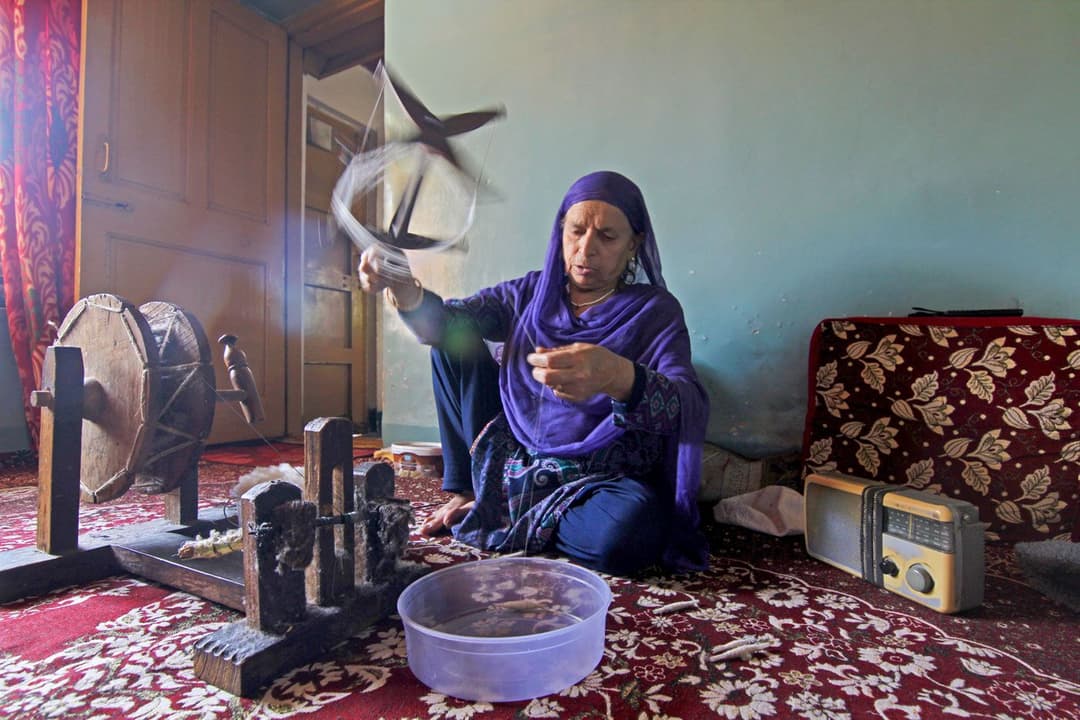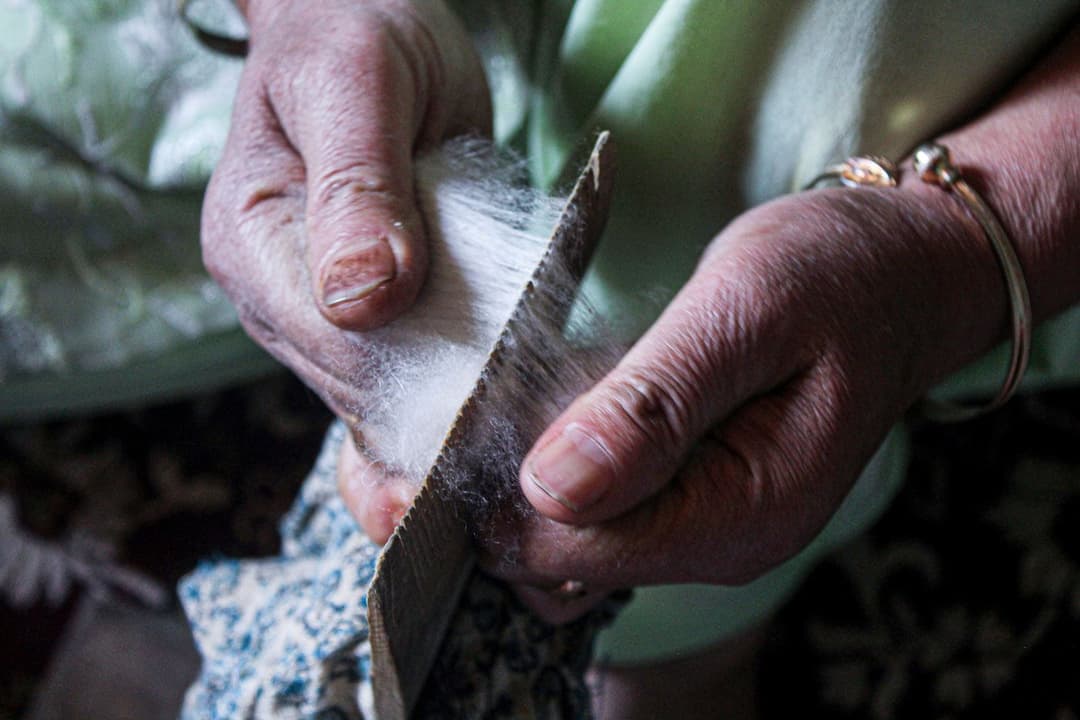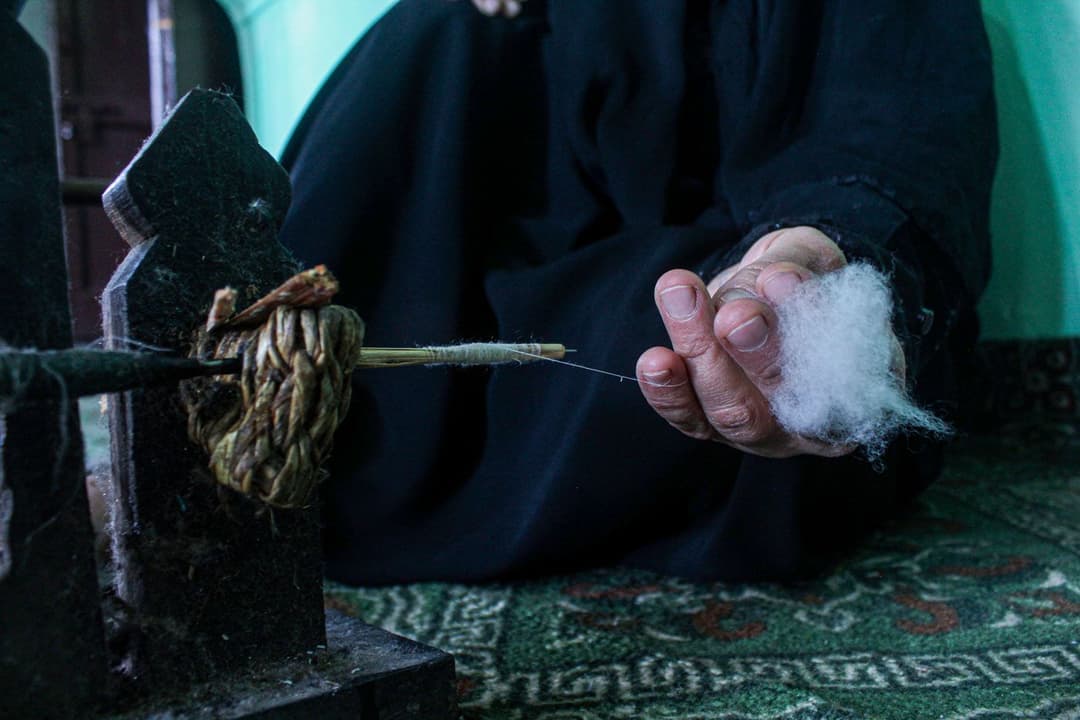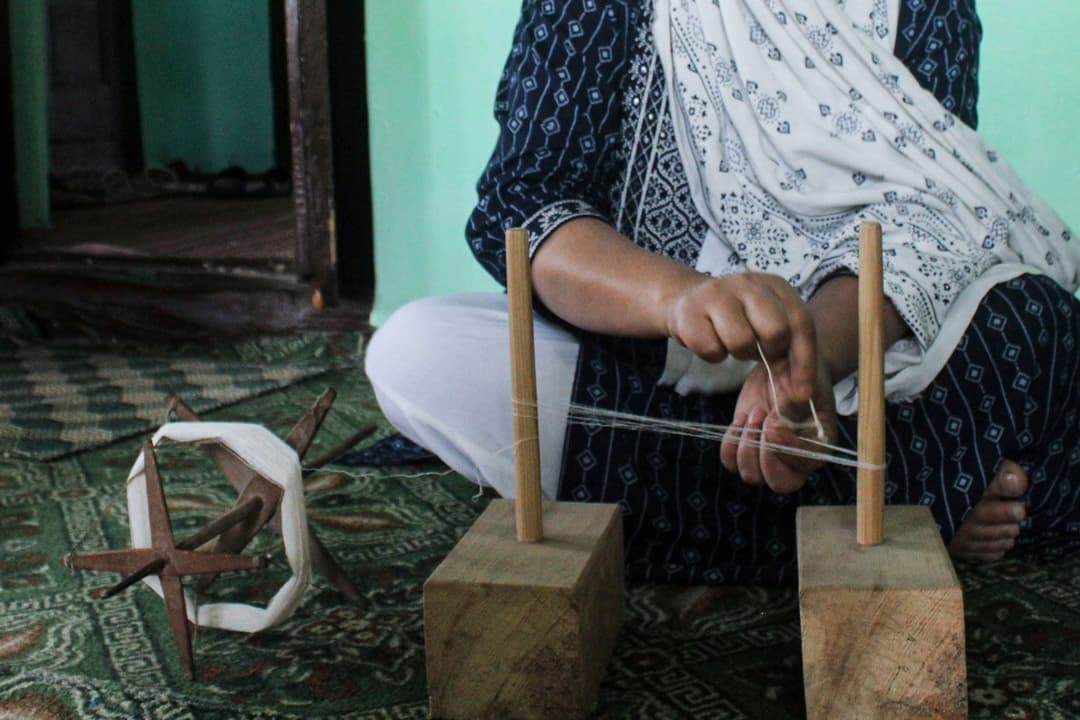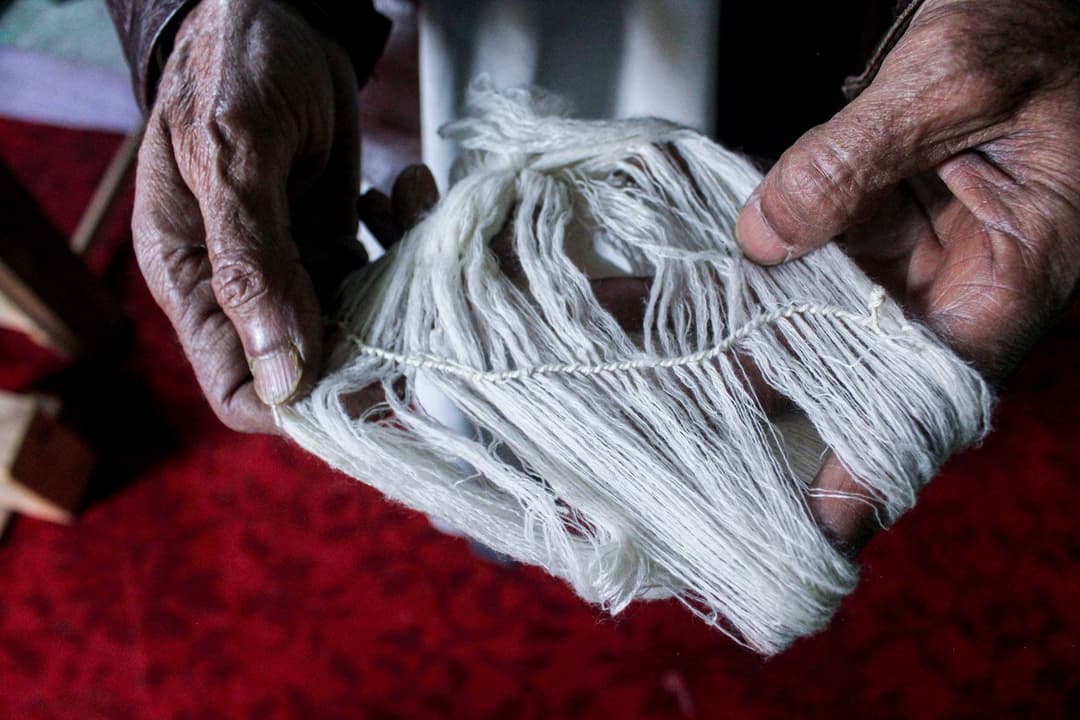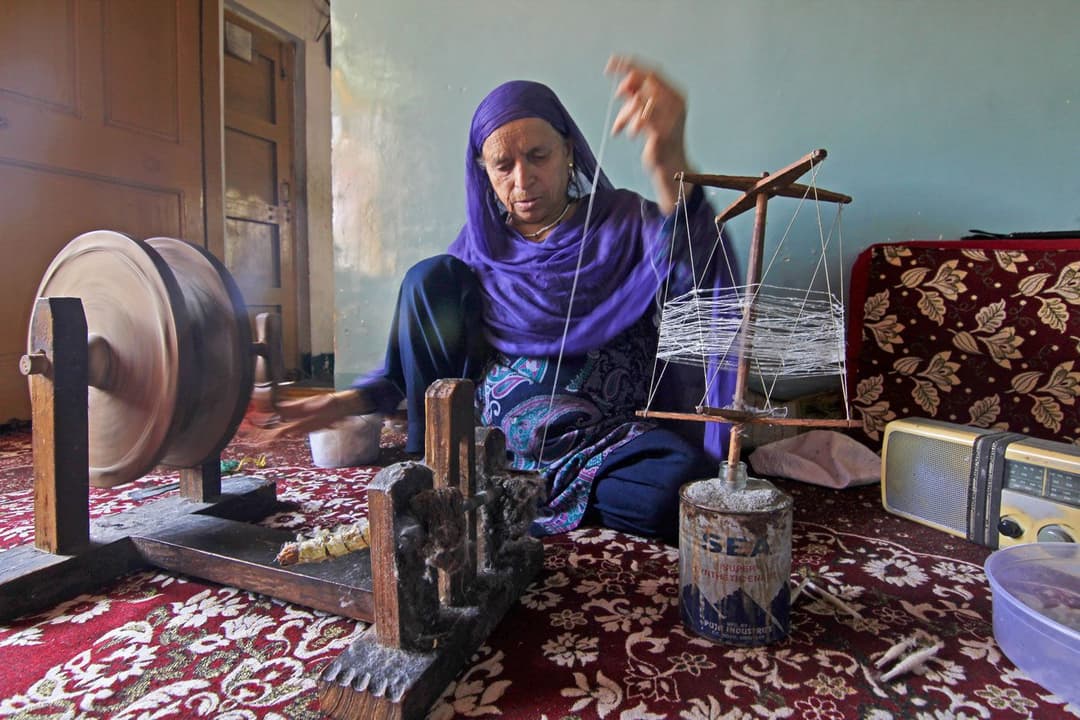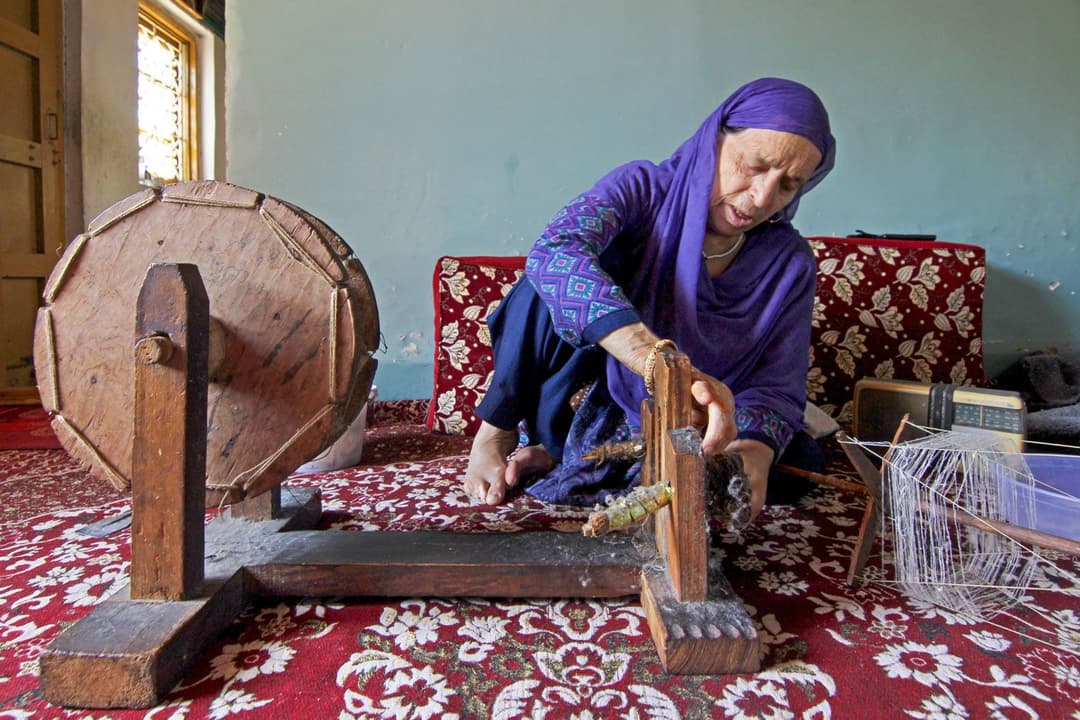

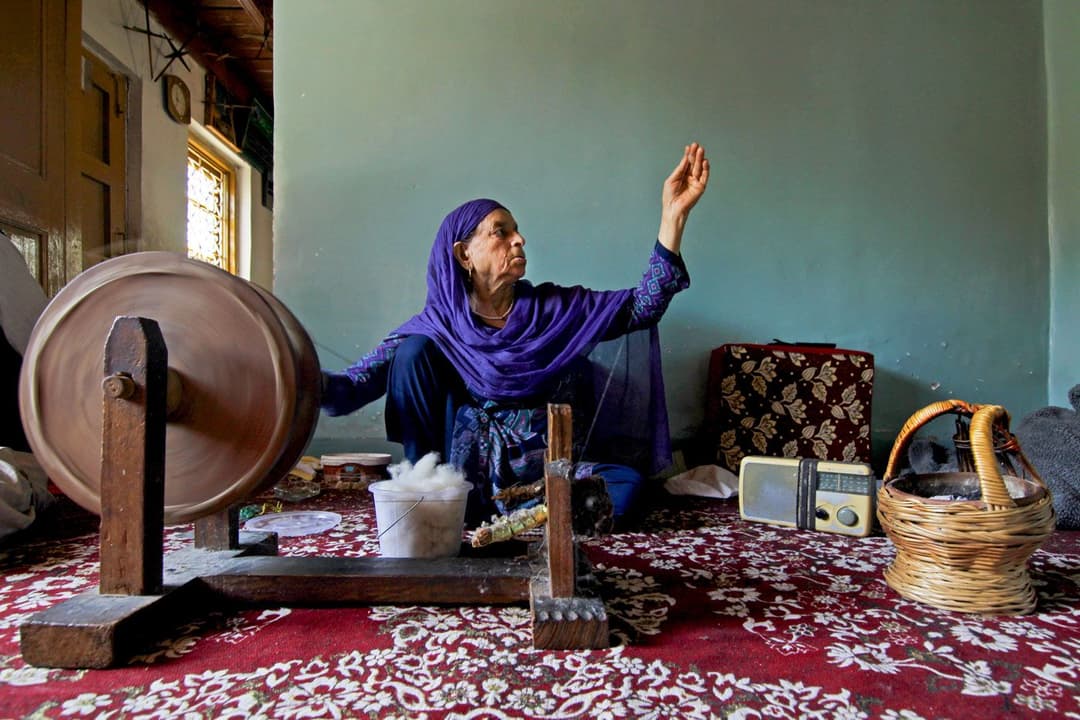
It takes Fahmeeda Bano a month to spin enough thread for a regular-sized pashmina shawl. Separating and spinning the fine, gossamer-like wool of the Changthangi goat is an arduous and delicate task. The 50-year-old artisan says she can expect to earn roughly Rs. 1,000 for her month-long labour. “If I work continuously, I can earn 60 rupees a day,” she adds, breaking it down.
That’s a negligible fraction of the price the highly valued shawl will sell for – anything from Rs. 8,000 to over Rs. 100,000 depending on the needlework embroidery and the intricacy of the woven patterns.
Traditionally, hand spinning of pashmina thread was done by women in between household work. The low wages for spinners like Fahmeeda have led to a sharp fall in the number of artisans willing to do this work.
Firdousa is another resident of Srinagar who used to spin wool before she was married and got busy taking care of her family and home. Recalling her younger days she says, “Elders in the family would urge us to spin, saying it would keep our minds occupied, rather than indulging in gossip.” Her two teenage daughters don’t spin, as they don’t find the time between their academics and household work. And then the money isn’t much.
Spinning is a part of Kashmiri culture, says Firdousa, and refers to the link between the local delicacy, nadru (lotus stem) and spinning: “Earlier women would compete with each other to spin a thread which was as fine as the fibre in a lotus stem."