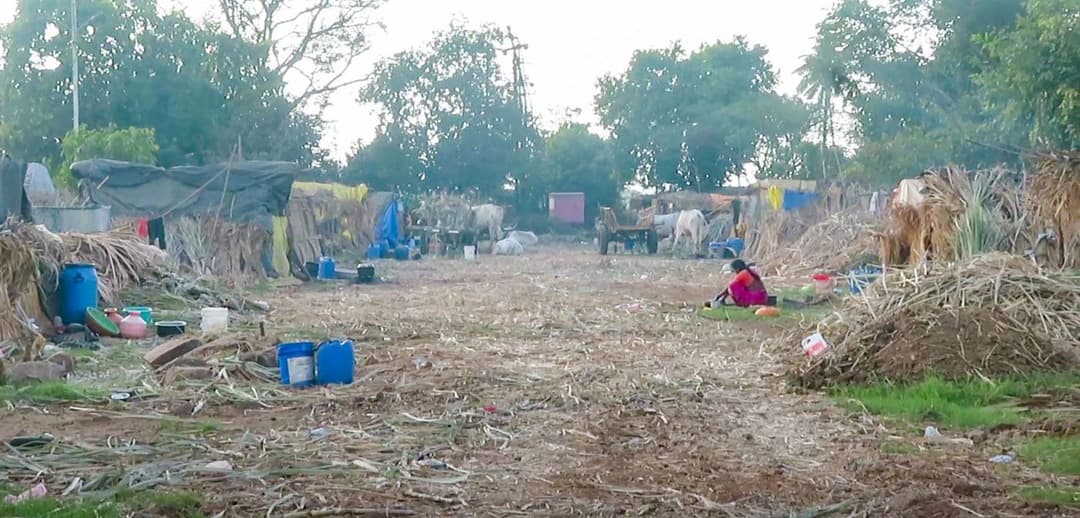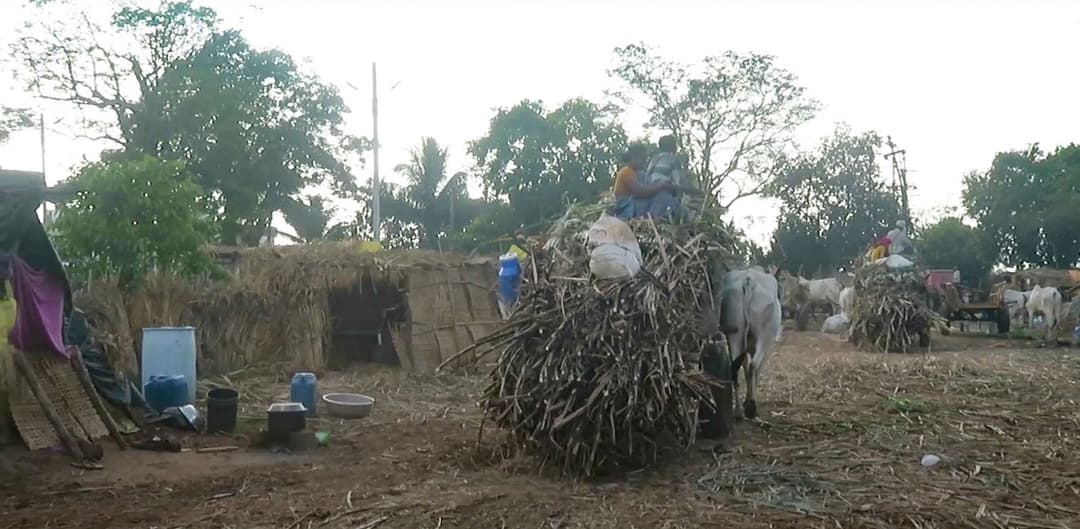

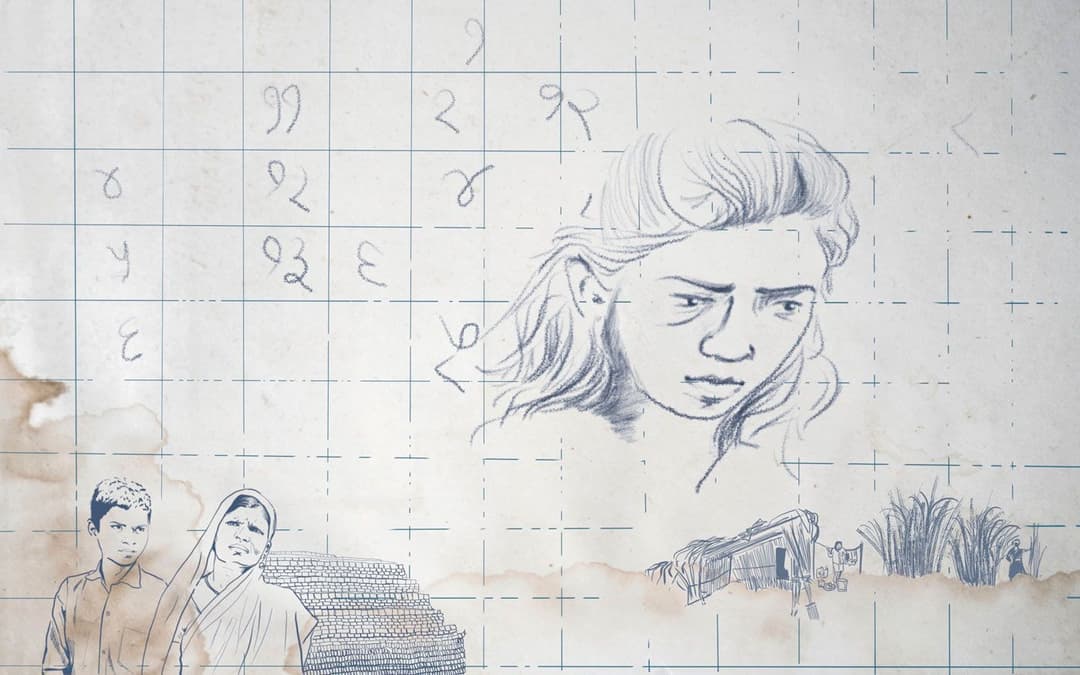
It’s a hot and quiet February afternoon at the Rajaram Sugar Factory in Kolhapur district. The hundreds of khopyas (thatched huts of sugarcane workers) located on the premises of the factory are mostly empty. Migrant workers are cutting cane near Vadanage village, an hour's walk from here.
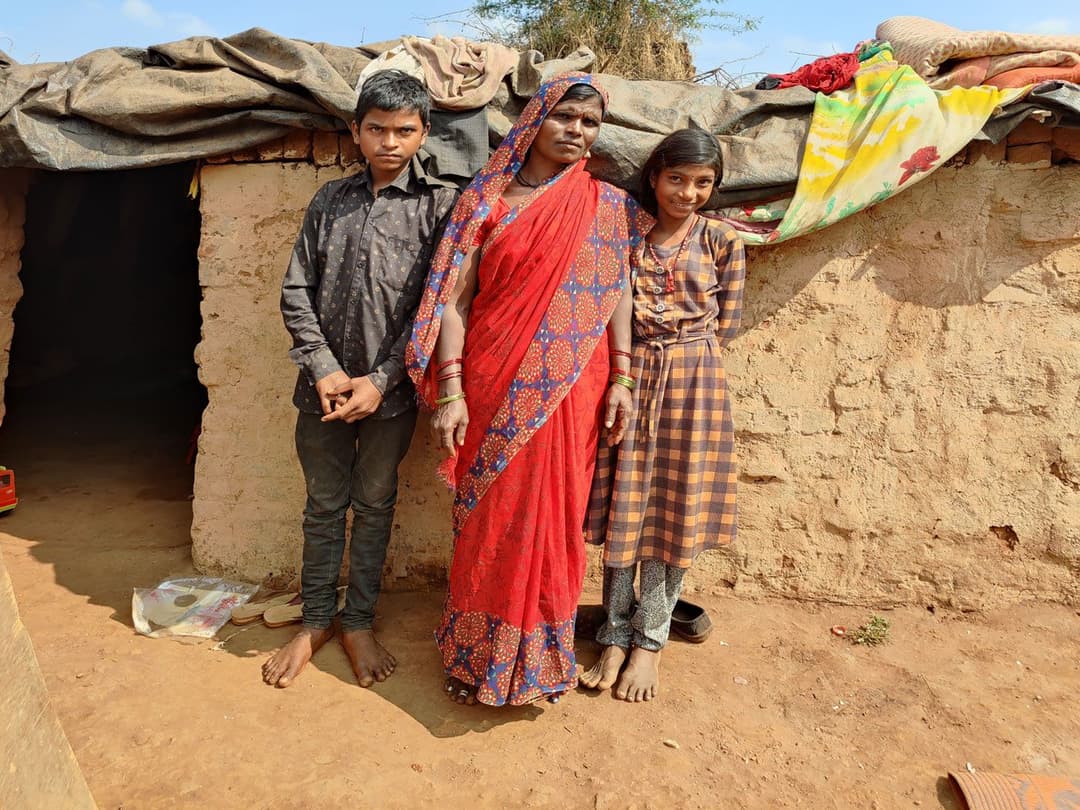
The distant sound of metal utensils being moved signals that some workers could be home. Following the sound leads us to 12-year-old Swati Maharnor who is getting ready to make her family’s dinner. Pale and exhausted we find her seated on the threshold of her family’s hut, all alone. Cooking utensils lie around her.
“I have been up since 3 a.m. in the morning,” she says, stifling a yawn.
The little girl left early this morning in a bullock cart with her parents, younger brother and grandfather to help cut sugarcane in Bavda taluka of Maharashtra. The family of five have been paid to cut 25 moli (bundles) a day, and all hands must help reach this target. They have packed bhakri and a brinjal sabji cooked the previous night for their lunch.
Only Swati returned at 1 p.m., walking back six kilometres to their home on the factory premises. “Baba [grandfather] went back after dropping me.” She has come home earlier than the others to prepare dinner for the rest of the family who will return soon, hungry and tired from over 15 hours cutting cane. “We [the family] have had only a cup of tea since morning,” says Swati.
This daily up and down between the fields and her home, cutting cane and cooking, has been Swati’s routine for the last five months – ever since her family migrated to Kolhapur district from their home in Sakundwadi village in Beed district, in November 2022. They live here, spread across the factory's premises. A 2020 report brought out by Oxfam, Human Cost of Sugar said that migrant workers in Maharashtra often live in large colonies of makeshift tents with tarpaulin covers. The colonies are often without water, electricity or toilets.