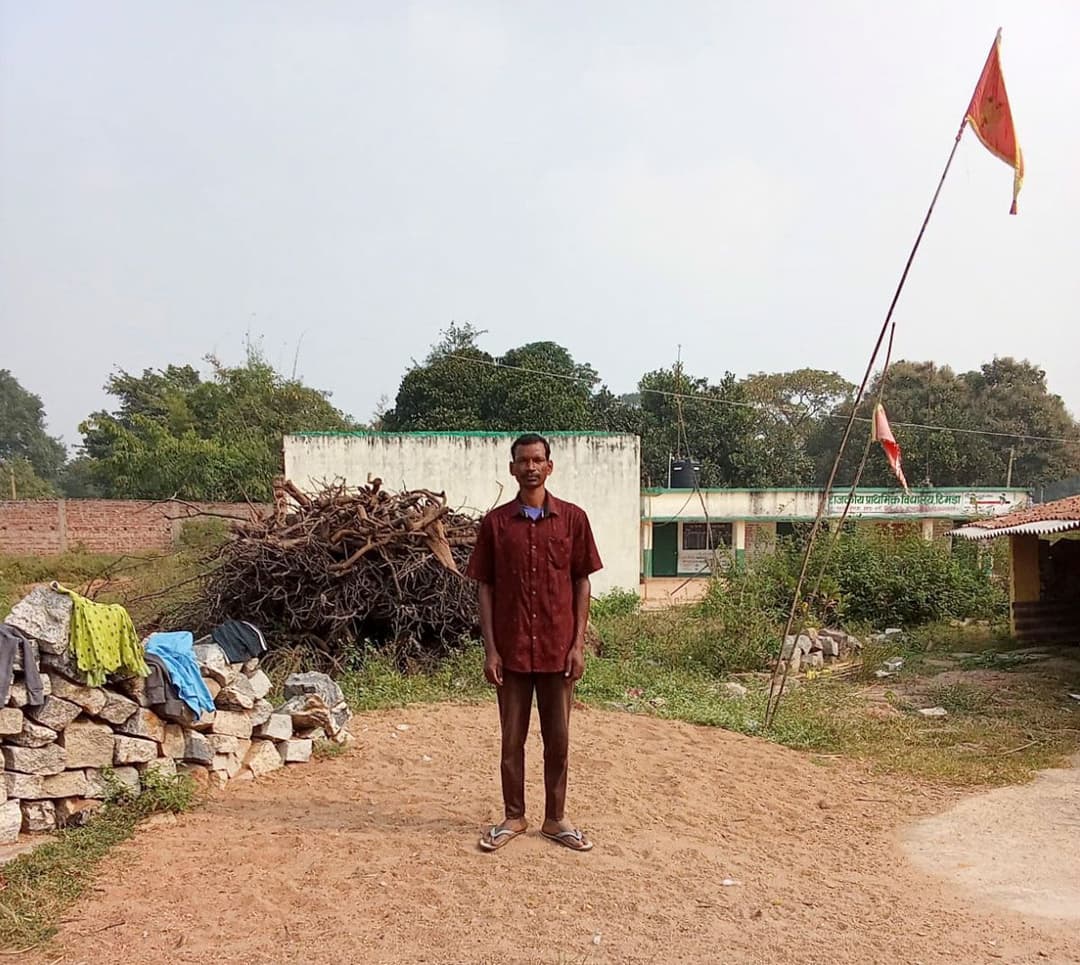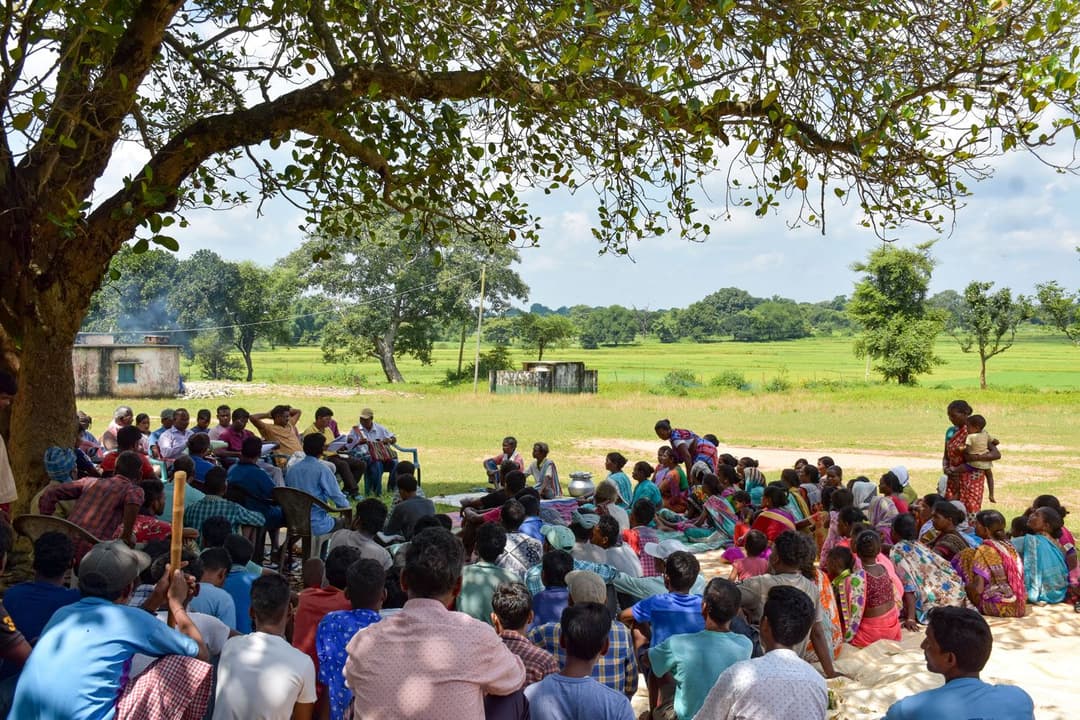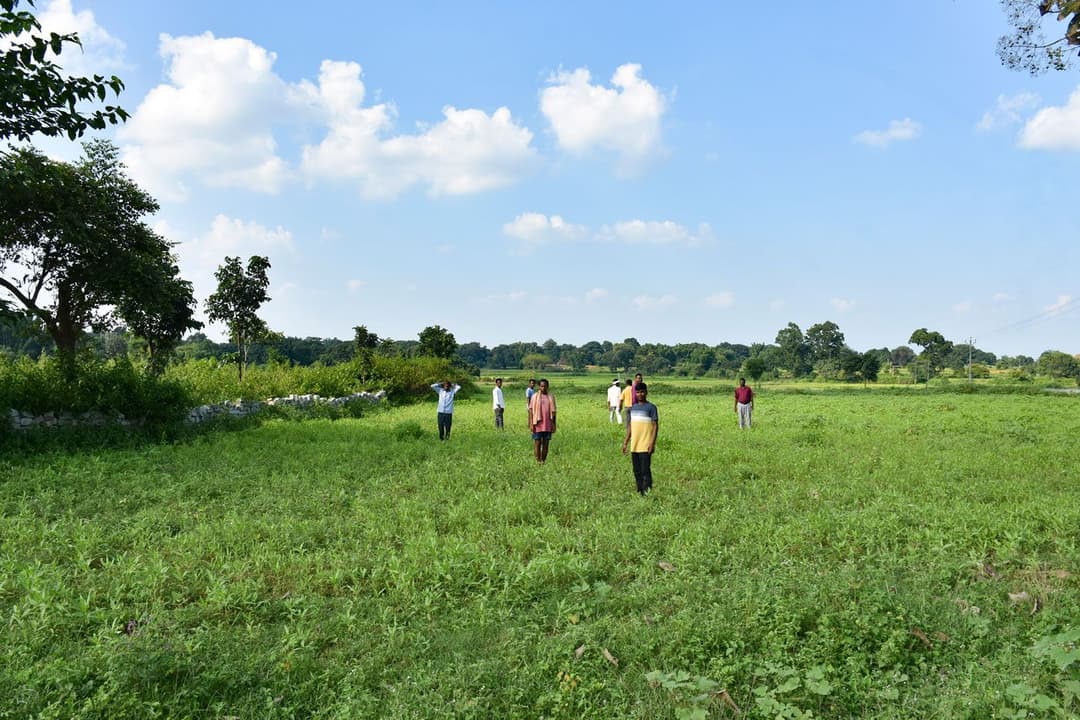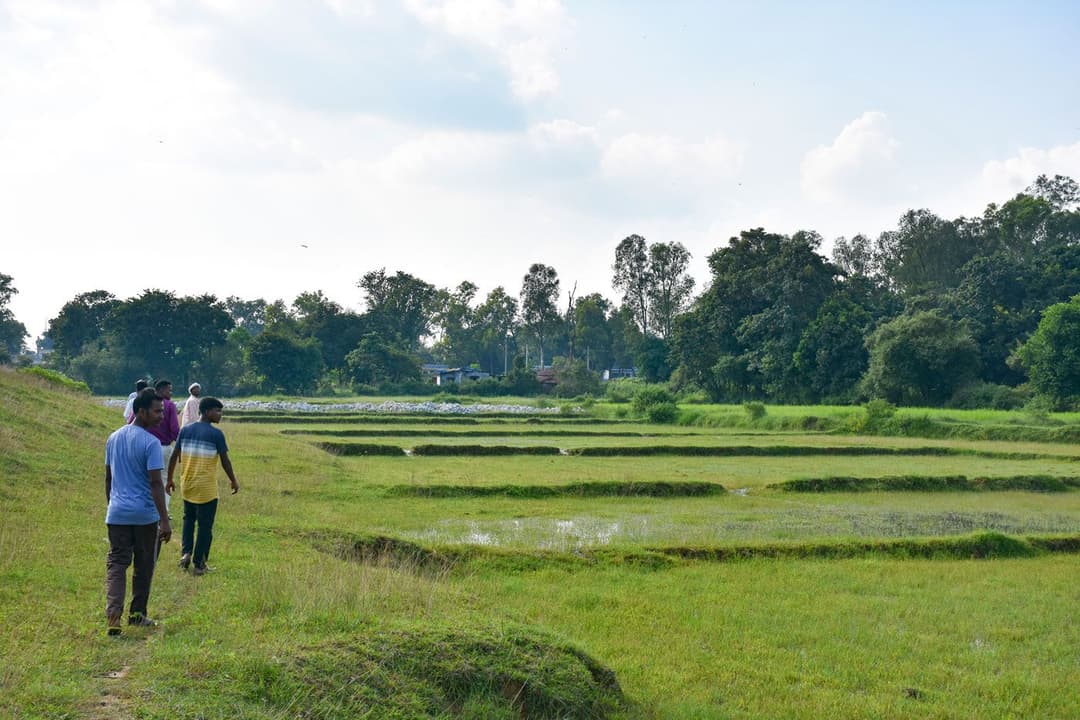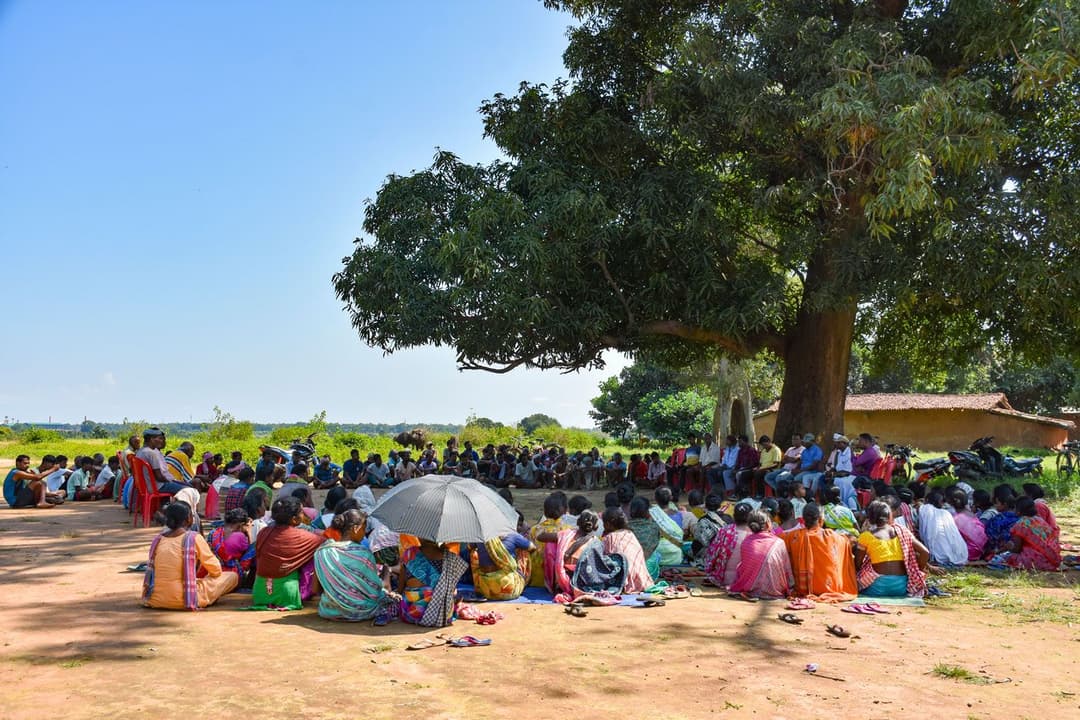
"During the lockdown in 2020, some people came to set up a boundary around 1.20 acres of our land,” says Faguwa Oraon. An Adivasi farmer in his early thirties, Faguwa is pointing to a brick wall surrounding an open tract of land. We are in Dumari village of Khunti district, largely inhabited by the Oraon community. “They started measuring it saying, ‘this land belongs to someone else; it is not yours.’ We opposed them.
“About 15 days after this incident, we went to the Sub-Divisional Magistrate in Khunti, 30 kilometres away from our village. Each trip costs us more than 200 rupees. We had to seek a lawyer’s help there. Now that man has already taken 2,500 rupees from us. But nothing has happened.
“Before that, we had gone to the zonal office in our block. We even went to the police station to complain about this. We were receiving threats demanding that we give up our claim on the land. A district level office bearer of a far-right organisation threatened us. But there is no hearing that has taken place in the court. Now this wall stands on our land. Aur hum do saal se isi tarah daud-dhoop kar rahe hai [and we keep running around like this for the last two years].
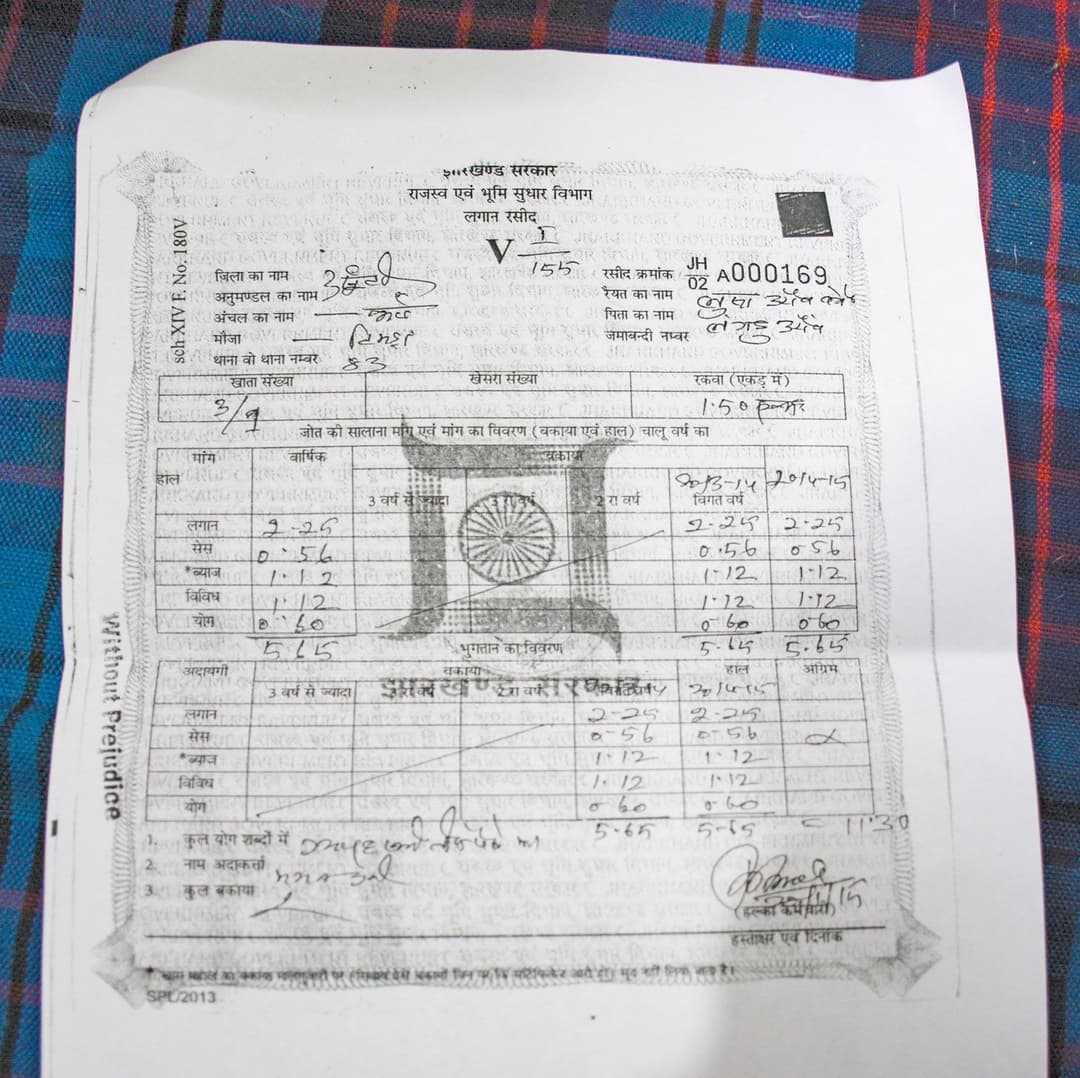
“My grandfather Lusa Oraon had bought the land from landlord Balchand Sahu in 1930. We have been farming on the same land. We have the rent receipts issued from 1930 till 2015 for this plot. After that [in 2016] the online system was introduced. And there in the online records our plot of land appears in the name of the former landlord's descendants. We have no idea how this has happened.”
Faguwa Oraon has lost his land to the union government’s Digital India Land Records Modernization programme (DILRMP), a nationwide drive to digitise all land records and create a centrally managed database for them in the country. Under the programme aimed at modernising the management of all such records, the state government in January 2016 inaugurated a land bank portal listing district-wise information about land. Its aim was “to minimize the scope of land/property disputes and enhance transparency in the land records maintenance systems.”
It has done just the opposite for Faguwa and many others like him.
“We went to the Pragya Kendra to the find out the status of the land online.” The kendra is a one-stop shop for Common Service Centres in Jharkhand, created under the union government’s Digital India scheme that provides public services at the Gram Panchayat for a fee. “According to the online records there, Nagendra Singh is the present owner of the land. Prior to him Sanjay Singh was the owner. He sold the land to Bindu Devi who in turn sold it to Nagendra Singh.
“The descendants of the landlord kept buying and selling the same land two to three times without our knowledge, it seems. But how is this possible when we have offline receipts for the land from 1930 to 2015? We have spent more than 20,000 rupees as of now and are still running around. We had to sell the foodgrains in the house to raise the money. Now when I see the wall on the land, I feel as if we have lost what we own. We don't know who can help us in this struggle.”