

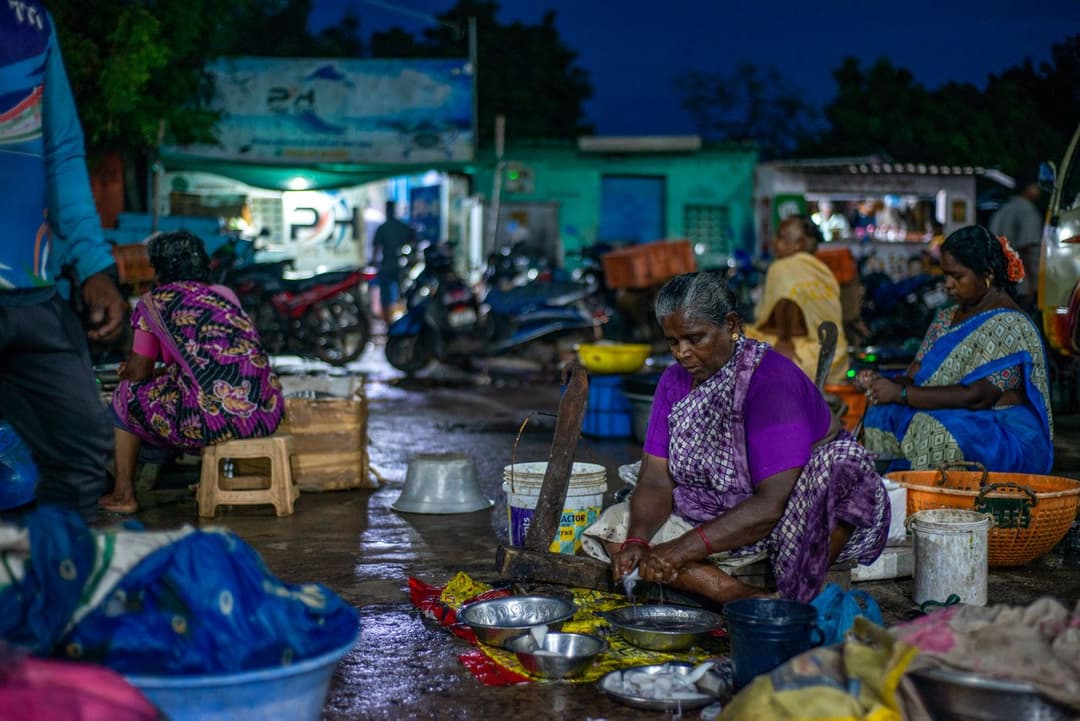
“There is no space for women fish-cutters,” said Kala, a fish-cutter from Kinjampettai village in Cuddalore district.
The 60-year-old is sitting below the Singarathope bridge. This concrete and metal structure is located outside Cuddalore Old Town harbour. At work here are roughly 20-30 fish vendors and cutters, and they are all women.
The district has a coastline of 57.5 kilometres and the harbour is packed with godowns, warehouses, shops and fishing boats.
“As more traders and trucks started coming to the harbour, there was no space left for us,” points out Kala (she uses only this name). “We were pushed out and had to move to this public space under the bridge. [It is] outside the harbour,” she added.
Women like Kala who do the activities such as vending, cutting, drying and selling waste, have been gradually edged out. Read: Puli gets by on shells, scales, heads and tails
While fisherwomen are usually characterised as fish vendors, many women lacking capital or suffering from a physical ailment, take on the task of cutting and cleaning fish, sitting close to the vendors.
“We need to be near the vendors, as the customers who buy fish from them, get it cut and cleaned by us. If we are not close to the vendors, we won’t get business,” Kala pointed out.


