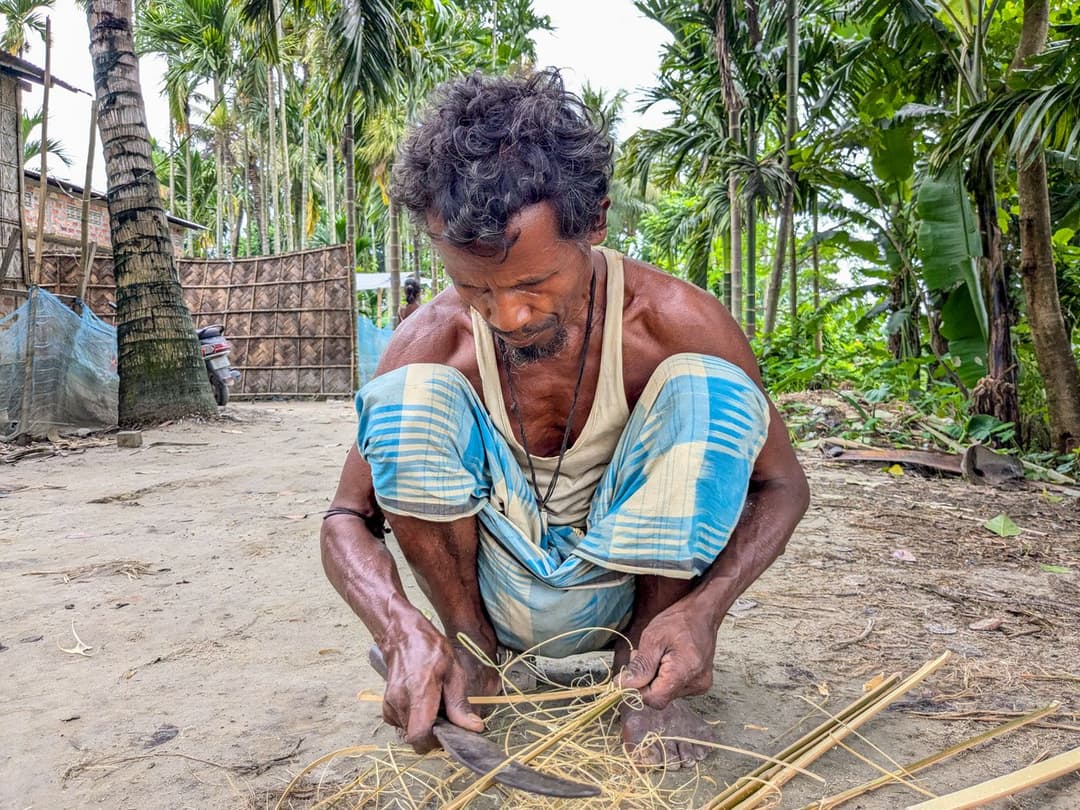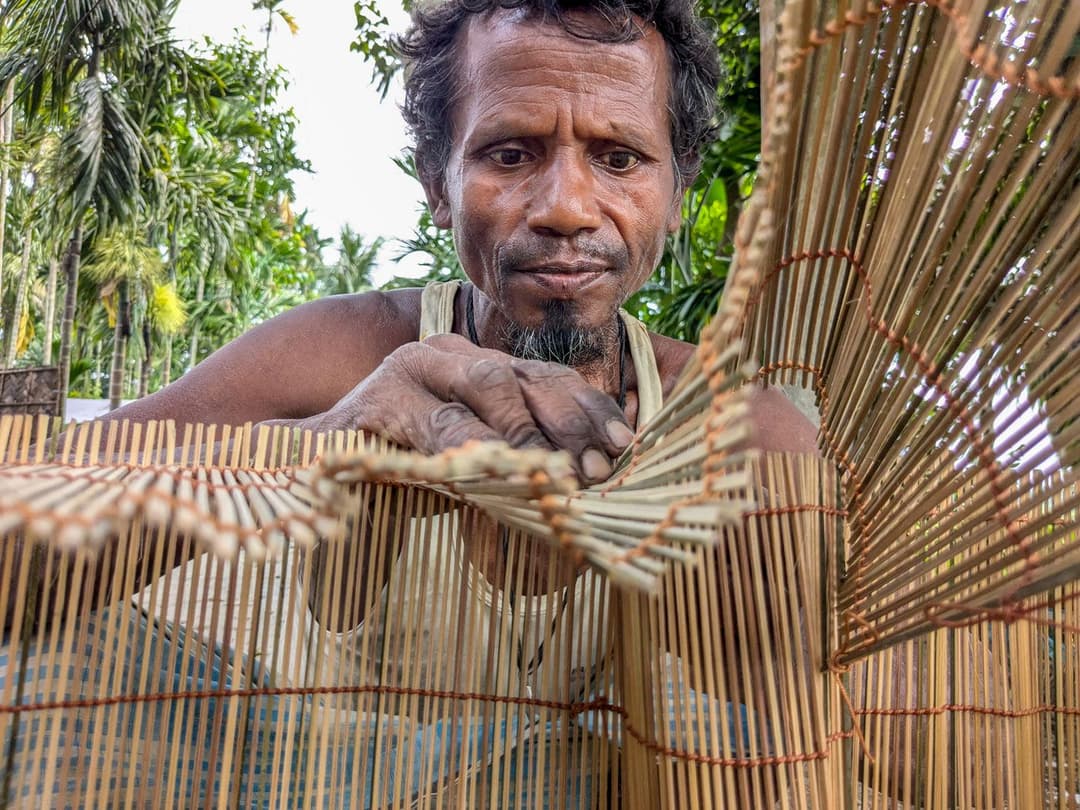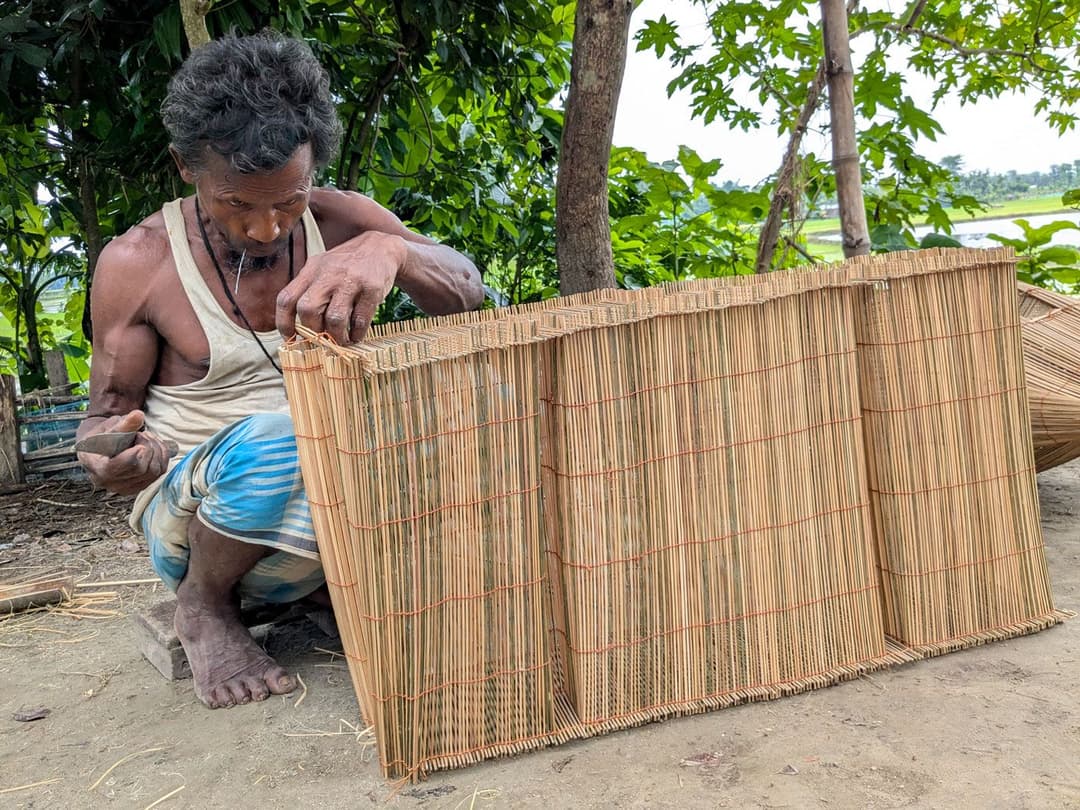

It was hunger that drove Jalal Ali to learn how to make bamboo fishing traps.
He was a young man trying to survive on daily wage work that would dry up in the monsoons: “The rainy season meant no work except for a few days planting paddy saplings,” he says.
But the monsoons also brought fish crowding the channels and swamps of Mousita-Balabari in Darrang district where he lives, and bamboo fishing traps were in high demand. “I learnt how to make the bamboo fishing traps as that way I could feed my family. When you are hungry, you think of the easiest way to put food in the stomach,” says the 60-year-old laughing at the memory.
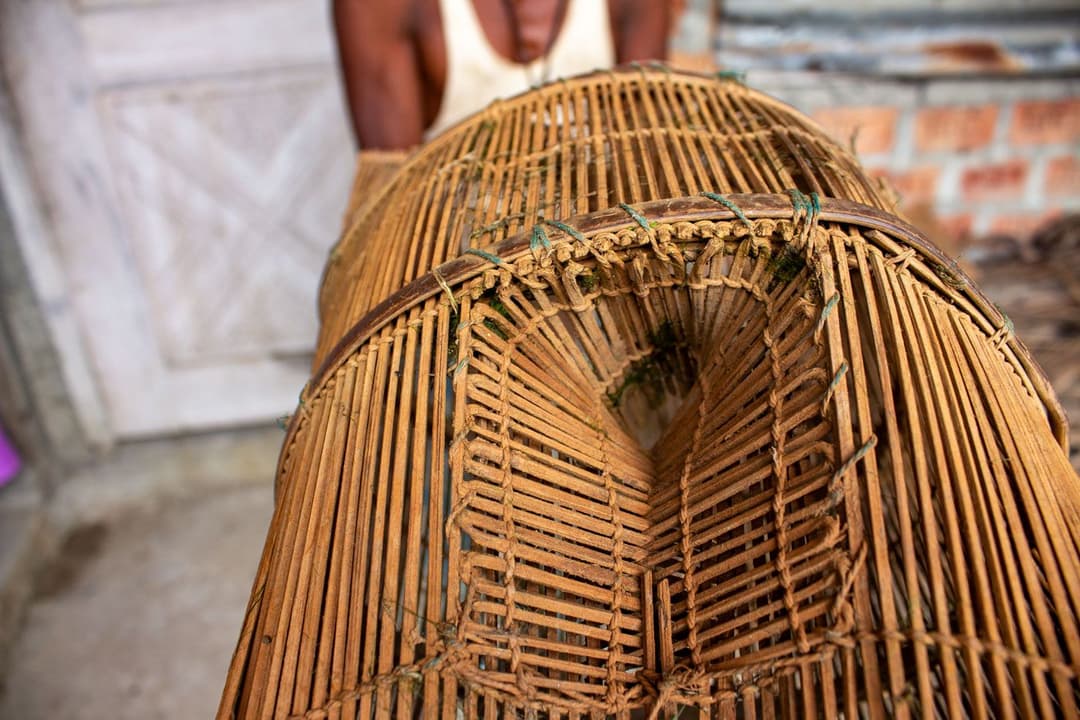
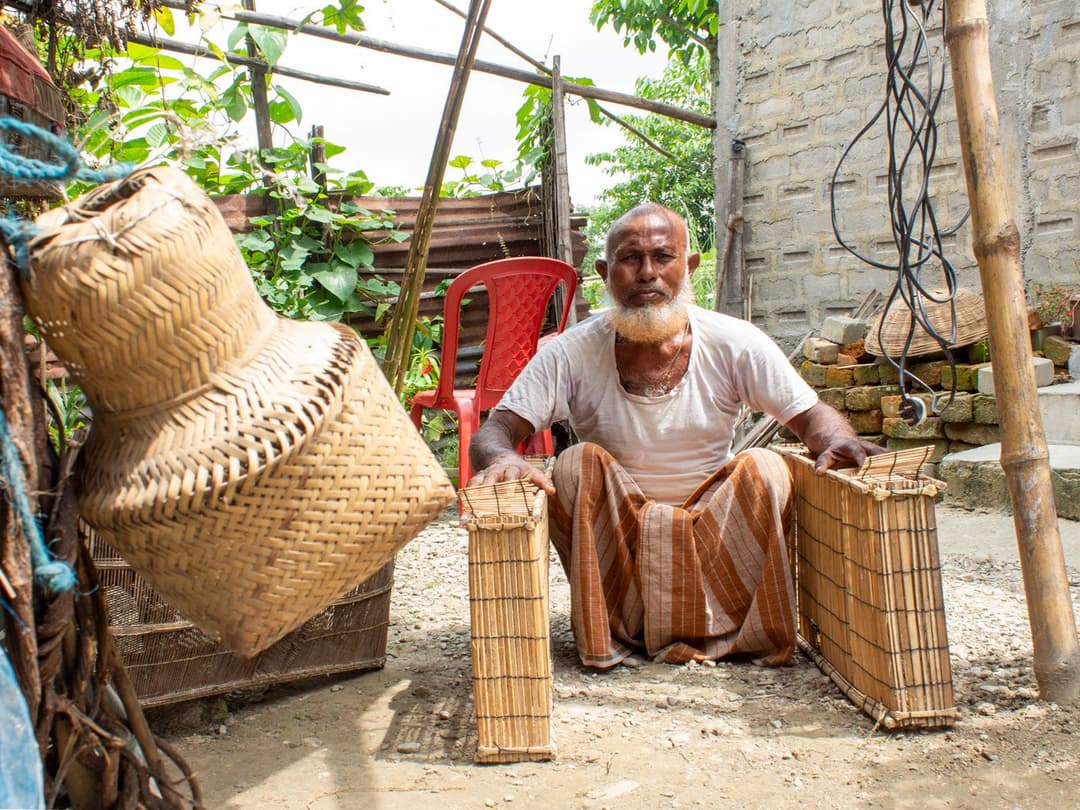
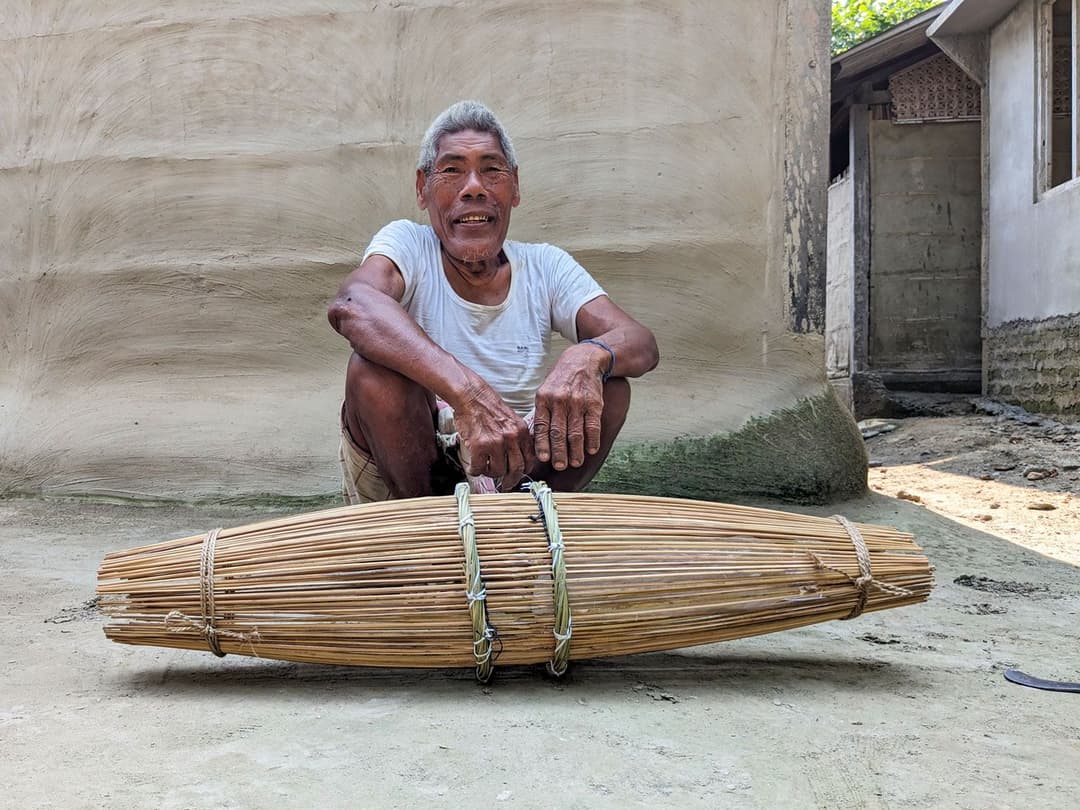
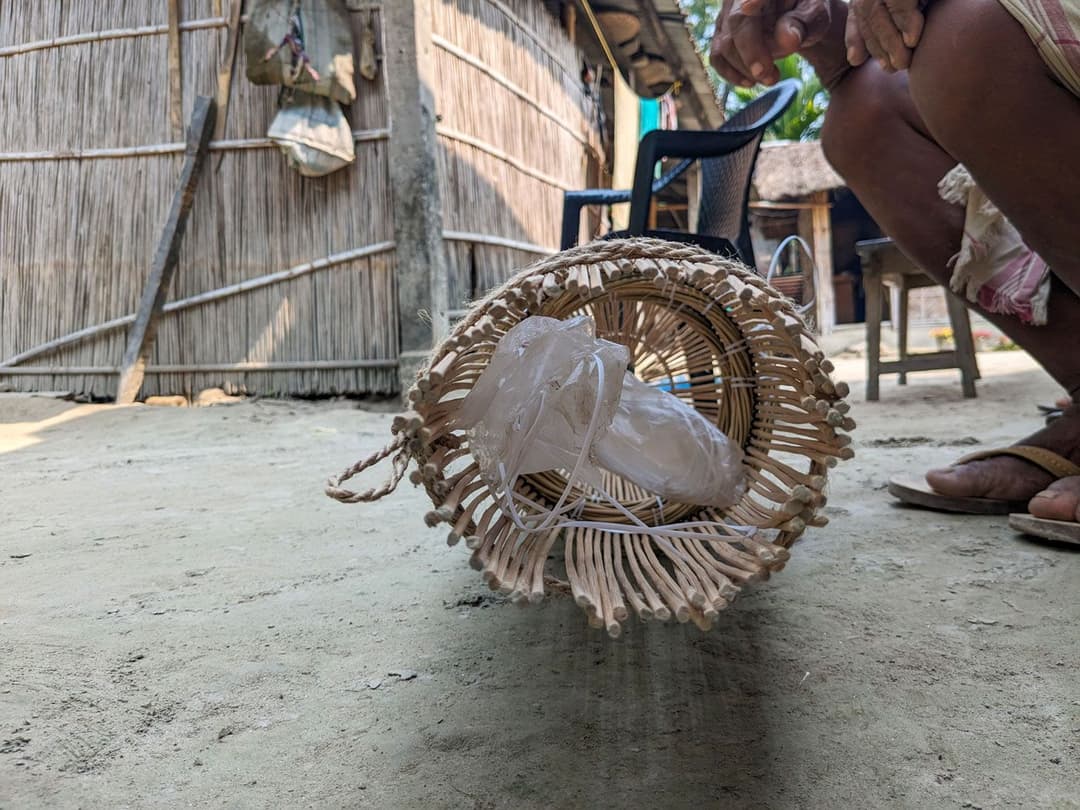
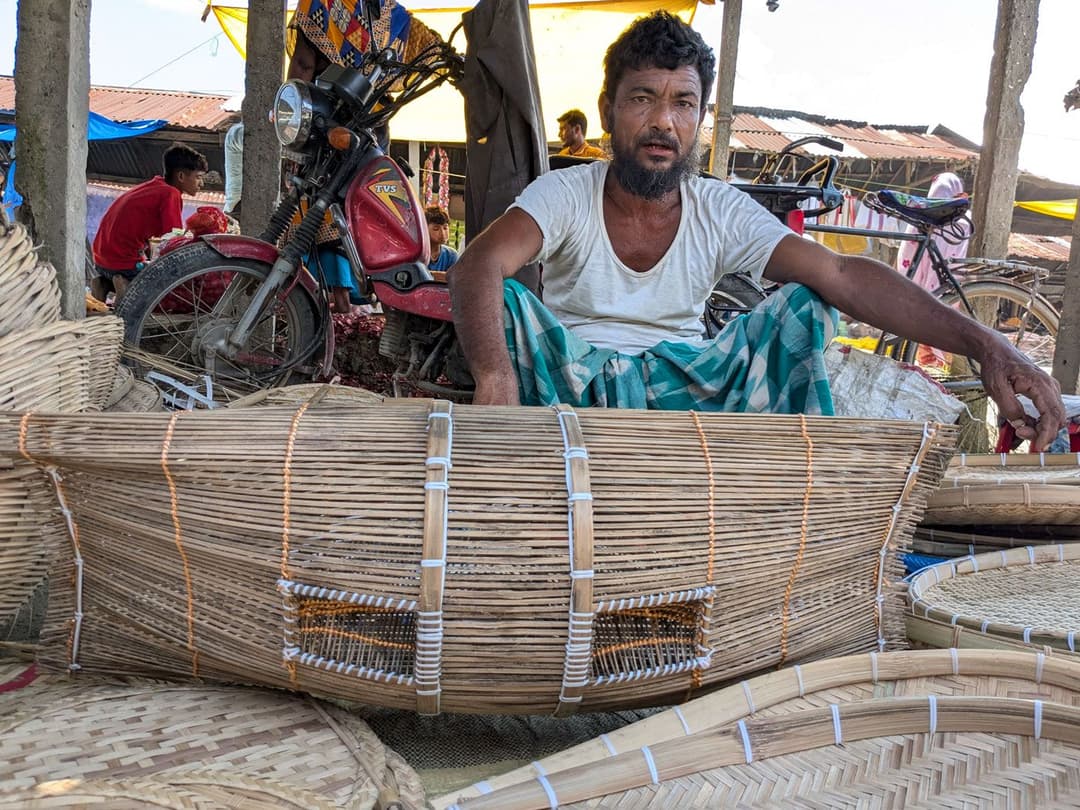
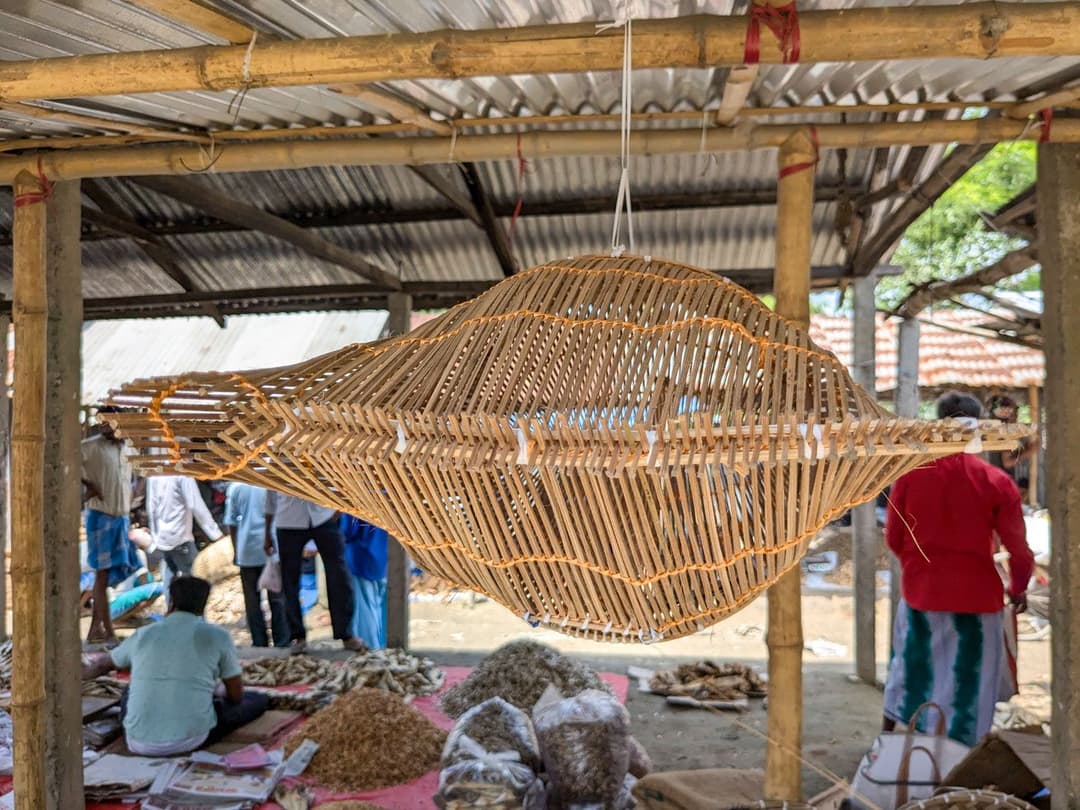
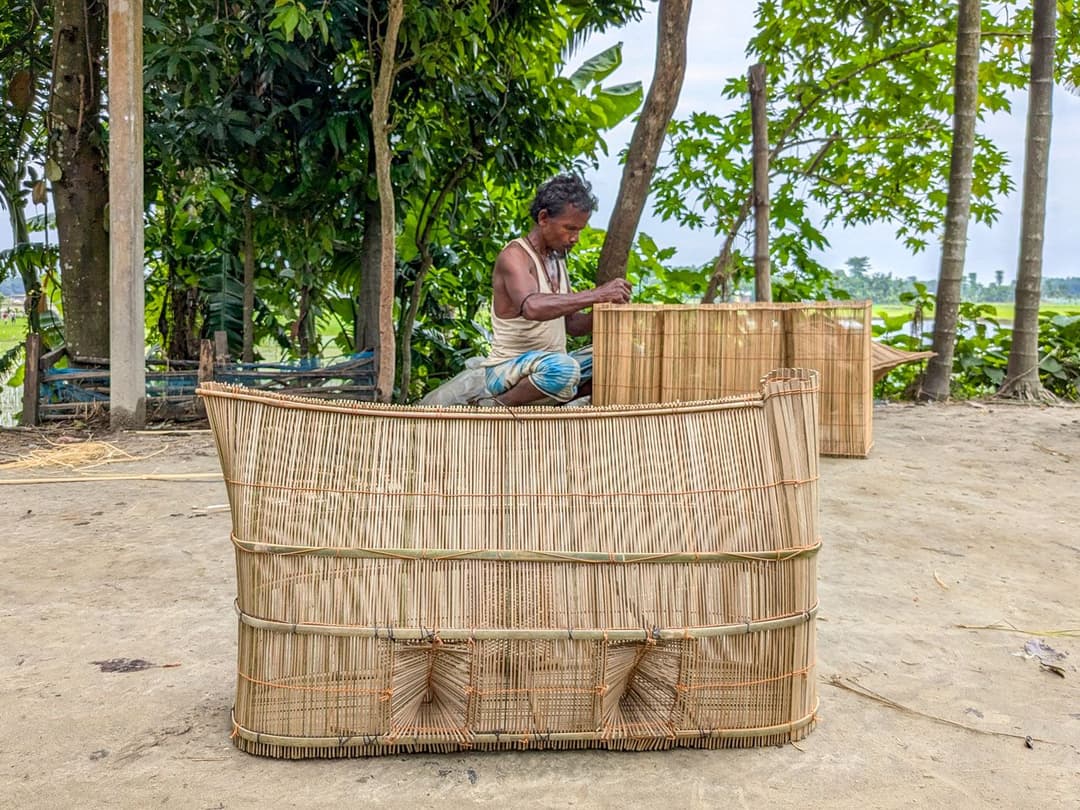
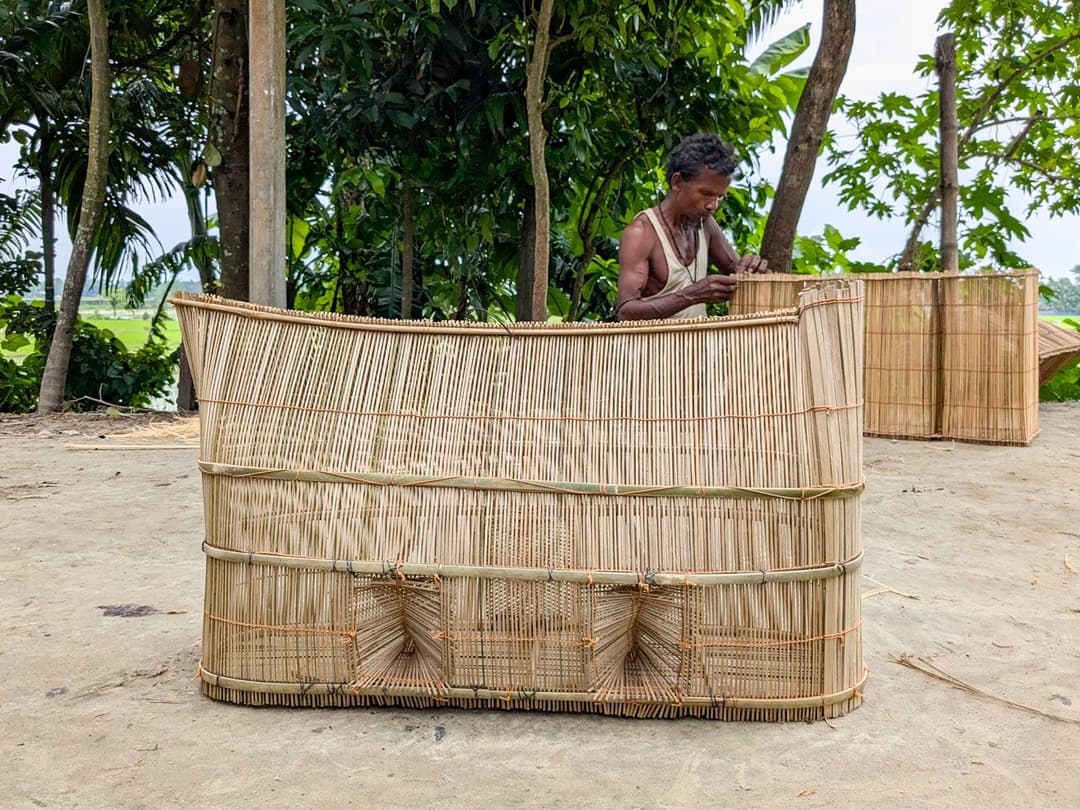
Today Jalal is a master craftsman of seppa, bosna and bair – indigenous bamboo traps that can catch a variety of fish in these water bodies. He makes them at his home at Pub-Padokhat village along the Mousita-Balabari wetlands in Assam.
“Just two decades ago,” Jalal says, “almost every household in my village as well as nearby villages used the [bamboo] trap to catch fish. Back then it was either the bamboo traps or the handmade shiv jaal.” He is referring to nets also known locally as tongi jaal or jhetka jaal – a square-shaped net with four corners attached to bamboo rods or strings.
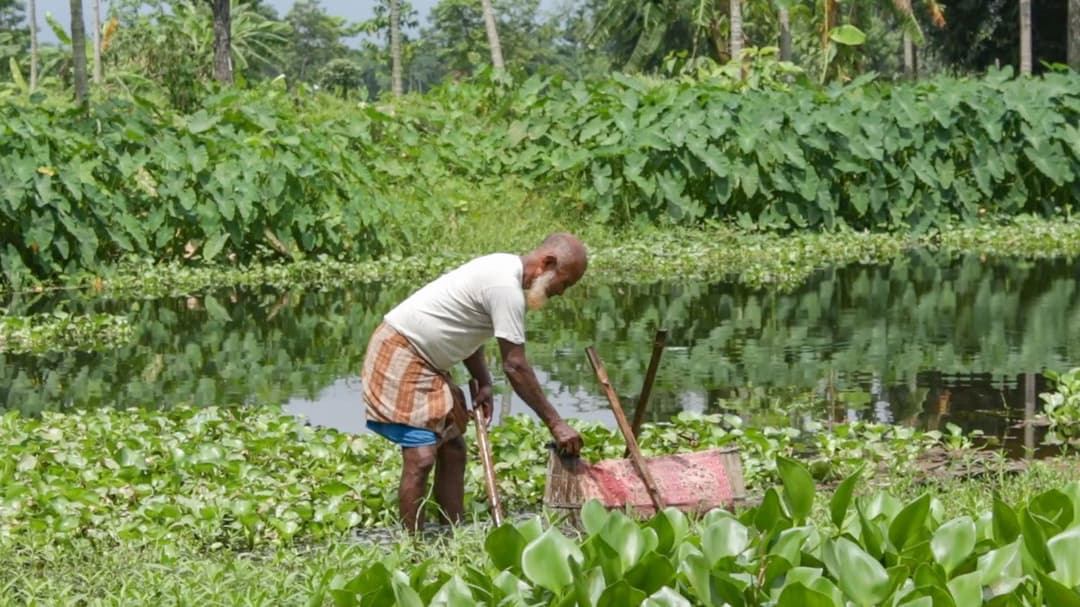
Local bamboo fishing traps are named according to their shape: “seppa is like a drum with oblong shape. Bair is also oblong-shaped but it is taller and wider. Darki is like a rectangular box,” explains Jalal. The duyer, diyaar and boishno traps are set in flowing water, mostly in water-logged paddy and jute fields, small canals, water conversing into swamps, wetlands or river confluence.