

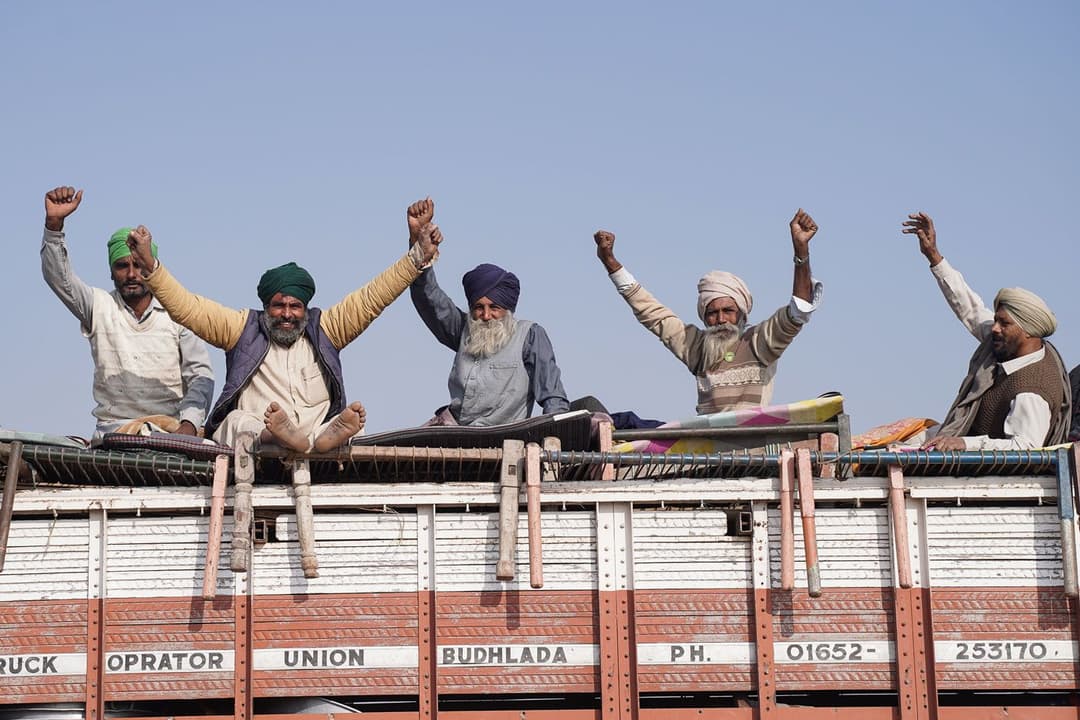
When they were removing the electricity cables on the morning of December 11, a shopkeeper nearby began crying. "He said that he will miss us and find it lonely without us here. It’s going to be difficult for us too. But the win of the farmers is a bigger celebration,” said Gurwinder Singh.
It was around 8:15 a.m. when Gurwinder and other farmer from his village began dismantling their makeshift tents at the Tikri protest site in West Delhi. At times, they used a wooden slab to break the bamboo joints, sometimes they used bricks to break the base of the structures. In 20 minutes it all turned to a heap, and they stopped for a tea and pakoda break.
“We built these shelters with our hands, and now with our own hands we are removing them,” added 34-year-old Gurwinder, whose family cultivates wheat, paddy and potatoes on six acres in Dangian village of Punjab’s Ludhiana district. “We are happy to be returning home victorious, but there is sadness too of leaving the relationships we have built here.”
“There was nothing here at the start of the protest. We all used to sleep on the roads, and then we made this home,” said Deedaar Singh, 35, who is from the same village in Ludhiana district, where he cultivates wheat, paddy, potatoes and green vegetables on a seven-acre farmland. “We have learnt a lot here, especially the feeling of brotherhood among all of us during our stay here. All governments only make us fight. But when all of us – from Punjab, Haryana, Uttar Pradesh – gathered here we realised we all are one.”
“We have elections in Punjab and we will vote for the right person,” added Gurwinder. “We will vote for the one who holds our hand [supports us]. We will not let those come to power who betray us,” Deedaar said.


