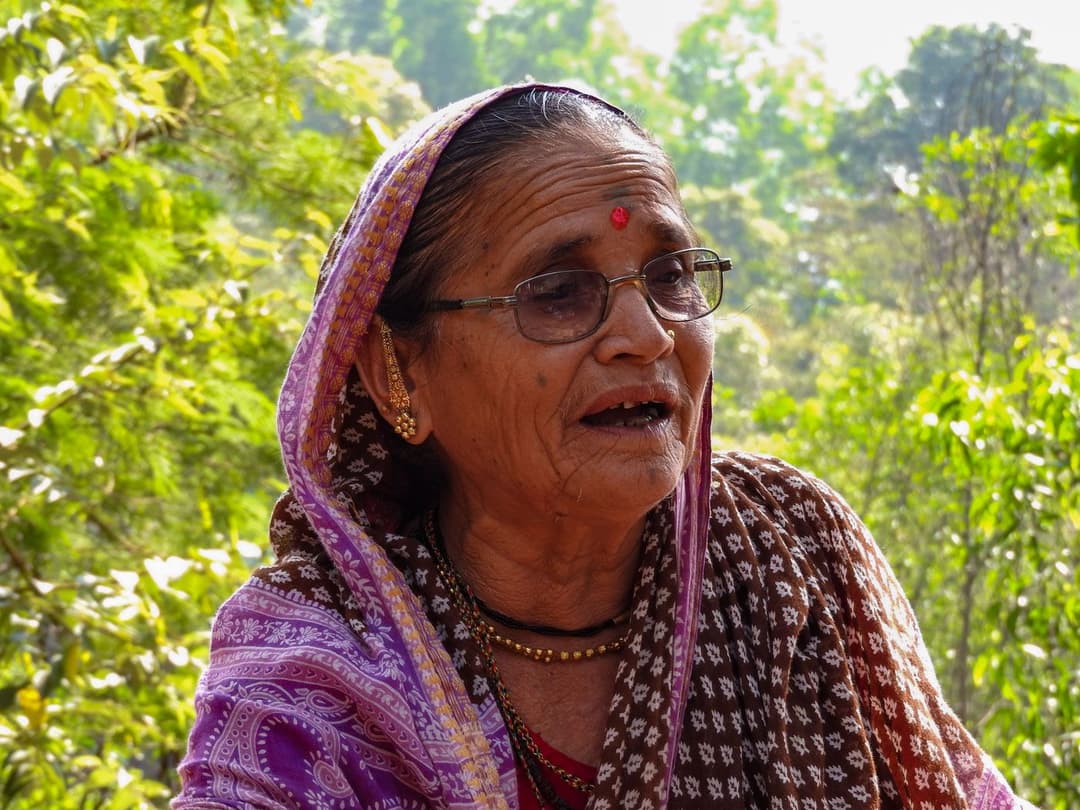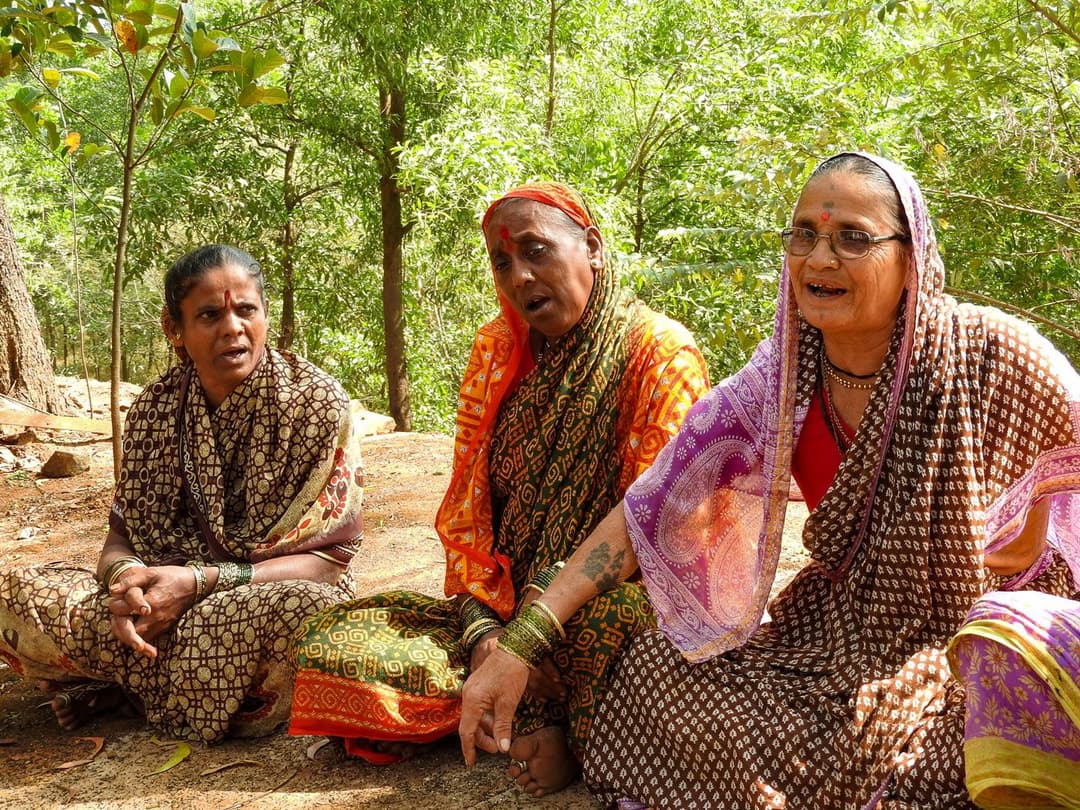

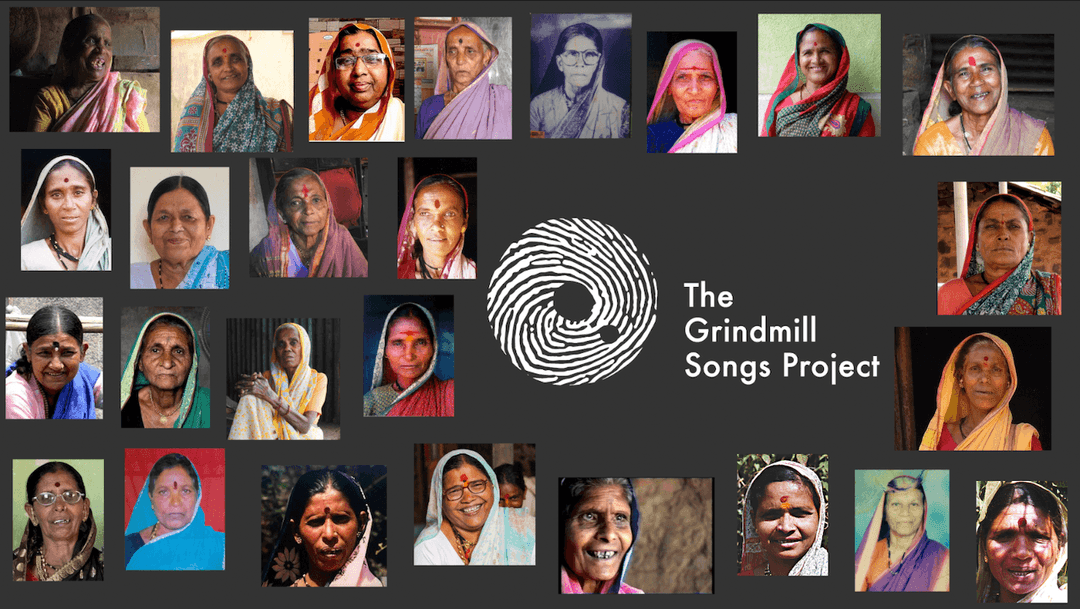
“I would remember two-three words from my mother’s singing,” said Hausabai Dighe. The year was 1995 and she was speaking to Hema Rairkar and Guy Poitevin. The social scientists and activists from Pune who initiated the Grindmill Songs Project (GSP) in the late 1980s, had arrived in Bhambarde village of Mulshi taluka with their team to talk to women performers of the grindmill songs.
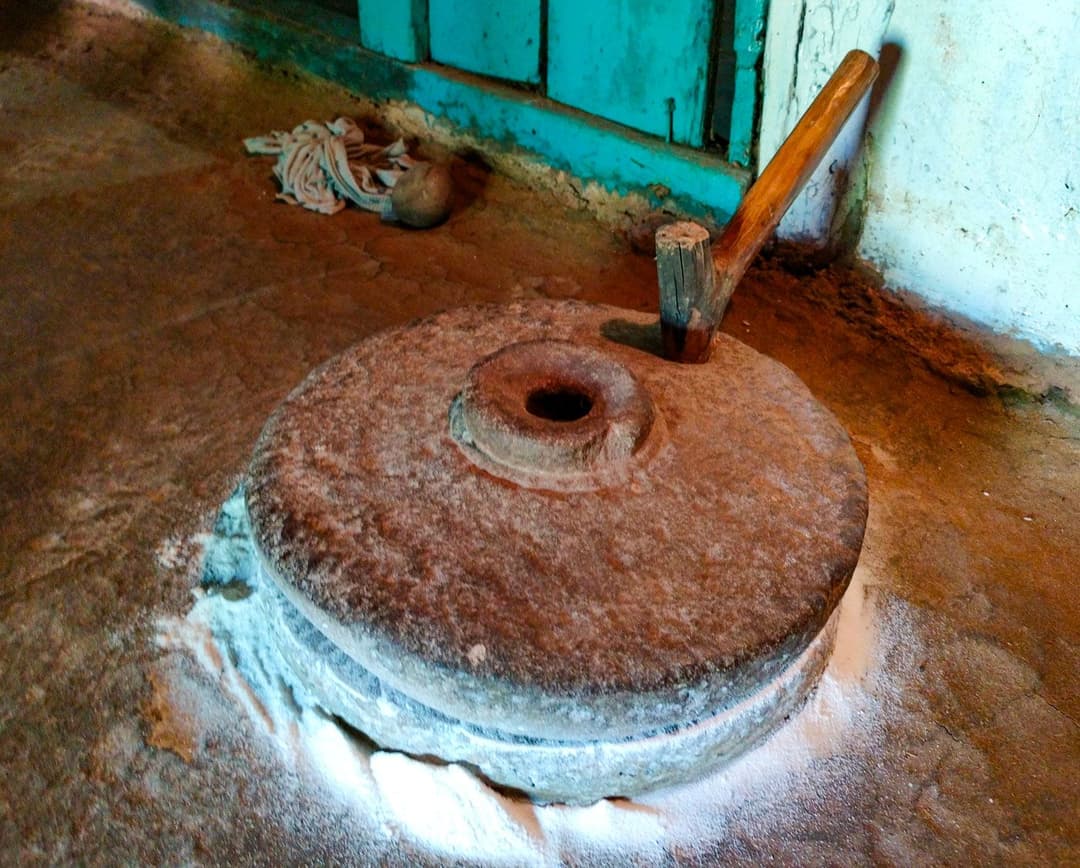
Hausabai then added, “when I return from labouring in the fields and find there’s no flour, I sit down at the grindmill and sing as I work. Our day feels incomplete without it. The songs flow as I remember the words. These songs will stop only when I die. Until then, I will remember them.” Her words speak for scores of rural women singers who belonged to the communities of farmers, agricultural labourers, fisher folk, potters, and gardeners. Working long hours every day, they were up much before sunrise to tackle the household chores and the work in the fields.
And almost always, the first chore of the day was sitting at the stone mill to crush grain to flour. They sang as they did it. The corner of the kitchen or veranda was their zone of comfort, a private space for them to share their struggles, joys, sorrows and triumphs with each other through the songs.
While doing it, they also shared their views on the world, the life in their village and community, familial relationships, religion and pilgrimages, the oppressions of caste and patriarchy, the work of Babasaheb Ambedkar and much more. In the video, Tarabai Ubhe from Khadakwadi hamlet of Mulshi taluka, Pune, talks about it.