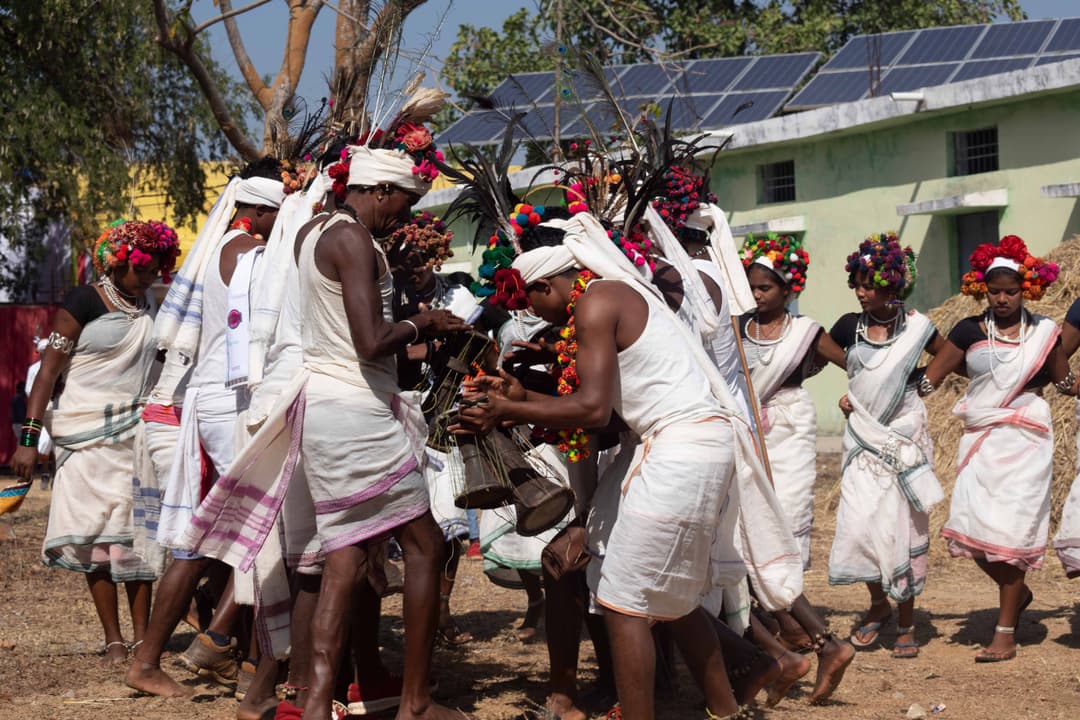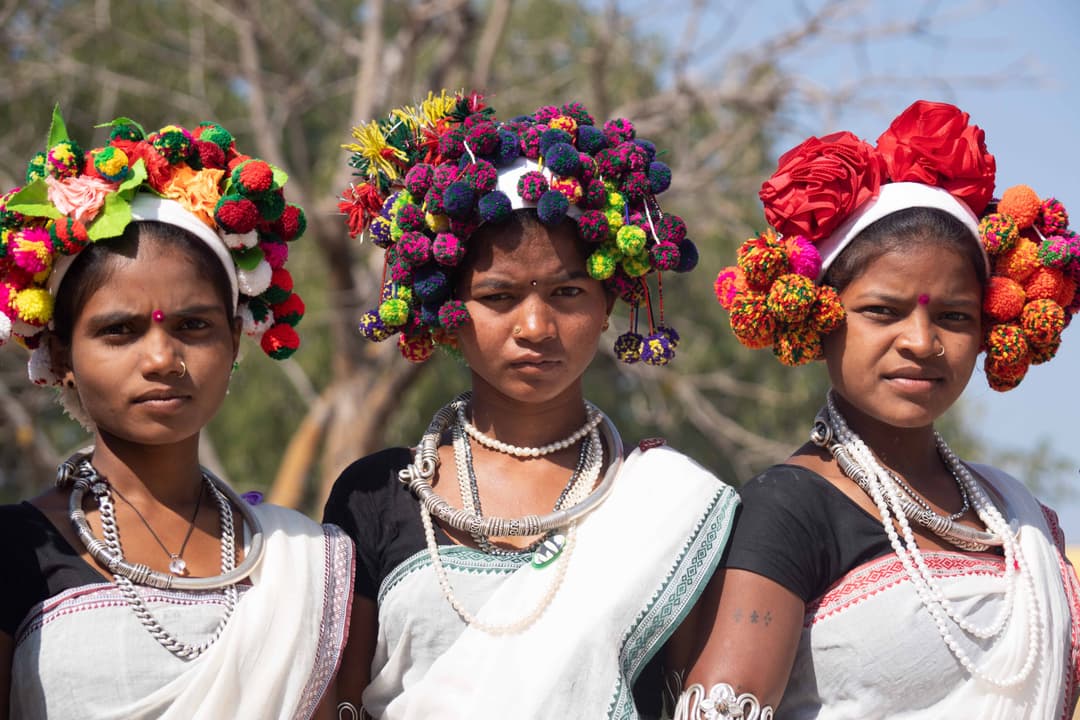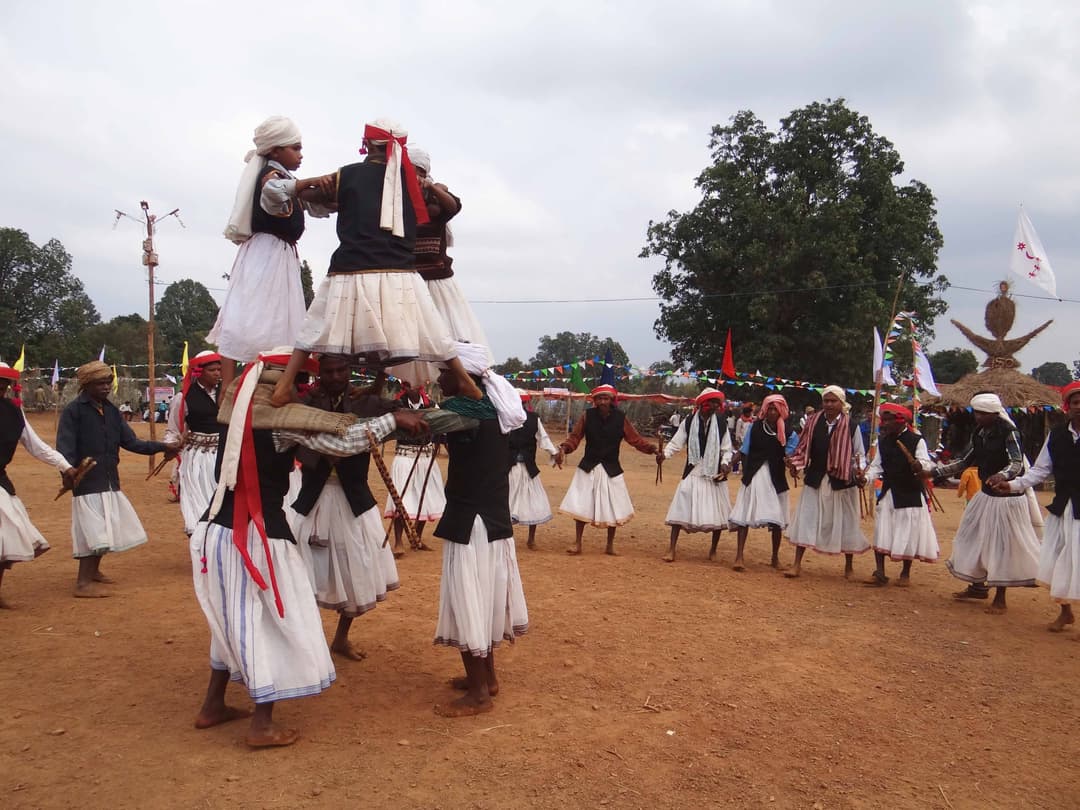

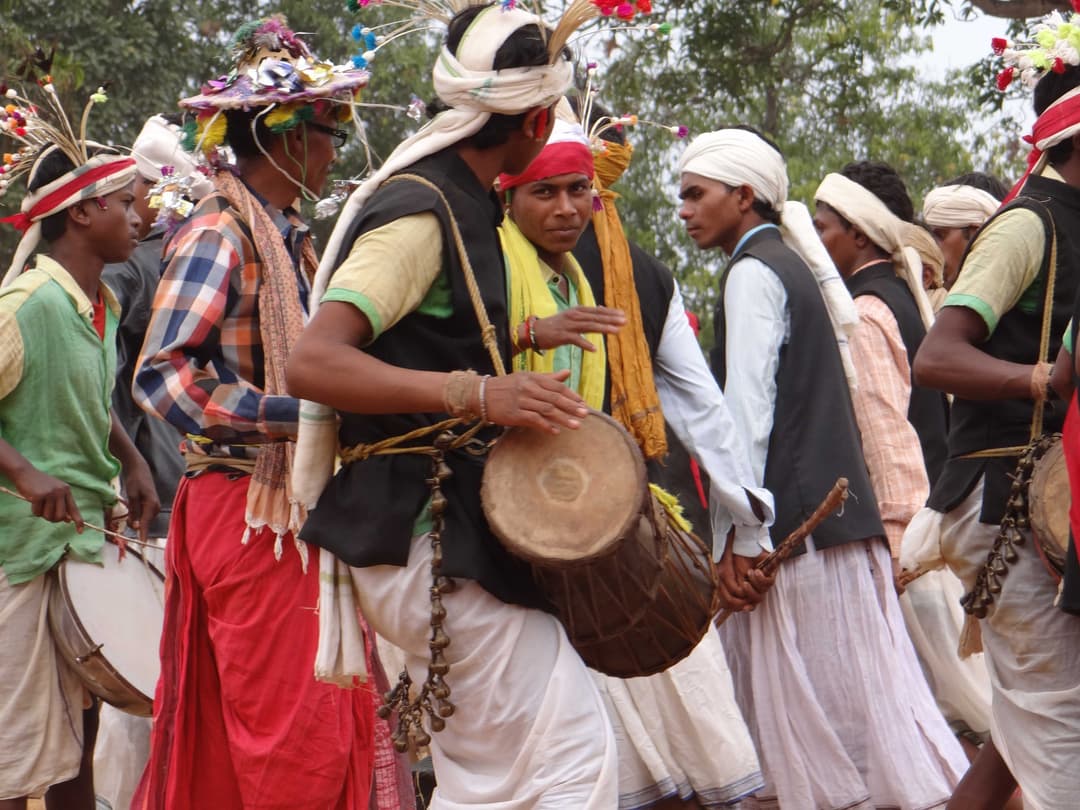
They moved with rhythm and agility – “Re Rela re Rela re Rela re” – a group of young women in knee-length white sarees and bright headgear, moving three at a time, arms entwined, singing Rela songs that are popular among Gond communities.
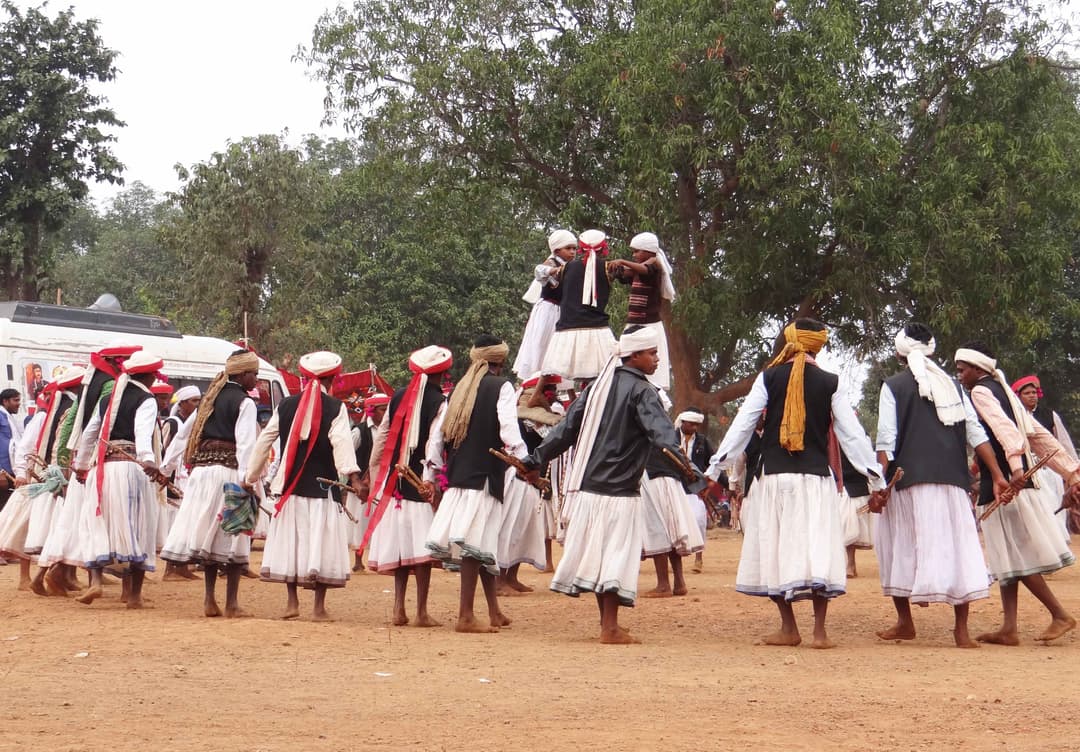
Soon, a group of young men, also dressed in white, with white turbans decorated with colourful feathers, joined in. Their ankle bells rang in perfect rhythm with the complex footwork, while they played a small drum (mandri) held in their hands and sang Rela songs. Weaving their arms, the young women formed a chain encircling the group of men. All of them kept singing and dancing.
The troupe of 43 men and women from the Gond Adivasi community, ages ranging from 16 to 30, had all come from Bedmamari village in Keshkal block of Chhattisgarh’s Kondagaon district.
They had travelled more than 300 kilometres in a van to reach this venue close to the Raipur-Jagdalpur highway (in the Bastar region), about 100 kilometres from Raipur, the state’s capital city. Other dancers from Adivasi communities of central India and particularly from Chhattisgarh were here too for the three-day Veer Mela, celebrated from December 10 to 12 since 2015 to commemorate the sacrifice of Veer Narayan Singh, a tribal king of Sonakhan in Chhattisgarh’s Balodabazar-Bhatapara district. The king, who revolted against British rule, was captured and hanged in Jaistambh chowk in Raipur district by the colonial rulers in December 1857. The British, local accounts say, blew away his body after he was hanged.