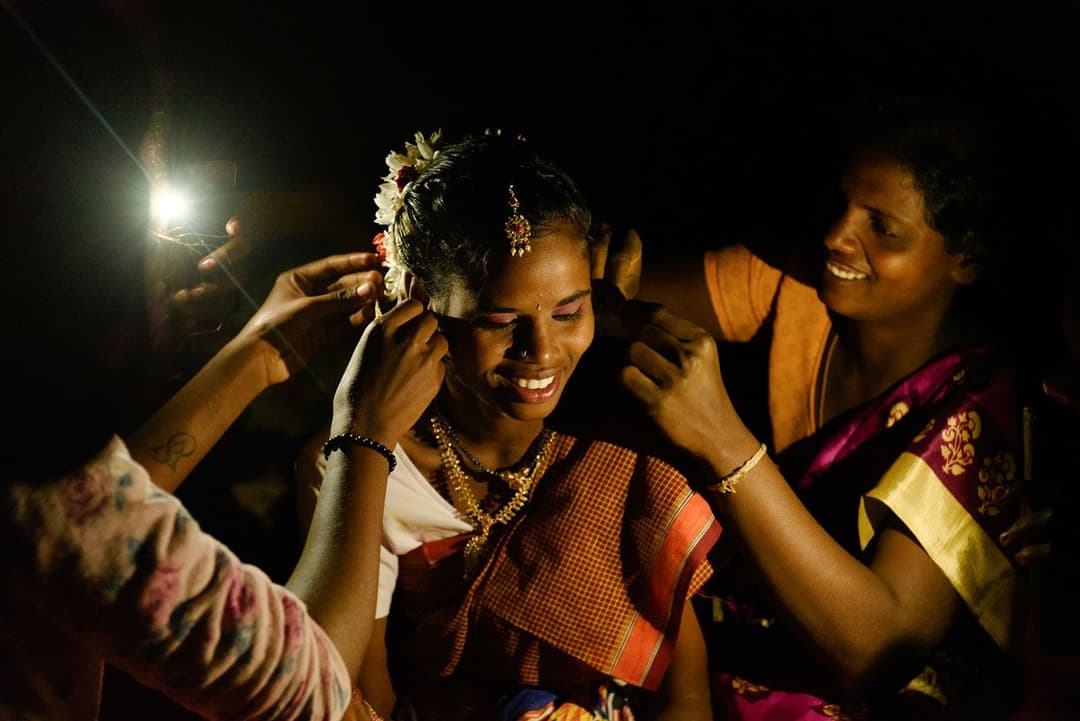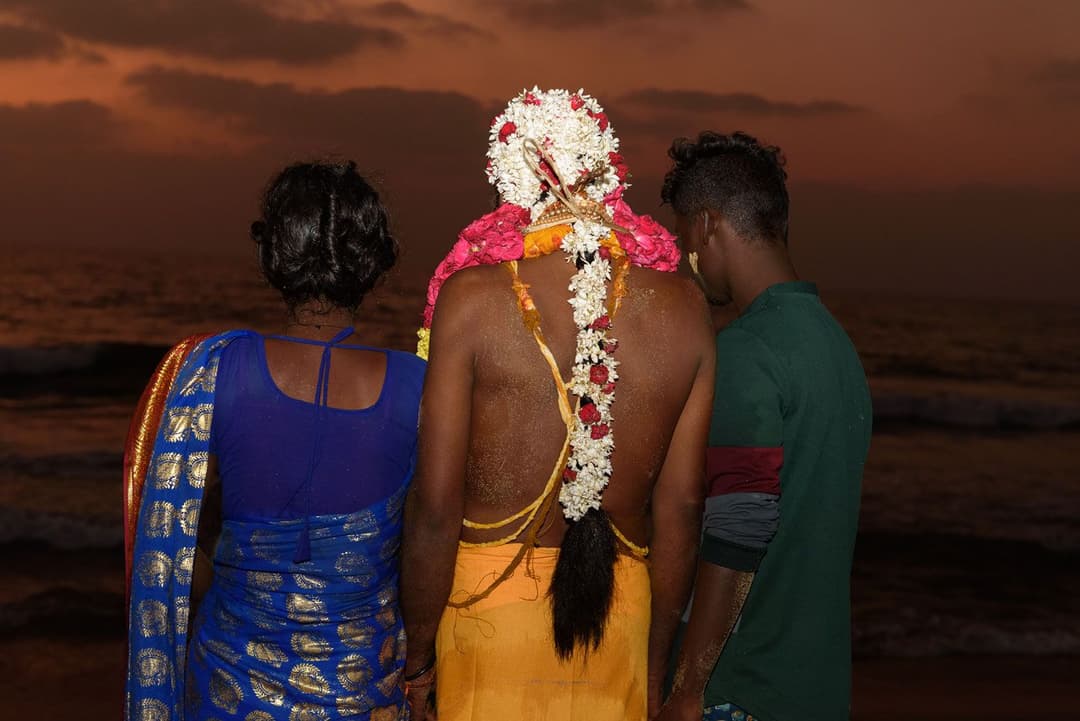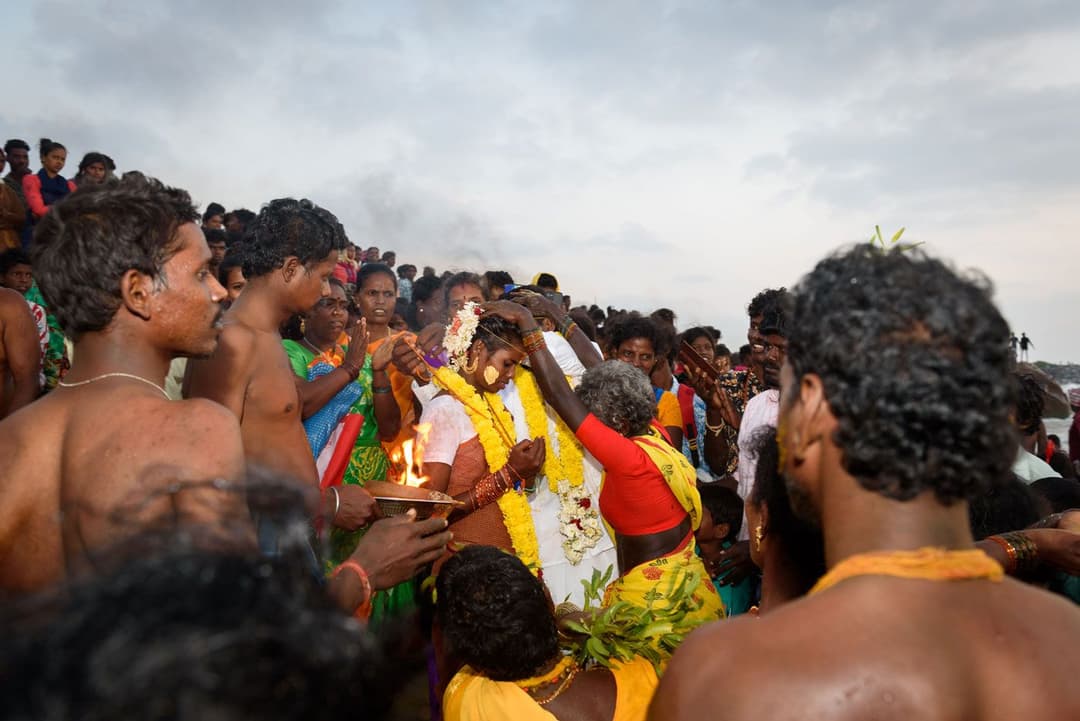

It’s three in the morning and Nandhini is sitting outside an orange tarpaulin tent, applying make-up under the light of a cell phone torch held up by her friend.
The 18-year-old, dressed in a simple cotton saree, will be getting married in a few hours.
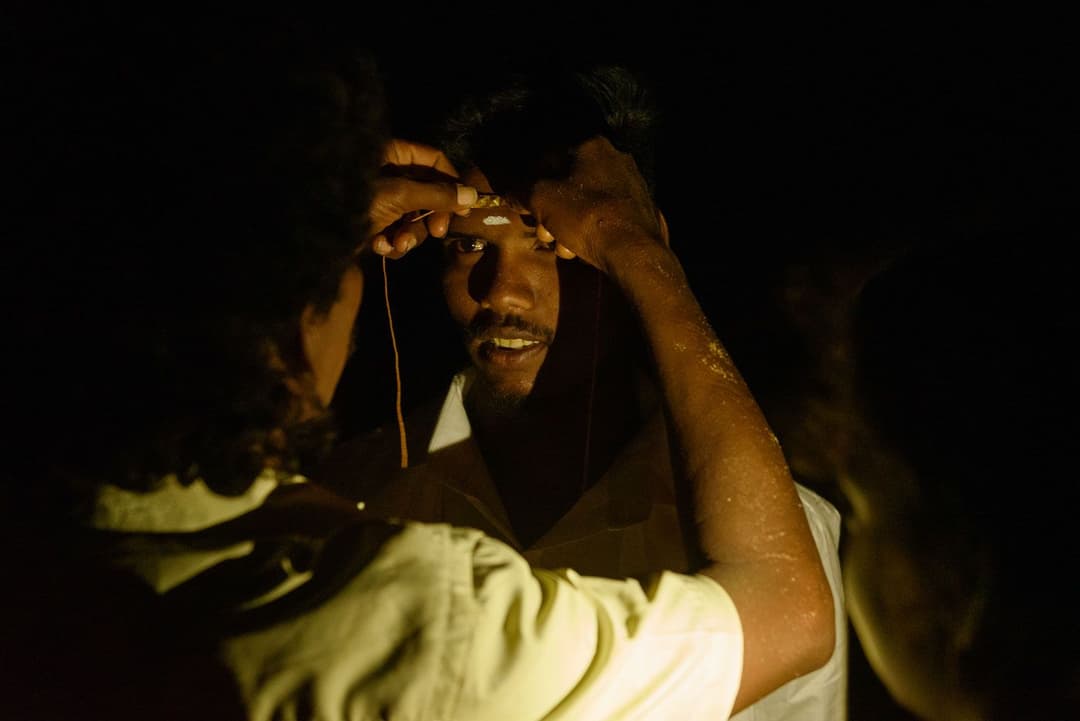
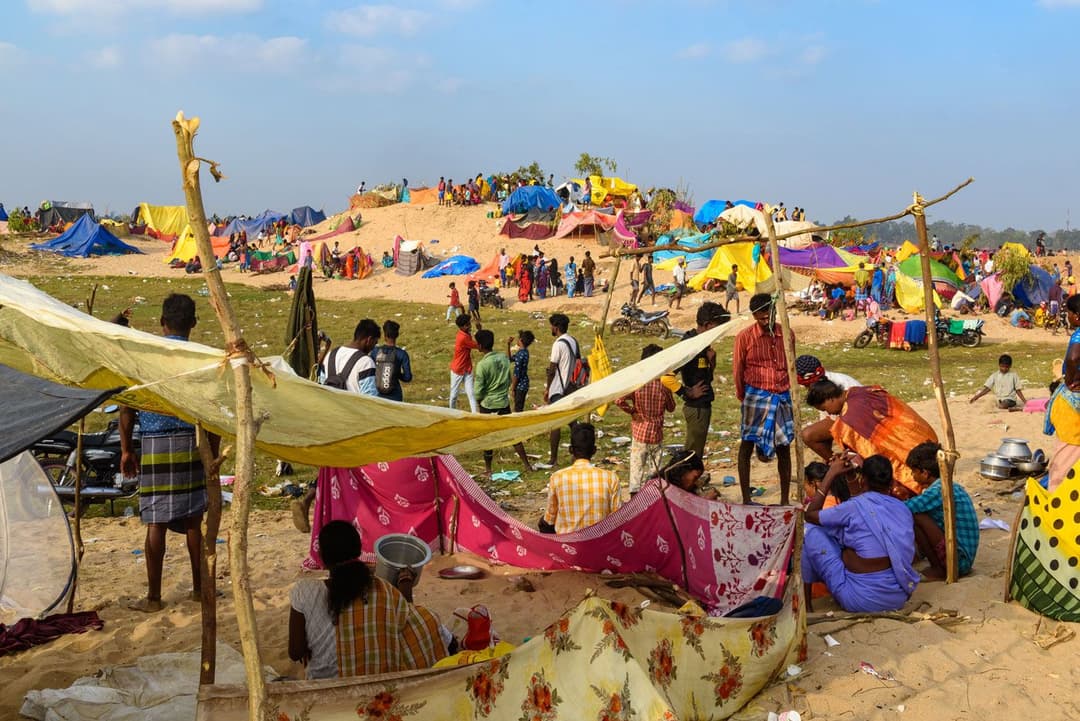
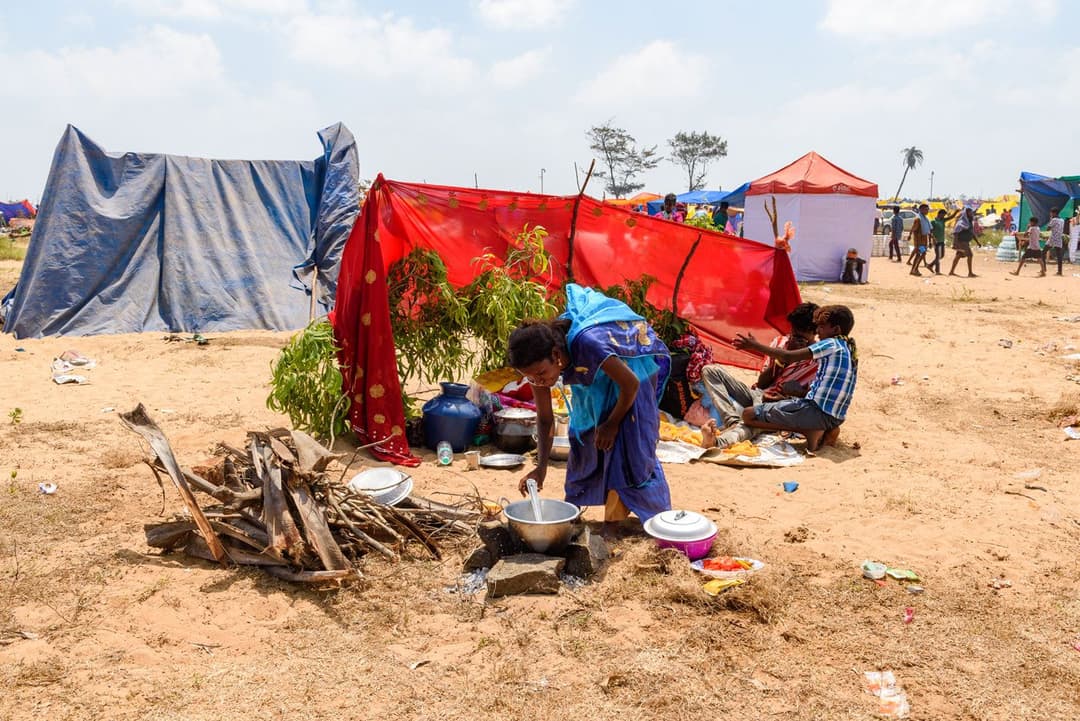
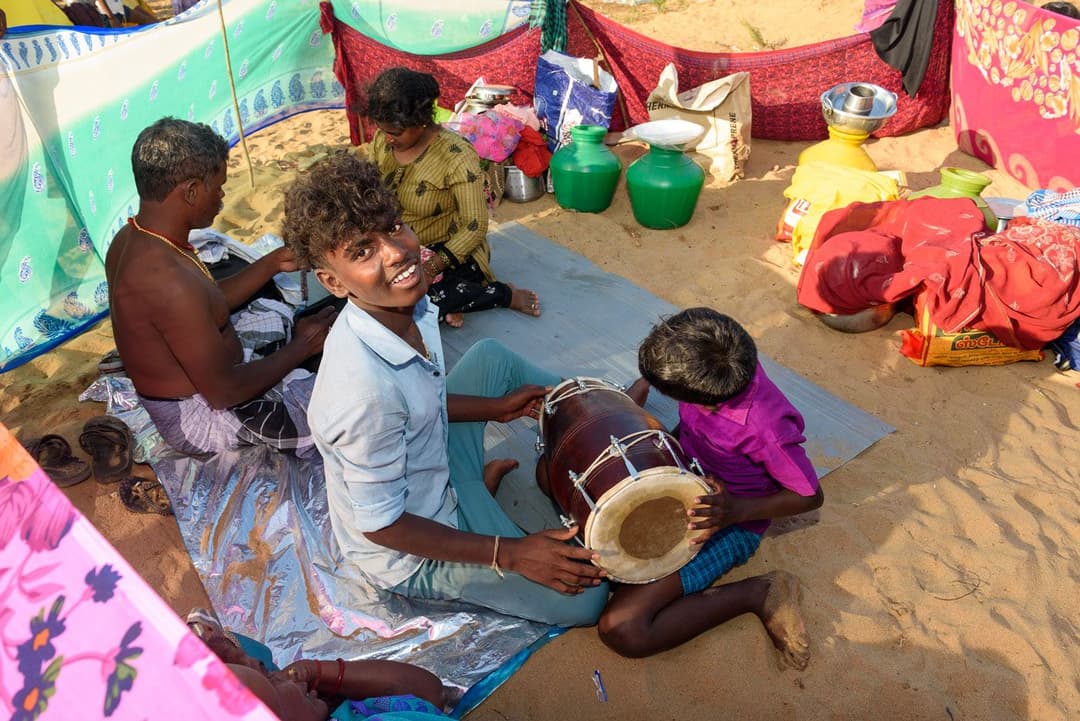
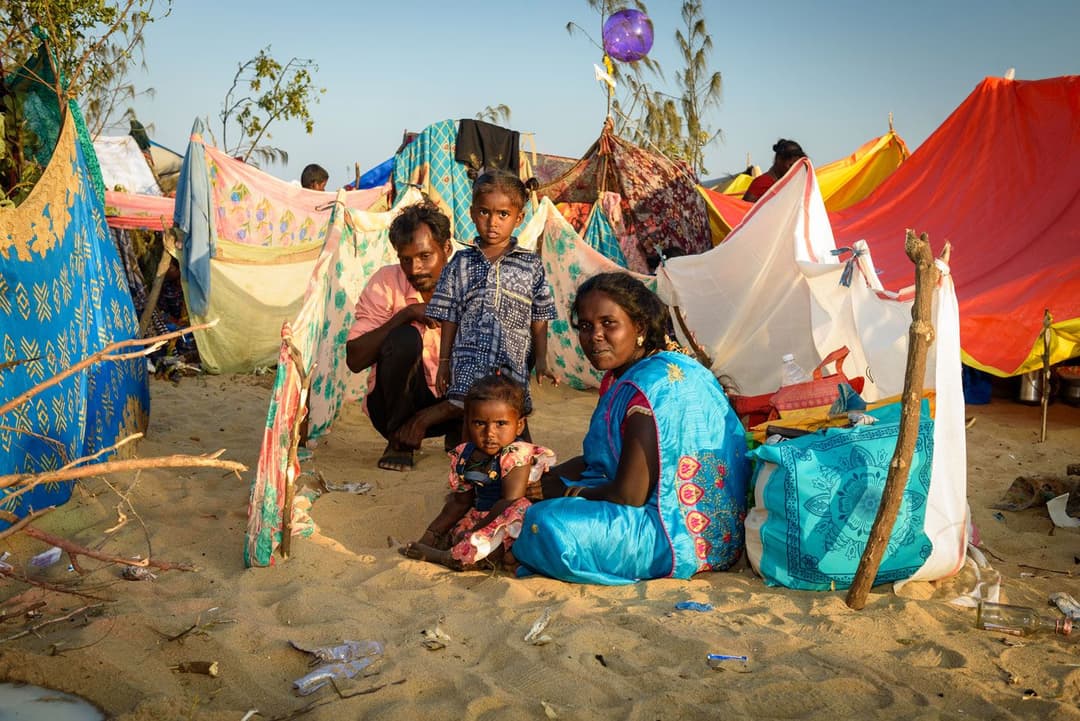
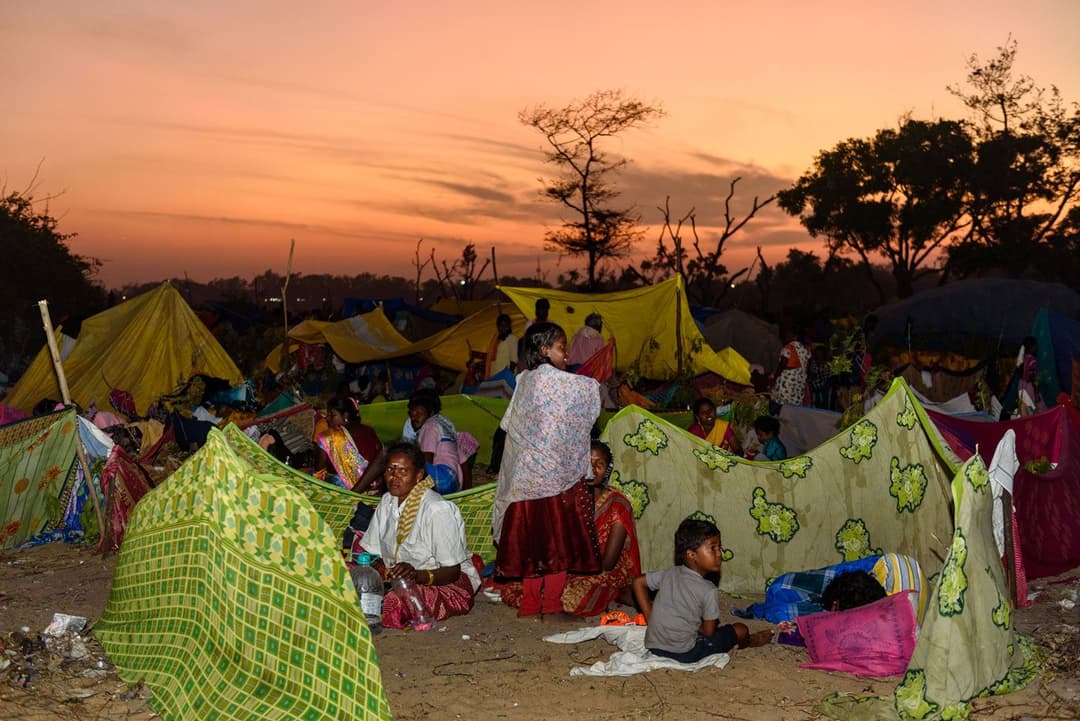
The previous evening, she and her groom, 21-year-old Jayaram, arrived in Mamallapuram from Bangalamedu (officially known as Cherukkanur Irular Colony) with their friends and family. This group from Thiruvallur district in Tamil Nadu, is among several hundred Irular families who are living in small tents they have pitched on the beach south of Chennai.
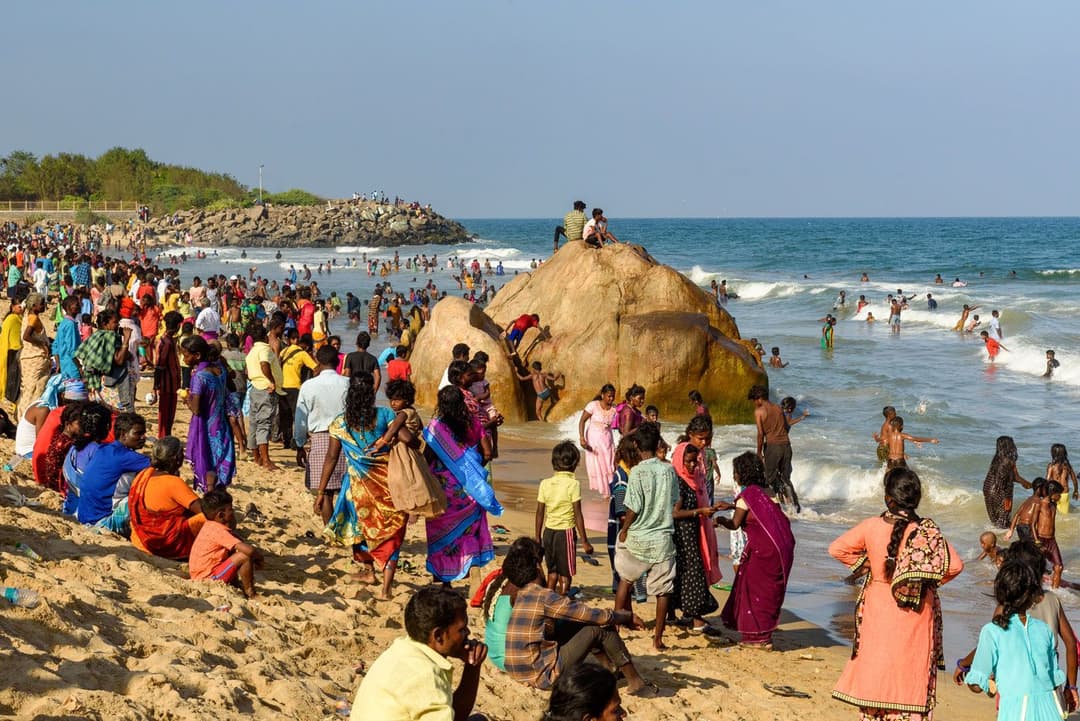
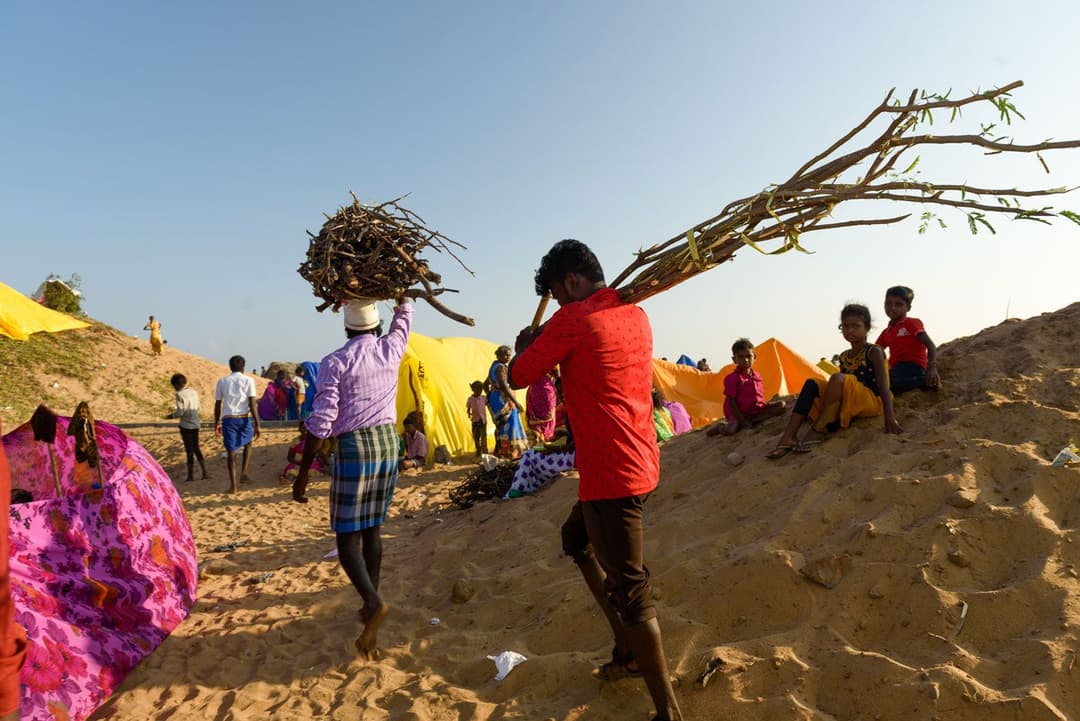
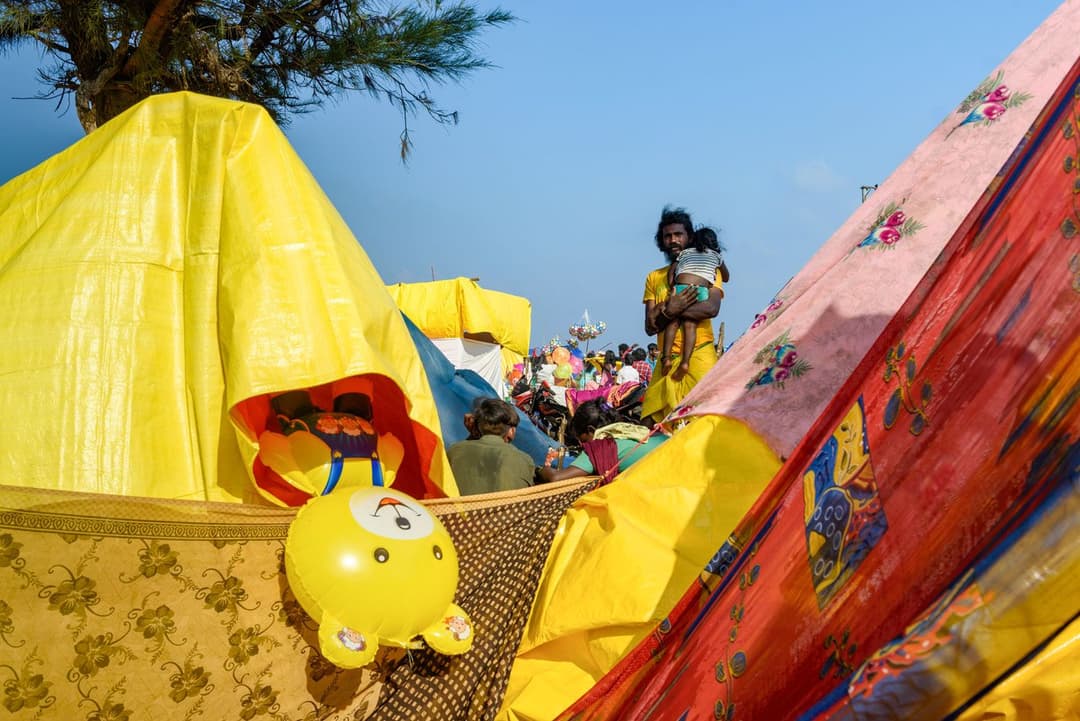
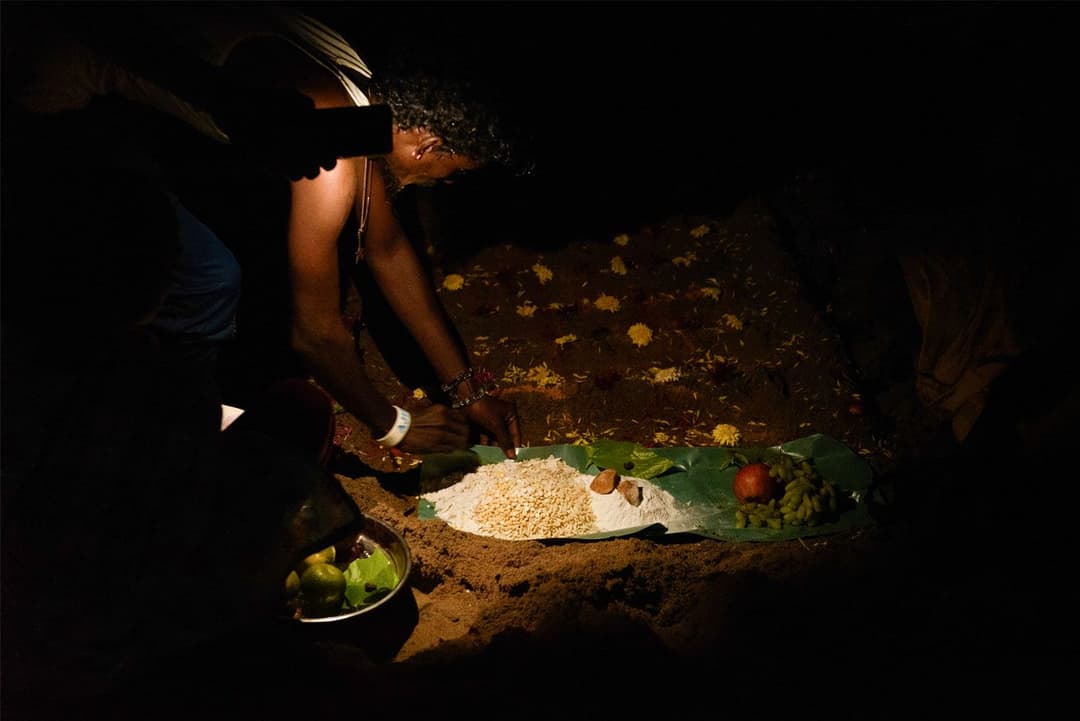
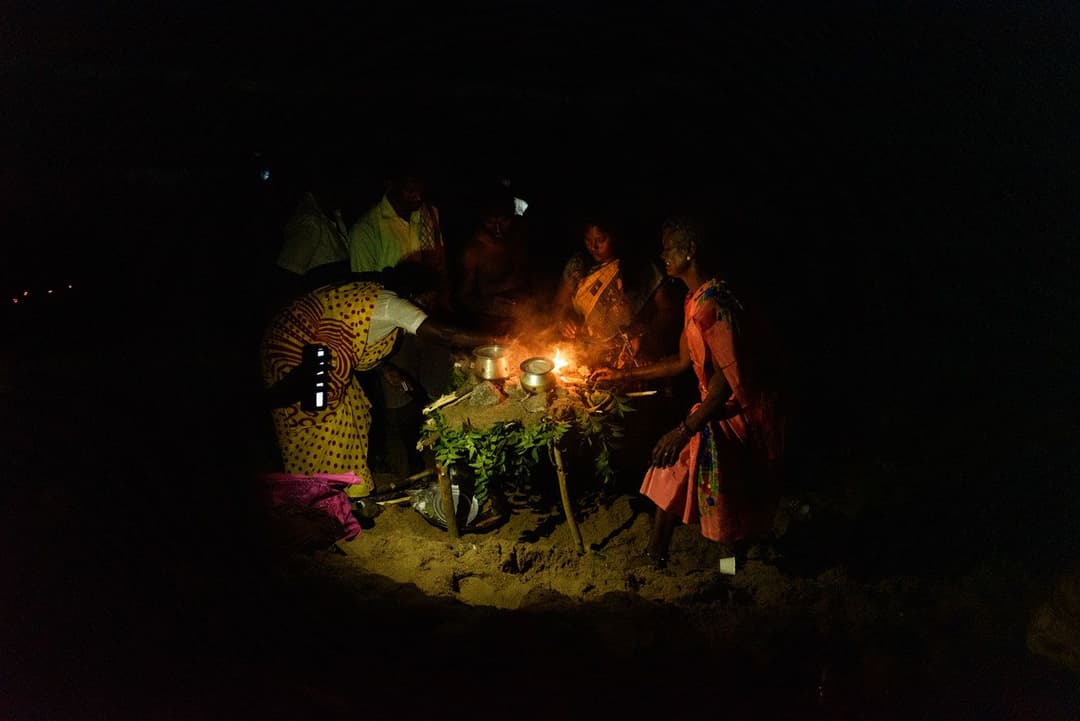
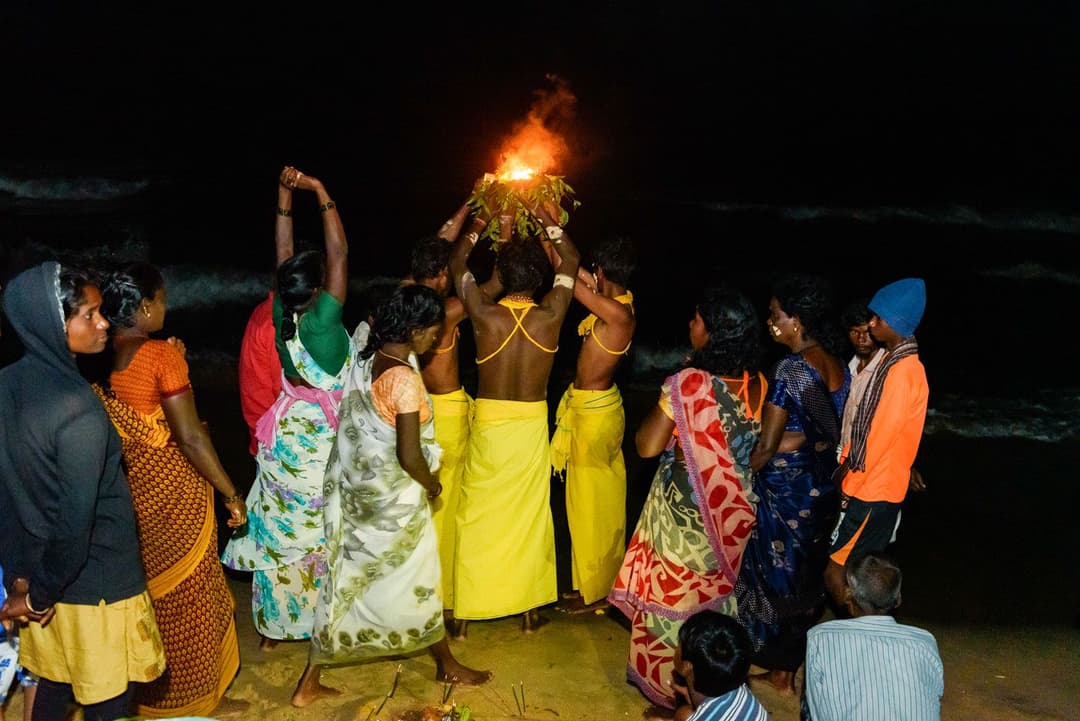
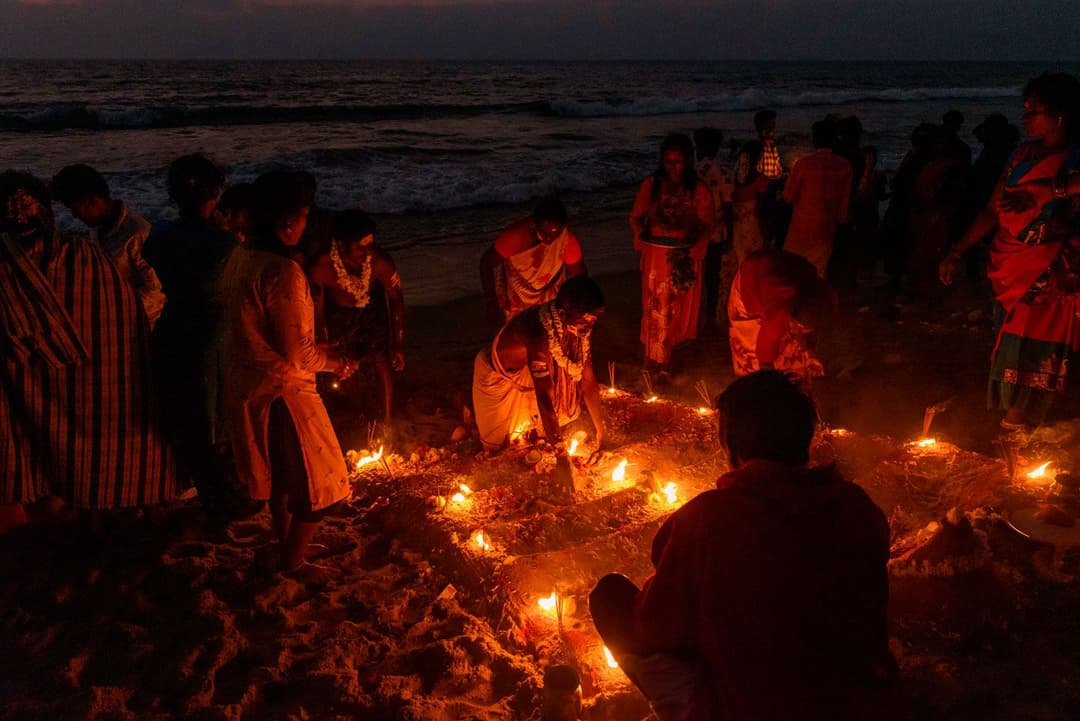
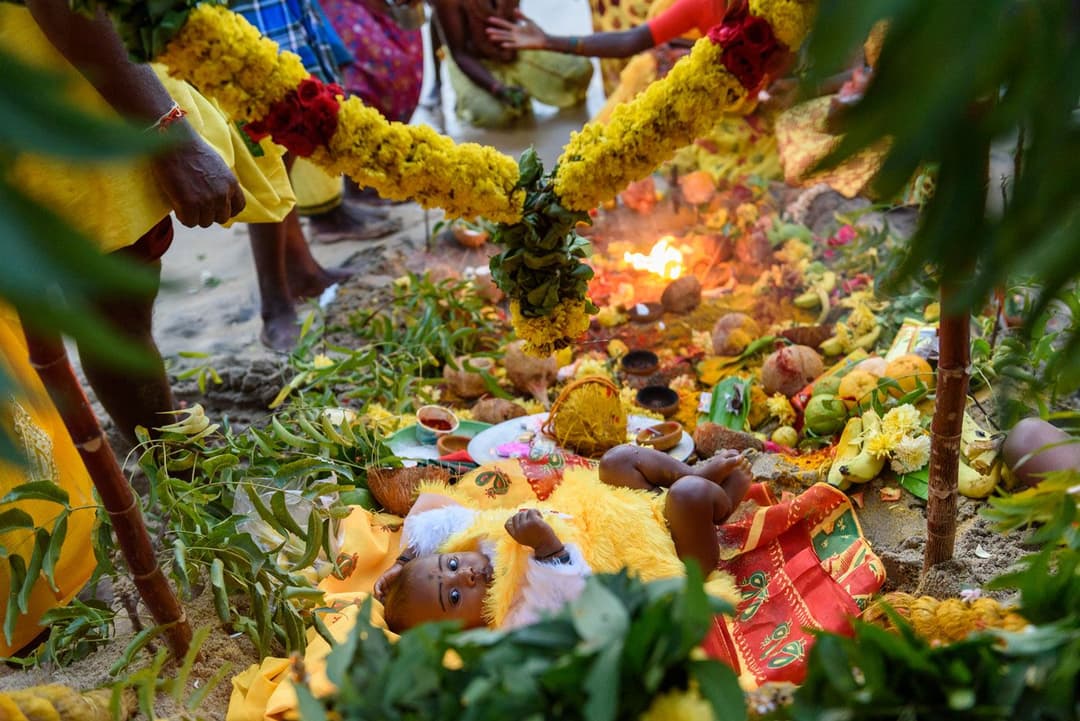
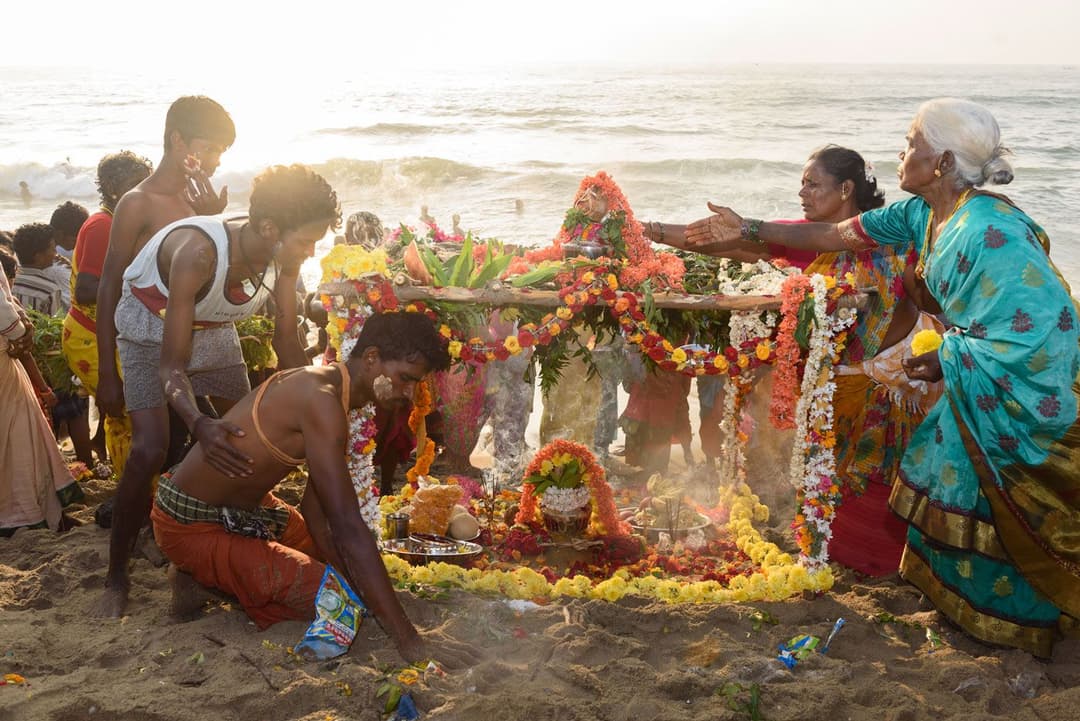
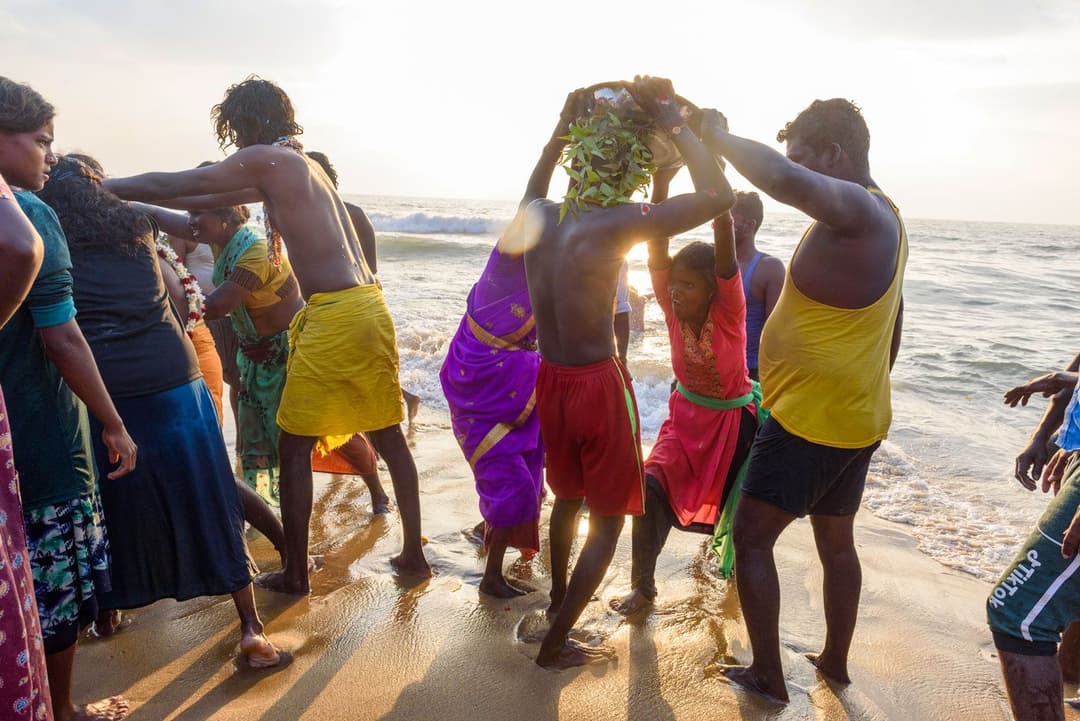
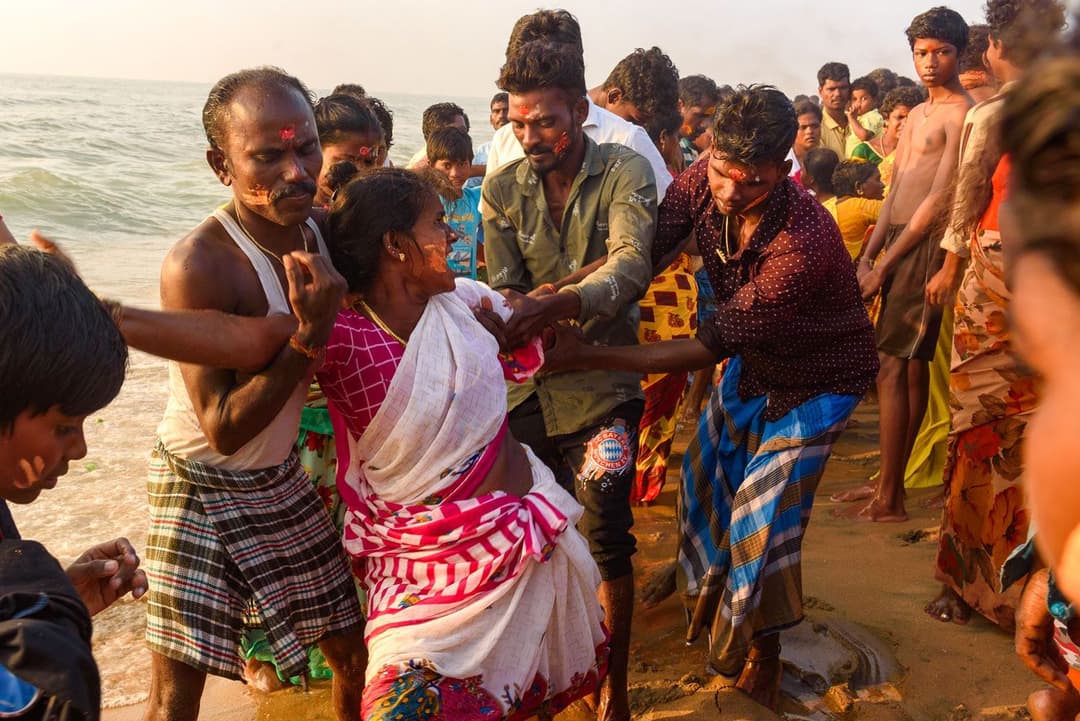
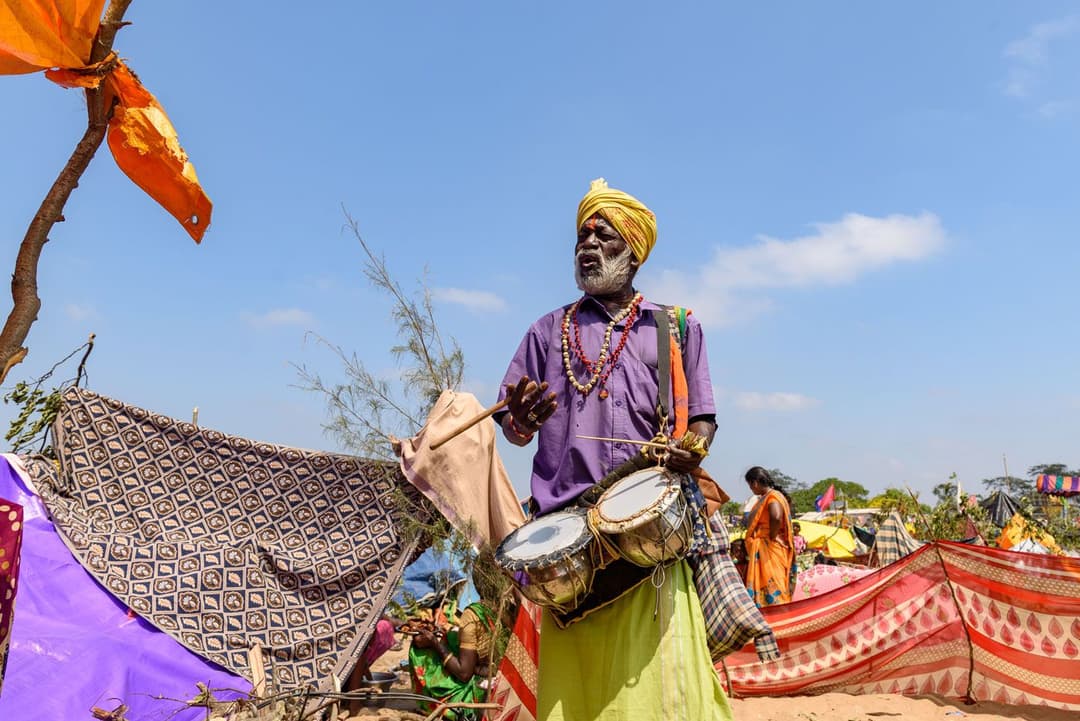
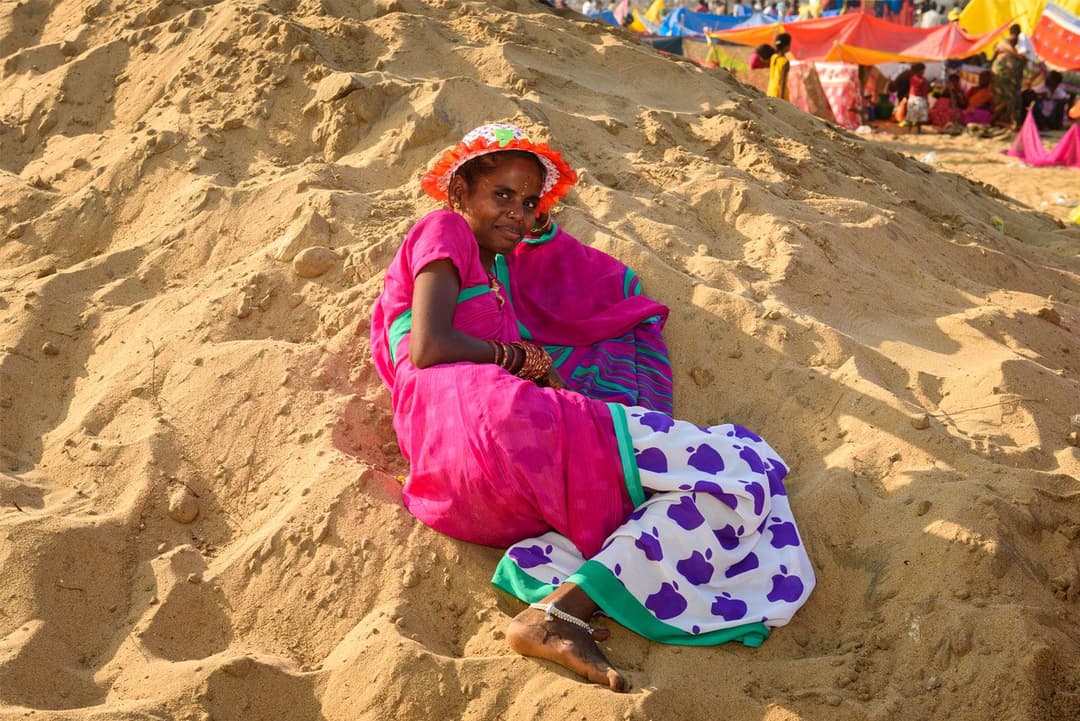
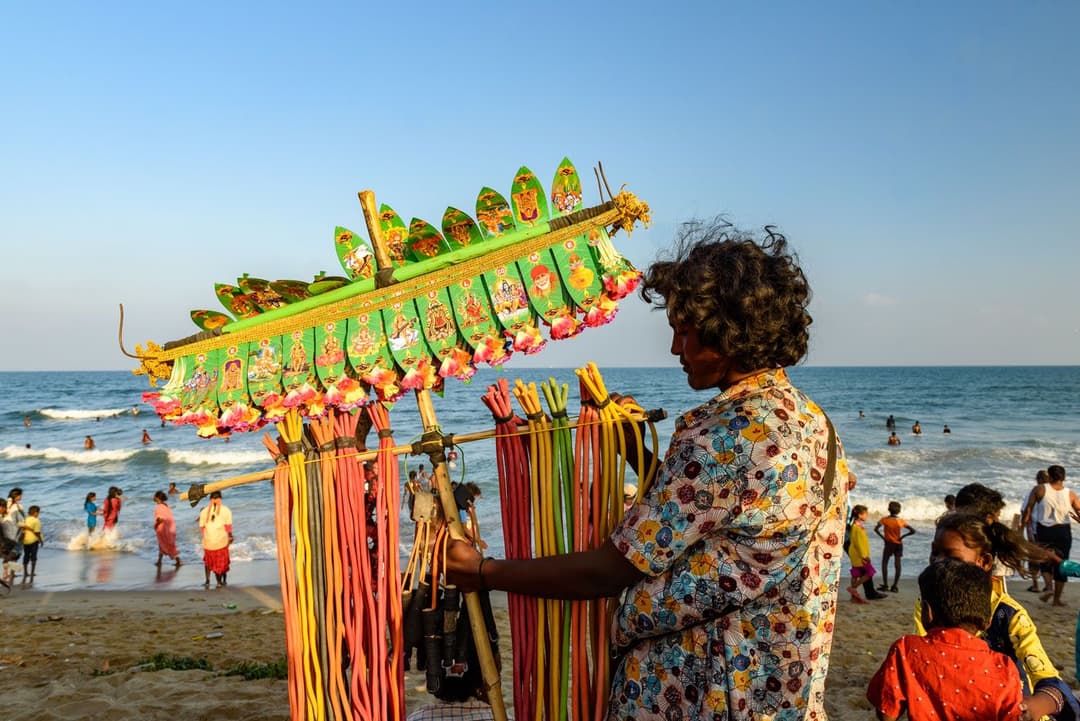
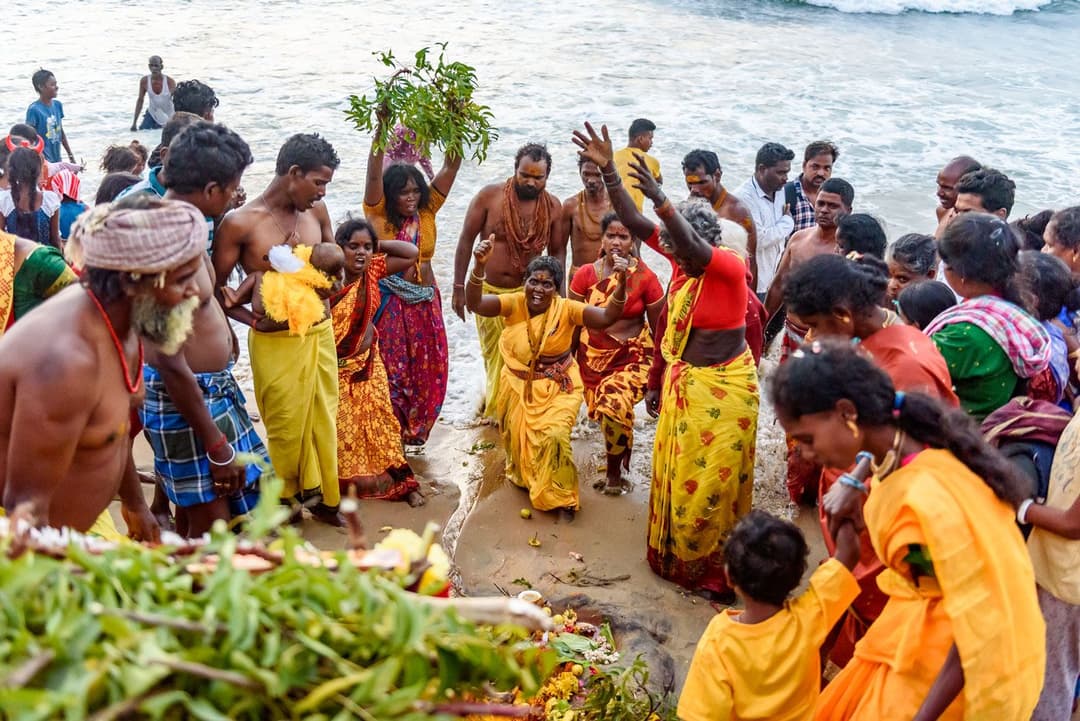
Every March, as the brief winter of coastal Tamil Nadu gives way to summer, the golden sands of Mamallapuram (previously known as Mahabalipuram), erupt in a riot of colours. The beach transforms into a huge maze of enclosures and tents made of thin sarees and tarpaulin, held in place using freshly cut stalks from nearby trees.
The usual buzz of local and international tourists on this popular beach is replaced by people from the Irular community who have come to celebrate the Maasi Magam festival from across the state. The Irulars are a particularly vulnerable tribal group (PVTG) – with an estimated population of around 2 lakhs (Statistical Profile of Scheduled Tribes in India, 2013). They live in small, isolated pockets spread across a few districts of Tamil Nadu.