

The first thing you notice about Rizwana Haji are her beautiful, watery, almond-brown eyes. She wipes them, smoothes her hair neatly under the drape of her dupatta, and tells me confidingly that sunglasses are for men.
“My husband wears them,” she says nodding towards Sharif, who is dragging a rake through salt crystals in a field nearby, his eyes hidden behind dark glasses.
“Why don’t you?” She lets out a hearty laugh as if the idea is impossible as well as strange. “There are elderly people here. What’ll they say! In our communities, women don’t wear sunglasses,” she adds waving her hand gently as if brushing the question away. She wipes her watery eyes one more time, and adds, “I’m shy.” Her embarrassment is as endearing as her words.
The water constantly pooling in and hampering Rizwana’s vision is a result of prolonged exposure to dry, saline winds which collect dust and salt particles in the eyes, dehydrating and damaging them gradually. It is one of the most common ailments among agariyas – Gujarat’s salt pan workers. The term comes from “agar”, the Gujarati word for salt fields, that span nearly 5,000 square kilometres in the Little Rann of Kachchh. The rann is a low-lying bowl-shaped tract of land, which, during monsoon, turns into a wetland but remains arid through summer and winter.
The switch from desert to wetland makes the rann’s unique landscape exceptionally biodiverse. It is a sanctuary for migratory birds like Flamingos and Pelicans during the wet season and a haven for blackbucks, boars, and antelopes who live here all year round. The arrival of wildlife tends to foretell what the year would bring, leading to a common local saying: Kutchma kale shu aavse, e aajej dekhay. [In Kachchh, tomorrow can already be seen today].
Once the water drains off, the agariyas move in, set up tents and live here for eight months, turning the underground brine into salt. They produce over 75 per cent of India’s salt.
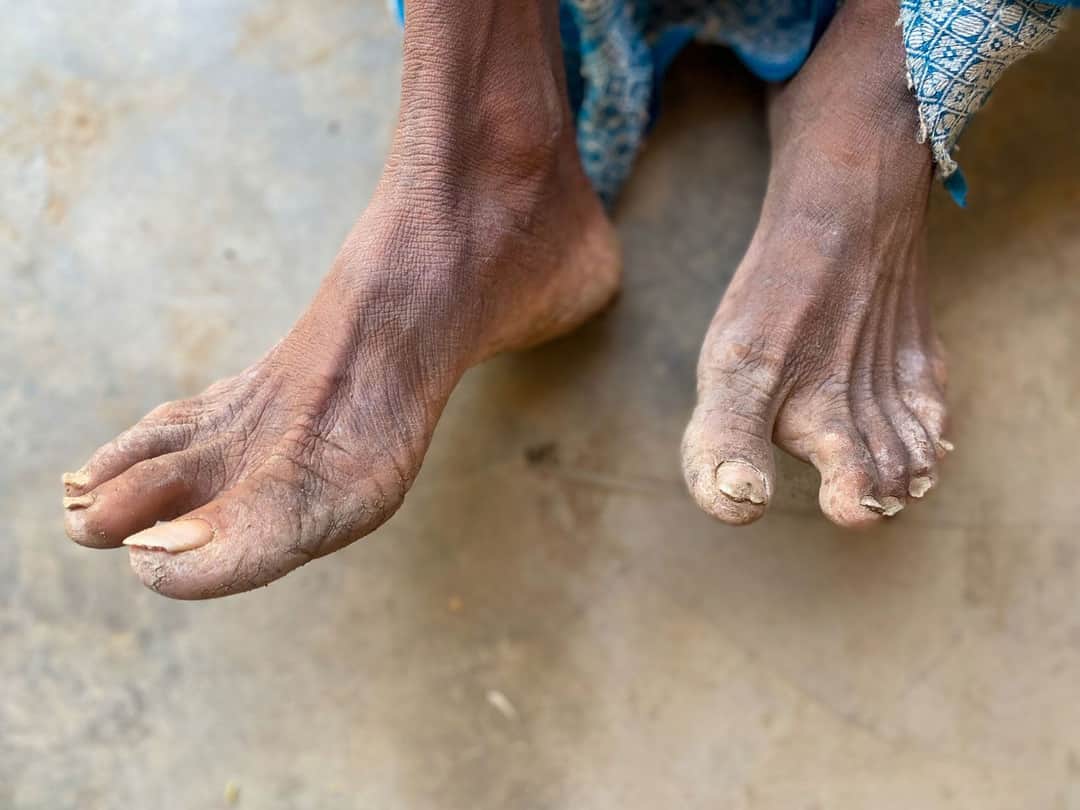
The rann here is a world of straight lines: white grids of salt pans, square solar panels and rectangles imposed on earth so uniformly it adds to the brutal nature of these vast salt pans. At 10 a.m. the sun is blazing in the rann like a molten orb, covering everything with unbearable white light. It’s an otherworldly terrain, with a thick crust of salt extending to the horizon. The whiteness below and above merge into a glare bordering on violence. The heat draws out water from everything: lips crack, throats burn with thirst, the eyes water all the time and heels split much like the parched earth beneath into deep, painful crevices.