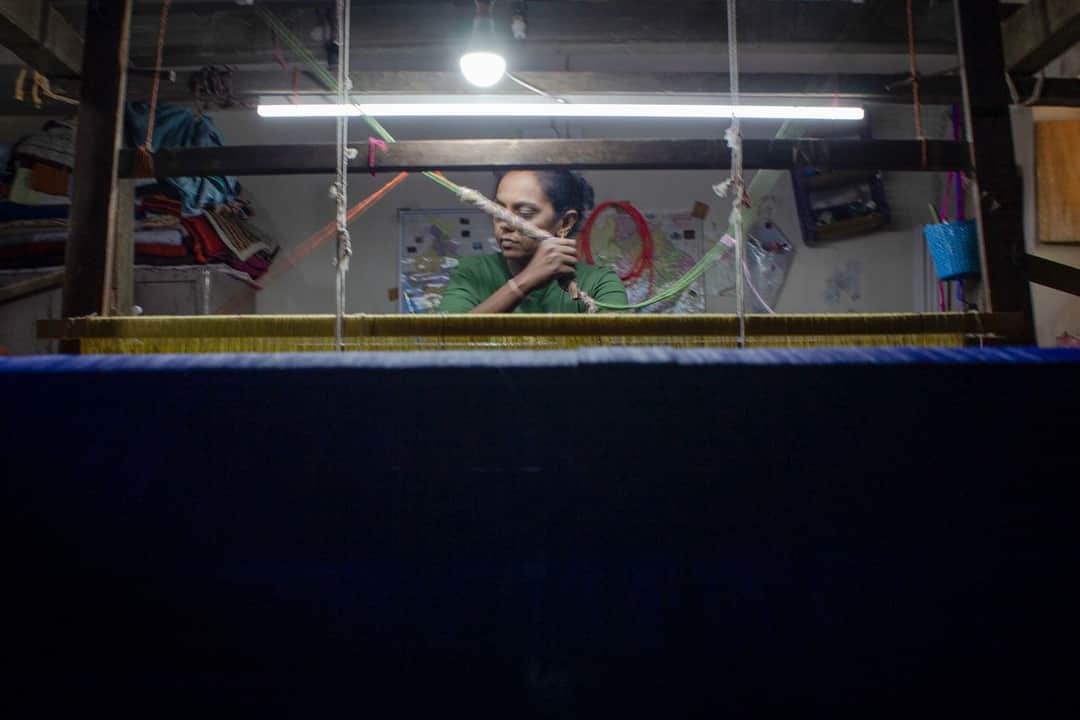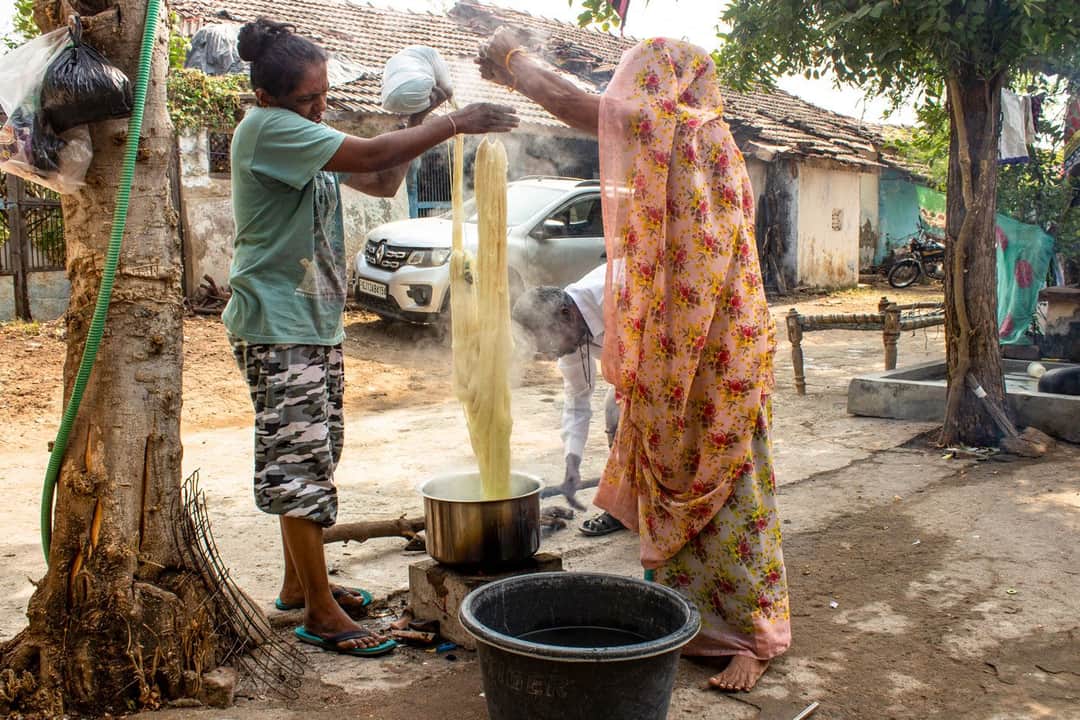

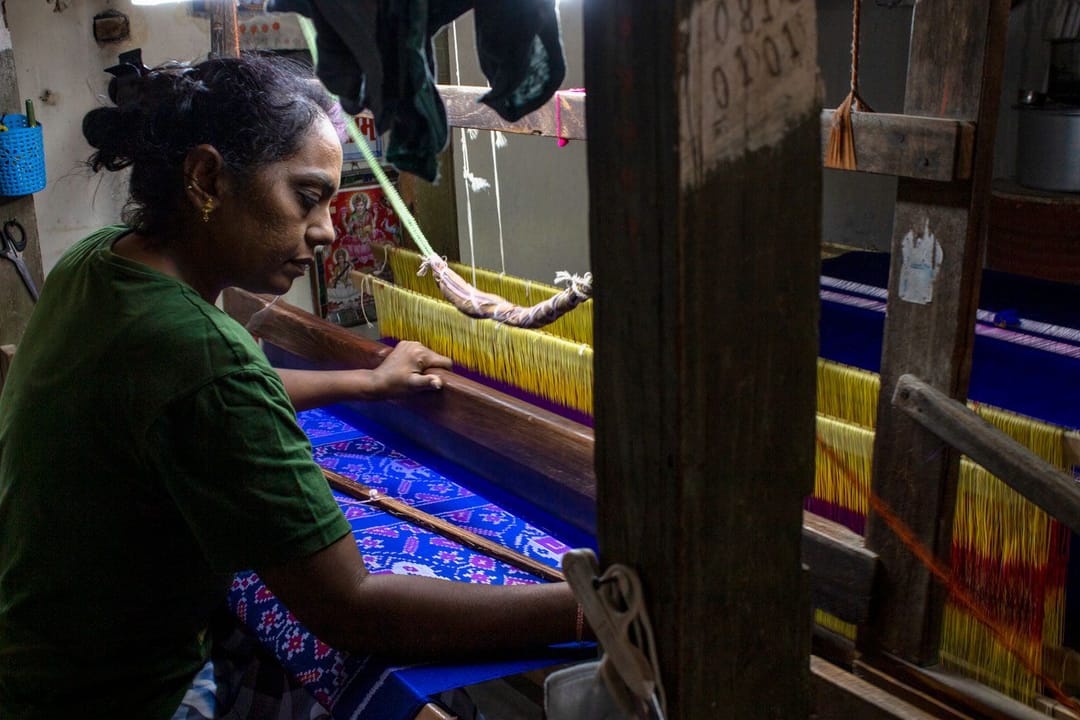
A paved side road forking off the Limbdi highway stretches right up to the village of Mota Timbla, about 10-12 kilometres away. At the very edge of the village is Vankarvas, a space designated for the homes of the Dalit weaver communities residing here. Khat-khat…khat-khat, the rhythmic sounds of shuttle looms echo in the narrow lanes between old-style, tiled-roof houses and a few thatched ones, an occasional human voice or two interrupting the periodic beat of the handloom. Listen closely, and you will even hear the sound of labour. Tune in a bit more, and you’ll catch what seems a faint sound of regret weaving an intricate pattern within the louder rap-trap-rap, like a prelude to the story of Rekha Ben Vaghela.
"I had hardly been three months in Class 8. I was living in a hostel in Limbdi and had come home after the first school exam. That is when mother said that I was not going to study any further. Gopal Bhai, my elder brother, needed help. He had already dropped out before graduation to earn a living. Our family never had the money to support [the education of] my two brothers. That is how I started patola work.” Rekha Ben’s words are straightforward but sharp, like all things honed by poverty. Now in her 40s, she is the master weaver of Mota Timbla in Gujarat’s Surendranagar district.
“My husband was addicted to alcohol, gambling, paan-masala, tobacco,” she says, pulling in another thread of the story of her life after marriage. A rather unhappy one. Often, she would leave her husband and return to her parents’ home, but would be coaxed into returning to him. She was miserable. Yet, she bore it all. “He was not a man of good character,” she says.
“He used to beat me up sometimes, even during my pregnancy,” she says. You can hear the wounds still afresh in her voice. “I found out about his affair after my daughter was born. I continued like that for a year. That is when Gopal Bhai died in an accident [in 2010]. All his patola work was pending. Gopal Bhai owed money to the trader who had got him the material. So, I stayed back [in my parents’ house] for the next five months and completed all his work. After that, my husband came to pick me up,” she says.
A few more years went in fooling herself into thinking she was happy, in caring for the young one, in enduring the pain within. “Finally, when my daughter was four and a half years old, I could not bear the torture anymore and just left,” says Rekha Ben. The patola weaving skill she had acquired after leaving school came to her aid when she left her marital home. It smoothed the sharp, rough edges left by poverty, and gave her a new start in life. A strong one.