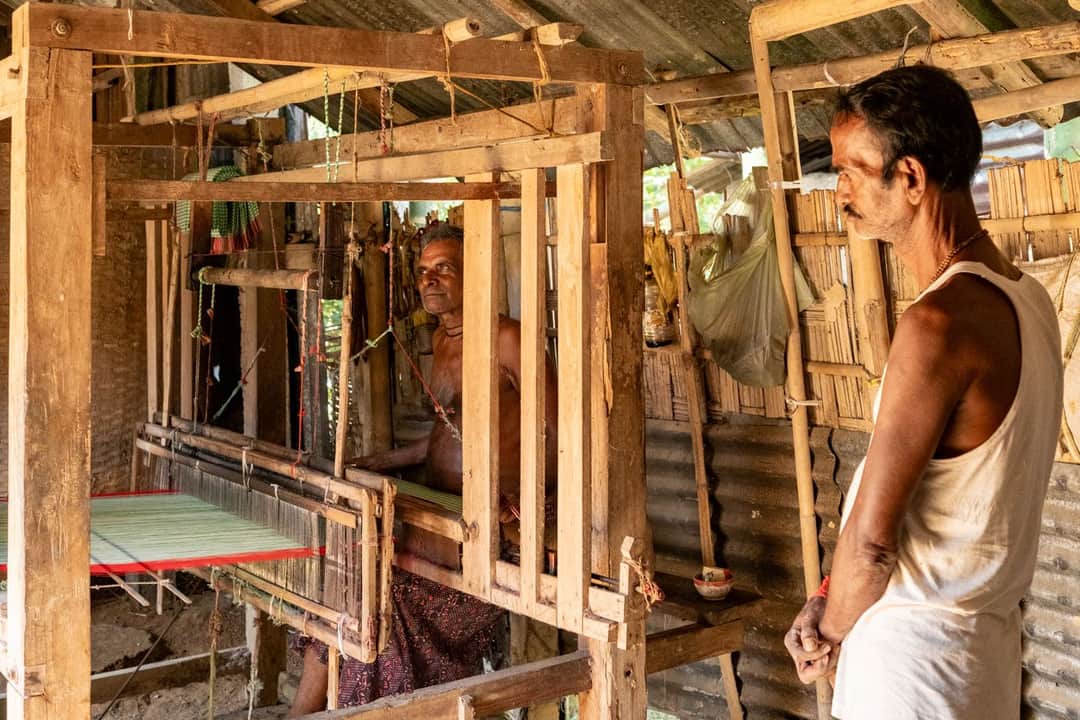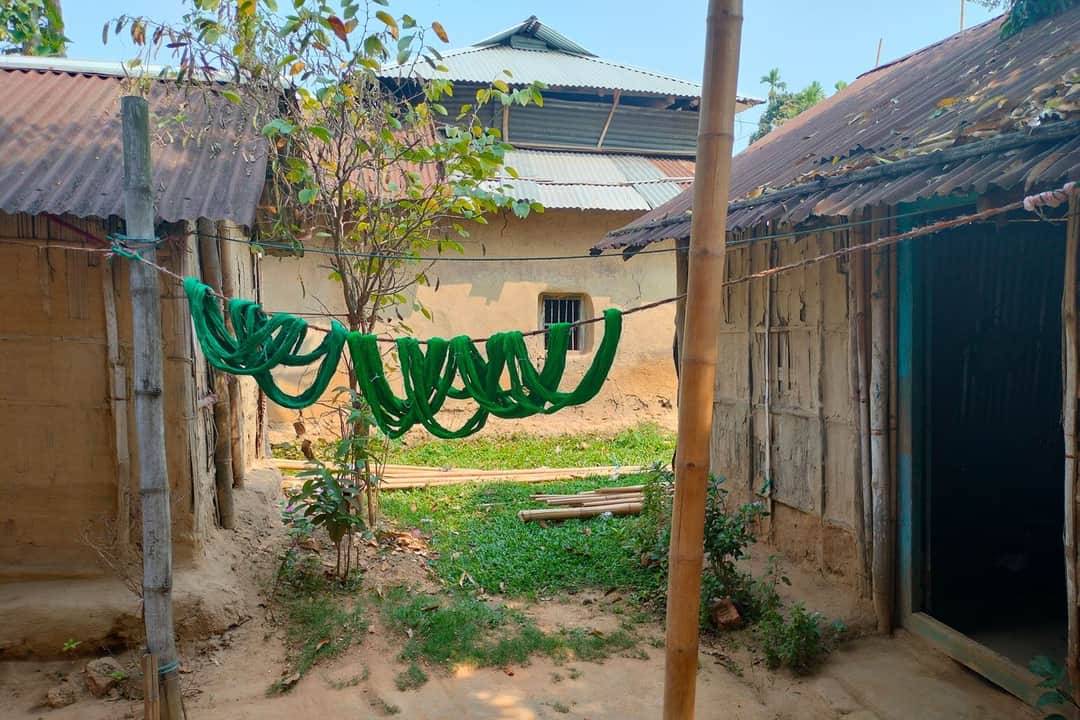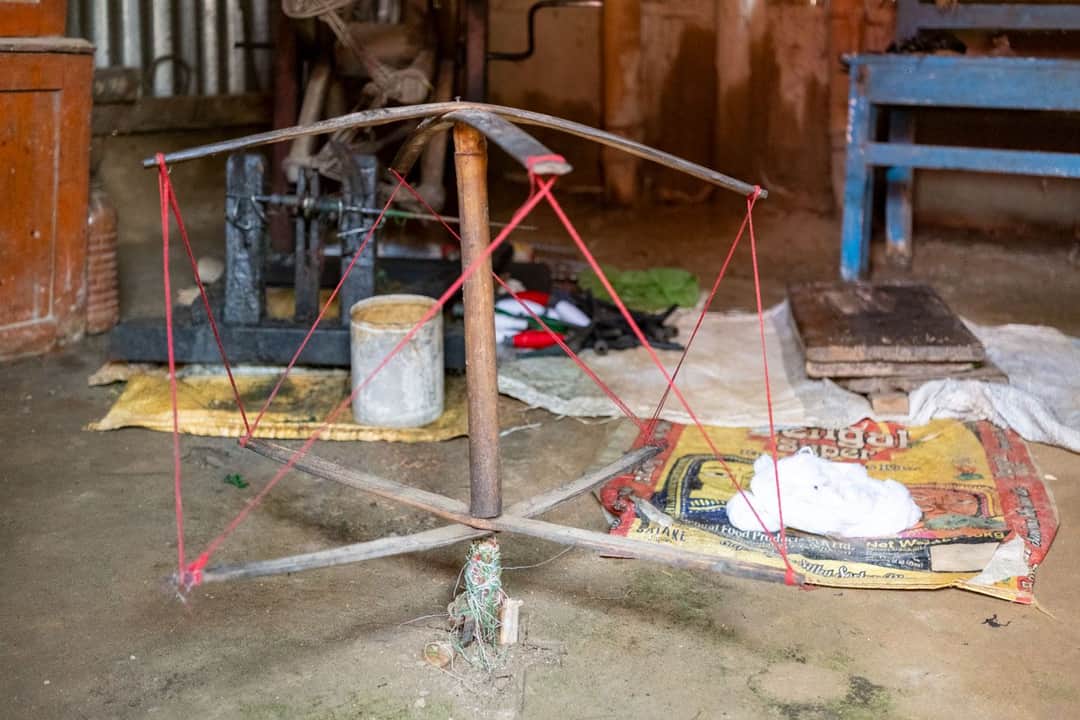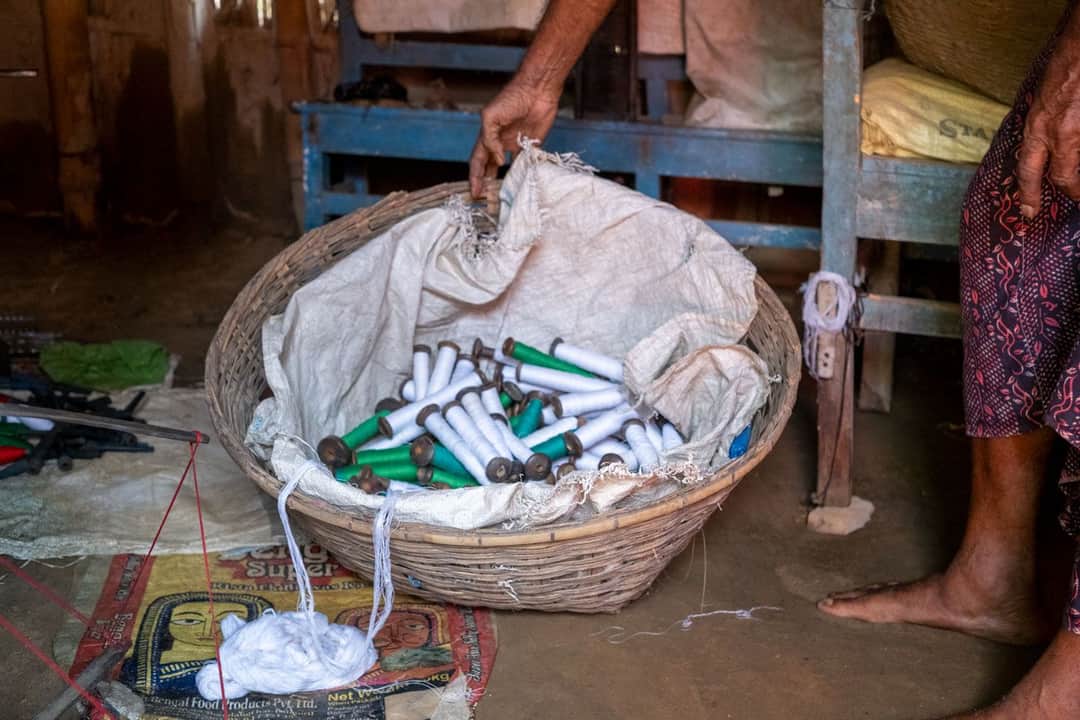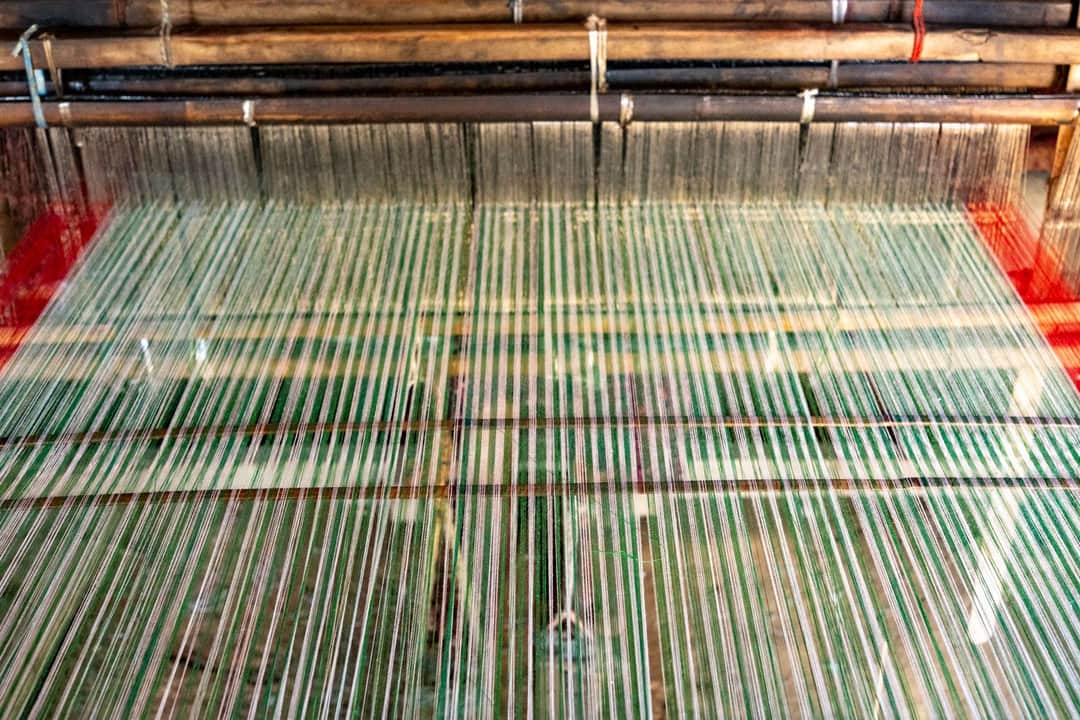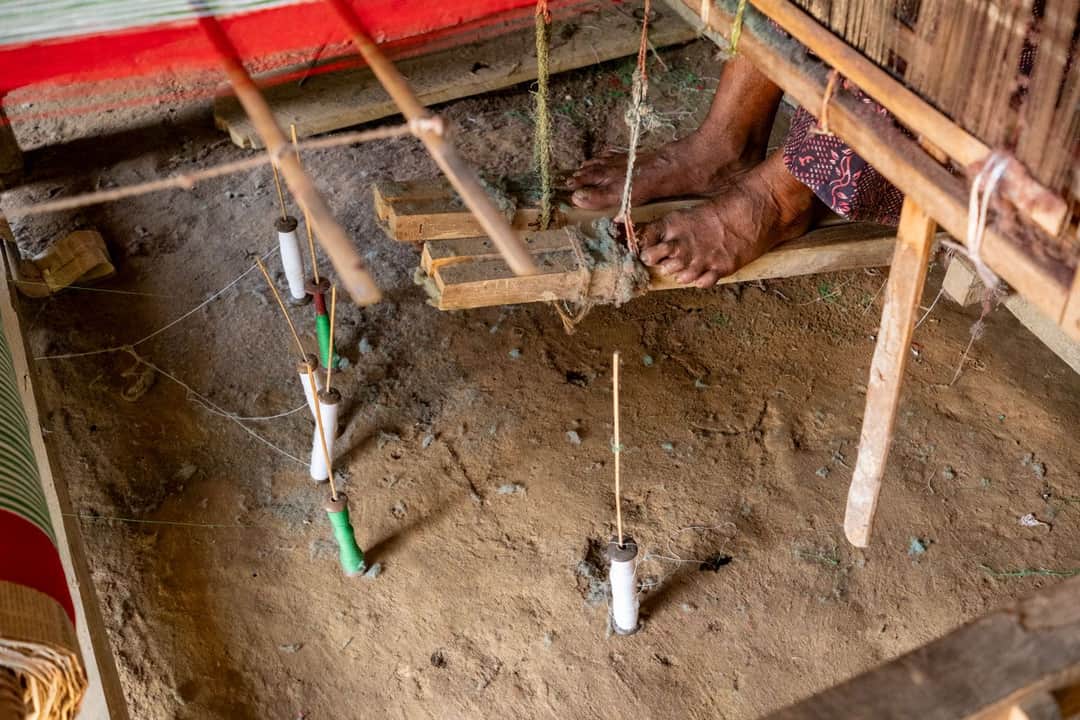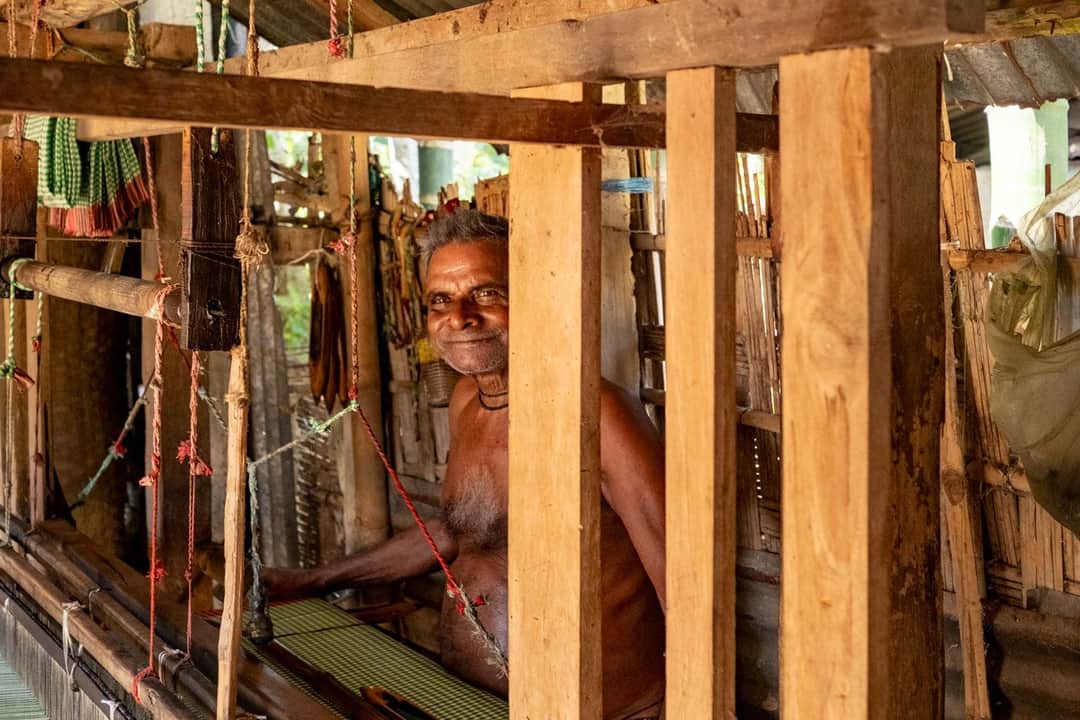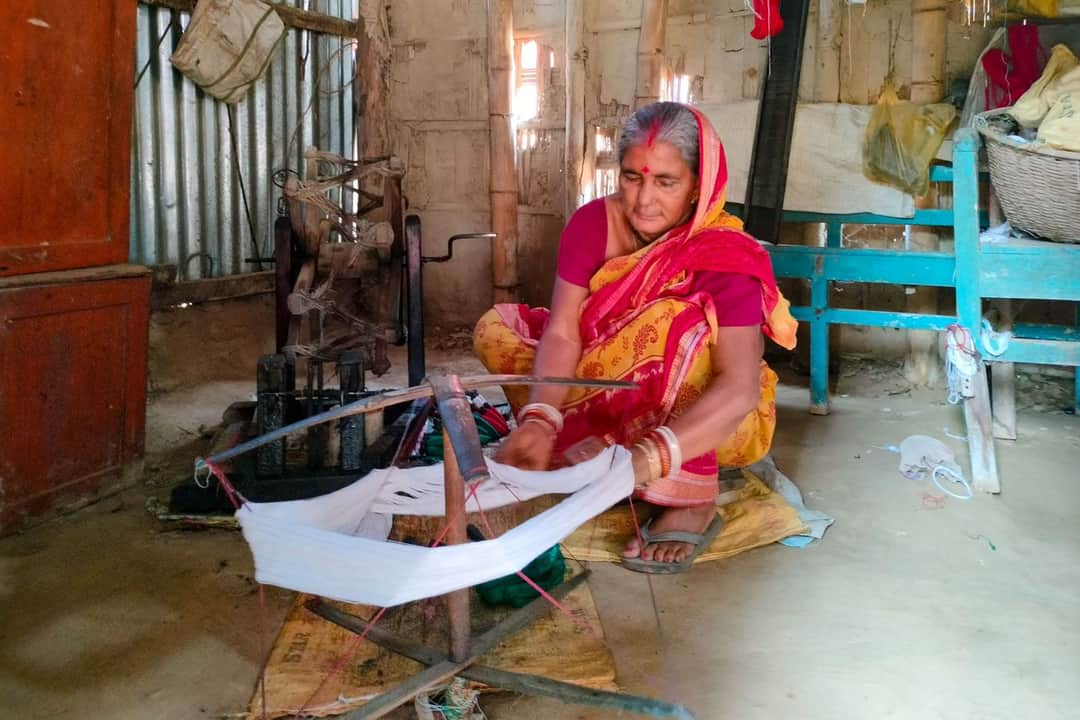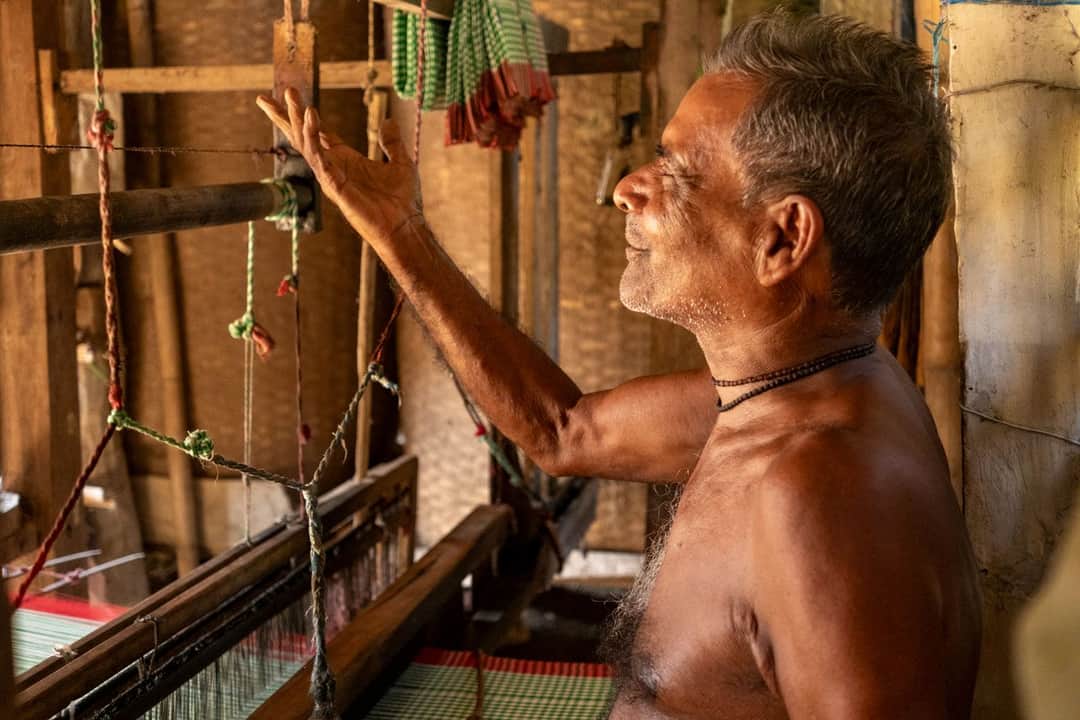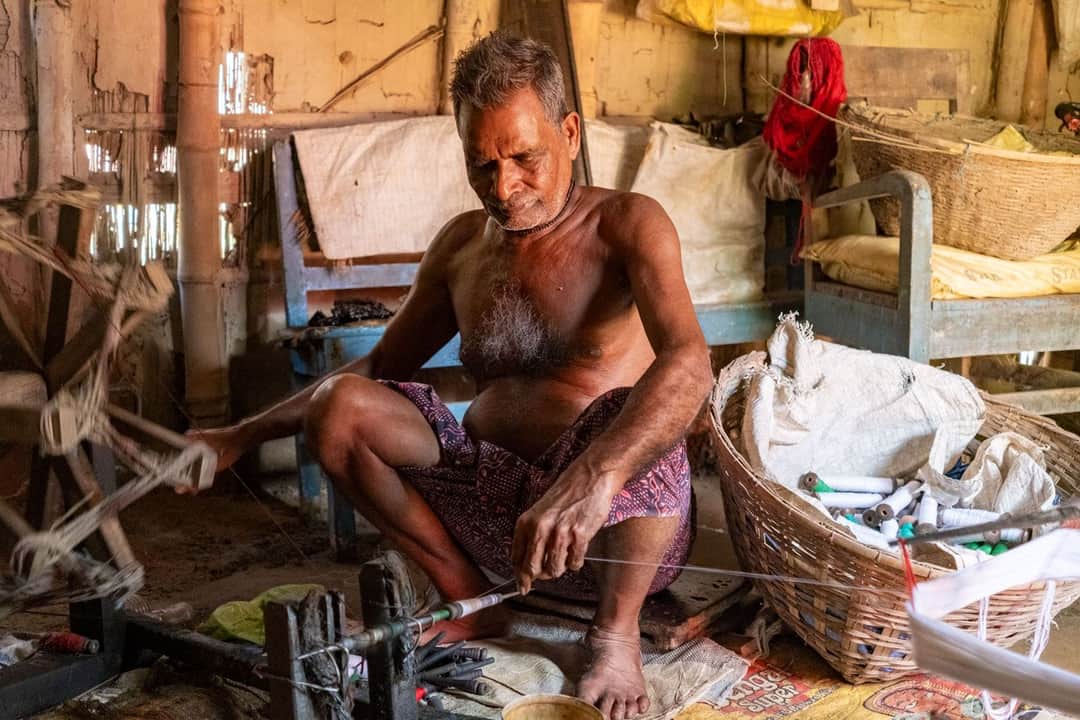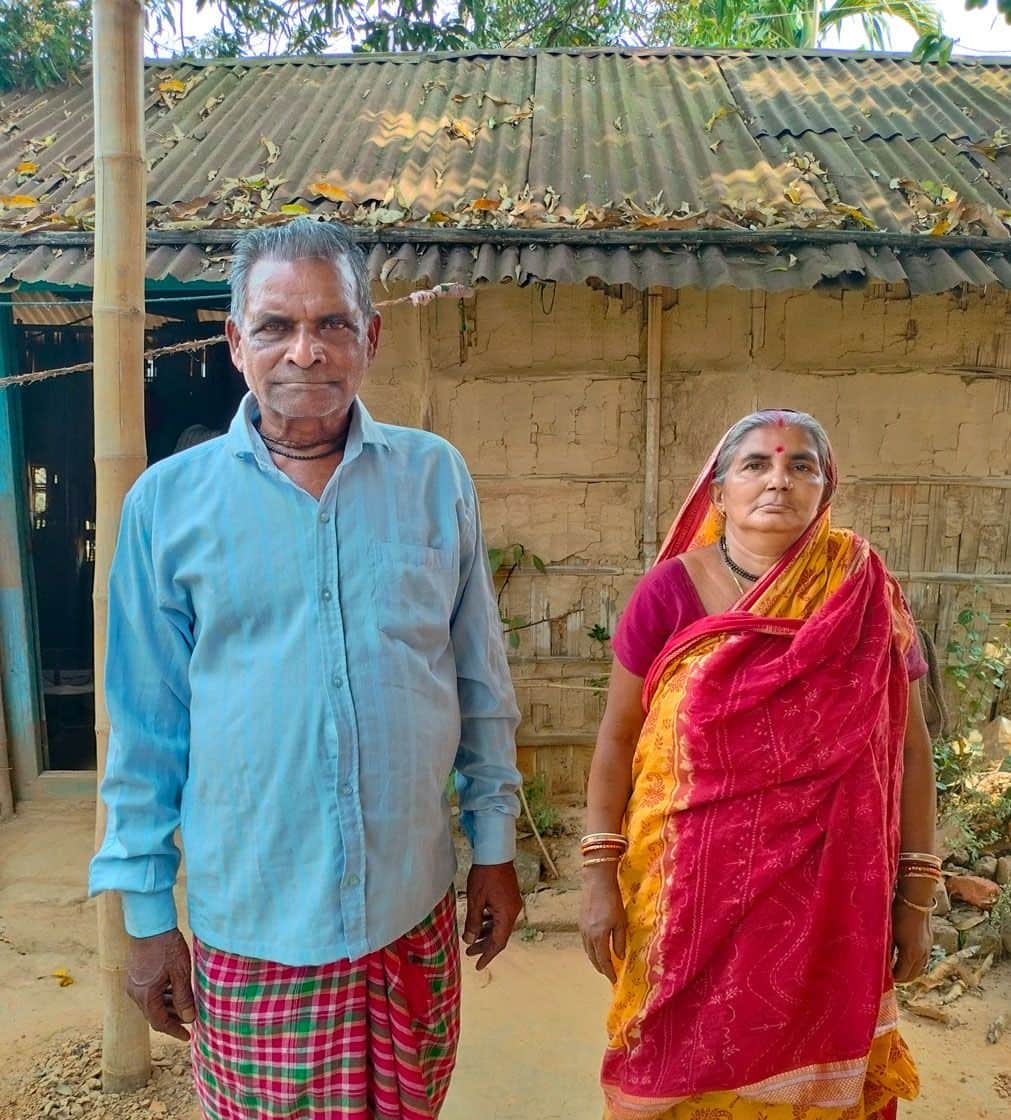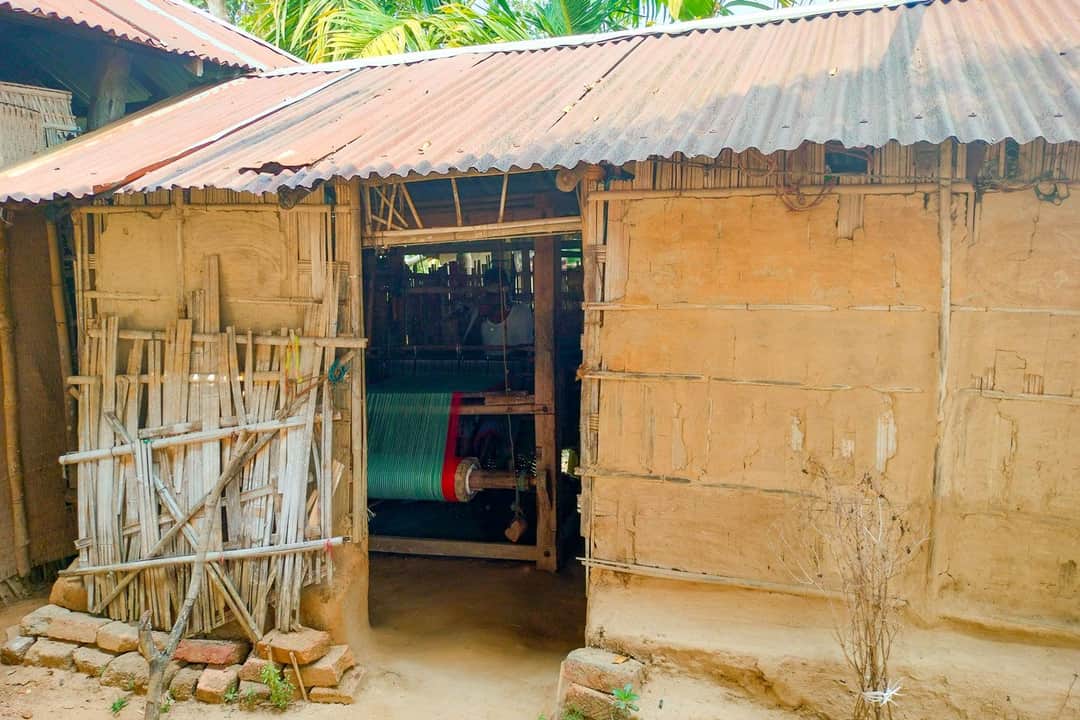

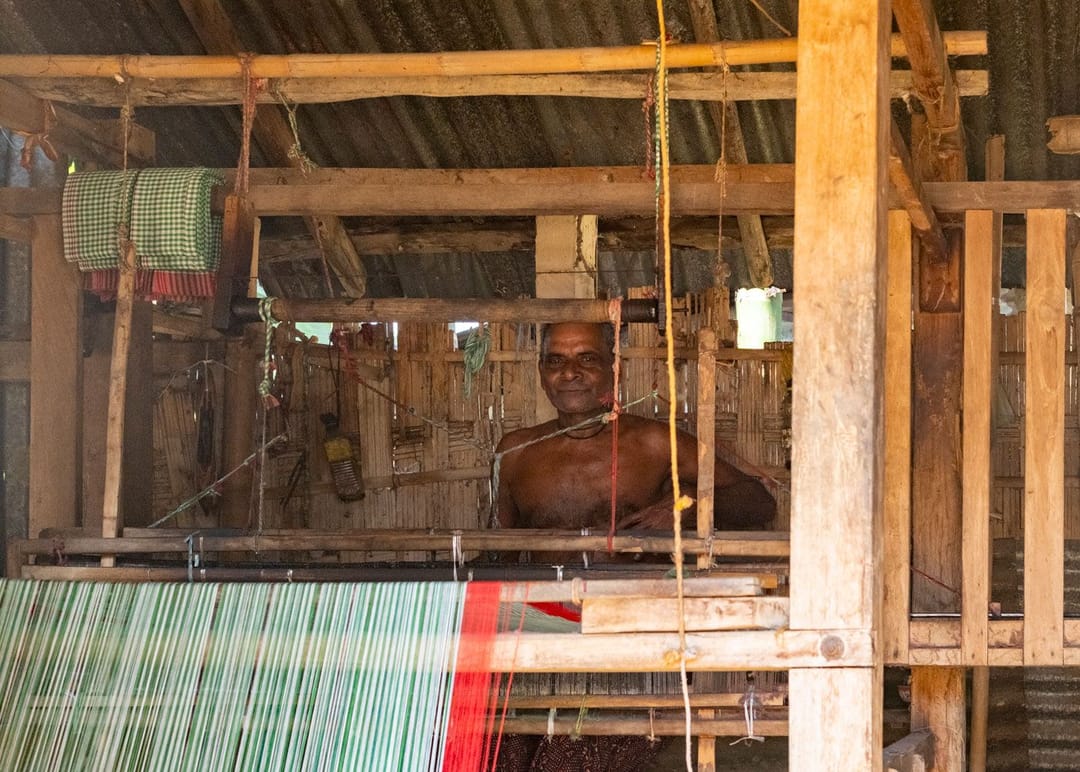
“There is no shortage of weavers here on paper but it’s all over [practically] once I die,” sighs Roopchand Debnath as he takes a break from weaving on the handloom in his bamboo hut. Apart from the loom, which takes up most of the space, are piles of junk – broken furniture, metal spare parts and pieces of bamboo, among other things. There is barely any room for more than one person.
Roopchand, 73, lives in Gobindapur on the outskirts of Dharmanagar city, on the border of India and Bangladesh, in the state of Tripura. A narrow pitch road leads into the village, once home to 200 weaver families and over 600 artisans, according to the locals. The office of the Gobindapur Handloom Weavers’ Association stands among the few houses in narrow lanes, its corroded walls a reminder of mostly forgotten glory.
“There was not a single house here that did not have a loom,” recounts Roopchand, who belongs to the Nath community (listed as Other Backward Classes in the state). The sun is bright and he wipes the sweat off his face before continuing. “Society used to respect us. Now, no one cares. Tell me who would respect a profession that doesn’t have any money?” he asks, voice cracking with emotion.
The veteran weaver recalls making the handwoven nakshi sarees which had elaborate floral motifs. But in the 1980s, “when Purbasha [the handcraft emporium of the Government of Tripura] opened an outlet in Dharmanagar they told us to discontinue making nakshi sarees and start making plain sarees,” says Roopchand. These were low on detailing and overall quality, and hence cheaper.
Slowly, he said, nakshi sarees faded out in the region, and today, he adds, “there are neither any artisans left nor the supply of spare parts for the looms.” His words are echoed by Rabindra Debnath, acting the President of the Weavers’ Association for the last four years who says, “there was no market for the clothes we used to make.” At 63, he cannot keep up with the physical demands of weaving any more.