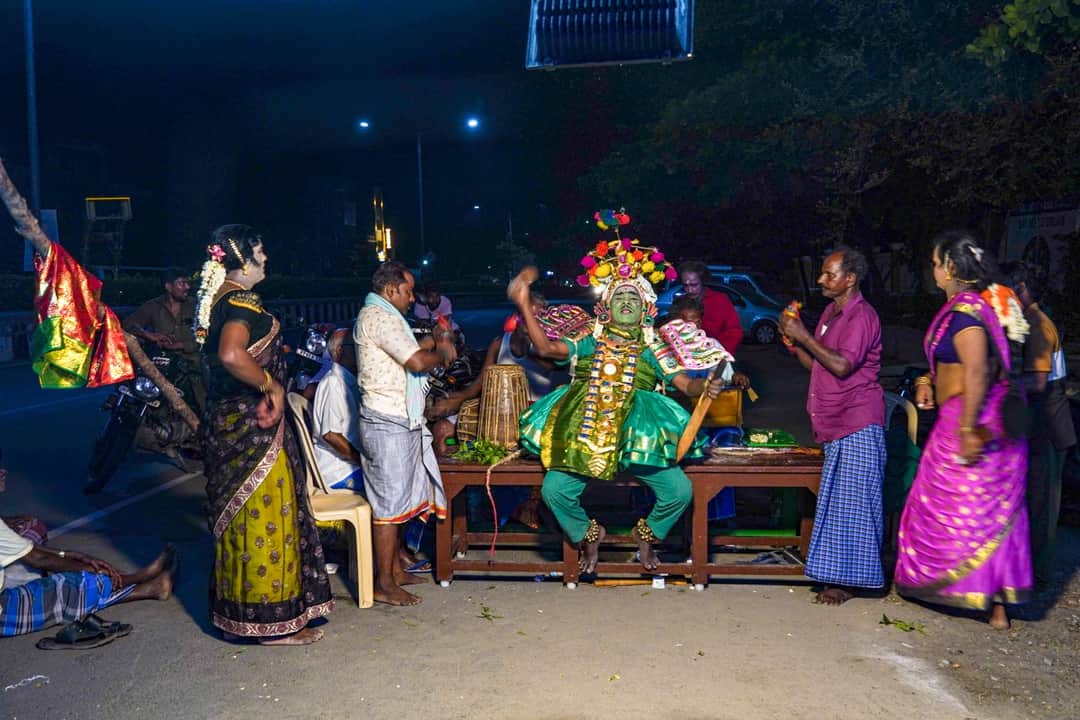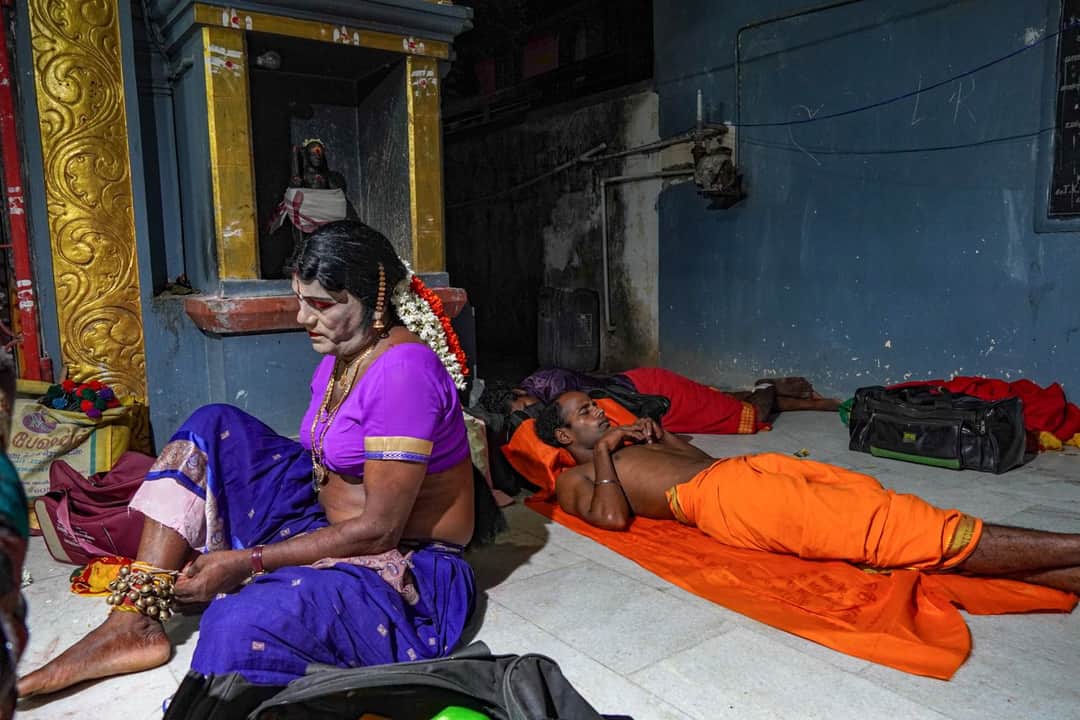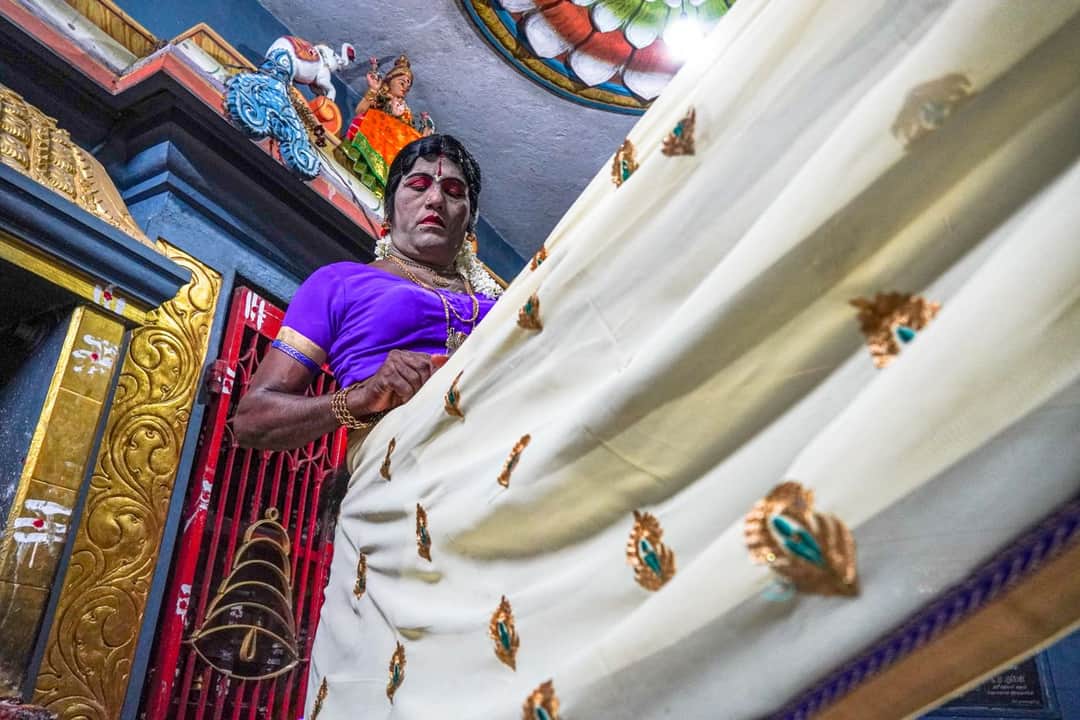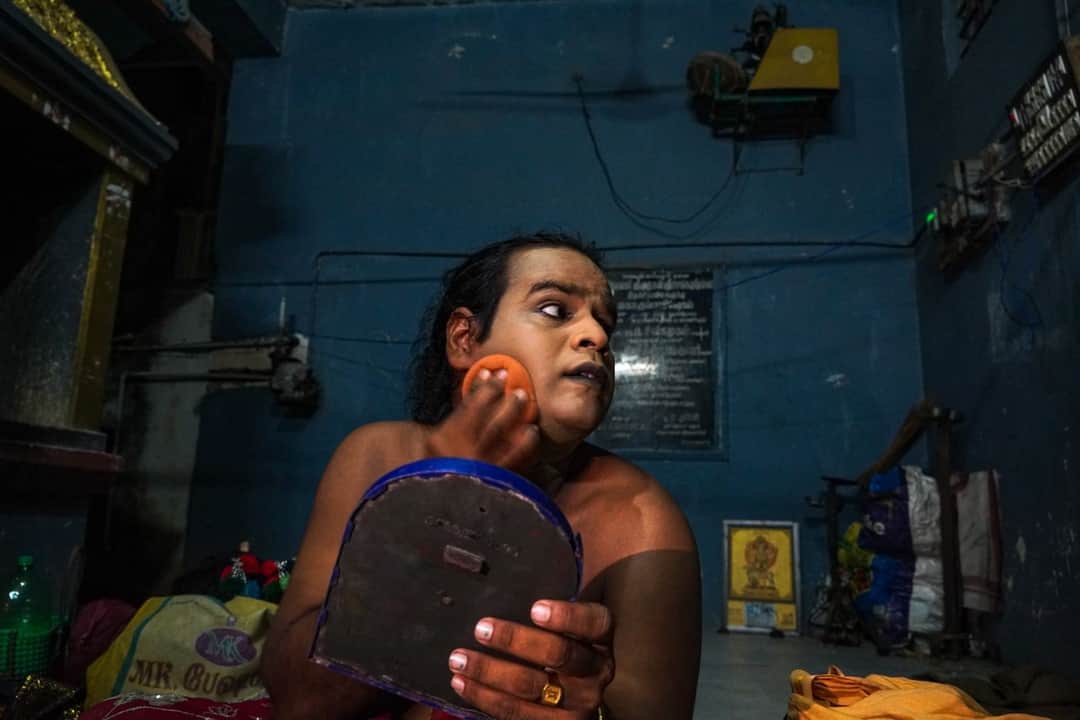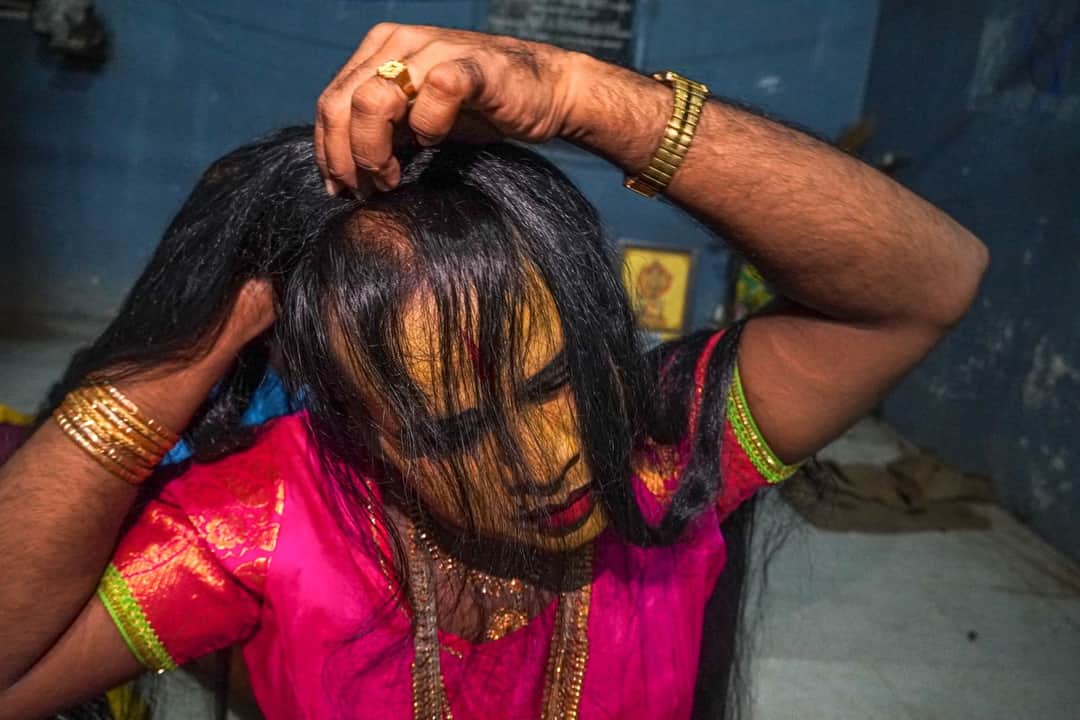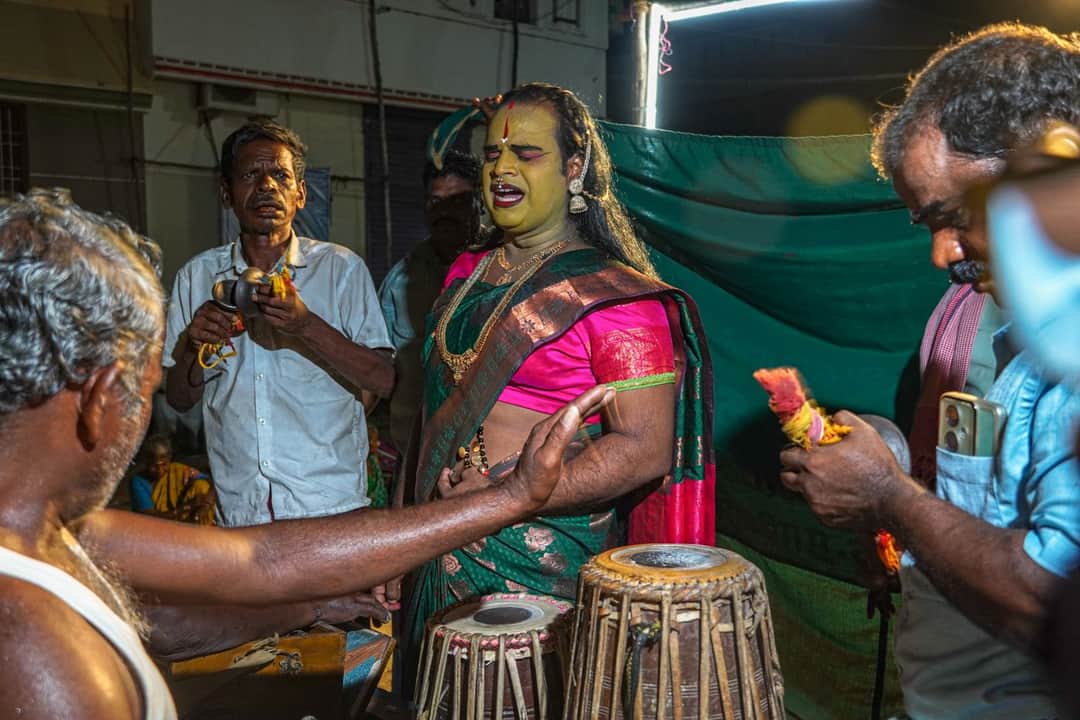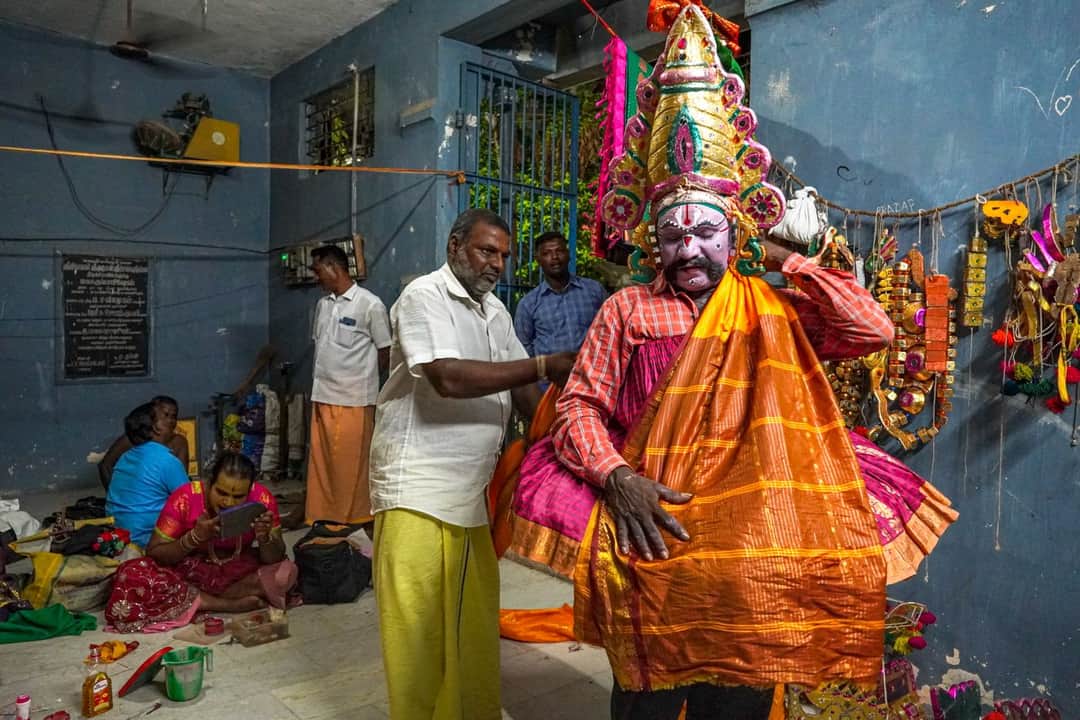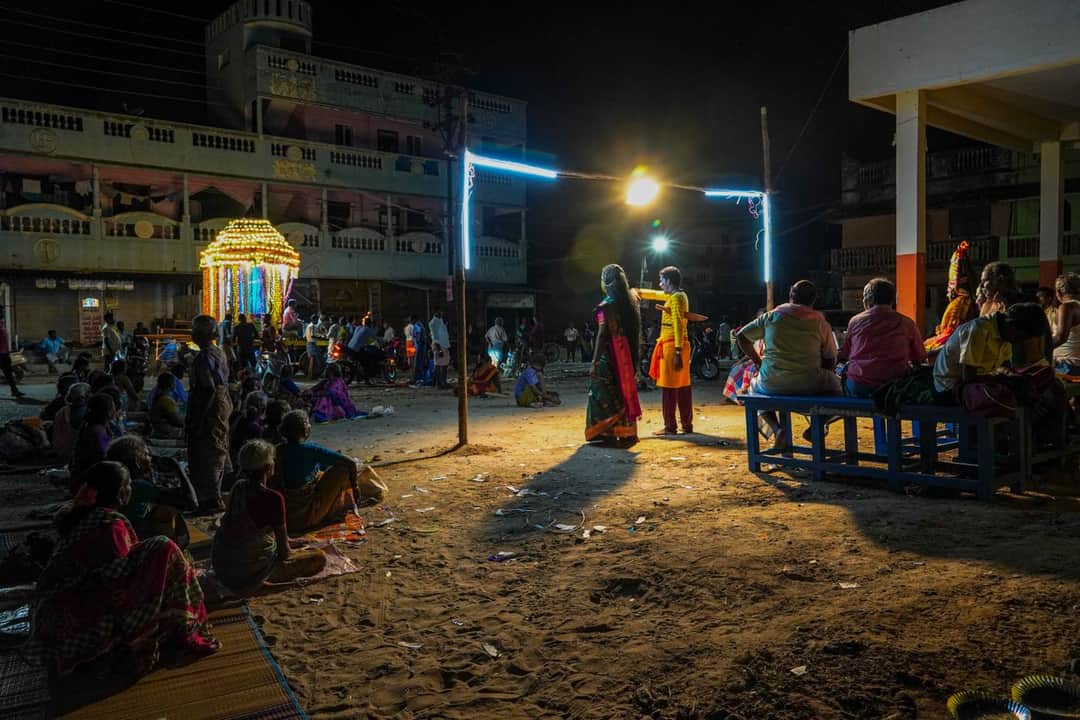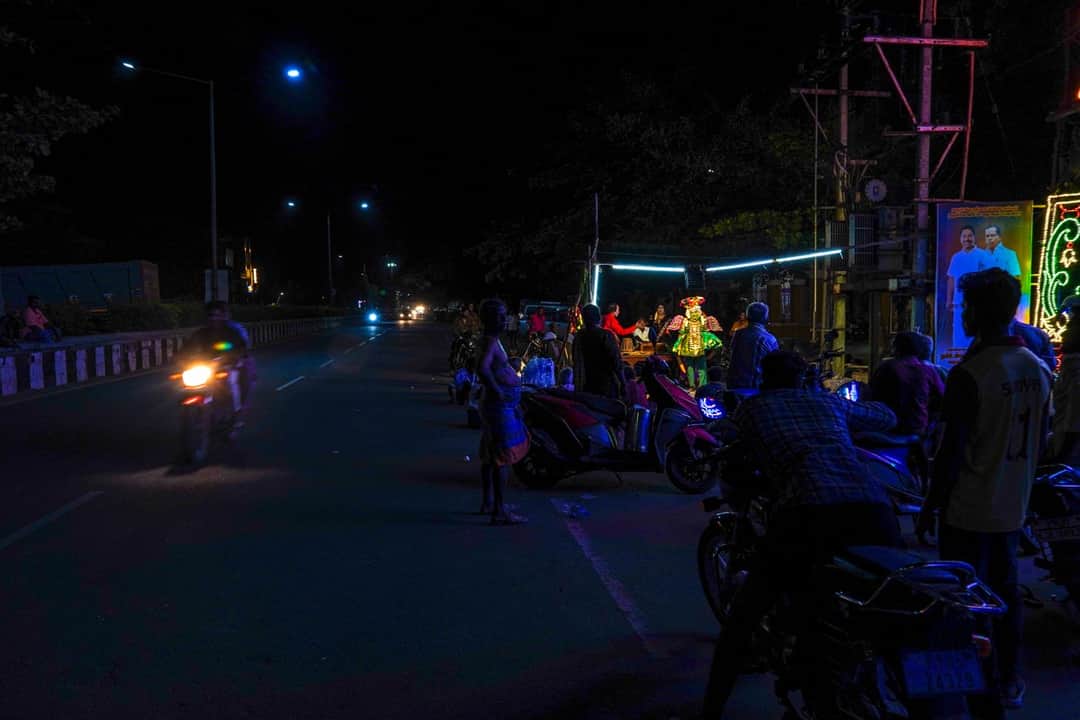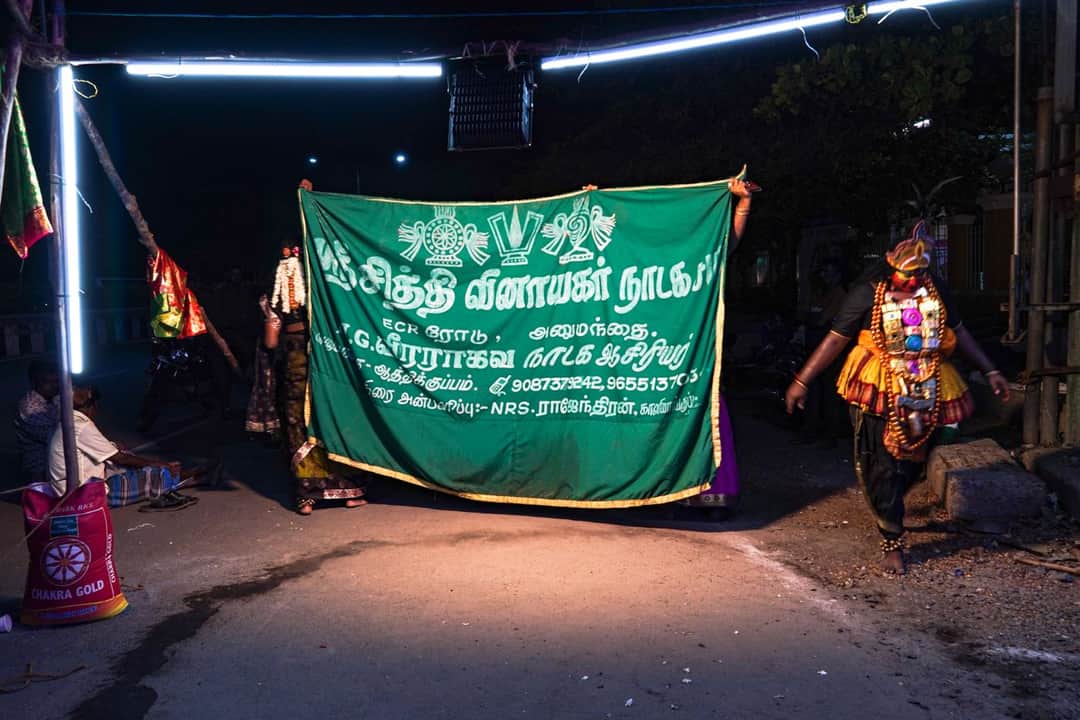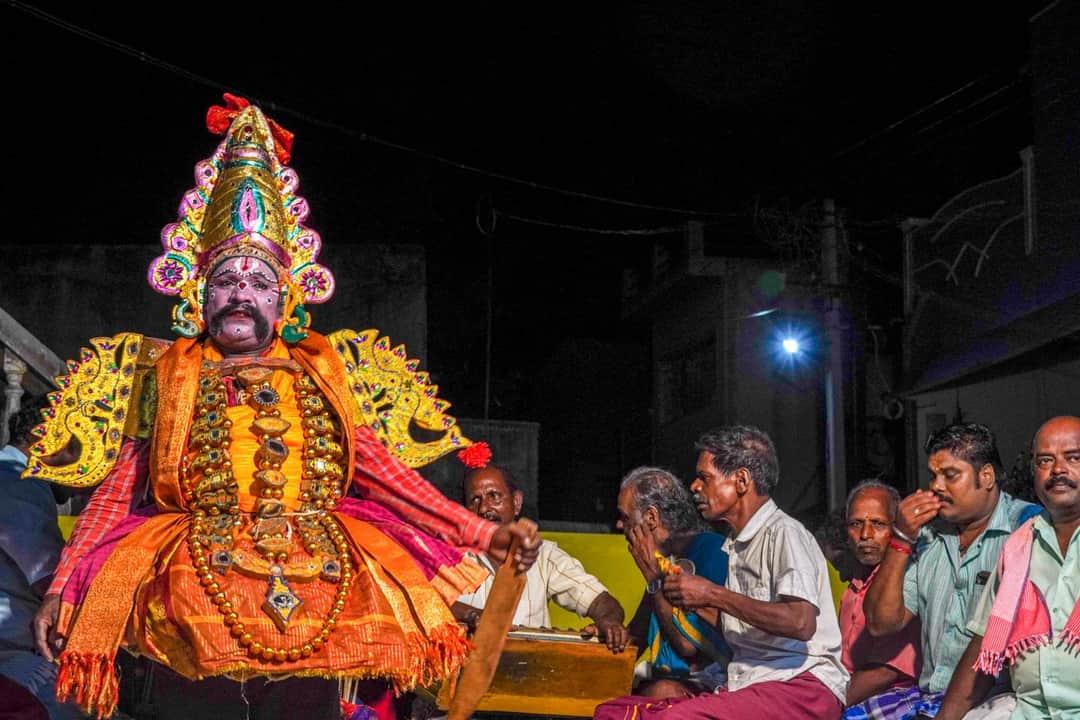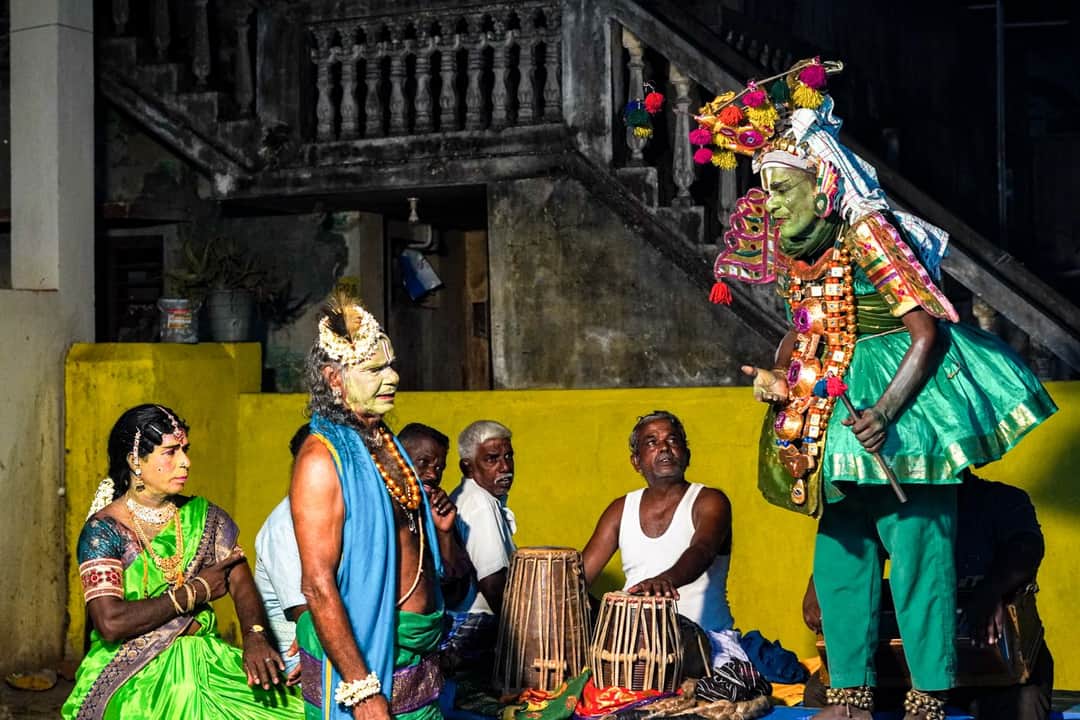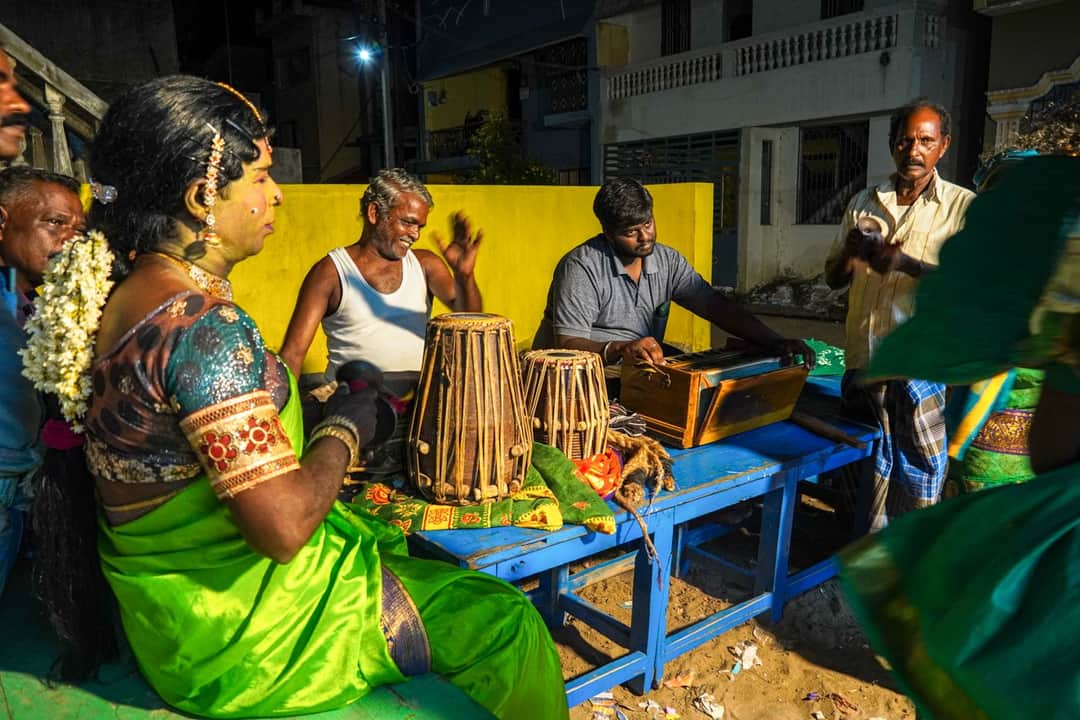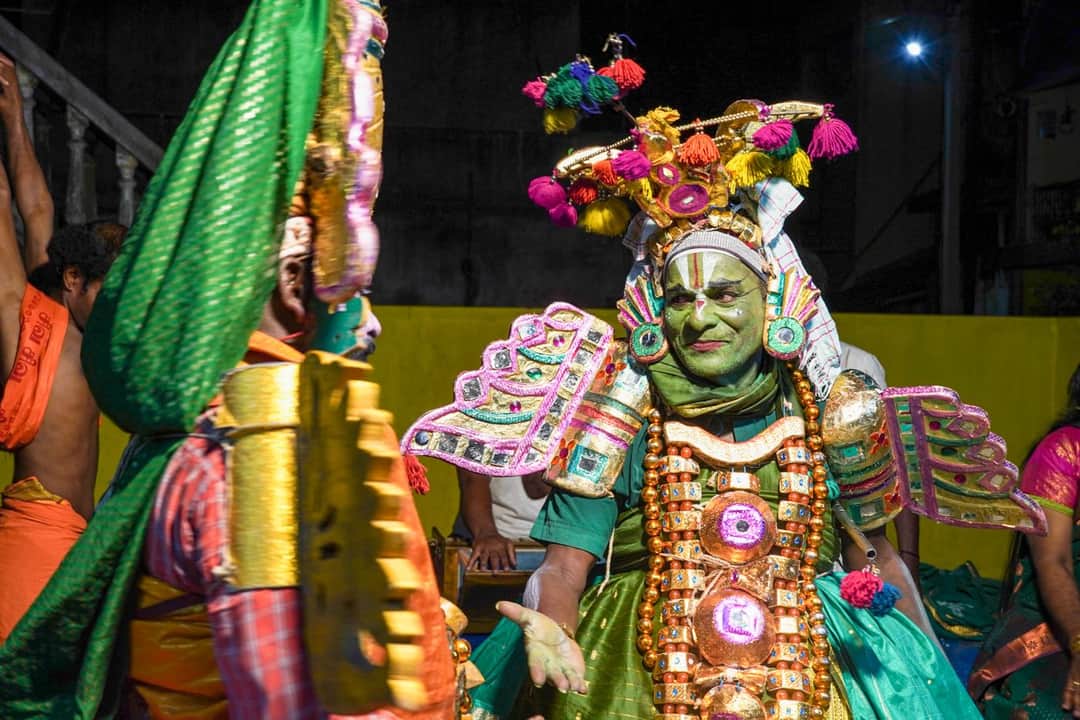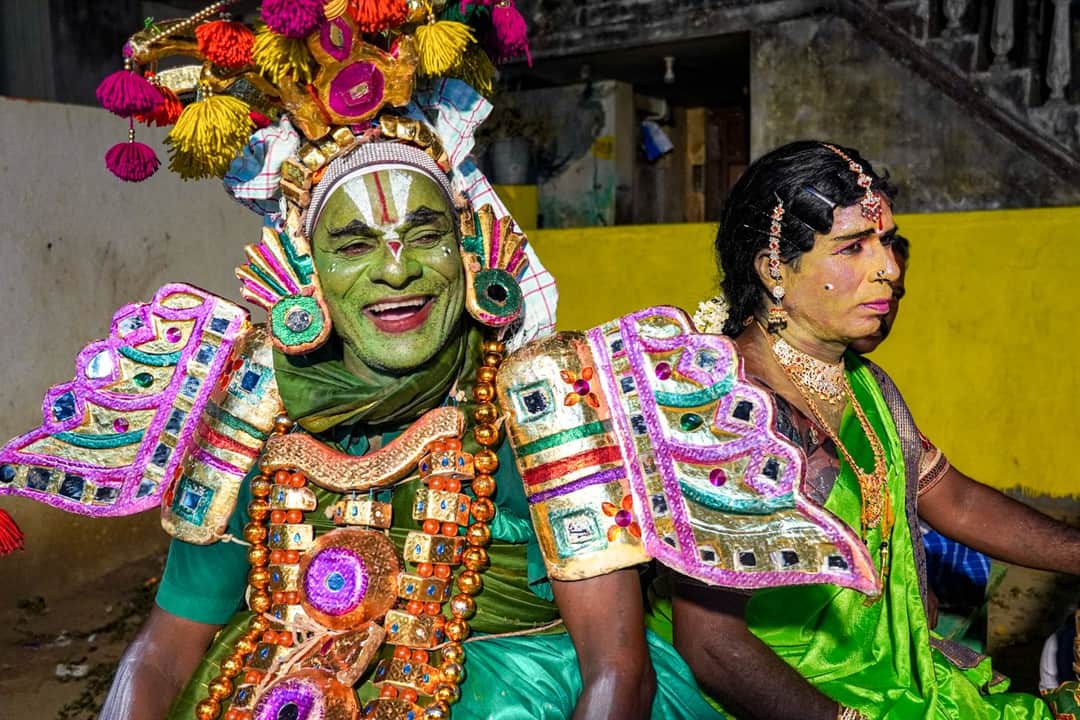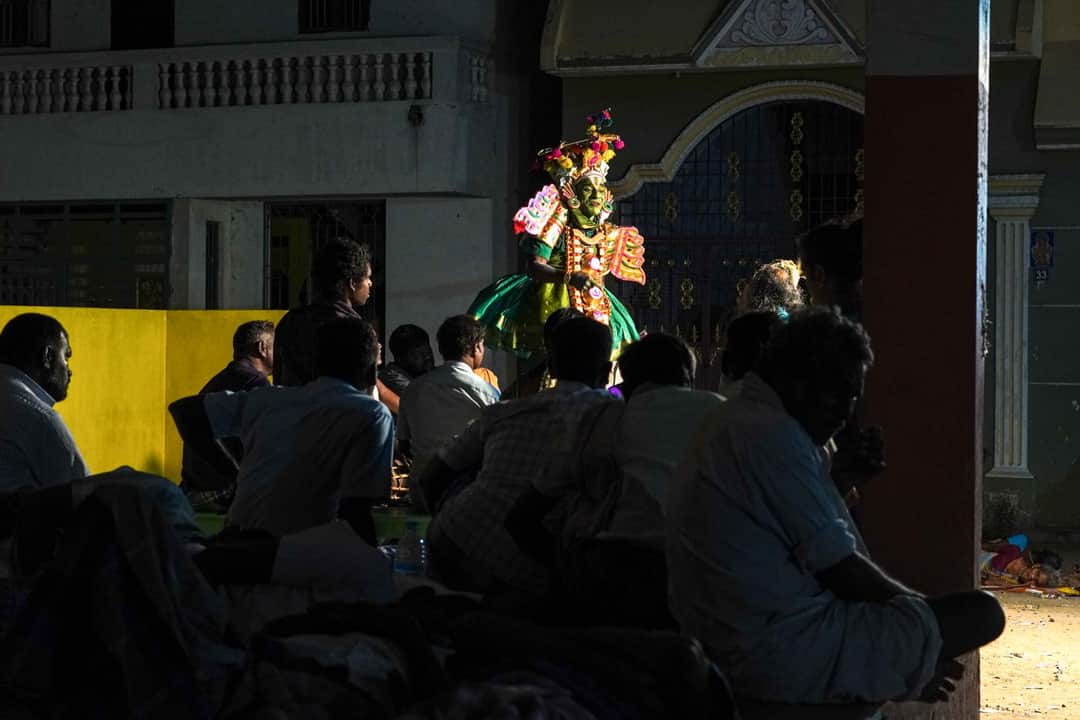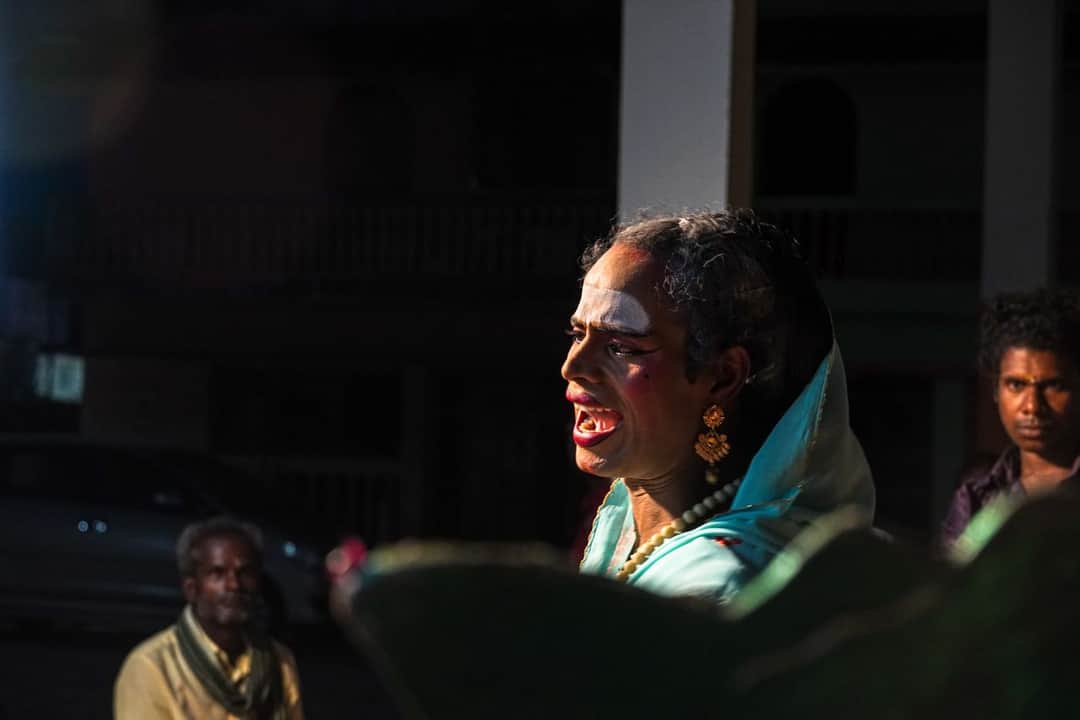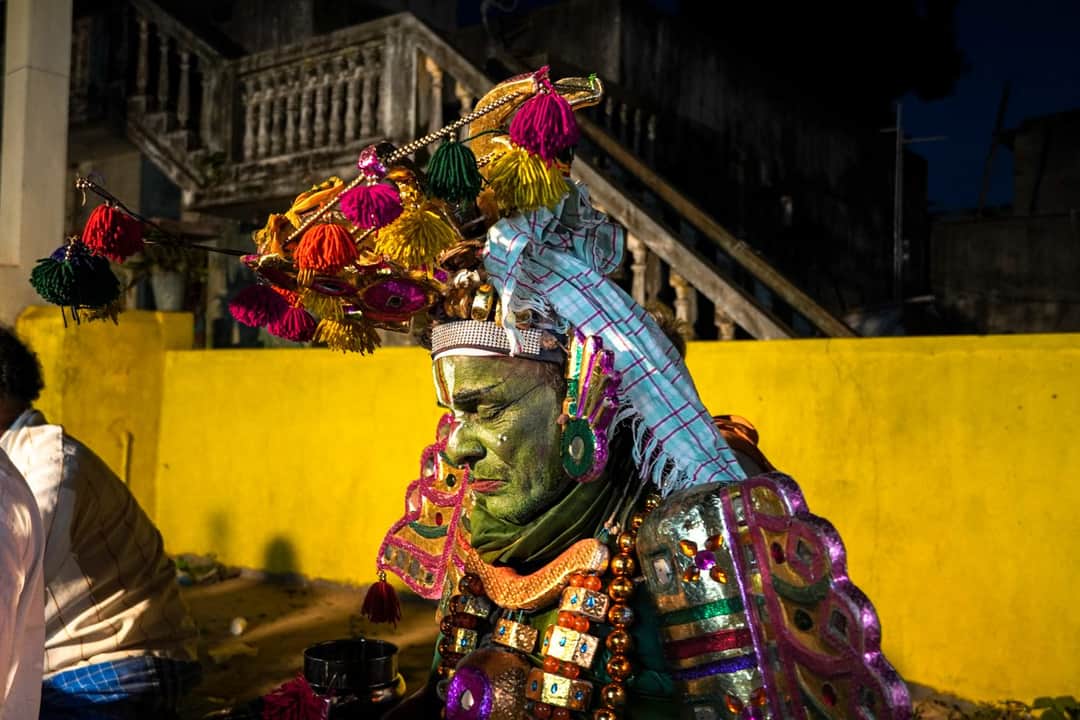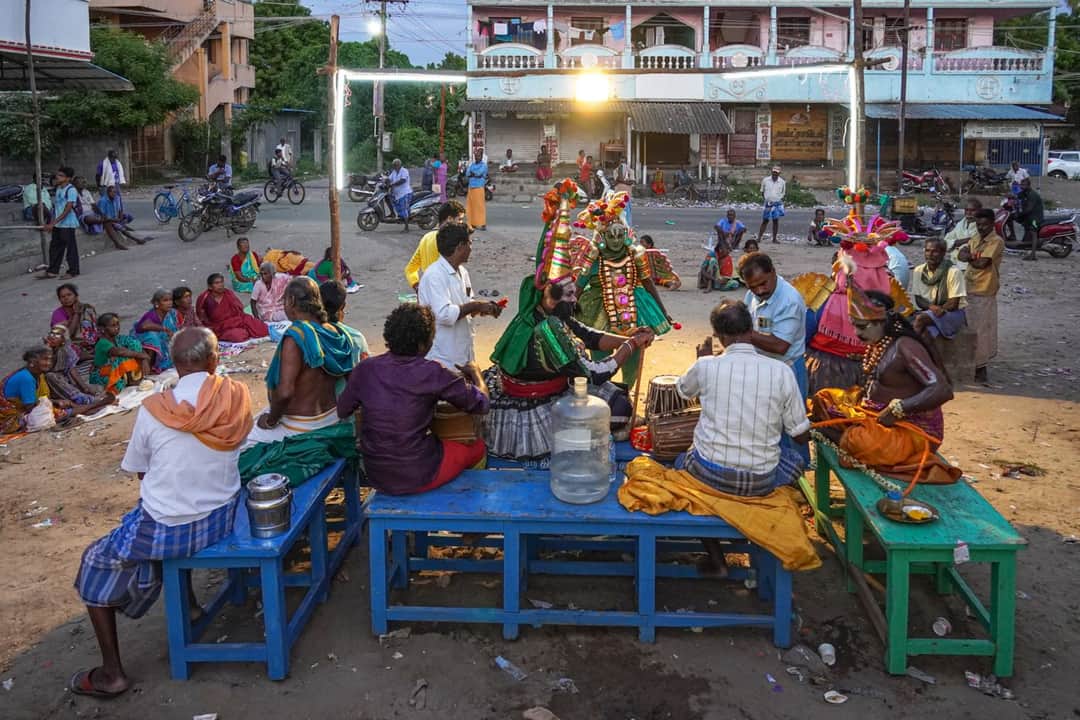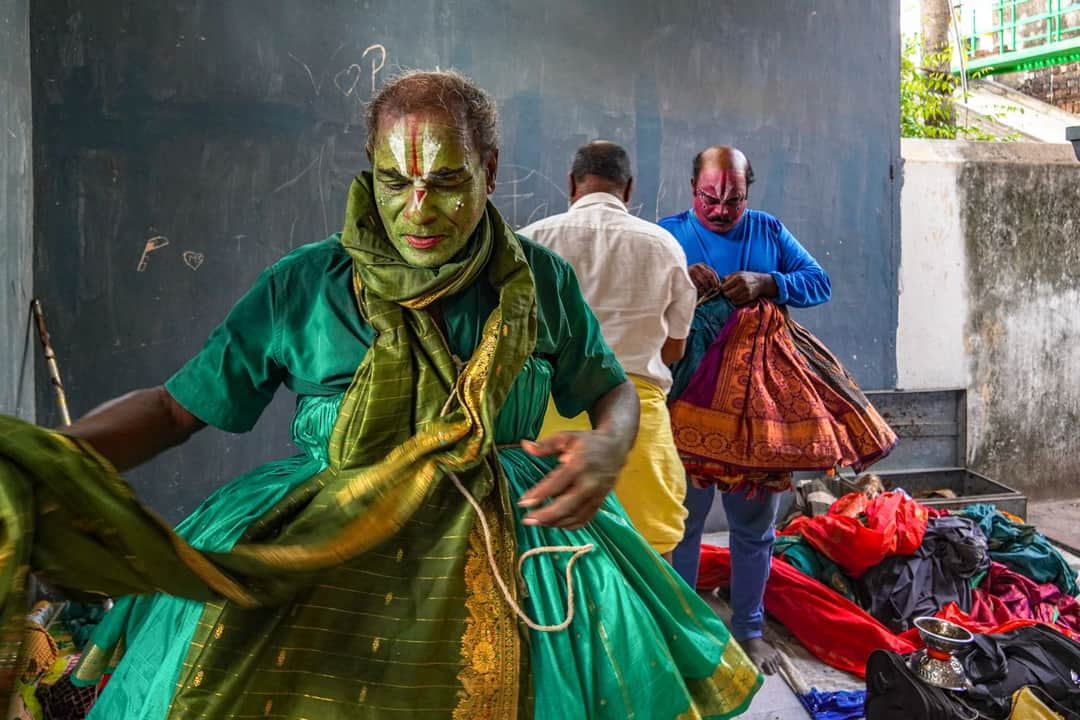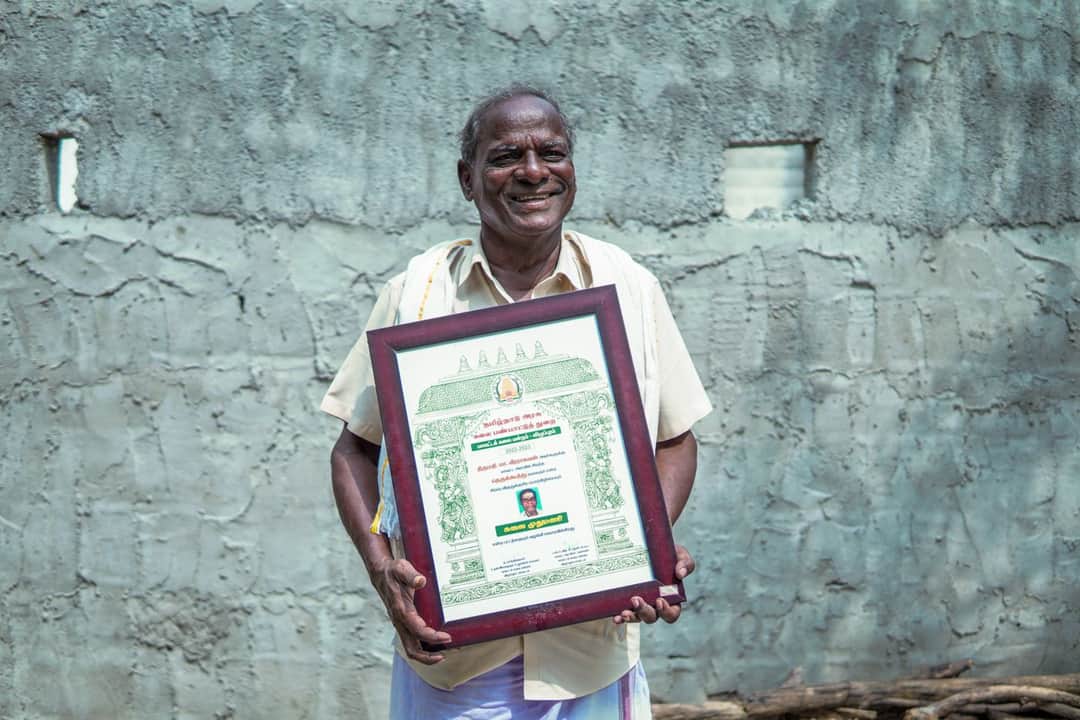

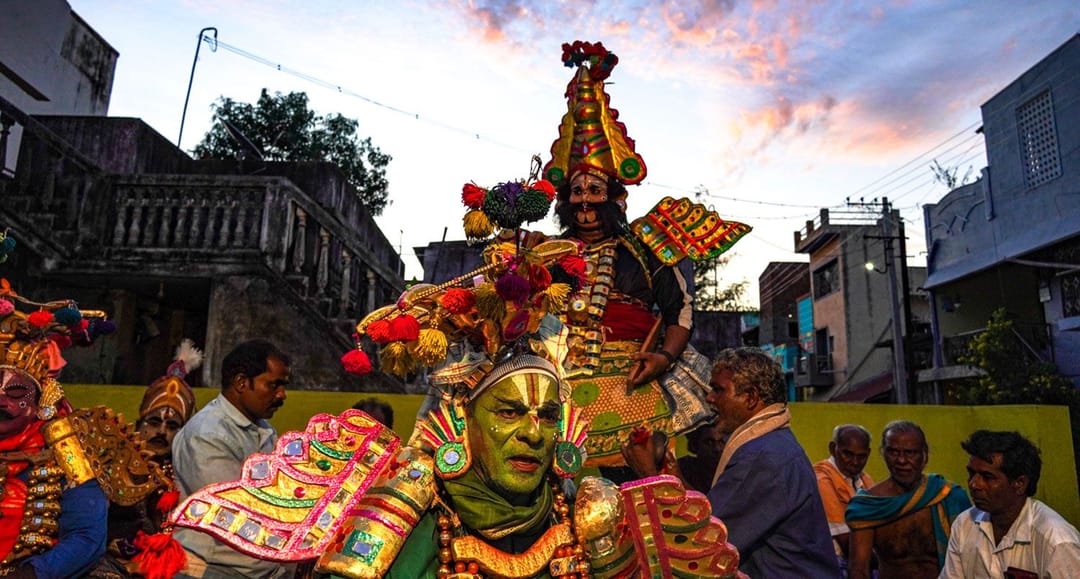
He stayed wide awake the whole night. Barely 15 years old, he was mesmerized by what he saw on Mariyamman Koil Street of Anumandai village in Tamil Nadu. “They were all in heavily decorated costumes, shining crowns, gilded ornaments, beautiful colours, bright makeup. They sang, danced and acted, with everyone looking at them in awe. The thathas and pathis [grandfathers and grandmothers] in the audience were folding their palms in a prayer mudra as if they were in front of some God. It was funny,” says 70-year-old Veeraragavan remembering his young days.
The night he saw Therukoothu, a street theatre form, as the word literally means, for the very first time is etched vividly in the mind of this veteran artiste. “I couldn’t eat or sleep. Something inside me kept saying, ‘I want to be with them. I wanted to do just what they were doing’,” he says. He was in Class 6 then, but his future was decided. With no formal training in music, dance, or storytelling, he quit schooling and joined a Therukoothu troupe.
His parents, agricultural labourers from the Vanniyar community listed as Other Backward Class (OBC) in the state, did not object. “We didn’t earn much, but I was excited to learn,” he recalls. “They gave me small tasks at first.” Eventually, Veeraragavan landed his first role as Duryodhana in a Mahabharata-based performance, practicing his lines day and night. “I was not nervous at all, in fact, I was very excited,” he says, the smile and pride on his face not faded by the years gone by.
Veeraraghavan devoted himself not only to learning the art but also to understanding the epics on which the performances were based. He read extensively, diving into puranic Tamil texts like Nool Agarathi, Periya Puranam, and Bharatham to build his knowledge.
Until the late '90s he earned barely 5 to 10 rupees for a show. “We had shows almost all year round, 250 days of doing just this,” he says with a smile. The cost of the performance was met by the village panchayat and donations from the villagers. “The audience also gave money out of love for the performance, thinking it was for the Gods,” he adds. People didn't earn much, he says, it was all about their passion.