
We are the girls of the new city town, O raj
Hey, where are you off to with your sassy walk?
We seven brothers are unmarried,
Hey, where are you off to with your sassy walk?
What kind of girl do you fancy, O raj
Hey, where are you off to with your sassy walk?
A dark-skinned girl is what we want, O raj
Hey, where are you off to with your sassy walk?
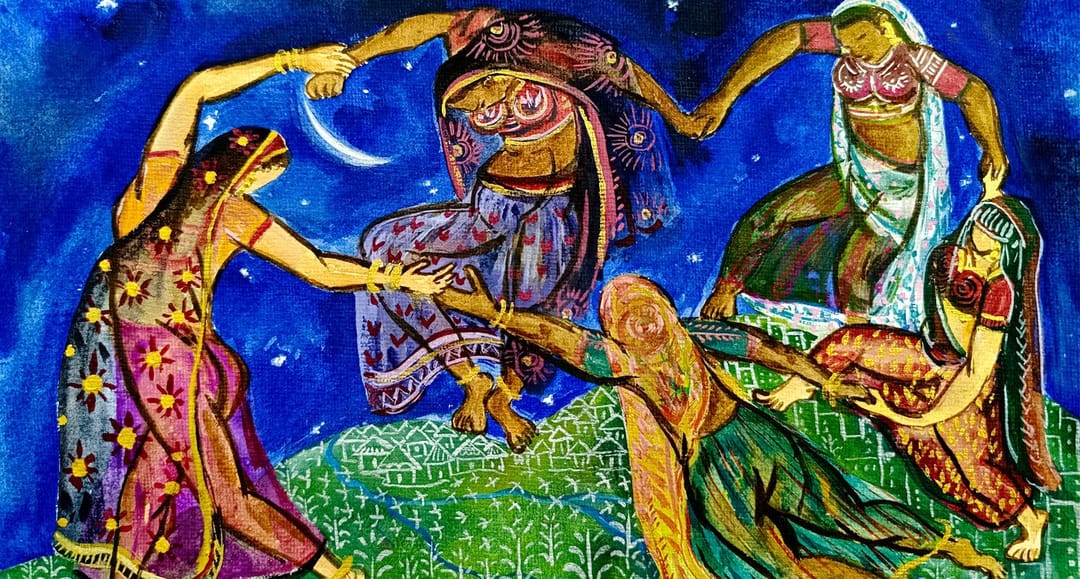
This Gujarati folksong performed at the weddings became popular with a 1970s Gujarati film Son Kansari, a popular tragic love story of Son Kansari and Rakhayat Babaria. Presented as a quick musical exchange between a team of female and male dancers taking turns to ask or answer, the song speaks of entrenched ideas of beauty, desirability, and marriage. The folksong here, very much in line with the nature of this genre, is inversing the prescribed gender roles, as awakened village women assert themselves, demanding their rights. To live with dignity and respect, to own property and land. To claim their material inheritance as they take charge of the cultural repertoire.
We have seen throughout world history how singing associated with resistance has often played an important role in the quest for freedom for the oppressed. This one rendered powerfully by Nanduba Jadeja, from Nakhatrana in Kachchh District with other women paved the way to a new awareness among the women Kutch Mahila Vikas Sangathan was working with, around 2017.