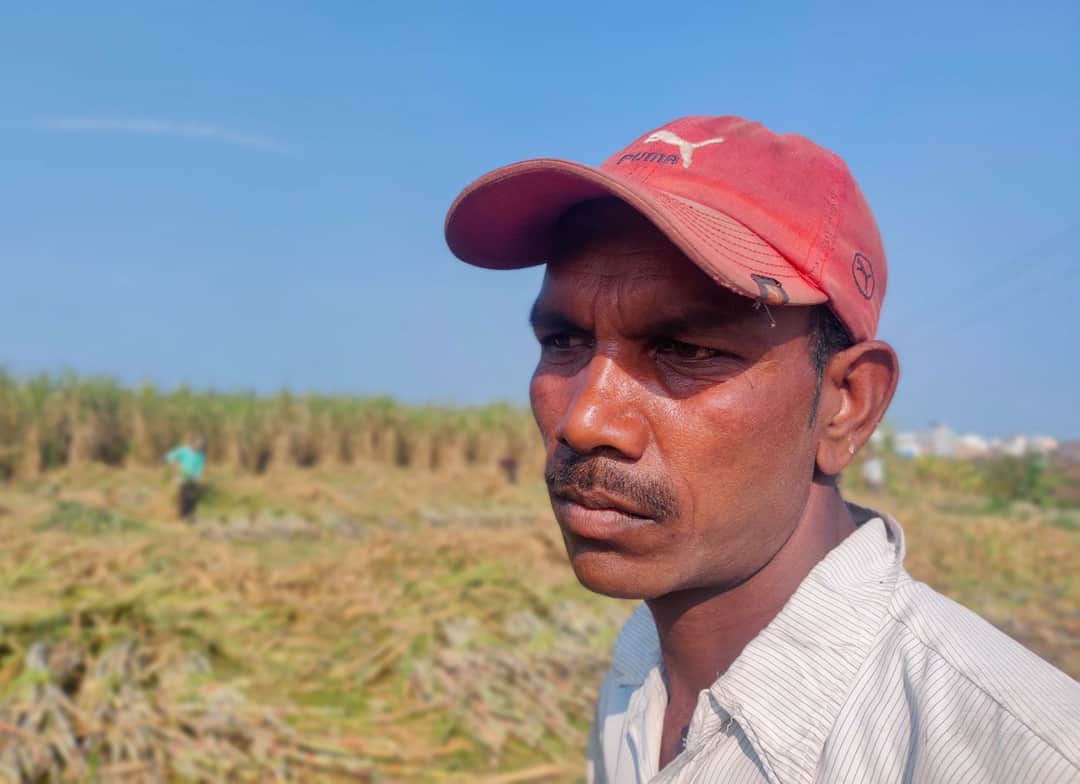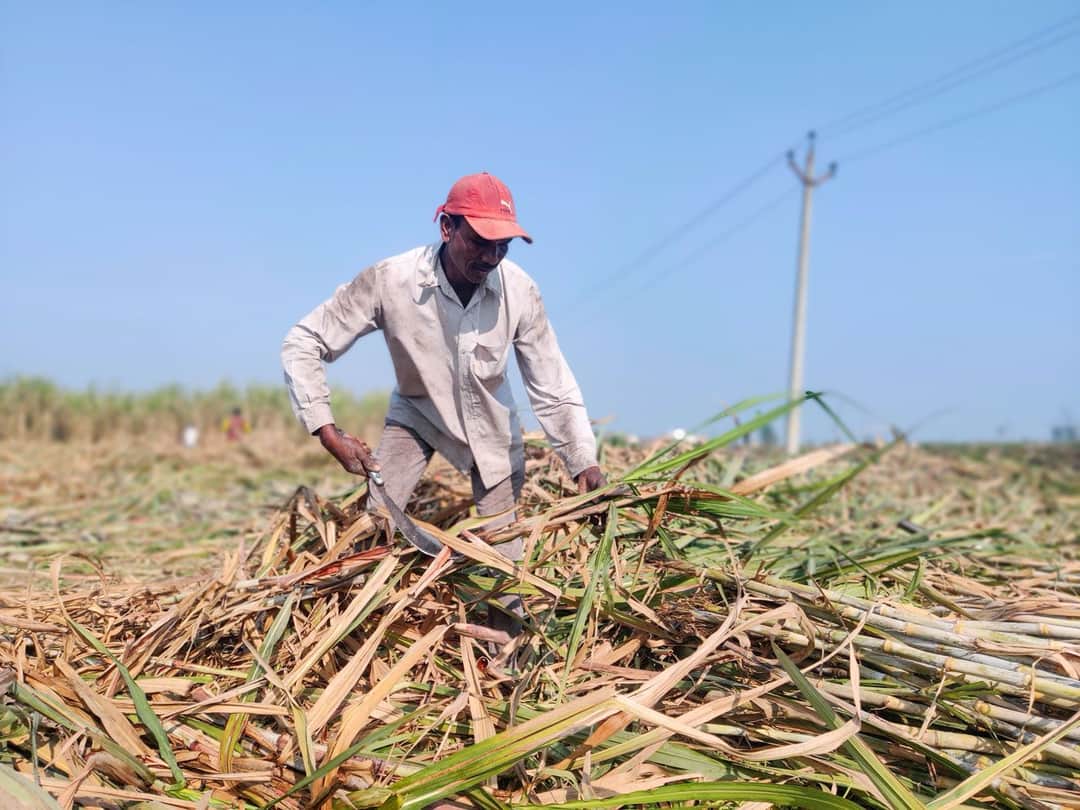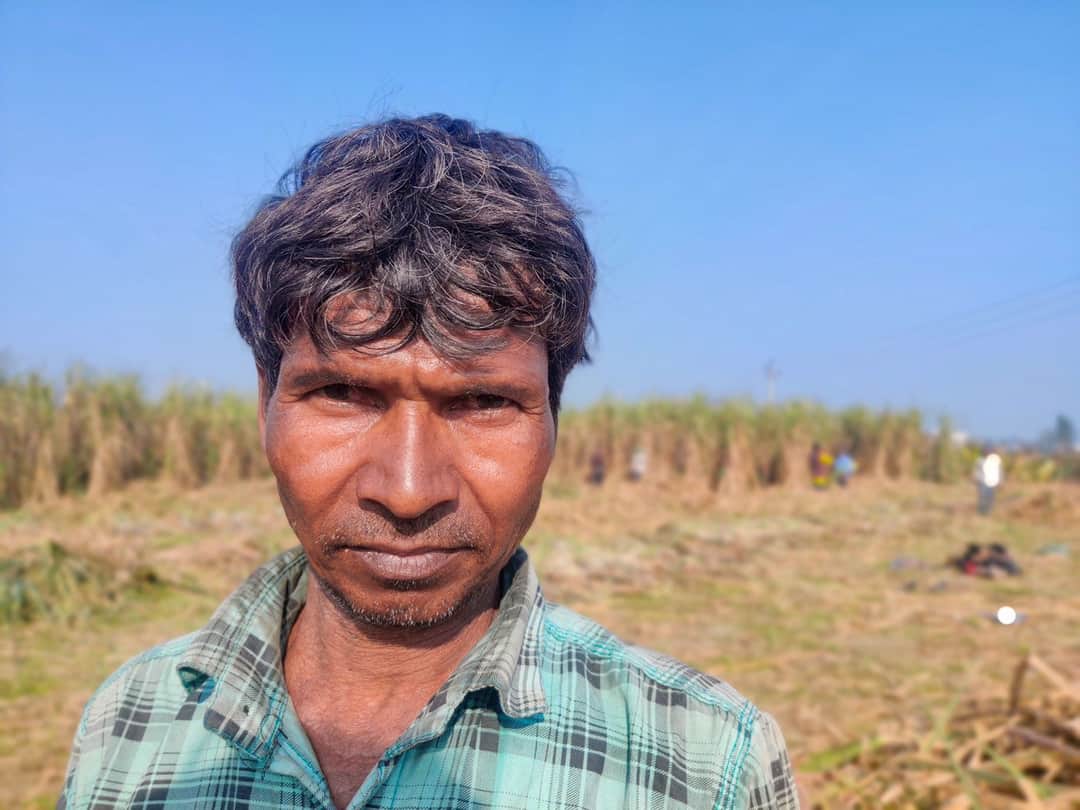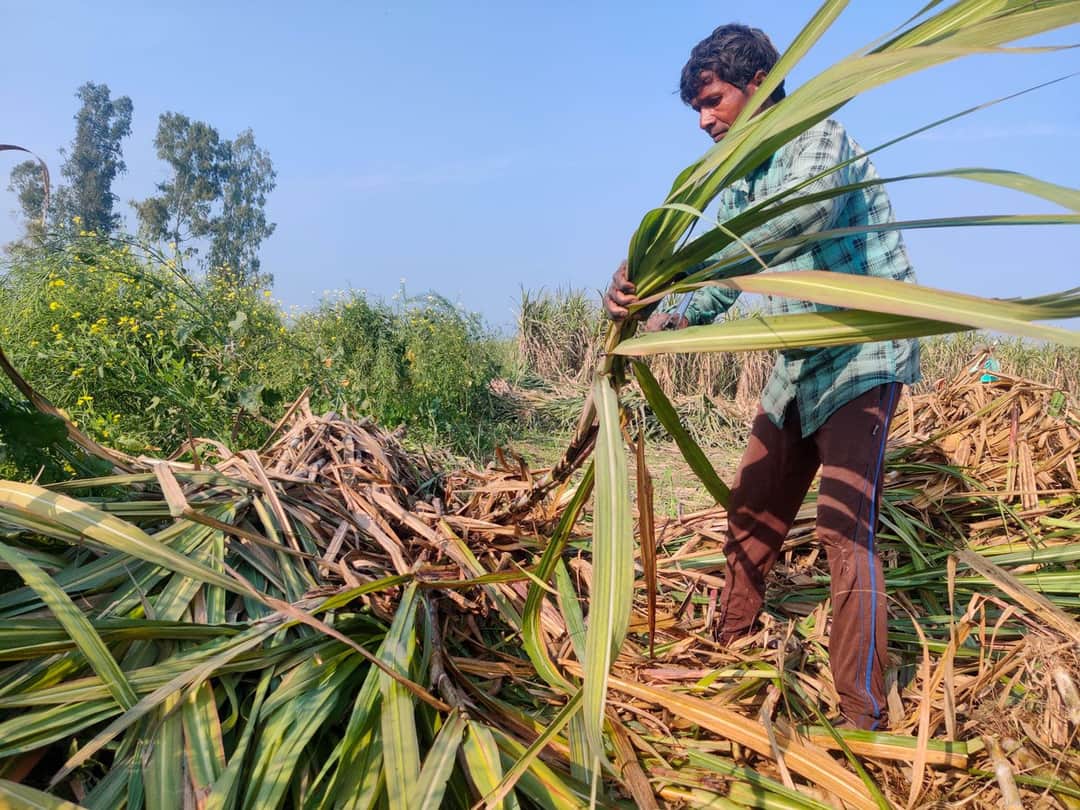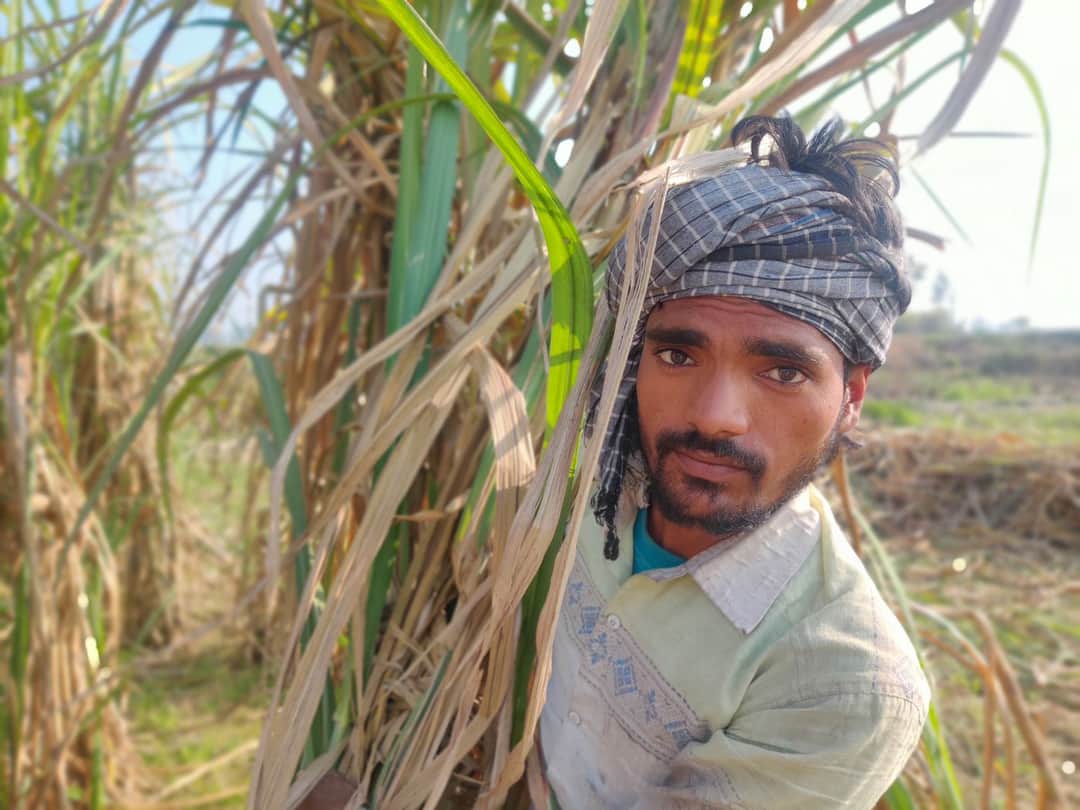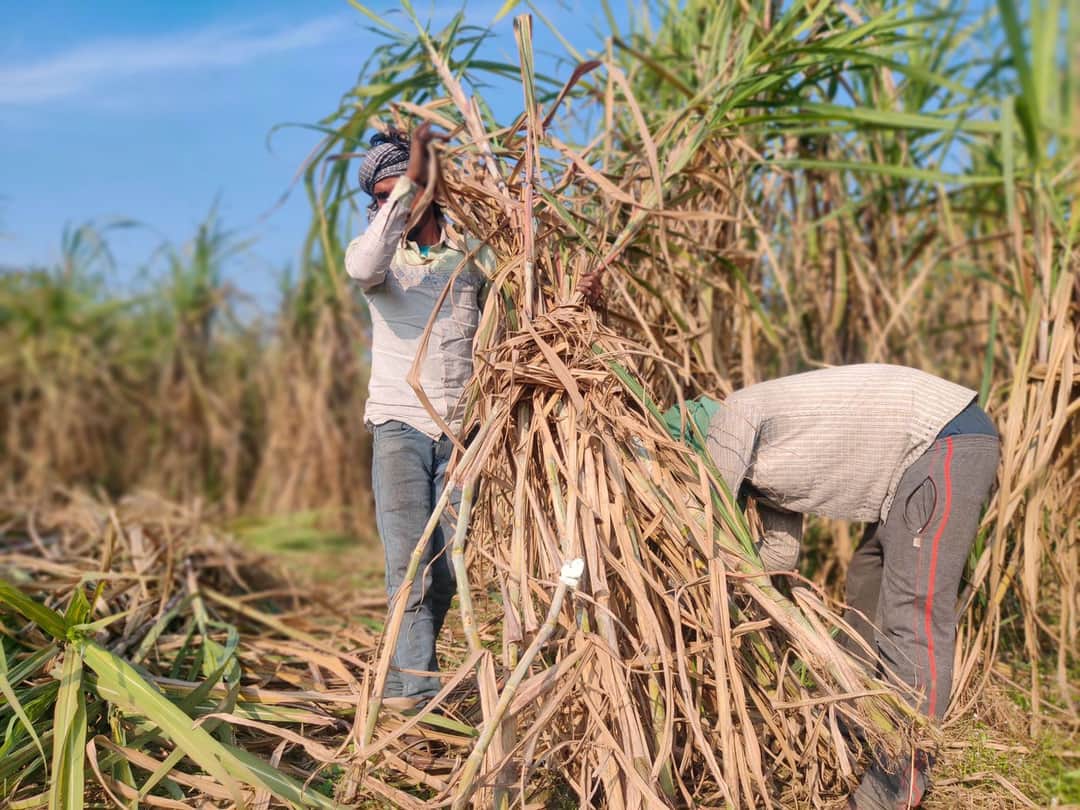


Ramesh Sharma can’t remember the last time he spent an entire year at home. “I have been doing this for the past 15-20 years,” he says, while cutting sugarcane in a field in Gagsina village in Haryana’s Karnal district.
For half of the year – from October to March – Ramesh, 44, migrates from Shoirgaon, his village in Araria district of Bihar, to work as a farm labourer in Haryana and Punjab. “I make more money as a labourer in Haryana than as a farmer in Bihar,” he says.
In Shoirgaon, Ramesh owns three acres of farmland, which he cultivates for six months of the year. He grows paddy during the kharif season (June-November). “Most of it is for self consumption,” he says, without taking his eyes off the sugarcane he’s chopping.
Sharma’s main cash crop of the year is maize, which he grows in the rabi season (December-March). But the crop hardly brings him cash. “I sold my harvest at Rs. 900 per quintal last year [2020],” he says, after harvesting 60 quintals of the crop. “The commission agent bought it from us in the village itself. This is how it has been for years.”
The price Ramesh received was about 50 per cent less than the minimum support price (MSP) – Rs. 1,760 per quintal – set by the central government for maize in 2019-20. Selling at the MSP at government-regulated mandis in Bihar is no longer an option, so small farmers like Sharma are pushed to negotiate prices directly with commission agents.
In 2006, the Bihar government repealed the Bihar Agriculture Produce Market Act, 1960. With that, the agricultural produce market committee (APMC) mandi system was abolished in the state. The government claimed the move would liberalise the farming sector by allowing privately-owned trading areas for farmers. But doing away with the APMCs did not bring better returns to Bihar’s farmers, who became even more dependent on intermediaries and on prices determined by traders.