
It was 10 days before Rekha realised she had no option other than to get married. She had resisted as much as a 15-year-old could but her parents didn’t take any of it seriously. “She cried and said she wanted to study more," says Bhagyashree, her mother.
Bhagyashree and her husband, Amar, both in their late 30s, live with their children in an impoverished village in Maharashtra’s Beed district. Around November every year, they migrate to western Maharashtra or Karnataka to cut sugarcane. After six months of gruelling labour in the fields, they earn Rs. 80,000 between them. With no land to their name, cutting cane is the only source of income for the family, which belongs to the Matang caste, a Dalit community.
Each time her parents migrated, Rekha and her siblings, aged 12 and 8, were left in the care of their grandmother (she died in May last year). They attended a government school just outside the village. But when the pandemic forced schools to shut in March 2020, Rekha, who was in Class 9, had to stay home. More than 500 days on, schools in Beed continue to be closed.
“We realised that the schools were not going to open any time soon,” says Bhagyashree. “When the school was open, there were teachers and children around. The village was busier. With the school shut, we couldn’t leave her behind because of safety concerns.”
So Bhagyashree and Amar got Rekha married to 22-year-old Aditya in June last year. His family was from a village 30 kilometres away, and they were seasonal migrant workers too. In November 2020, when the sugarcane-cutting season was about to start, Rekha and Aditya migrated to western Maharashtra – leaving just her name behind in the school register.
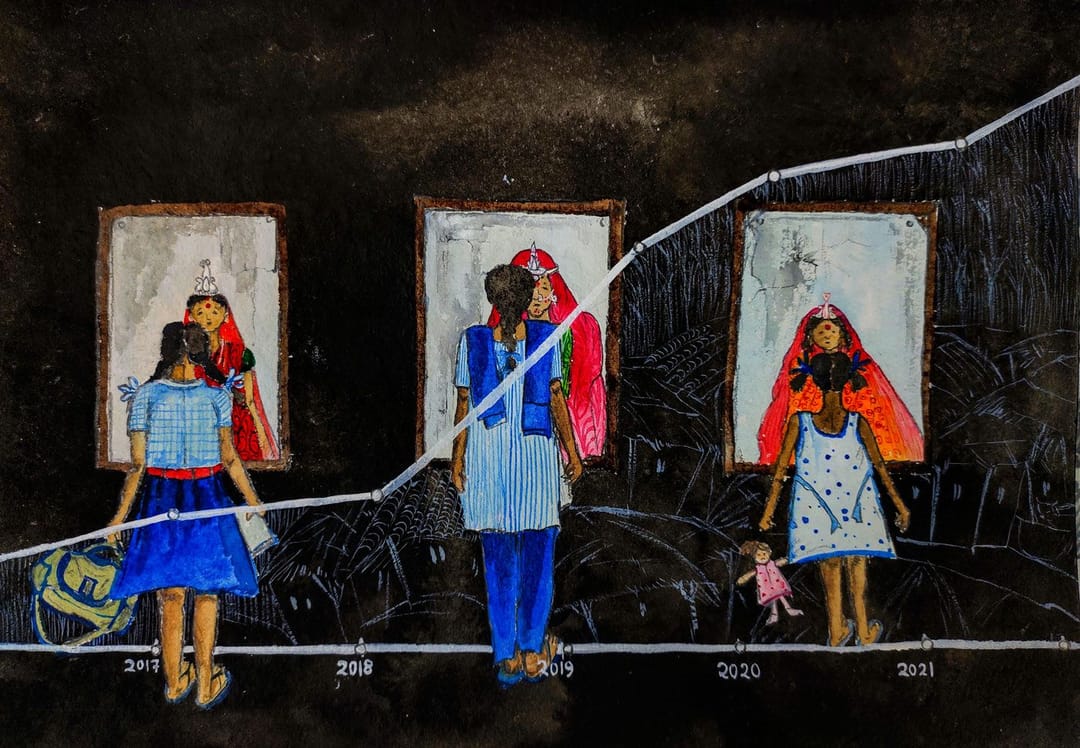
Adolescents like Rekha and girls younger to her are being pushed into marriages because of the pandemic. A UNICEF report released in March 2021, titled COVID-19: A threat to progress against child marriage, warns that by the end of the decade, an additional 10 million girls globally would be at risk of becoming child brides. School closures, rising poverty, parental deaths and other factors resulting from Covid-19 “has made an already difficult situation for millions of girls even worse,” the report notes.
In the last 10 years, the proportion of young women married as children had decreased by 15 per cent, and about 25 million child marriages were averted around the world, adds the UNICEF report. The pandemic has become a threat to the progress made in recent years, even in Maharashtra.