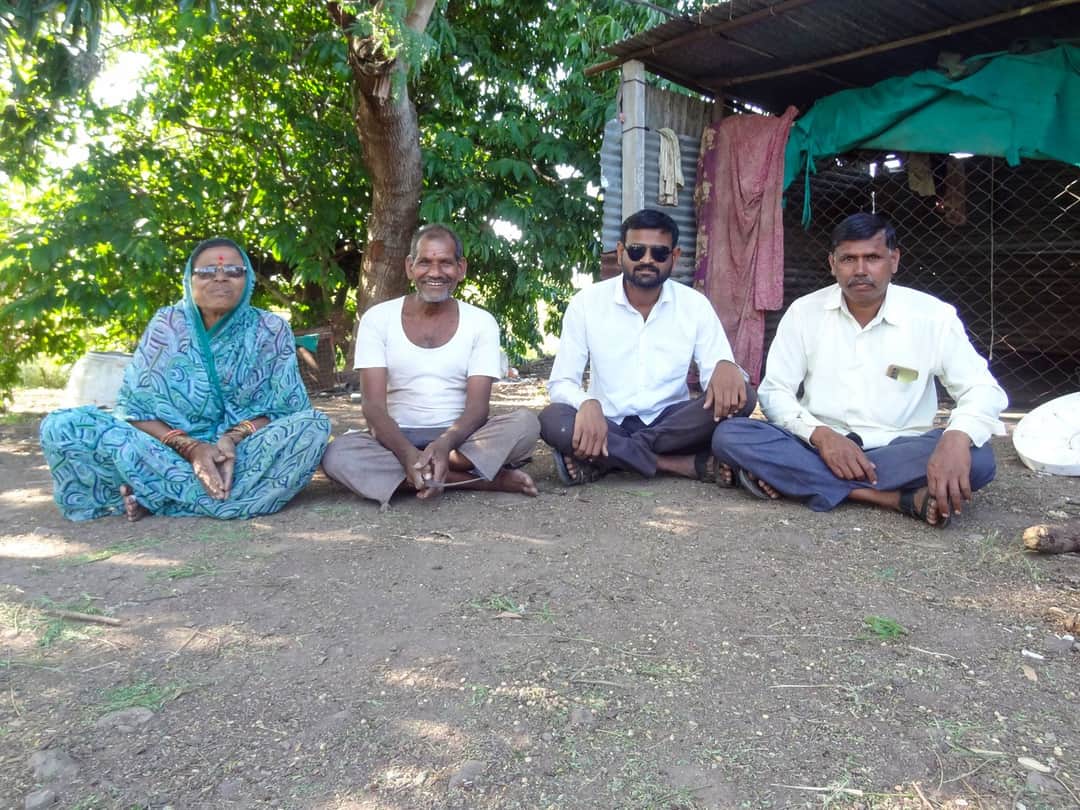


Maloji Chavan does not need a guiding hand once he is in his one-acre vineyard. He steps away from his friend Santosh Hingmire, his movements guided by instinct rather than sight. The 31-year-old farmer is visually disabled but is very familiar with the lay of his land.
“Do you see this branch?” he asks, pointing to an iron pole supporting a grape climber.
“Which one?” we wonder, momentarily unsure.
Smiling at the irony, Maloji leans forward and gently lifts a tender shoot, its five fresh leaves curling at the tip. Running his fingers along it, he says quietly, “It hasn’t grown well. It won’t give bulbs. The roots were damaged. They didn’t get enough sun for months.”
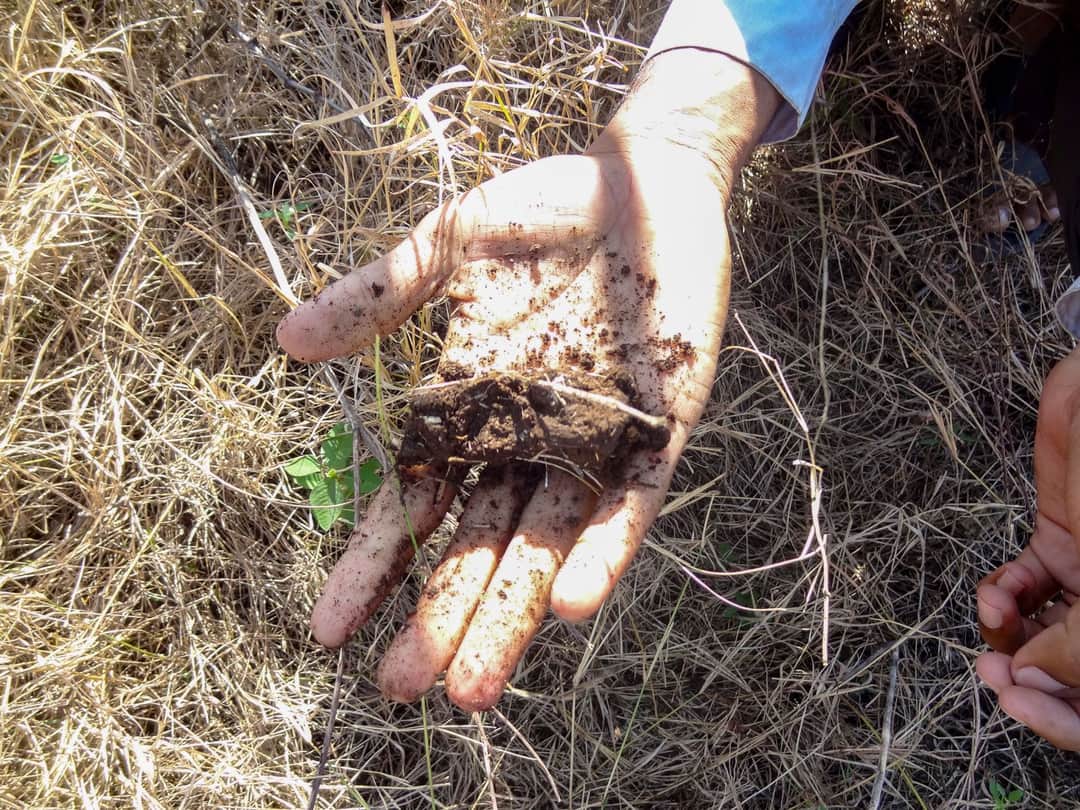
That single creeper tells the larger story of his one-acre vineyard, part of a five-acre irrigated farm owned by his parents, Dhanaji and Pushpabai. There will be no grapes this year. Sugarcane shoots and other fruit trees on the farm are decaying as well. The family estimates cumulative losses of Rs. 10 lakh. This will set them back financially by at least a decade.
The devastating damage is the result of extreme rainfall events during the 2025 monsoon when rains simply did not pause. Not in Jamgaon. Not across Solapur district, nor in neighbouring Beed and Dharashiv districts of Marathwada. By early November 2025, soybean fields and vineyards lay wrecked. Swollen rivulets – usually dry for most of the year – were in full flow across this drought-prone belt.
From mid-May to the October-end 2025, western Maharashtra and Marathwada experienced long, relentless spells of rain. The situation worsened dramatically between September 19 and 25, when a series of cloudbursts and flash floods destroyed standing crops, orchards, soils, livestock, and in some cases human lives. Across Solapur district, officials counted more than 47,000 hectares of irreparably damaged crops.