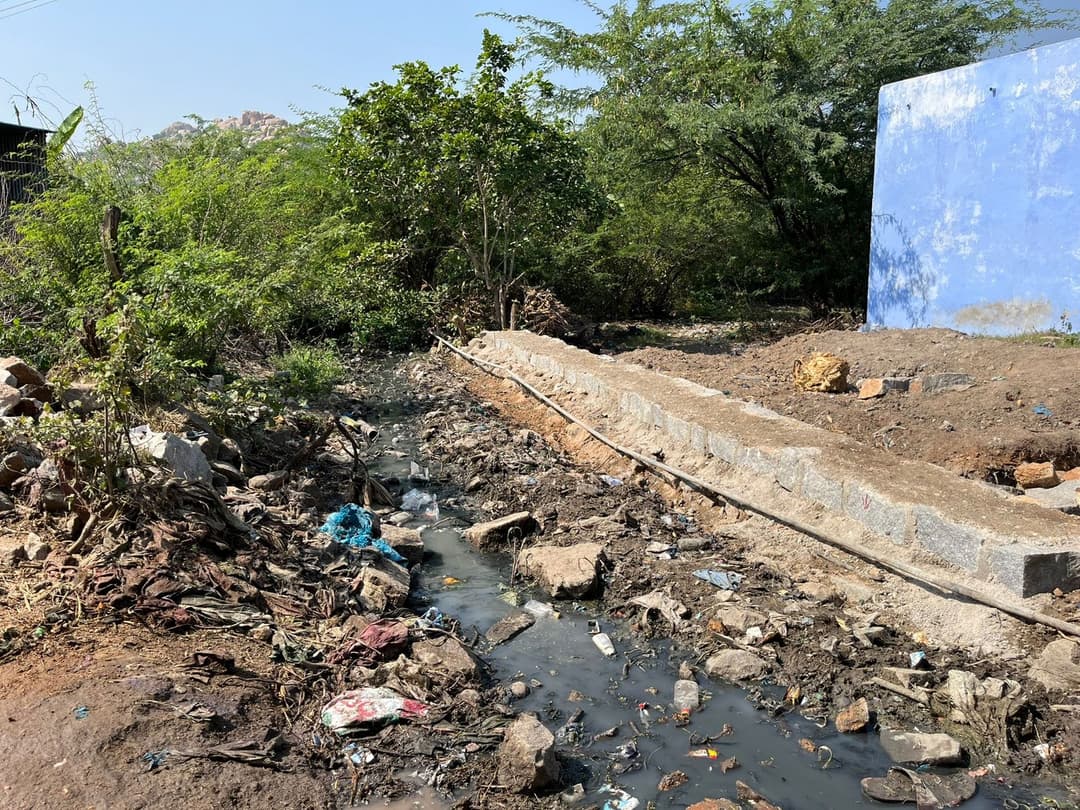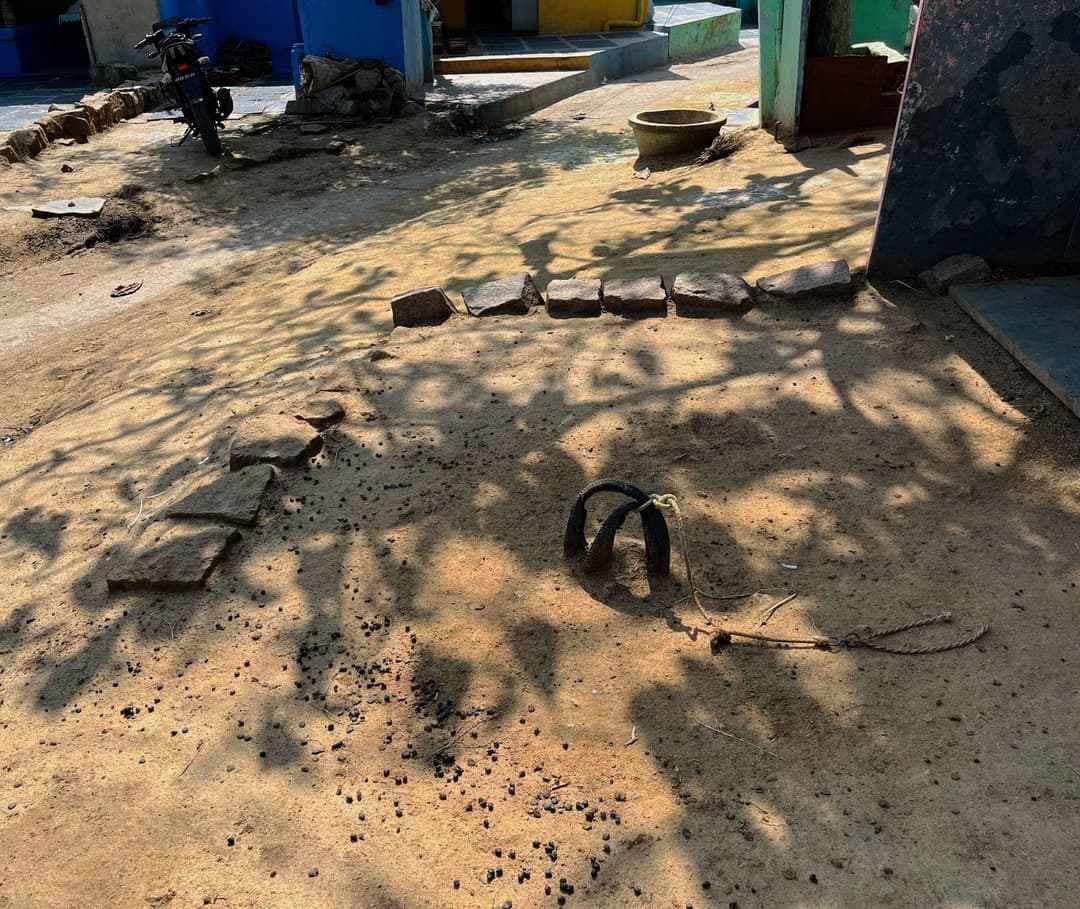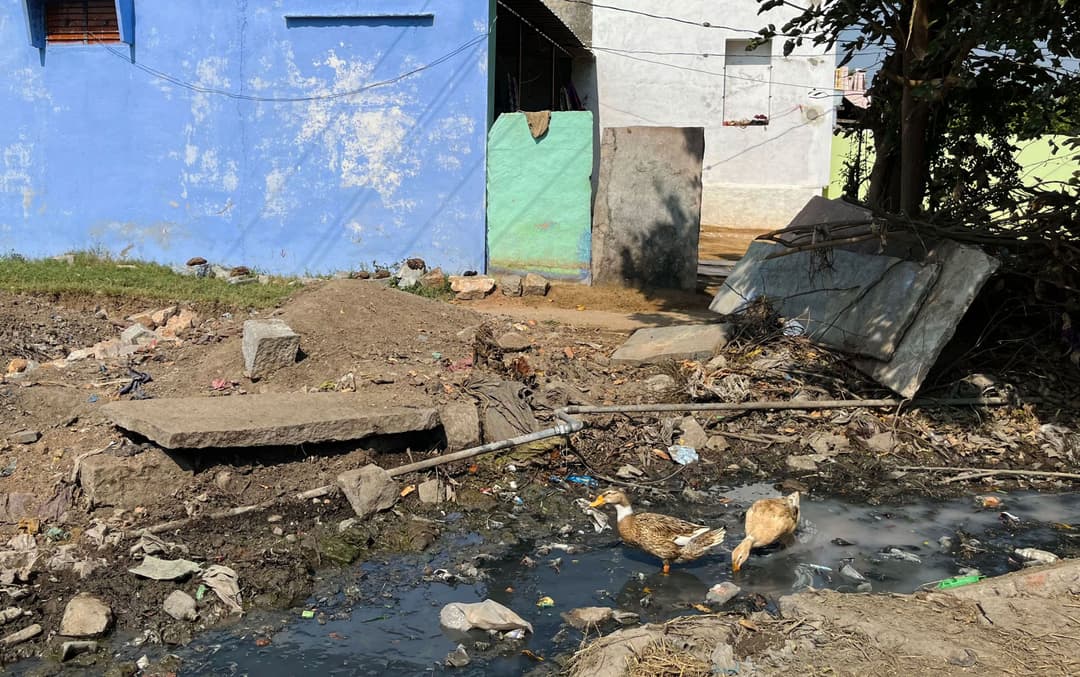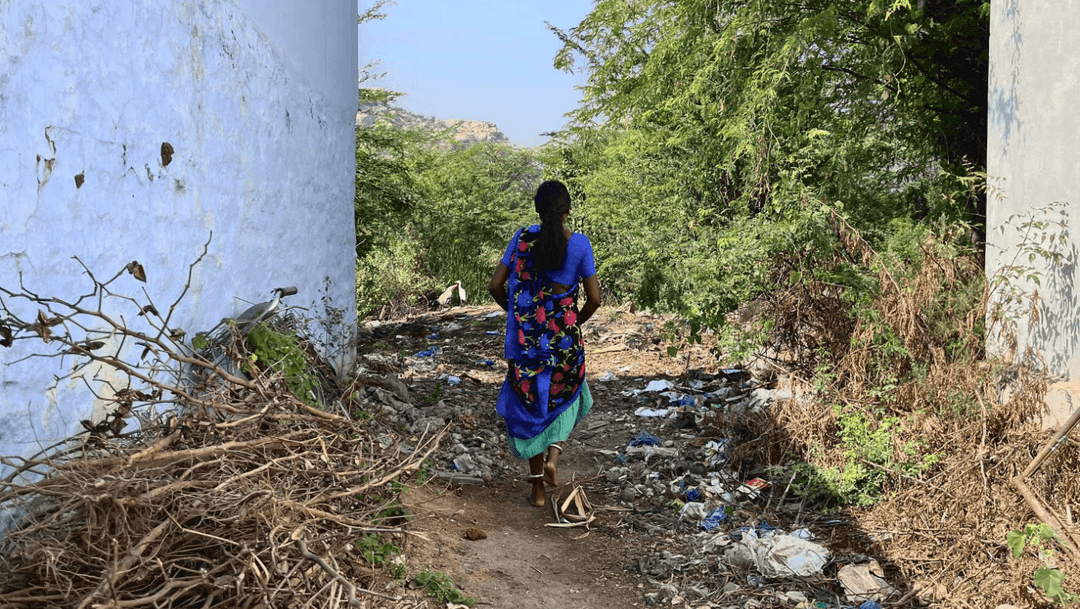
Nallamma steps across a stagnant stream of liquid sewage as she enters the dusty path between two pucca houses, lined with supplies of firewood. The 35 year-old walks tall in her floral blue chiffon saree, her bare feet marking a route that appears to be in frequent use.
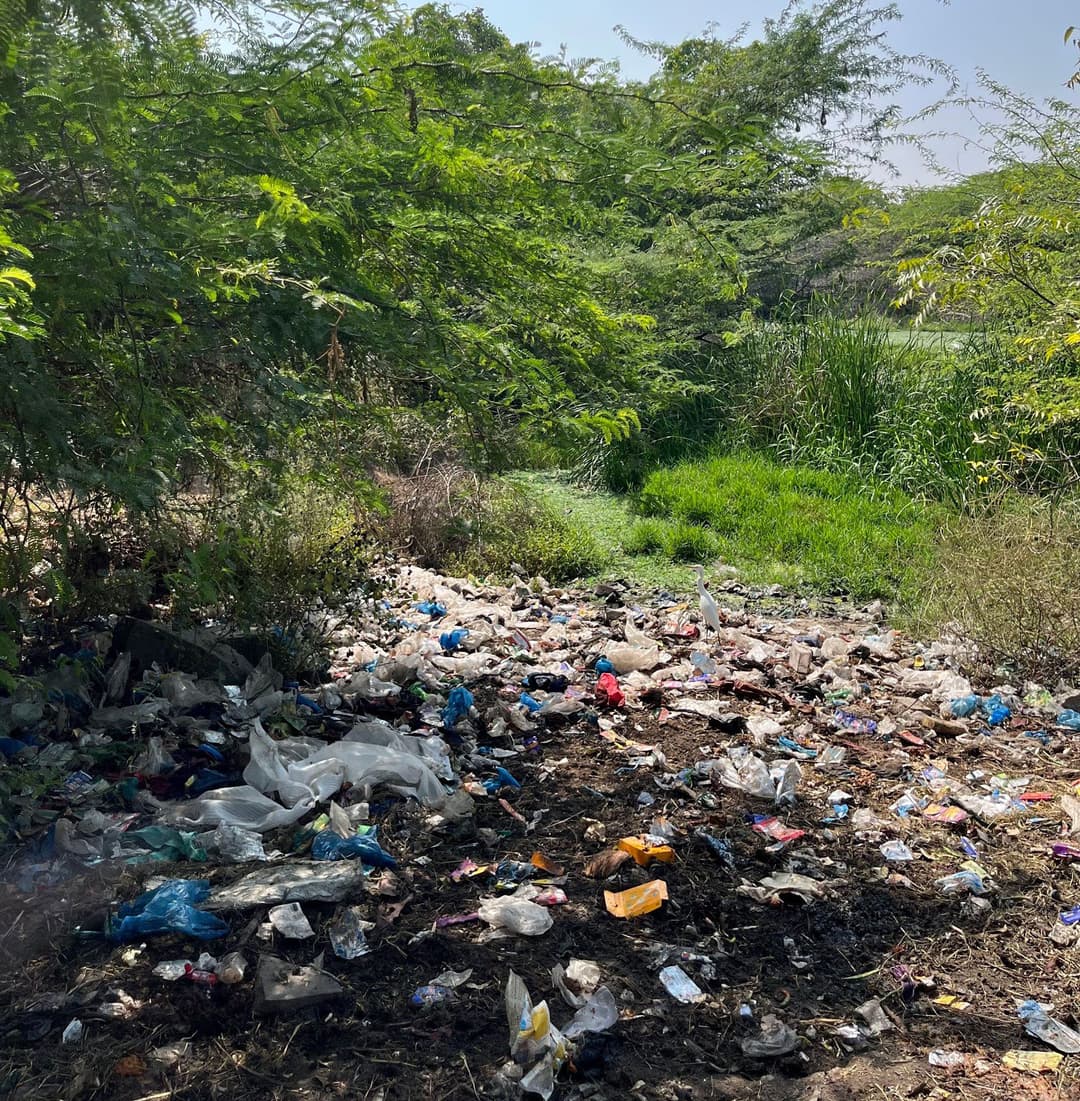
We reach an open space, filled with shrubs, dry grass and garbage. “Wherever there is space, we sit [to defecate],” Nallamma says, pointing to the houses in Gudikal village that we just passed, “None of our homes have toilets. Even if it is a C-section [caesarean birth], pregnancy or periods, we have to come here,” she says with finality.
Over the years, inti venuka [behind the house] has come to be known as the designated area for open defecation. “Every woman from my side of the lane comes here. The men have a similar space on the other side of the lane,” explains Nallamma.
Gudikal village in Yemmiganur block of Kurnool district has a population of 11, 213 people (Census 2011). It was declared “open defecation-free” by the central government and later by the state government in 2019. But Gudikal’s third ward – where Nallamma lives – is definitely not open defecation-free, residents say. In fact, Nallamma says that six out of eight wards here have no toilets. (Official data shows 20 wards but local government officials including the local secretariat and her assistant say there are eight.)
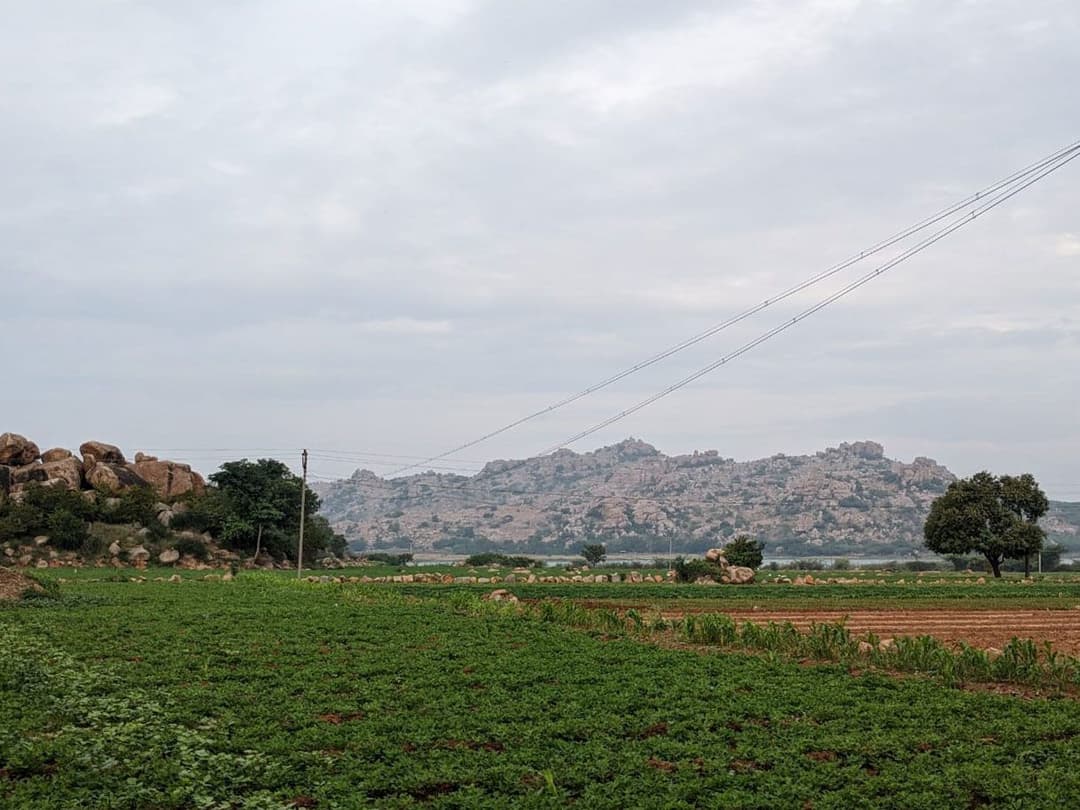
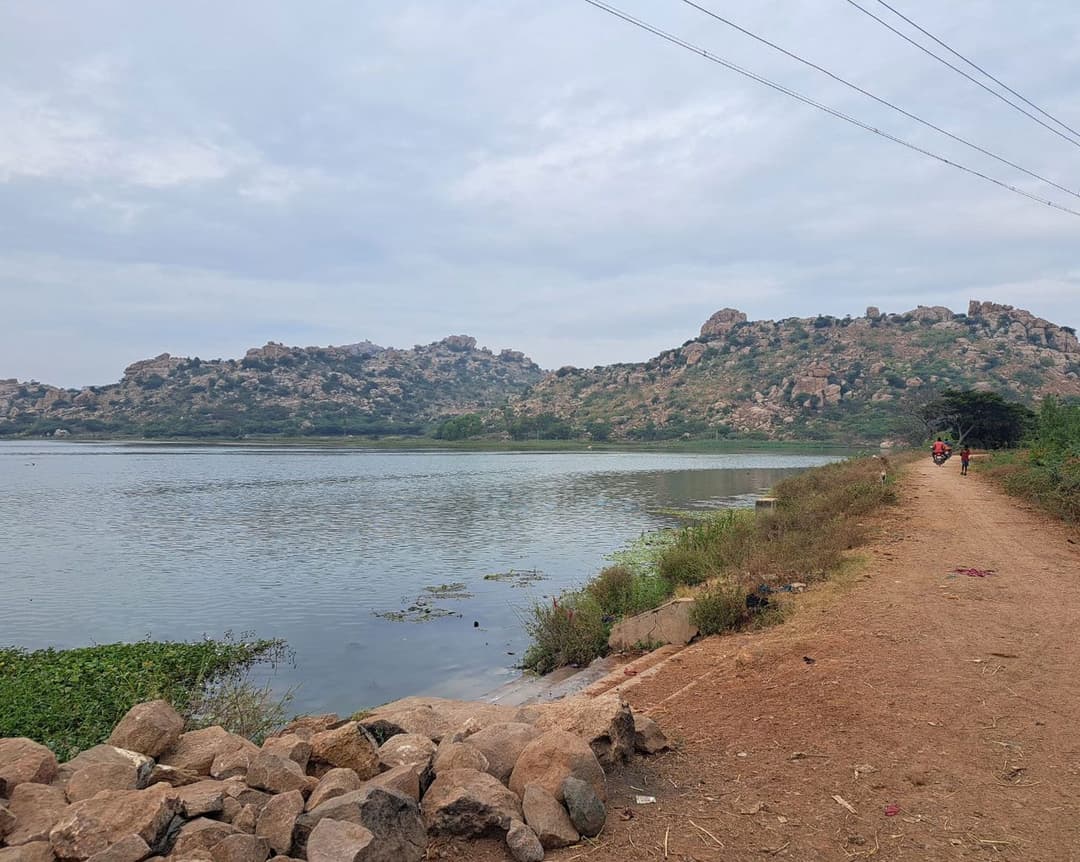
Roughly 25 per cent of households in Gudikal are daily wage workers; half the population are cultivators. Most farmers grow commercial crops such as chilli and cotton. Due to the region’s ongoing water crisis, the agriculture is primarily rain-fed with about 1,420 hectares of total irrigated land.
Nallamma points at four wild boars resting under the shade of an old Jammi (Prosopis cineraria) tree. She says that boars along with, “white cranes and snakes,” are commonly seen here. “It is usually pitch dark in the morning when we come. Nothing has happened till now, but there is fear,” she says.